Jump to ratings and reviews
Rate this book
Rate this book
At turns heartbreaking, uplifting, fiercely romantic, and riotously funny, Queen of America tells the unforgettable story of a young woman coming of age and finding her place in a new world.

Beginning where Luis Alberto Urrea's bestselling The Hummingbird's Daughter left off, Queen of America finds young Teresita Urrea, beloved healer and "Saint of Cabora," with her father in 1892 Arizona. But, besieged by pilgrims in desperate need of her healing powers, and pursued by assassins, she has no choice but to flee the borderlands and embark on an extraordinary journey into the heart of turn-of-the-century America.

Teresita's passage will take her to New York, San Francisco, and St. Louis, where she will encounter European royalty, Cuban poets, beauty queens, anxious immigrants and grand tycoons -- and, among them, a man who will force Teresita to finally ask herself the ultimate is a saint allowed to fall in love?

496 pages, Hardcover

First published November 28, 2011

231 people are currently reading
3209 people want to read

About the author

Luis Alberto Urrea

62 books2,944 followers
Luis Alberto Urrea is the award-winning author of 13 books, including The Hummingbird's Daughter, The Devil's Highway and Into the Beautiful North (May 2009). Born in Tijuana to a Mexican father and American mother, Luis has used the theme of borders, immigration and search for love and belonging throughout his work. A Pulitzer Prize finalist in 2005 (nonfiction), he's won the Kiriyama Prize (2006), the Lannan Award (2002), an American Book Award (1999) and was named to the Latino Literary Hall of Fame. He is a creative writing professor at the University of Illinois-Chicago and lives with his family in the 'burbs (dreaming of returning West soon!).

Ratings & Reviews

What do you think?
Rate this book

Friends & Following

Create a free account to discover what your friends think of this book!

Community Reviews

5 stars
709 (35%)
4 stars
809 (40%)
3 stars
379 (18%)
2 stars
92 (4%)
1 star
24 (1%)
Displaying 1 - 30 of 301 reviews
Profile Image for Lorna.
1,051 reviews734 followers
July 8, 2024
Queen of America is the sequel to The Hummingbird’s Daughter as Luis Alberto Urrea continues the mythical saga of his great-aunt Teresita, revered as the Saint of Cabora. As the author Urrea acknowledges in his Author Notes, that between the two books he has spent twenty-six years in Teresita’s world, when in addition to exhaustive research, he relied on family spread all over the United States, Latin American and Spain to take part in amassing this story.

There is a wide following of believers in the healing powers of her touch but the Mexican government believes that she also foments rebellion among the people. Because of this she and her father Tomas Urrea are forced to flee from Mexico seeking refuge in Arizona in 1892 where an old family friend, a politically active newspaperman, uses Teresita’s popularity to rally public sentiment against the corrupt Mexican president. Tomas, while missing his young wife and children left behind in Mexico, resorts to alcohol as he flees to protect his daughter. Teresita, abandoned as a small child by her Yaqui Indian mother, she and her father seek a new life in the United States. However, pursued by the Mexican government, assassins sent to kill her, once again, Teresita and Tomas are forced to continue to move from the borderline states. At the turn-of-the-century, Teresita embarks on a cross-country odyssey taking her to San Francisco, Saint Louis, and New York. Teresita is a fascinating mix of wisdom and the pure enjoyment of life’s simple pleasures as she associates with European royalty, Cuban poets, immigrants and tycoons. Forming a relationship with an old friend, Teresita is forced to ask herself if a saint is allowed to fall in love. Teresita and John travel across America to New York City, where she struggles to maintain spiritual clarity despite her introduction to earthly luxury and human love.

Queen of America is a glorious mix of magical realism and a panoramic view of history in twentieth century America. The book is very Dickensian in scope with a lot of characters making their appearance, even Geronimo. As with much of the writing by Luis Alberto Urrea, the prose can be heartwarming and alternatively heartbreaking. After devoting twenty-six years of his life to the efforts of those two books, I am happy that I have been able to read these beautiful tales about the tumultuous life of Teresita Urrea.

”The Saint opened her eyes and watched the land unfurling, flopping, rising and falling like a flag or a sheet drying on a clothesline being tossed by the wind. In her mind she was out there, not in the dark squeaking car, and she was in the air, speeding, her hair unfurling behind her for a mile, her arms wide in an embrace of the wind, flying like she had once seen Huila do in her dream a upon the llanos many years ago, Huila, drifting in the air as she came back from her journeys, coming down the breeze as if gingerly stepping down a stairway to the empty earth below.”

“He drew back the curtain for her to see. Skyrockets flew from the rascuache camp and from the hills behind. Glittering sky bombs rained down from the Franklin Mountains on the city below. Teresita laughed and clapped her hands. They leaned on the window ledge and watched their first Fourth of July.”
Profile Image for Paula.
858 reviews
December 1, 2011
Don’t tell my husband but, ever since reading “The Hummingbird’s Daughter” earlier this year, I have a major crush on Luis Alberto Urrea. I was so enthralled with that book that I immediately read his maybe autobiography “Nobody’s Son” and followed that up with the chilling “Devil’s Highway” (highly recommend). When I heard that a sequel to “Hummingbird” was due in late 2011, I went on a mad search for an ARC copy and did find one, which I just managed to finish as he is starting the book tour for “Queen of America.”

But “Queen” is a very different book. Not better, not worse but definitely not as magical. And perhaps that is part of the point. In “Queen of America,” Teresita Urrea is older and certainly frayed around the edges after her exodus from Mexico and pursuit by all manner of nefarious characters bent on her destruction. Tomas, her father, is a bit at odds and ends without his beloved consort, Gaby. He drinks too much, is getting older and less vibrant, but the charm and mischief-making are still evident.

With her maturity, Teresita’s thoughts turn to the opposite sex and, like many of us, she makes her fair share of mistakes. It is perhaps the very human-ness of Teresita that lies at the core of “Queen”, giving the book a very different feel. Where “Hummingbird’s Daughter” introduces a magical character, filled with the exuberance of learning healing arts and magical cures, “Queen” brings us a wearier soul, who has commercialized her healing powers and seems to be trapped by them. Virtually all her relationships hit speed bumps, some which are irreparable. It would be easy to be disappointed by this turn of events but perhaps that is the message. While we are enthralled by larger-than-life celebrities, it’s easy to forget that they really are human, subject to the same mistakes, second guessing and heartaches as the rest of we mere mortals, with the exception of having to live out those dramas for the whole world to witness.
Profile Image for Kalen.
578 reviews102 followers
November 13, 2011
I'm not entirely sure where to start here, but I loved this book and devoured it, as I do all of Urrea's books. He's definitely become one of my favorite authors and one I can always recommend without hesitation.

Queen of America is a sequel to the epic Hummingbird's Daughter, and they can definitely be read out-of-order, but I recommend reading them in order. The characters are all so colorful and so full of life that you'll want to get to know them in the first book.

Urrea's storytelling is magical. I'm a page counter and never once stopped to see how many pages were left, which is a compulsion of mine, even with the best books. I just kept drinking his prose. What I love about both of these books is that the story is based on the real life of Urrea's great aunt Terisita, the "Saint of Cabora."

This second volume doesn't feel as big as the first one, but the storytelling is still pitch-perfect, filled with humor and warmth. This is published on 11/28, so you've still got time to read Hummingbird's Daughter before it's released.
Profile Image for Debbie Zapata.
1,980 reviews57 followers
September 24, 2022
Sep 23, 840pm ~~ This book is the sequel to The Hummingbird's Daughter, and continues the story of Teresa Urrea, the Saint of Cabora.

Except that the men in her life take over the story. Not entirely unexpected considering the times she lived in, but we follow the men around so much that Teresa gets pushed into the background of her own tale.

Which could very well have been the way the actual Teresa's life turned out. The author insists in his notes at the end of the book that this is a novel, not a history. But he was working with information gathered during decades of research, as well as his own imagination. And considering the time of the story, around 1900, men would certainly have bulldozed their way into Teresa's life, most likely claiming 'for your own good' but meaning 'for whatever we can earn from you'. And as a woman of her time, she would have allowed that, perhaps would have felt she had no choice.

I was enchanted by The Hummingbird's Daughter, but I could not lose myself in this book. I was upset at how minor Teresa herself seemed to be here. I was more than annoyed at all the stupid men from her father to his friend Lauro to the men who proposed she tour the country performing, to John. They take and take and take, just using her to fulfill their own greedy dreams.

Like other reviewers, I would say that a person could read this book without reading the other, but there is not a lot of backtracking here, so in order to truly understand Urrea's version of Saint Teresa, definitely read The Hummingbird's Daughter before reading Queen Of America.

And wonder while you read if Teresa will return to her Self by the final pages.

Profile Image for Suzy.
825 reviews377 followers
October 23, 2021
I have been immersed this year in the epic story of real-life Teresita Urrea, La Santa de Cabora, illegitimate daughter of rancher Don Tomas Urrea. I first met her in The Hummingbird's Daughter, which tells the story of her life from the time she was born in 1873 to a 14-year-old Yaqui Indian ranch worker until she is 18. At a very young age it becomes clear that she has healing powers, which she develops under the tutelage of Huila, the ranch's curandera and midwife. This book was written with heart-pounding momentum, great humor and tenderness, and a cast of thousands by Urrea, who based this book on 26-years of research stemming from curiosity about his distant "aunt".

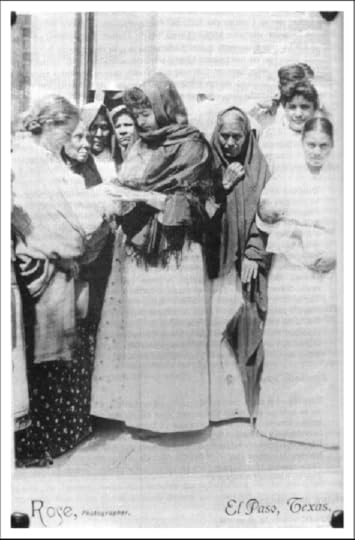
Queen of America picks up after Don Tomas and Teresita emigrate to the U.S., first to Nogales, Arizona, then on to other cities, most notably El Paso, Texas, where word of her healing powers draws thousands of the poor and sick to be cured.


She travels to many other cities, becoming somewhat of a popstar and blossoming into a beautiful young woman. I won't say more for fear of spoiling other readers' discovery of this wonderful story. But not to fear, it is written with the same momentum, humor and tenderness, and cast of thousands as The Hummingbird's Daughter. I didn't want to say goodbye to these people at the end of the first book, and I was left in tears at the end of this one.

Urrea has become a favorite author after reading three of his books, including the outstanding The House of Broken Angels. I say you can't do better than to listen to him tell his own stories in the audiobooks, but fair warning - take notes or have the print copy handy to keep track of that cast of thousands!

Why I'm reading this: Buddy read with IRL reading buddy, Diane. We both loved The Hummingbird's Daughter, so have been eager to get to this follow-on story. I love listening to Urrea tell his stories!
Profile Image for switterbug (Betsey).
936 reviews1,494 followers
November 30, 2011
Dickensian in scope, this ribald novel is peopled by the humble and the haughty, the meek and the mighty--pilgrims, prostitutes, yeoman, warriors, cowboys, vaqueros, royalty, revolutionaries, financial exploiters, gamblers, tycoons, corrupt politicians, drunks, rogues, and outlaws. It's gritty, bawdy, tender, and tumultuous, and sometimes turgid, as it meanders down several long and winding paths. When it stalls at intervals, patience and the love of prose and colorful character will keep the reader fastened. This will appeal to fans of high adventure, mixed with folktale wisdom and mystical fantasy. Big, vast skies and rough and tumble travel, this is an unforgettable story of love, purpose, and redemption.

This is the last paragraph of my review. Full review is on MostlyFiction--
http://bookreview.mostlyfiction.com/2...

Profile Image for Susi.
64 reviews5 followers
February 15, 2014
This review of Queen of America originally appeared in The Washington Independent Review of Books on January 12, 2012. Posted to Goodreads on February 15, 2014, as the link is currently dead.

Queen of America, the long-awaited sequel to 2006's The Hummingbird's Daughter , is the culmination of 26 years of research and writing by Pulitzer Prize-finalist Luis Alberto Urrea ( The Devil's Highway: A True Story ). Based on the life of his great-aunt Teresa “Teresita” Urrea, the Saint of Cabora, the novels chronicle her ascendancy as a purported saint, beloved healer, muse of revolutionary fervor and, finally, as a stranger in the strange land of the United States at the turn of the 20th century.

While The Hummingbird’s Daughter concerns Teresita’s life in Mexico, Queen of America is an immigrant story, complete with the wistfulness of missing home and the wonder of discovering someplace new. An anticipatory prologue describes Teresita’s world, which expands from her family in Arizona and Mexico to the wider United States, from sea to shining sea. It is a fitting analogue to the painful separation that every immigrant experiences, as she leaves the known for an unknown life in a new country.

The novel traces Teresita’s adventures from Arizona to Texas, California, Missouri, New York City and back again. Still venerated as a saint, pushed by fellow exiles to inspire rebellion, and subject to the occasional assassination attempt courtesy of Porfirio Díaz’s corrupt Mexican government, Teresita struggles to reconcile the life she once had with the life she now must live. Throughout, she is surrounded by the people she counts as family and those who flock to her, drawn by her mysticism and fame. With a large cast of distinctive and enjoyable characters, both historical and fictional, the novel is epic in scope.

What drives this novel are the characters and their relationships, conveyed through funny repartee, exasperated arguments and affectionate recollections of each other. Teresita’s father, Tomás, finds living with a saint exhausting even though his love for Teresita dominates all. Lauro Aguirre, friend to Tomás, urges Teresita to lead a rebellion, but only manages to bemuse her with his tirades — or enrage her when he hawks images of her, claiming they are powerful amulets. John Van Order, a romantic interest of Teresita’s, is a flawed character whose love and resentment for the saint drive the last third of the novel.

But Queen of America is also about Teresita’s struggle to grasp control in her new world. While she feels called to help people, she nonetheless wonders what life would be like were she not saddled with this obligation. Teresita’s pushing of her sainthood’s boundaries, equal parts spirited and tentative, leads to an unhappy break with her father, forcing her out of Arizona to traverse the rest of the country. Believing that she is unable to go home, Teresita instead resolves to “take God’s power to all of America.”

Teresita’s powers, attributed to sainthood, stem from the readily observable: the land, the flora that can be beneficial to health, and her tremendous empathy toward those she encounters. Teresita’s magic is less about miracles, and more about understanding the humanity of those who seek her out. She recognizes this and is determined to help to those in need. However, caught up in the dynamic of growth and change at the turn of the century, Teresita loses sight of what’s real and important.

Ice cream, the World’s Fair, Ambrose Bierce, Geronimo and high-society parties in New York City — Teresita is overwhelmed with these experiences and the immensity of her new country. Her loneliness and unhappiness become proportional to her increasing fame: no matter how she struggles for love and comfort, they are elusive. Separated from her family, unwilling to return out of shame and regret, Teresita epitomizes the uncertainty and difficulty of the immigrant who needs to reconcile and make harmonious the incongruent experiences and values of past and present. Even in the 21st century this question lingers for many.

Urrea is masterful at including funny and true-to-life instances of adaptation to life in the United States. Even small details are simultaneously touching and hilarious. When Teresita’s father and friend Lauro sip Arbuckle’s Coffee to chase away their perpetual hangovers, Urrea points out the typical “… Mexican spin. They called it: Arr-BOO-kless.” It’s an affectionate nudge that continues with other instances of Spanglish lexical borrowing. For instance, my grandmother also used “panquéquis” for “pancakes.” In moments like these, Queen of America made me long for what is physically lost but forever captured in my heart.

The novel is brilliant and funny, with biting commentary on turn-of-the-century (and sometimes contemporary) America and the process of adjusting to life in a new country. But the novel also houses a soul exemplified by the love that the characters radiate, the intensity of their memories, and their alternatively exhilarating and confusing new experiences. Forged by Urrea’s unflinching imagining of his great-aunt’s life, the truth that each character speaks or comes to know weaves a beautiful tale of love, loss and the hope of redemption in a new land.
Profile Image for Book Concierge.
3,078 reviews387 followers
August 30, 2022
Urrea picks up where he left off in The Hummingbird’s Daughter and continues the story of his great aunt, Teresita Urrea, “The Saint of Cabora” or “Mexican Joan of Arc,” who fled the 1892 uprising in Mexico with her father, Tomas, to the relative safety of Arizona. But the Mexican government, fearing that she was still fomenting revolutions sent a series of assassins to kill her. And yet pilgrims continued to flock to her, for the tales of her healing powers would not abate.

Trying to find her way she travels across America, from Arizona to Texas, California, St Louis, and New York. She encounters physicians, journalists, famous politicians and tycoons, even European royalty. She also finds love … of a sort … sometimes with decidedly unworthy men. She begins as a naïve, sheltered young woman who wants nothing but to gather herbs and help the women of her area as a midwife / healer. Teresita is in turns sheltered and looked after, abused, taken advantage of, earning and taking charge of her celebrity, and finding peace. She is best served when she listens to the women around her.

As always, Urrea’s writing is full of the mystical and includes many references to indigenous culture (here the Yaqui). Set against the backdrop of historical events in the late 19th and early 20th centuries, he gives us a woman who has earned a place in history and legend.
Profile Image for Ann.
364 reviews122 followers
July 23, 2024
I continue to love Urrea’s beautiful, special writing in this sequel to The Hummingbird’s Daughter. This novel continues the story of Teresita, an indigenous (Yaqui) Indian from northern Mexico, who had powers to heal and was, therefore, loved by the People and feared by the Mexican government. She became a saint in Mexico and was exiled to the United States, where she and her father landed in Arizona. This novel continues the story of the efforts of the Mexican government to irradicate her and the Yaqui people, but primarily moves on to describe her interesting life as a saint in the United States. We follow Teresita through Arizona (where the remainder of her family settles) to El Paso, San Francisco, St Louis and New York. We watch as she succumbs to the wiles of a really awful, deceitful man and then, later, as she has a relationship with a slightly better man who, nevertheless, uses her to further his own self interest. She falls into the power of a consortium, the members of which desire to make money from her powers, and also, for a period of time, becomes the “darling” of New York society.
Throughout it all, Urrea’s lovely, seductive and descriptive writing sets the tone of the story. Although there are fewer descriptions of nature and ranching (which I so loved in the first novel), the settings are excellent and the characters are wonderfully and fully continued and changed as they age (there are wonderful contemplations of aging and life choices). Although I did not love this novel as much as Hummingbird’s Daughter, I unquestioningly love Urrea’s writing style and descriptions. For me, his portrayal of the end of Teresita’s life was not only incredibly beautiful and moving – but will remain with me for a long time.
PS – There are a fair number of untranslated Spanish phrases in this novel (as in his others). This is great for me, but may not work for some readers.
Profile Image for Orbs n Rings.
248 reviews42 followers
January 12, 2012
Live, love and laugh along with the Queen of America and her menagerie of characters.

As a first time reader of this authors work, I was quite surprised by Urrea's writing style. His Queen of America is definitely not what I expected, in fact it was better than I expected. The main character of this book, Teresita, on who the story is based, actually existed, although most of the book is fiction. Urrea has a pre-sequel to this book, which I have not yet read, however this did not affect my reading of Queen of America, as it did not read like a sequel. I actually was completely surprised to learn Teresita was actually a real healer in her time back in the early 1900's instead of a fictitious character. This I did not note until after I read the notes and acknowledgement section at the end of the book.

Urrea's quirky style of writing and his list of characters remind me of a western-style movie with comedy scattered throughout. Teresita, her family, and friends are all characters one quickly feels comfortable with and the ongoing saga made it was difficult to put this book down. Being of Hispanic descent but not Mexican, I understood some of the Mexican words scattered throughout the book, while other times I had no idea what the word might mean. However, this did not in any way keep me from enjoying this book and I laughed out loud many times throughout this book. At other times it I was so caught up in the characters it was as if I was family. Teresita seems like the average poor Mexican, however, she also has a gift of what this generation may call healing of the hands. A term that back in the 1900's was considered by some to be witchcraft and at times she is ostracized for it. This book was an amazing adventure of love, laughter, pain and sorrow as Teresita lives her life, at times traveling across the continental United States. Urrea's words seem to carry you, when you feel the heat of the desolate desert or the scraping of the horse between your legs, while winding through the hills of Arizona. At other times you are riding on a windowless, dusty train through hills and valleys of the Old West with awe and wonder at the first glimpse of a creek bed or river, or maybe even the ocean. What may happen next? The wonders seem to never cease for what Teresita's next contingency may be. Yet in the end, Teresita finds exactly what she is longing for.
Profile Image for Carl R..
Author 6 books31 followers
May 17, 2012
You may not have been wondering, as I had, what happened to Saint Teresita after the central figure of The Hummingbird’s Daughter saved her fleeing family from extermination by standing atop their train, arms outspread, hair flowing in the breeze, as it chugged through a narrow defile on its way from Mexico to Arizona, escaping attack only because the marauders feared for their very souls to assault the legendary young girl who offered herself in such a sacrificial pose. Then The Queen of America appeared on my Kindle as a birthday gift soon after its publication and wonder replaced the wondering.
We find the Urrea’s--not the author, but his ancestors--Teresita and her father, Tomas, ensconced in mode
st circumstances in Arizona desert mountains. lt’s a refuge from enemies as well as from Teresita’s followers who have exhausted the family seeking healing and blessings. Tomas maintains an income from his Mexican holdings, and they remain in contact with their cousin in El Paso, who makes a living publishing a newspaper devoted to the overthrow on the Mexican dictator Diaz.

The peace doesn’t last long. Assassins appear along with pilgrims, and the world returns to essentially the same turmoil they fled from in Mexico. However, they are not in Mexico, they are in turn-of-the-twentieth-century America, a yeasty mix of new politics, religion, business, and technology. Before long, Teresita’s healing turns into a commercial enterprise, and we commence an entertaining and meaningful journey from El Paso to NYC and points in between, during which we experience a host of new-fangled gadgets up to and including a flying machine, hear a montage of popular melodies, and feel what it’s like to become a stranger in a strange land.

In many ways, The Queen of America is a coming of age story about Teresita’s emergence from adolescence to adulthood. Even a saint--a title she constantly denies--is subject to the same errors of passion as the rest of us mortals, and thanks to the power of Urrea’s prose--the author’s, not his ancestors--we experience the joys and the consequences of her mistakes right along with her. Her father, Tomas, remains his stubborn, stormy self, and the conflict between father and daughter reaches nearly the proportions of Greek tragedy before the book is over.

Together, I see Queen and Hummingbird as a grand hymn to passion--passion and magic of the spirit of the kind that appears in the person of Huila, a sort of bruja-Virgil who can take us to exotic, dangerous, and joyous realms--if we posses courage and folly enough to follow.
11 reviews
January 1, 2012
I've been waiting for this to come out for over a year! The prequel, "The Hummingbird's Daughter" is one of the best books I've ever read. And I have yet to find a Urrea book I dislike. Needless to say, I have high hopes for this.

Post-reading: happy to report this book did not disappoint me. I loved watching Teresita become a wife & mother, and try to figure out her role in the U.S.
Profile Image for Richard Thompson.
2,932 reviews167 followers
August 29, 2021
I am a great admirer of Luis Urrea. I thought that "Into the Beautiful North" and "House of Broken Angels" were both fantastic. Both of those books feature characters who are charismatic and undeniably heroic though deeply flawed, both exist in worlds that straddle Mexico and the US, and both made me feel that their protagonists were my brothers and sisters with whom I felt a strong connection despite the yawning gulf between their world and my own. Mr. Urrea is working with similar raw materials in this book, and I think that he was reaching for much of the same magic that he performed so well in the other two books, but for me it didn't work as well in this one. Perhaps this is because the subject matter here is historical and personal, as it tells the story of Mr. Urrea's own family, so the that he was constrained by a combination of historical fact, family feeling and emotions that he could not completely harness. But that's just speculation. I don't know why, but the overall impact, despite the similarity of themes and characters was not as strong for me here as in his other two books that I loved.
Profile Image for Marc Gerstein.
600 reviews202 followers
April 25, 2020
It’s hard to be a saint. It’s hard to live with a saint.

This is the sequel to Luis Urrea’s epoch novel “The Hummingbird’s Daughter,” in which he gives a fictionalized account of the life of a distant relative, Teresa Urrea, or Teresita, also known as the Saint of Cabora. At the end of the first novel, Teresita had her father are allowed by the Diaz government to leave Mexico and live in the US; they feared executing them would have enraged many in the northern part of the country.

As it turned out, banishing a saint (a renowned healer and inspiration to rebels) was easier said than done. Others north of the border advocated in her name in Mexico and the Diaz folks made unsuccessful attempts at assassination. Eventually, though, Teresita settled into her life as a healer in the U.S. — sort of. In the late 1800s-early 1900s, as now, miracles inspire business ventures and eventually, Teresita gets caught up with a “consortium.” And as she leaves childhood behind, she finds it hard to just be a saint. We see her father, a great man in Mexico, the “Sky Scratcher,” shrink in his new life and Teresita expand, but not all is great.

A lot of sequels disappoint. This one didn’t.
Profile Image for K.R. Gastreich.
Author 7 books354 followers
September 20, 2020
I picked up this book without having read The Hummingbird's Daughter. That may have been a mistake. Queen of America is beautifully written; through his prose, Luis Alberto Urrea paints a vivid, engrossing picture of the borderlands during the late 19th century - skillfully weaving together threads of violence, revolution, tranquility, abundance, scarcity, and humor in a single story.

My disappointment in the narrative stems from the title and the back cover description, which led me to believe this was about Teresita, the Saint of Cabora. While Teresita figures largely in the book, the novel focuses more on her father, Don Tomas. Tomas is colorful (to say the least), but I've found him to be largely unsympathetic. Teresita seems squashed as a character in his presence. I get the sense that as readers, we aren't allowed to see her except through her father's eyes: as an uncertain girl with a bothersome gift. Her changing identity as she embraces womanhood, her passions, strengths, and desires, even her anger at her father and her miraculous gift, are all relegated to the background of Tomas's personal journey, his regret at having left his wealth and numerous lovers behind in Mexico.

On the whole, "Queen of America" is not about Teresita, but about Tomas and the other men of her new home. In fact, female characters are rare in this novel and when they appear, they are blips on the radar made available for the sole purpose of romance or sex, or making dinner. No wonder Teresita seems so despondent. I am, too. At the time of this review, I'm 200 pages in. I'm going to shelve this for the moment, maybe come back to it later. Not sure who I'd recommend this to. Maybe try something else by Urrea first; Queen of America was not a good place to start.
Profile Image for Catherine.
1,316 reviews87 followers
November 13, 2012
I didn't love this book as much as it's predecessor, The Hummingbird's Daughter, but it was still very good. It's just such a different book; where HBD was the epitome of magical realism, QoA is more historical fiction. Perhaps that difference is due to being set in the U.S. instead of Mexico, or to Teresita growing up, or to the increased historical material.

The first third or so of QoA moves very slowly, reflective of how Teresita's life is just treading water at that point, trying to keep ahead of assassins sent by the Mexican government and trying to coexist with her father, Tomas, who has given up everything for her and whose resentment is growing. There are a few bait and switch moments in this first part that add a little excitement, but overall it was almost painfully slow at times...especially since I read this immediately after HBD.

Then things pick up speed and (for Teresita) spin out of control, forcing Teresita away from her home and family. Overall, this book made me really sad -- Teresita lost so much, including herself. Knowing she was a real person just makes it that much sadder.
Profile Image for Elizabeth Moran.
1 review
October 8, 2017
I love love love this book which I read slowly because I didn't want it to end. I bought it a couple years ago and have been hanging on to it to read at the "right" time. As someone who usually lives in Tucson (I bought it at the Festival of Books and had it signed by the author who is always so gracious) - this year while I am living in New Zealand seemed like the right time. The descriptions transported me back to the desert southwest, and the characters had me turning to Wikipedia to learn more about the history of the time (ornithopter, victor ochoa, Lauro Aguirre, etc). Page after page filled with the most beautiful lines - "Everyone and everything that had touched her had been only a tide of some unseen ocean" - with a bigger story about the place for magic, miracles, and saints in our world. As an American Cultural Studies major in college, I wrote my thesis on The House on Mango Street and The Last of the Menu Girls, but if I were doing it in 2017 I would put Queen of America front and center. I will read anything by this author (and have), but it will be hard for anyone to write something I will love more than Queen of America.
4 reviews
March 4, 2021
It is satisfying to have this resolve after "The Hummingbird's Daughter." The book was enchanting however not as much as it's predecessor... maybe because it is in the turn of the century which you could argue global-capitalism destroys magic anyways. The lessons of life are profound (especially being a young maturing woman) love vs. infatuation, desire to be romantically loved, freedom and holding true to one's values. You should absolutely read "Queen of America" if you have not yet!
Profile Image for Elise.
1,087 reviews73 followers
August 8, 2019
Queen of America is a beautiful and beautifully written book that is a coming of age story, but it is also so much more. It is the story of America at the turn of the century (19/20th), and it raises questions about the place of faith and sainthood in the modern world. Sainthood might also be viewed as a metaphor for the powers of our youth and what we do with those powers after our life undergoes a series of radical changes. The story of Teresita is also a story of families, especially fathers and daughters, as well as a love story about how our relationships with our parents direct the course of our choices in love. Teresita, the Saint of Cabora, seems the polar opposite of her womanizing, alcoholic father, Tomas, and Urrea addresses these difference with humor, love, sadness, and piercing psychological honesty and truth. Queen of America is also a story of borders, homesickness, and revolution. Is Teresita a mystic, a healer, a visionary, a revolutionary, just an ordinary woman or all of the above? Read it and find out. I loved the story and Urrea's beautiful writing, but I thought it dragged at times. Maybe I just started it at too busy a time in my life, but I still recommend it. The fact that Teresita and her father Tomas are exiled from Mexico and sent over the border to America as a punishment for inciting revolution, even though the Saint is simply preaching God's love, is interesting and timely given what is happening now at our Mexican-American border. This book will give you a great deal to think about and discuss.
Profile Image for Denise Hatcher.
318 reviews4 followers
October 17, 2025
I read The Hummingbird’s Daughter years ago and remember enjoying it. I enjoyed this book, a continuation, as well. Still, at times, I put this book down to read others.

Teresita is a young healer who faces many challenges, but remains a good person who genuinely cares about others. There were times in the book when her choices made me angry because I suspected they would lead to unexpected difficulties and, or obstacles. Still, I enjoyed her character and her character development immensely. There were so many times during these 485 that I was very thankful to be a woman born when I was born, and to have the life I have.

Having read other books by Urrea, I remember his ability to weave fiction and non fiction together to tell empowering stories. Queen of America is no different. As he shares on page 486, “The story is not the history.”

I believe there is so much in life we will never understand, such as the healing powers of Teresa Urrea and her teacher Huila. Reading challenges me, especially books such as Queen of America, to remember that not everything in life is black and white, or fair.
Profile Image for Distant Sounds.
284 reviews
May 28, 2018
This was as magical and wonderful as the first book, 'The Hummingbird's Daughter.' Urrea is so poetic, so mystical, and so beautiful with his language. His descriptions are so vivid, like paint being splashed across a vast canvas. He is also a masterly storyteller. His characters are deep and profound, drawing on your emotions as the long journey unwinds. He is easily one of my favourite writers.

Profile Image for Maya.
42 reviews3 followers
April 21, 2020
A masterpiece. Urrea is the King of characterization.
Profile Image for Christylove.
41 reviews
October 31, 2021
I listened to the audio, narrated by author Luis Alberto Urrea. I listened right after completing “The Hummingbird’s Daughter”, part 1 of this saga. What a wonderful story. Rich, full of so many emotions. I’m sad it’s over.
Profile Image for Lindsay.
1,236 reviews
August 16, 2018
Real talk: it's been long enough since last reading The Hummingbird's Daughter, so I've lost a little of the plot. I also listened to this over the course of a cross-country move and packing/unpacking, so I've been a little distracted to say the least. But I did enjoy it and it kept me company during many ordeals, and for that it will hold a special place. The descriptions of Teresita's travels are what grounded me every time, and that ending is gorgeous.
Profile Image for Alan.
1,268 reviews158 followers
September 4, 2025
Rec. by: Previous work
Rec. for: Saints and sinners, for we partake of both

Just a few weeks earlier, I had finished reading the amazing first half of Luis Alberto Urrea's historical fiction about his ancestral relative Teresita Urrea, the Saint of Cabora... but I was dubious about picking up its conclusion—as I said then, I didn't want the "silvery sheen of The Hummingbird's Daughter to be tarnished by a followup which (I am also informed) was not nearly as satisfying."

However, I am also sometimes susceptible to believing in serendipity and omens. When a copy of Queen of America presented itself to me while I was traveling, sitting demurely on the shelf in the small used-books section of Valley Bookseller in the town of Stillwater, Minnesota, I felt compelled to buy it despite my misgivings. And I'm very glad I did, after all, not least because buying it also sparked an animated conversation with the folks running that fine independent establishment about Urrea's work and his visits to Minnesota. (NB: This is an unsolicited endorsement.)

Queen of America is, I'll admit, much sadder than its predecessor. After Teresita Urrea and her father Tomás go north into exile in the United States, her life encompassed many sorrows, despite (or rather because of) her increasing fame and commercial success ministering to the wealthy who welcomed her into New York City's society. This is Teresita, transplanted:
In America, you needed different dreams. And she did not yet know their language.
—Prologue, p.5


And however much her circumstances changed, it often seems that she has just traded one set of tasks for another:
She knew that when her work was done, her work was not done.
—p.41


Urrea's prose throughout Queen of America is just as sonorous—and often just as pointed—as in The Hummingbird's Daughter... this review, in fact, consists largely of quotes from the book, reproduced in order, that I found striking. Like this:
Huila had often told her that people sought God on mountaintops, but mountaintops were too small for anybody to stand on. If you really wanted to find God, you would have to stand in the mud like everybody else. All this noise. How could anyone hear anything?
—p.50


Although Teresita's and her father's flight to the States was prompted by the fears of Mexico's dictator Porfirio Díaz that the Saint of Cabora would become a revolutionary leader, Teresita herself wanted no part of such conquest.
"Revolution is God's work."
"Healing is God's work," she demurred. "Childbirth. Making honey. Not shooting people."
—Don Lauro Aguirre and Teresita, p.144


Tomás, in particular, used to ruling over the expansive resources of Rancho Cabora, had a hard time adjusting to their reduced circumstances:
There was no room for most of their things, so Tomás rented a storage shed around the corner. The stench of Tomás's cheese immediately attracted mice, which began tunneling through their belongings. They dug comfortable tunnels in the Parmesan and ate themselves to sleep.
—p.162


Now, it may be sacrilege of a sort to compare these novels with Monty Python's Life of Brian, but Urrea (whether Teresita, or Luis) often seems as horrified by the violent adoration of the Saint's followers as Brian is by his:
"May God guide us," Manuel said.
"Let us," added Benigno, rising and dusting off his pants, "kill them all."
—p.166


It was inevitable, perhaps, that Tomás and Teresita would eventually part ways. I, too, have felt this:
He was struck mute with the silence of every father of every daughter, that moment when the words cannot come, and what wanted to be said would forever remain silent.
—p.240


Teresita herself is not immune to crises of faith, which seem to come to her more frequently—or to strike more deeply—in Queen of America:
"I have failed."
"Failed at what?"
"Failed at my calling. My work."
"Really? One mistake is failure? Damn. It's a good thing I didn't know that."
—p.267


Tomás, himself an only recently naturalized U.S. citizen, expresses political convictions that come across as even more bitterly ironic in these benighted times:
In spite of the landslide victory of his candidate, doom seemed to dog his steps. He hated the news every day; the American population had swelled to seventy-six million. Soon there wouldn't be a place for a man to stand. And worse, immigrants poured in by the millions. Why, just that morning, an editorial stated that nine million foreigners would enter the country by 1901. He wrote letters demanding that the borders be closed, that the European trash be stopped from sullying the Americas any further. Germans, Italians, Irish, Chinese, the Hebrews—all taking over his country. It was getting so that a man could not hear good old Spanish anymore.
—p.290


Heh... I'd had no idea, when I name-checked Ambrose Bierce in my recent review of Urrea's The Water Museum, that he'd show up here too, on the page (in the flesh, as it were), midway through Queen of America.

Teresita remained observant about the differences between faith and the performance of faith:
God did not deliver grace any quicker to a peon in mud than He did to a millionaire in a penthouse—it was simply that the millionaire, though greatly more in need than the peon, did not notice grace when it came. Why would he? Cigars, whiskey, grand beds, and gold wallpaper were all more visible than God. You could put your arms around a bawdy woman, but you had to intuit the Holy Spirit. No. It was all mud. Some mud was more glittery, that was all.
—p.317

—and, later—
"You can stack two thousand Bibles on an ass's back," she said. "And he would still be an ass."
—Teresita, p.364


I thought this line was sheer poetry:
As the sky burned pink at its bottom hem, she rose and attended to her belongings one last time.
—p.375


Sometimes Urrea's historical research runs deeper than I expected... I'd thought his mentions of New York's "deafening El tracks" on p.400 and later on might be an error, having only heard of Chicago's elevated trains... but a little digging showed me that the IRT Third Avenue Line was also known as the El, back when it was new...

Queen of America is, after all is said and done, an historical novel, and Urrea give us endings, as much as are known, for Teresita's story and for the stories of those around her. That, too, is sad... but it is an instructive sadness, a closure that the Saint of Cabora's tale richly deserves.

Urrea's own Notes & Acknowledgements are also illuminating:
Since the first book came out, I have met more than a half dozen reincarnated Teresitas, and ten or twelve channelers who channel her from Heaven. I am led to believe that in the afterlife, one can go condo and inhabit all sorts of interesting new bodies at once. And, being spirit rather than flesh, one can also be in Heaven and Texas at the same time. I often wonder what Tomás Urrea would have made of all this.
Luis Alberto Urrea, p.489


And—this edition, at least, of Queen of America actually winds up with recipes you can use for your own version of "Luis Urrea's Instant Book Club Party"!
Profile Image for Kayla.
125 reviews14 followers
March 11, 2018
My only complaint: the last hundredish pages felt a bit rushed to me, so much time was covered with not enough attention paid to it. Besides that, I loved it.
Profile Image for Jessica.
64 reviews
November 27, 2011
Luis Alberto Urrea has done it again.
Urrea has released his new book, Queen of America (Little, Brown), the sequel to his brilliant 2005 novel, The Hummingbird’s Daughter. And while the tone of the books is different, the book is classic Urrea.
In Daughter, Teresita Urrea (the author’s great aunt) discovered her healing powers, earning her the name “Saint of Cabora” and leading an uprising of Mexican revolutionaries that prompted her and her father to escape to the north. America describes her journey to the United States, taking her from Arizona to El Paso to California to St. Louis to New York City. Teresita finds love along the way, but she also realizes the negative effects of being a celebrity, such as in this passage when she thinks about how her friends think of her now:
“They had once been her neighbors and friends, and then they become her followers. She felt a small chill of horror. Followers! It was terrible to have followers. But it was more terrible that part of her liked it.
Of course, she could not control her fanatics, only herself. Balance, again. When she had followers, she was watched over by the government and the newspapers. People copied her words in notebooks. She caught herself wondering what she had said and worrying all night if this time her careless utterances would lead to someone’s death or some outbreak of madness she could not have foreseen. Sometimes you just want to speak without measuring your words! Sometimes you want to laugh and sing! Sometimes you just want to ride your horse!”
That passage shows why Urrea is such a great writer. He’s just so much fun to read. Besides his beautiful descriptions and witty dialogue, he also creates some memorable characters, such as Teresita’s father, Don Tómas. His selfishness, arrogance and lack of self-awareness brings some of the biggest laughs in the book.
Check out this dialogue between Teresita and Tómas:
“ ‘I never said I was a saint … I am a prophet.’
‘Oh God, no,’ he said. ‘What you are is nineteen years old.’”
Or read this conversation between Tómas and a businessman seeking to exploit Teresita:
“‘You will provide for her with your Consortium profits. You incorporate. Partners. But structured so that she can honestly say she took nothing. It will honor her, shall we say, religious beliefs.’
‘I love America,’ Tómas said.”
But Tomas is absent from the last half of the book as Queen focuses mostly on Teresita’s journey. And then the book becomes somber, as Teresita realizes that not everyone has the best intentions for her and she yearns to return to her homeland. The reader becomes a bit melancholy, too, as another great book comes to an end.

This review appeared on my blog, http://hispanicreader.com.
Profile Image for Sara.
264 reviews12 followers
December 21, 2011
ARC received through the Goodreads First Reads program.

I made a bit of a blunder when I received this book--I didn't immediately find a copy of The Hummingbird's Daughter to read first. As a result, I felt like I was plunked down in the middle of a story, and it took a bit of flailing around to find my place and grab hold of the narrative thread. Granted, I still have not read The Hummingbird's Daughter, so I can't be certain that's why I didn't enjoy Queen of America as much as I expected to.

Teresita is 19 when the story begins. She and her father are living in Arizona, away from their home in Mexico. At the beginning of the story there are assassins after Teresita, but that sort of threat isn't present throughout the whole book. I believe that's a holdover from the first book, but it felt a little disjointed to me.

One device I found interesting was the way the passage of time sped up. At the beginning of the book, Teresita is 19. Time seems to pass slowly through the experiences at the beginning of the book, then speeds up as she travels to San Francisco and beyond under her contract with the Consortium. This seemed to be indicative of both how time speeds up as you get older and how urban America is more of a whirlwind of activity than rural Arizona or Mexico.

I love the way Urrea writes conversations. They're beautiful, and pick up the pace a bit in an often meandering book. The book, as a whole, doesn't seem to follow a well-structured story, but is more of a series of medications on different episodes in Teresita's life. In this particular case, that style didn't work for me very well.

I wanted to like this book much more than I actually did. I felt lost not knowing the backstory, and although some of the gaps were filled in there were still enough of them for me to really feel I was missing things. The story didn't really grab me, either--largely because I didn't feel strong connections to the characters.

Teresita, the Saint of Cabora, was a real woman. What's more, Urrea is a relative--Teresita was his great-aunt.
Profile Image for drey.
833 reviews60 followers
July 18, 2016
I loved Luis Alberto Urrea’s Into the Beautiful North so when I found out about the opportunity to review Queen of America, I jumped.

drey’s thoughts:

Queen of America is a long and rambly story of Teresita Urrea – the Saint of Cabora – after she escapes Mexico and lands in the United States – and chronicles her journey from healer to wife to mother.

As you follow along on her travels, you often forget that Teresita is only barely out of her teenage years. She learns that fame is fleeting – wealth and love as well, and family ties can bind you tighter and longer than you may want. And everybody wants to use you.

The storytelling lulls and rocks you as it takes Teresita from coast to coast – much like the trains she rode on. Her emotions are hidden but her thoughts are frequently entertaining, especially in her conversations with Huila, her old mentor. One of my favorite passages is when Huila scolds Teresita for moping:

“You have learned you are not perfect. You are no different from any other person. But God still pours His power into you. No one can know why. Frankly, I am irritated with you. But God believes. He’s strange that way. God believes in you. So wake the hell up and go forward. There is no time left for lazy moping. Not now. Child! If you were born to be a flood, you cannot insult Heaven by insisting you are a drought.”

Some parts of Queen of America went by slowly, but overall this is a lyrical story of a young woman trying to figure out her way in a strange new world – one of America in the late 1800s where the Mexicans living along the southern border were as proprietary of their America as the gringos. Take your time with this one, it’s a perfect read to curl up with on a cold dark winter evening.

drey’s rating: Excellent!
Profile Image for ROBYN MARKOW.
433 reviews51 followers
February 8, 2024

Have tissues handy for this book, it’s a sadder but wiser Teresita in this one . This sequel is beautifully written & the characters are ,once again, vividly depicted. There’s also a lot of earthy humor in this one as well. There’s less of the wonder & magical realism of the first book , but that’s intentional on author Urrea’s part( yes, he’s distantly related to the MC. ) I gave this book 4.5 stars since I felt it dragged a bit in places but other than that , it’s a worthy successor to “ Hummingbird’s Daughter “ & can be read as a stand-alone though I feel that u should read both books to get the full scope of the saga of Santa Teresita de Cabrona.
Displaying 1 - 30 of 301 reviews

Can't find what you're looking for?

Get help and learn more about the design.