Jump to ratings and reviews
Rate this book

Emperor and Galilean: a World-historic Drama

Rate this book
Emperor and Galilean is a play written by the renowned Norwegian playwright Henrik Ibsen. The play is a world-historic drama that tells the story of the Roman Emperor Julian the Apostate, who ruled from 361 to 363 AD. The play is divided into two parts, with each part containing five acts. The first part of the play focuses on Julian's early life and his rise to power, while the second part explores his reign and his eventual downfall.The play is set in the fourth century AD, during a time of great political and religious upheaval in the Roman Empire. Julian, who was a devout follower of the pagan religion, becomes emperor after the death of his cousin Constantius II. He embarks on a campaign to restore the ancient pagan religion and to rid the empire of Christianity, which he believes has corrupted Roman society.Throughout the play, Julian is depicted as a complex and conflicted character, torn between his desire to restore the pagan religion and his duty as emperor to maintain the unity of the empire. He is also haunted by the memory of his Christian upbringing and the guilt he feels for betraying his faith.Emperor and Galilean is a powerful and thought-provoking play that explores themes of religion, power, and the struggle between tradition and progress. It is considered one of Ibsen's most ambitious and challenging works, and is a must-read for anyone interested in the history of the Roman Empire or the works of Henrik Ibsen.This scarce antiquarian book is a facsimile reprint of the old original and may contain some imperfections such as library marks and notations. Because we believe this work is culturally important, we have made it available as part of our commitment for protecting, preserving, and promoting the world's literature in affordable, high quality, modern editions, that are true to their original work.

364 pages, Paperback

First published January 1, 1873

Loading...
Loading...

About the author

Henrik Ibsen

2,328 books2,139 followers
Henrik Johan Ibsen was a major Norwegian playwright largely responsible for the rise of modern realistic drama. He is often referred to as the "father of modern drama." Ibsen is held to be the greatest of Norwegian authors and one of the most important playwrights of all time, celebrated as a national symbol by Norwegians.

His plays were considered scandalous to many of his era, when Victorian values of family life and propriety largely held sway in Europe and any challenge to them was considered immoral and outrageous. Ibsen's work examined the realities that lay behind many facades, possessing a revelatory nature that was disquieting to many contemporaries.

Ibsen largely founded the modern stage by introducing a critical eye and free inquiry into the conditions of life and issues of morality. Victorian-era plays were expected to be moral dramas with noble protagonists pitted against darker forces; every drama was expected to result in a morally appropriate conclusion, meaning that goodness was to bring happiness, and immorality pain. Ibsen challenged this notion and the beliefs of his times and shattered the illusions of his audiences.

Ratings & Reviews

What do you think?
Rate this book

Friends & Following

Create a free account to discover what your friends think of this book!

Community Reviews

5 stars
47 (26%)
4 stars
61 (33%)
3 stars
55 (30%)
2 stars
15 (8%)
1 star
2 (1%)
Displaying 1 - 22 of 22 reviews
Profile Image for Armin.
1,231 reviews35 followers
October 10, 2021
Auf religiöse Abwege geratener Kaiser wird von einem frommen Jugendfreund, der im ersten Akt des ersten Teils ein wenig rumjammert Dazwischen viel fauler Zauber und noch mehr Namen. In insgesamt 10 Akten treibt Ibsen jeden bekannten Namen aus der Epoche über die Bühne. Das Werk entstand wohl bevor der Autor die Psychologie für sich entdeckt hatte und wirkt wie der Versuch eines Sechstklässlers von Anno 1870 sich in aktiver Shakespeare-Nachfolge zu versuchen.
Unter ganz gewaltigen Defiziten in Sachen Psychologie und allerlei allzu demonstrativen Verbeugungen vor dem frömmelnden Zeitgeist leidet auch der von Felix Dahn und junger Gattin verbrochene Roman https://www.goodreads.com/review/show... aber der ist wenigstens zweidimensional, Ibsen liefert nur Pappfiguren.
Bin eigentlich stets Historiker und Literaturwissenschaftler genug, um mildernde Umstände bei allerlei nicht mehr zeitgemäßen Wertungen und Wendungen zu lassen, wenn die gute Absicht dahinter noch erkennbar ist. Aber dieses in schlechtestem Sinne konventionelle Drama wird weder der Epoche noch einem großartigen Außenseiter gerecht, der an sich und vollkommen verfehlten besten Absichten scheitern musste. Nur für Ibsenologen zu empfehlen, , die den Grad der Weiterentwicklung des Autors daran bestimmen können. Ansonsten absolute Zeitverschwendung.
Profile Image for Eddie Clarke.
239 reviews58 followers
October 12, 2022
I read the adapted script by Ben Power staged by the National Theatre in 2011.

Power radically condensed Ibsen’s epic drama to make it stageable. I quite enjoyed it, even if Ibsen’s conception of Julian’s character is very different to mine.

I think this would have been radical for the 19th century - Ibsen places Christianity and Paganism on the same moral level. This play is more interested in exploring how people’s beliefs shape their actions rather than determining which belief system is superior, or seeking to create any suspense about ‘who wins’ - we know that obviously from the start.

Ibsen is quite harsh on Julian, who rapidly becomes a bloodthirsty tyrant on assuming the throne and whose paganism leads him into reckless military decisions.

He begins the play dithering like Hamlet and ends it in epic bloodshed like Macbeth - as in Macbeth, Julian’s fate hangs on an ironically ambiguous prophecy.

I quite liked Ibsen’s indirect method of exploring his themes, and the way he foregrounds intimate personal questioning and debate but punctuates the drama with epic set-pieces - the play gives enormous scope for ambitious & megalomaniac staging.
Profile Image for Matthew.
1,227 reviews41 followers
October 3, 2021
Emperor and Galilean is a very significant Ibsen work, despite its lack of fame. It is the last of his epic works and his last historical play. It is autobiographical and the clearest summation of his opinions on religion. Ibsen himself said that it was his masterpiece.

For all those reasons, I am disappointed that I don't like it more. However, there is still much of interest within the play.

For his last historical play, Ibsen turns away from Norwegian history and back to Roman history, the subject of his very first play, Catiline. Catiline felt like reheated Shakespeare, and Emperor and Galilean clearly owes a debt to Shakespeare too.

There is a scene where Julian uses duplicitous eloquence to win over the soldiers, reminiscent of Mark Anthony's crowd-pleasing speech in Julius Caesar. Julian resembles Hamlet in the early acts, living in fear at a hostile court, before turning into MacBeth by the play's end, the ruler taking power by force and maintaining himself by oppression and tyranny.

However, Ibsen's play is a long way from Shakespeare in other respects. Like Catiline (and Earl Skule), Julian is another rebel who yearns for leadership. Of course, most of Ibsen's heroes are rebellious or iconoclastic. The political rebels are generally marked by vacillation and self-doubt, and perhaps that is why all three of these heroes are doomed to fail. In Julian's case, he does at least become Emperor, but is unable to impose the old Roman religions over his subjects, or to defeat the new Christian religion, finally dying at the hands of a fanatic.

The Wikipedia page provides a link to a rather poorly-written review which suggests that Emperor and Galilean may have influenced Hitler's behaviour. However, the argument is rather tenuous, since it assumes that Hitler was so besotted by the work that he even copied Julian's mistakes.

I mention this only because it does raise a troubling aspect of Ibsen's work. Ibsen often does seem to be enthusiastic about the strong hero who triumphs by an act of will. Weaker characters are pitiful and end up crushed and left by the wayside. I often wonder what Ibsen would have made of Hitler. Would his awe for powerful strong-willed characters have swayed him into unwise sympathy for the Nazi leader, or would Ibsen's more liberal tendencies have alienated him from the Third Reich? I guess we will never know.

However, the political intrigues in Emperor and Galilean are far less interesting than the religious discussions. Julian hesitates between two religions - the Roman religion of the past which promises joy and happiness, though perhaps of a shallow kind, or the new sober Christian religion which is intolerant and celebrates death, rather than life.

This is a debate that Ibsen will be having with himself throughout the rest of his plays. How to balance our sense of duty and seriousness with finding a joy for living? The two aspects are memorably captured in a scene where a procession of revellers from the old religion clash with a procession of prisoners from the new gloomier religion:

Apollo Procession (sings): Blessed to be cooled by a garland of roses/Blessed to be warmed by the light of the sun!
Prisoners: Blessed to die in a blood-filled grave/Blessed to enter the garden of heaven

We are left in no doubt of what Ibsen thinks of Christianity in the first scene where the Christians are seen bullying members of the older religion. Later, Julian is repelled by their humbug when they proclaim miracles from the body of his adulterous wife, and he chooses the older religion. He is doomed to fail. His attempts to live peaceably with the Christians are thwarted by their dogmatic acts of terror, and his attempts to repress them only make them stronger. Ultimately, it is their religion that will triumph.

However, the play discusses the idea of forming a new religion that will replace both. Julian fails because he wishes to return to the infantile older religion based purely on pleasure, rather than seeking to marry the best parts of both religions and form a new kingdom. This appears to be what Ibsen is looking for too.

The double-play is overlong and does not add up to Ibsen's best work, but at this stage of his career, Ibsen was incapable of writing something that was not immensely interesting.
Profile Image for Ali.
Author 17 books680 followers
May 1, 2007
ایبسن در "امپراطور و جلیلی" تلاش دارد نظریه ای را که با "براند" آغاز کرد، و در "پیر گونت" ادامه داد، روشن و بصورت نهایی ارائه دهد؛ جهانی نو که یولیانوس امپراطور، می خواهد از تعلیمات مسیح بسازد. نمایش نامه کمی گنگ و نارسا بنظر می رسد. از آنجا که این نمایش نامه ها مانند آن دو تای دیگر مورد استقبال قرار نگرفت، ایبسن راه نوشتاری و ارائه ی نظریاتش را تغییر داد. بنظر می رسد که خود او نیز از عدم موفقیت نظریه اش آگاه شده بود. پس از براند، پیر گونت و امپراطور و جلیلی، ایبسن دیگر نمایش نامه ی منظوم ننوشت و تلاشی نداشت تا شکسپیر پایان قرن نوزدهم باشد. این نمایش نامه ی ایبسن هم به احتمالی به فارسی برگردانده نشده است.

آثار نمایشی هنریک ایبسن مانند زندگی اش پر از فراز و نشیب اند. برخی منتقدان او را به راستی ستوده اند و برخی هرگز آثارش را نپسندیدند. ایبسن به معنایی که دکتر امیر حسین آریانپور در کتاب "ایبسن آشوب گرای" نوشته، چه در زندگی و چه در آثارش یک آنارشیست جلوه می کند. با وجودی که گفته اند از شکسپیر به این سو دوران تراژدی بسر آمده، برخی از منتقدان بر این اعتقاداند که ایبسن تنها نمایش نامه نویسی ست که برخی از آثارش مانند اشباح و هداگابلر به تراژدی به معنای ارسطویی و شکسپیری آن نزدیک است.
Profile Image for Michael P..
Author 3 books73 followers
June 7, 2011
My first time with this impressive play about the Emperor Julian's rise to power as an apostolate, only to be conquered, he thinks, by the god of Christianity durning his war against the Persians. Involved, dramatized rather than argued, and subtle, Ibsen shows how people find a way to cling to their beliefs to explain life no matter what turns their lives take. Fascinating and great, with some dull passages here and there.
Profile Image for Sindre Arder.
9 reviews
April 8, 2026
«Keiser og Galilæer» er stor skala dramatikk. I alle fall i sin lengde og tematiske mengde. Ibsen selv omtalte skuespillet som sitt hovedverk, selv om de lærde strides om det egentlig er dét. Stort, filosofisk, politisk og tidkrevende er det uansett hva en måtte mene om den saken.

For dette verket tar litt tid å lese. Ikke bare fordi det er dramatikerens desidert lengste skuespill (nesten dobbelt så langt som «Brand»!!), men også fordi det er store tanker som presenteres og som en må kunne fordøye dersom man vil henge med. Og selv med tiden til hjelp, kan jeg vedkjenne at jeg nok ikke forstår alt. Men det gjør ikke så mye, for i det store og det hele mener jeg «å fatte skissa» (for å bruke et nordnorsk uttrykk, oversettelse: «å forstå tegninga»).

Det handler gjennomgående om storpolitikk og makt, men også om den indre og ytre drakampen som finnes i hovedkarakteren, Julian, kring tro og religion. Verket viser oss også et klart eksempel på hvor kostbart det er å forsøke og omvende et helt samfunn i retning av ens egen tro og virkelighetsforståelse. Konflikt og krig blir - dessverre - ofte løsningen. Joda, ikke så langt fra det vi ser de gamle mennene med makt i vår samtids verden også «løser» tingene med. Dette er der skuespillet treffer meg aller mest. Den er - igjen: dessverre - relevant og tidløs i sin tematikk.

I tillegg vil jeg trekke frem Ibsens utrolig godt skrevne hovedkarakter. Keiser Julians stemme er godt spikket håndverk uten mange fliser eller skjevheter. Det er en thriller å følge hans prosesser i søken etter - det jeg tolker som - sannhet. Skal han velge å tro på den hedenske makt, begjær, forlystelse og filosofi, eller skal han gå i retning av galileernes tro, kristne livssyn og idealer?

Verket er likevel litt vel langt for min smak. Noen vil sikkert påstå at den holder interessen deres oppe hele veien, men det gjorde den ikke helt for meg. Jeg opplever tidvis stillstand og ønsker at handlingen skal drives videre. Det skal nevnes at det beskrives om verket at det er et idéhistorisk verk, heller enn et verk der handlingen i seg selv står sentralt.

Verdt å lese, men ha litt tid til rådighet - og muligens søkemotoren til Google tilgjengelig, dersom du ønsker å henge helt med i timen.
18 reviews
April 13, 2026
When I read multiple books at once, I usually try to keep them firmly segregated by genre and topic. I like to minimize the likelihood that the audio book I’m listening to at breakfast bleeds into the mental space occupied by the novel I page through at night. But even with the most disparate pairings, there are transcendent moments of mutual illumination. In my evening read, Henrik Ibsen’s rarely produced 1873 historical drama Emperor and Galilean, the spiritually tormented heir to the Roman throne, Julian, was wrestling with contradictions in the message of his kingdom’s reigning deity:

Everything I’ve ever done, Christ has been there, all the time, judging, commanding, the poisoned hypocrisy of the words themselves. Thou shalt not. Words that crush life…. When my spirit, starved of beauty, dreamt of the ancient world, Christ told me to look only at His one hard truth. Thou shalt not. When I felt the natural sweet yearnings of the flesh, Christ, the lord of self-denial, terrified me into chastity. Thou shalt not. Thou shalt not. Thou shalt not! Everything human, everything beautiful, forbidden. With Him, to live fully is to die. To love as we can and to hate as we must, both are sinful. And why?


The next morning, essayist John Jeremiah Sullivan's collection Pulphead jumped its boundaries to directly reply to Julian’s Christ-haunted tirade.

[Jesus] was the most beautiful dude. Forget the Epistles, forget all the bullying stuff that came later. Look at what He said…. There’s your man. His breakthrough was the aestheticization of weakness. Not in what conquers, not in glory, but in what’s fragile, and what suffers—there lies sanity. And salvation. “Let anyone who has power renounce it,” he said. “Your father is compassionate to all, as you should be.” That’s how He talked, to those who knew Him. Why should he vex a person? Why is His ghost not friendlier? Why can’t I just be a good child of the Enlightenment and see in His life a sustaining example of what we can be, as a species? Once you’ve known Him as a god, it’s hard to find comfort in the man.


How could the omnipotent judge vexing Julian be the same man as Sullivan’s power-averse humanitarian? Ibsen and Sullivan were both grappling with the inherent tension between the two Christianities, one focused on the tolerant humility of the “Carpenter’s son,” as Julian calls him, and the other fixated on his elevation to the strata of ultimate power. The historical Emperor Julian (331- 363) tried to halt the growth of this second Christianity by restoring the polytheistic paganism of his forefathers. In Ibsen’s telling, however, Julian’s only alternative to the oxymoronic concept of a “Christian Empire” is to place his own conflicted, vacillating self at the head of another bullying theocracy.

Ibsen said in an 1873 letter that Emperor and Galilean, which contained “more of my own spiritual experience than I care to acknowledge to the public,” portrayed “a struggle between two irreconcilable powers.” The letter does not define these powers, but a line from William Archer’s 1907 English translation of the play clarifies Ibsen’s meaning by repeating his terminology. In the scene containing the “Thou Shalt Not” monologue quoted above, Julian’s pagan spiritual advisor Maximus confronts the aspiring leader with a stark choice between submitting to oppressive Christian purity and employing political power in the pursuit of happiness. “Emperor or Galilean;—that is the alternative. Be a thrall under the terror, or monarch in the land of sunshine and gladness!” declares Maximus. “You cannot will contradictions; and yet that is what you would fain do. You try to unite what cannot be united,—to reconcile two irreconcilables.” (The emphasis is mine.) The edition I read, a streamlined 2011 National Theatre adaptation by Ben Power that distills Ibsen’s pedantic monologues into brisk action-oriented dialogue, states this line more directly: “Live … under Christ’s terror and judgement or rule a world of light! Emperor, or Galilean, that’s your choice.” Either way, Maximus is telling Julian, why wallow in spiritual resentment when you are uniquely positioned to be the change you wish to see in the world?

Elsewhere in the play, Maximus frames this choice as trifold, suggesting that Julian offer an alternative not only to the austerity of Christianity but also to the emptiness of hedonism, which Ibsen associates with the pagan beliefs embraced by the historical Julian. Ibsen betrays his cultural biases by persistently couching his discussion of Hellenistic paganism in Biblical terms. For example, take this exchange between the young Julian and Gregory of Naziansus, a classmate who later became Bishop of Constantinople:

GREGORY. Beautiful things were written about pagan sin, but it was not beautiful.
JULIAN. Wasn’t Socrates beautiful in the Symposium? What about Achilles? Heracles? Odysseus!
GREGORY. Poetry! You mistake poetry for reality.
JULIAN. Then look at our Scriptures. There was beauty in Eden and we called it sin. There was beauty in Sodom and Gomorrah and we said it was so ugly that God was forced to destroy it. That’s our truth. Our truth is the enemy of beauty.


After a few perfunctory allusions to antiquity, Ibsen retreats to more comfortable terrain for a Norwegian raised in the Lutheran church.

Despite Ibsen’s misgivings about that tradition, which he explored in his 1886 play about the apostate pastor Rosmersholm, the dramatist can’t bring himself to endorse its replacement by paganism. William Archer suggests as much in his introduction to the play:

The secret of Julian’s failure lay in the hopeless inferiority of the religion he championed to the religion he attacked. That religion, with all its corruptions, came to seem a necessary stage in the evolution of humanity; and the poet asked himself, perhaps, whether he, any more than Julian, had even now a more practical substitute to offer in its place.


So, Ibsen has the pagan prophet Maximus advocate for the development of a third kingdom. “The first is the kingdom born of sin, in the garden, on the tree of knowledge,” explains Maximus. “The second is the kingdom born of death, on the hill, on the tree of the cross.” Julian is visited by mystical representatives of these kingdoms, who turn out to be Cain, the murderous brother from the Old Testament, and Judas, the traitorous apostle from the New Testament. Maximus wants Julian to use his power to provide a third way.

This vision was an expression of Ibsen’s Hegelian optimism (it reflects Hegel’s idea that history is refined by synthesizing thesis and antithesis), but it was opaque enough to result in chilling misinterpretations. Historian Stephen F. Sage argues that Ibsen’s vision for Julian’s third kingdom, which translates to “Third Reich” in German, inspired another disturbing vision of Christian conquest: that of Adolf Hitler. “What Christianity wrote against Julian is the same drivel as the stuff the Jews pour forth about us,” said Hitler in a dinnertime chat reported in Sage’s Ibsen and Hitler. “While the writings of Julian are the pure truth.” Hitler’s theological thinking is unsurprisingly muddled, but his approval of Julian’s vision remains a caution for those who would impose Christ’s bottom-up ethic from the top down.

In any case, Ibsen’s Julian is too weak and insecure to realize his lofty vision. In the first section of Power’s condensed four-part structure (Ibsen’s epic was originally divided into two five-act plays), Julian is a devout Christian tortured by paralyzing doubts. He longs to escape to Athens, where he would defend Christ in the “lion’s den” of secular academia. He gets his wish in the second part, but Julian the scholar is reportedly more interested in Dionysian revelry than his studies. The last two parts detail his gradual political ascension from soldier to Caesar to Emperor.

In the end, Julian’s ambitions of establishing a utopian third kingdom prove to be just as impracticable as those of the second Christianity. Julian initially promises to institute liberal reforms to the religious state (“Under my rule, there will be freedom of worship for all citizens of the Empire”). But he grows jealous of the citizenry’s continued devotion to Christ, persecutes believers mercilessly, and is consequently assassinated. Julian wants to transcend the judgmental “Thou Shalt Not” of Christianity, but having acquired the power to do so, Christ’s demand that “anyone with power renounce it”—as quoted by Sullivan from the extracanonical Gospel of Thomas—becomes a threat. In one scene, Julian describes a recurring dream:

What is victory? When Christ still reigns as the king in human hearts. I’ve been dreaming about Him, the same vision over and over. In my dream, I conquer the whole world, erase all memory of the Galilean… But then a procession passes me on this other world. At its head are soldiers and priests, weeping women following. And in the middle of the crowd walks the Galilean, fully alive, a cross on His back. I shout to Him, ask Him where He’s going. He turned to me, smiles, and says, ‘To the place of the skull.’ Maximus, what if His death on this planet was just one amongst many? Defeating Him on Earth is meaningless if He keeps on suffering, dying and conquering again and again from one world to the next? Then He rules the whole universe and my efforts count for nothing.
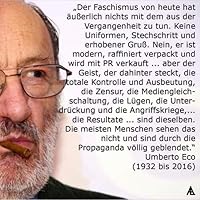

Empires must be built, defended, and maintained at sword-point. Religions are unenforceable. As soon as they are enforced, they lose their moral authority and become monstrous.
Profile Image for d.
47 reviews4 followers
July 15, 2024
i just do not understand how Ibsen considered this his life's major work?!
Profile Image for Antonio Papadourakis.
873 reviews31 followers
June 22, 2018
Ανέγνων, έγνων, κατέγνων! Η περίφημη φράση εδώ δίνεται στον Απολλινάριο και όχι στο Μέγα Βασίλειο.
Δύσκολο για ανέβασμα θεατρικό, επειδή είναι εκτενές και πολυπρόσωπο.
" Όλη μου η ζωή ήτανε ένας αδιάκοπος φόβος για τον Αυτοκράτορα και για το Χριστό. Ώ, είναι φοβερός αυτός, ο αινιγματικός, αυτός ο ανελέητος θεάνθρωπος! Παντού όπου πήγαινε, μπροστά! Μού 'φραζε το δρόμο μου μεγάλος κι αυστηρός... με την αδιάλλακτη και αλύγιστη αξίωση του!...
Όταν η ψυχή μου μαζευότανε πληγωμένη και συντριμμένη από το μίσος μου για το φονιά της γενιάς μου, αμέσως άκουγα την προσταγή του: Αγαπάτε τους εχθρούς ημών! Όταν το πνεύμα μου μαγεμένο από την ομορφιά, διψούσε συνήθειες και ινδάλματα του περασμένου ελληνικού κόσμου, τότε και πάλι ξεχώριζα την προσταγή του Χριστού που μου αξίωνε να μη γυρεύω παρά μονάχα ούτινος χρεία εστίν! Όταν ένιωθα τις ηδονικές επιθυμίες της σάρκας κι αποζητούσα το ένα ή το άλλο, τότε και πάλι ο ηγεμόνας της απάρνησης με τρομοκρατούσε με την προσταγή του: πέθανε εδώ, ίνα ζωήν αιώνιον κληρονομήσεις!.... Ότι είναι ανθρώπινο έγινε απαγορευμένο, από τη μέρα που ο προφήτης της Γαλιλαίας πήρε στα χέρια του το πηδάλιο του κόσμου!"
"Τότε τι είναι αυτό που το μισείς και το κατατρέχεις; Δεν είναι εκείνος, είναι η πίστη σου για εκείνον! Σάμπως δεν είναι ζωντανός μέσα στο μίσος σου και στους διωγμούς σου, όμοια όπωε είναι μέσα στην δική μας τηναγάπη;"
Profile Image for Torjus.
142 reviews5 followers
September 11, 2025
Endelig ferdig med dette langtekkelige stykket. Keiser og Galilæer er et «verdens historisk skuespill» i 10(!) akter, og var Ibsens egne favoritt. Det tror jeg han var alene om. Det er også det lengste stykket, med veldig god margin. Akkurat som med de fleste stykkene til Ibsen fra denne perioden (Kjærlighetens komedie, Brand, Peer Gynt) blir på en måte tanken og filosofien så enorm og tar så mye plass at det går på bekostning av handlingen. Replikkene er til tider så lange og konstruerte at de har innrykk for å markere avsnitt, noe jeg mener snakker for seg selv. Tanken bak er likevel spennende, og kanskje langt mer aktuell 150 år senere enn det Ibsen hadde forestilt seg.
Profile Image for Kasper.
529 reviews12 followers
October 31, 2021
This is my second time reading this play and it is almost as confounding as the first. Some passages of this play are absolutely electric and I love Maximus and Julian is fascinating . . . but I just feel like there's something I'm missing here or some themes I'm not grasping. If only this play was more popular and I could look up what others thought. I don't really agree with any of the analysis Johnson puts forth in the introduction, I know that much.
Profile Image for Kasper.
529 reviews12 followers
May 29, 2017
A fascinating play that really codifies Ibsen's artistic ideals but it's just a little bit too long for my tastes.
Profile Image for Maddy TJ.
172 reviews3 followers
July 22, 2020
Una obra sublime, impresionante, erudita y que debería ser de culto, una obra donde Henrik sale de su zona de confort, es compleja y entretenida.
Profile Image for Michael.
67 reviews
Did Not Finish
March 22, 2026
I didn’t know Ibsen was capable of such a colossal failure right before he wrote twelve of the greatest plays in existence.
Profile Image for Keith.
863 reviews39 followers
November 6, 2019
In the midst of Ibsen’s transition from highly expressionistic poetic dramas (Brand and Peer Gynt) to his tightly naturalistic prose plays (The Pillars of Society, The Dolls House, etc.), he completed this play – a sprawling, philosophical history play.

The two plays that make up the book are based on the life of Emperor Julian, that last non-Christian emperor.

The Apostasy of Caesar *** -- The first play is a rambling story of Julian’s survival as heir-apparent to the unstable Emperor Constantius.

Much is made of Julian’s attempts to find authentic religious inspiration and revelation. He explores the troubling nature of trying to live authentically Christian (love thy enemy, etc.) in the real world.

At least that’s what I think happens. The long play (just the first part), probably around four hours in performance, covers a lot a theoretical ground. Although the play gets into rather weedy philosophical ramblings, Julian is a mildly interesting character. He is a searcher like Brand and Peer. The play/poem, however, doesn’t have the focus or the other interesting characters of these two great plays.

This is for the Ibsen enthusiast only, particularly if you enjoyed Peer and Brand. I don’t know if I’ll make it through the second part.

P.S. I wouldn’t get too excited about Ibsen once referring to this as his “best” play. This has the feel of an off-hand remark, uttered once and never repeated.
Profile Image for Raúl.
Author 10 books63 followers
December 4, 2024
La última obra histórica de Ibsen, su obra siguiente fue Los pilares de la sociedad, la primera de sus doce obras "contemporáneas" por las que es más conocido y se convierte en la columna vertebral del teatro naturalista y de espíritu social.
Esta obra larga, escrita en dos partes cada una de 5 actos, es sin duda irregular, pero se lee con completo interés, de cabo a rabo. Nos cuenta la ascensión de Juliano, su apostasía y conversión al paganismo, sus intentos de ser justo y de que su reino sea tolerante, y la oposición de los cristianos, de los galileos, que se empeñan de forma intransigente en sofiocar ese aire de libertad de Juliano. Eso oposición lleva a la represión que el emperador ejercerá sobre ellos, a la ausencia de diálogo, y a la locura del emperador. Sin embargo, hay un punto que no creemos, el que por negar el cristianismo se dé la caída de Juliano. Quizá el ambiente de la çepoca hace que Ibsen frente en ese retrato de, de nuevo, un personaje idealista que topa con una sociedad que le rechaza, como ocurría en Brand, como ocurrirá en El enemigo del pueblo y en muchas más.
Pese a ello, una tragedia rica y sugerente.
Profile Image for Feisty Harriet.
1,287 reviews40 followers
July 16, 2014
This epic tale of Julian, Caesar turned Roman Emperor, Christian turned pagan, is Ibsen's masterpiece, however clocking in at nearly 7 hours it has never been performed. Yes, this was written in the late 1800's and only a few years ago a Broadway producer cut it down for it's inaugural performance over 125 years after it's publication. There are mystics, the clash between the Romans and the Christians, the expansion of the Roman empire at the detriment of the Persians, Gauls, Africans, and Arabs, men and women who vacillate between paganism and Christianity, as well as those who are firmly camped on one side or the other. There is murder and intrigue, love and death, heroes and fools. This has everything. (Emperor = Roman Emperor, Galilean = Jesus/Christians)
Profile Image for Charlotte.
54 reviews26 followers
July 26, 2015
I read this in preparation for an essay on Julian the Apostate and his historical reception and I have to say it wasn't an easy read. I think that if I had seen it performed, it would have been easier to relate to but sadly this is rarely performed. If I get the chance to go, it is currently running at the National Theatre in London (heavily edited), but until then I must make do with what I can. I can only give it three stars for that reason, but I intend to re-read it properly when I don't have to study it and maybe my rating would change.
Profile Image for Thomas Hettich.
159 reviews4 followers
August 17, 2012
The first Ibsen I've read in quite some time and the first that I remember covers a historical Roman figure. It is a delight to see how Ibsen's modern approach to story telling works on the historical figure of Emporer Julian. Having recently travelled to Pergamon and Ephesus, the story brings to life these places in a way that I haven't experienced with another text.

For a proper review, this is my favorite: http://www.ibsenvoyages.com/translati...
Profile Image for Laura.
161 reviews2 followers
January 6, 2010
Lies, intrigue, all the sins of today... only set in yesterday. I guess some things never change.
Profile Image for Robyn.
16 reviews5 followers
September 20, 2011
A good read. Kind of long with some dull passages
Displaying 1 - 22 of 22 reviews