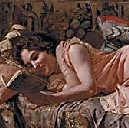
England, 1349. Pestilence rages across Europe and arrives at England's shores. Alyse Elsey, a young wife and mother, finds herself alone within two short weeks when her family succumbs to the disease. Her best friend, Margery, and Margery's husband, Peter, also die, leaving Alyse to care for her god-son, Harold. In desperation, Alyse travels to Norwich, hoping to find sanctuary with Harold's uncle, Brother Roger of Lynn. The trip is perilous, but when Alyse reaches Norwich, she finds she has not reached the sanctuary she hoped for. Although she is given work in the priory kitchen and a place to live, her dead remain with her: her husband, children, and especially, her friend Margery. How can she learn to live and love again without them? This book explores the Medieval belief structure, which is centered around the Church. The ultimate conclusion is life-affirming and joyous.
I have always been interested in the Bubonic Plague. There was more than one occurrence, but this deals with the most severe and far reaching one in 1349. Alyse Elsey lost almost everyone she knew; her husband and children, her sisters and her best friend. The only survivor was her best friend's toddler son, Harold. She feels that she has to take Harold to his uncle, a monk in Norwich. The people she meets and the situations she runs into on the journey give a picture of the lives of the survivors. All over England there was chaos and lawlessness. All the usual structure, government, familial attachments, marketing and day to day existence of their lives were permanently changed. In many villages, less than one tenth of the people were left, and the cities were worse.
Alyse was a gifted healer and as she settles in Norwich, her talents are sorely needed. At first, she is reluctant to become close to anyone because her grief is too great and she did not think she could bear to love people again only to have them snatched away from her. However, she does meet John and his healer mother, who take her and Harold in when was left dying a long the road. How these people put their lives together is a fascinating story.
The author's writing mechanics were very good, and the author made a weak plot stronger through her characters. Set in England in the mid fourteenth century, the plague has ravished the country. Alyse, the main character, suffers the death of her husband and children, hunger, homelessness, near rape, and a host of other tragedies, but her indefatigable spirit keeps her alive and charitable to the sufferers of all kinds. My favorite character was Harold, a three year old orphan, who travels with Alyse to find a home that is not rife with death from the plague. He comes to life through word pictures showing him an imp and an angel. The plot weakens when the Church comes into play. There is so much corruption there handed down by men of the cloth that should not be. recommend the book.
As I was reading this book all I could think of was how depressing and sad it was and I was ready to say enough. But when I thought about it, this was a very realistic portrayal of a terrible time in history. The story was full of vivid descriptions that left the reader wondering how anyone managed to stay sane or get up to face each new dreadful, deadly day.
There's a great deal of religion and praying, after all much of the story takes place in a priory and revolves around monks, yet it was in no way preachy. I found it historically accurate regarding the superstitions and fear that was so common in this time period. If the subject matter wasn't so serious and sad some of the beliefs of the time would be laughable. Yet, they were true and shows how far we've come in what we believe.
The characters weren't perfect, they were true to life. Alyse served as an example of someone who can live through deep despair, question her beliefs yet is able to push on and find happiness. The author did an excellent job of weaving hope and romance into her life. Little Harold, John, Agnes, Meg, really all the characters were well written and made the story real.