

What do you think?
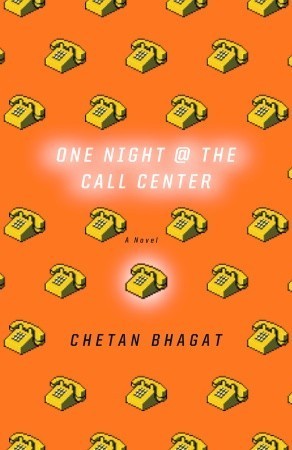
One Night at the Call Center
Press 1 for technical support.
Press 2 for broken hearts.
Press 3 if your life has totally crashed. . . .
Six friends work nights at a call center in India, providing technical support for a major U.S. appliance corporation. Skilled in patience–and accent management–they help American consumers keep their lives running. Yet behind the headsets, everybody’s heart is on the line.
Shyam (Sam to his callers) has lost his self-confidence after being dumped by the girl who just so happens to be sitting next to him. Priyanka’s domineering mother has arranged for her daughter’s upscale marriage to an Indian man in Seattle. Esha longs to be a model but discovers it’s a horizontal romp to the runway. Lost, dissatisfied Vroom has high ideals, but compromises them by talking on the phone to idiots each night. Traditional Radhika has just found out that her husband is sleeping with his secretary. And Military Uncle (nobody knows his real name) sits alone working the online chat.
They all try to make it through their shifts–and maintain their sanity–under the eagle eye of a boss whose ego rivals his incompetence. But tonight is no ordinary night. Tonight is Thanksgiving in Appliances are going haywire, and the phones are ringing off their hooks. Then one call, from one very special caller, changes everything.
Chetan Bhagat’s delicious romantic comedy takes us inside the world of the international call center, where cultural cross-wires come together with perfect pathos, hilarity, and spice.
Press 2 for broken hearts.
Press 3 if your life has totally crashed. . . .
Six friends work nights at a call center in India, providing technical support for a major U.S. appliance corporation. Skilled in patience–and accent management–they help American consumers keep their lives running. Yet behind the headsets, everybody’s heart is on the line.
Shyam (Sam to his callers) has lost his self-confidence after being dumped by the girl who just so happens to be sitting next to him. Priyanka’s domineering mother has arranged for her daughter’s upscale marriage to an Indian man in Seattle. Esha longs to be a model but discovers it’s a horizontal romp to the runway. Lost, dissatisfied Vroom has high ideals, but compromises them by talking on the phone to idiots each night. Traditional Radhika has just found out that her husband is sleeping with his secretary. And Military Uncle (nobody knows his real name) sits alone working the online chat.
They all try to make it through their shifts–and maintain their sanity–under the eagle eye of a boss whose ego rivals his incompetence. But tonight is no ordinary night. Tonight is Thanksgiving in Appliances are going haywire, and the phones are ringing off their hooks. Then one call, from one very special caller, changes everything.
Chetan Bhagat’s delicious romantic comedy takes us inside the world of the international call center, where cultural cross-wires come together with perfect pathos, hilarity, and spice.
320 pages, Paperback
First published January 1, 2005
About the author
Chetan Bhagat
40 books5,616 followersChetan Bhagat writes op-ed columns for English and Hindi newspapers, including Times of India and Dainik Bhaskar, focusing on youth and issues based on national development. Bhagat is also a motivational speaker and has given talks in leading MNCs and other institutions. He quit his international investment banking career in 2009, to devote his entire time to writing. In 2008, The New York Times called Bhagat "the biggest selling English language novelist in India’s history". Bhagat, a graduate of Indian Institute of Technology (IIT) Delhi and IIM Ahmedabad, is seen more as a youth icon than as an author.
Ratings & Reviews
Friends & Following
Create a free account to discover what your friends think of this book!
Community Reviews
Displaying 1 - 30 of 1,941 reviews

November 22, 2010
I'm really hungry which means I'm in a really bad mood and I will be until I eat something. There is pasta on the stove. Do not fear my hatred. Embrace it. It is hungry, it is the truth. I hated this book in a complete way, like where you go on a journey of hatred to be able to clearly and openly hate it. I hate people that like this book, which is apparently a large portion of India. I hate that I sat on the freeway in traffic thinking "well, I guess it's for a certain sort of reader that doesn't read a book for its beautiful language or interesting characters, it's a pop parable designed for shallow, ignorant people, and shallow people deserve books too, especially when the parable has the message of staying true to yourself" but you are pandering prejudiced poorly written trash and the fact that you don't even know you're trash makes me even angrier. Nobody deserves books this bad. I don't understand how someone could read you if they were not being paid to do so. You make me realize that I actually don't wish people would quit their boring jobs and write the book inside of them, because sometimes the book inside of them is this shit. It should have remained inside you, Chetan Bhagat, inside you where it is too dark to read.
The only thing I got out of you was this sentence: "I just had to hear that ass woo my ex-girlfriend with the promise of expensive cars." ass woo. HAHAHAHAH. You were good for a booty call, ONATCC, and nothing more. And you didn't even know that's what you were good for. Fuck you.
--
I'm still angry, because I actually think this book DOES know that it's trash, and I can't believe this book had the balls to be so bad AND THEN have an epilogue where the author talks to a character, a girl who apparently told him the story, and says "Wow! Some story that was!" "So, did you like it?" "Yes, it was fun. But it also made me think." "There you go. It's one of those rare stories that's fun but can help you as well." Are you fucking kidding me? Are you so lazy and manipulative that you have to have a character mention what they think of the story so that those lines will go around and around in a reader's head after they're done with the story?
The only thing I got out of you was this sentence: "I just had to hear that ass woo my ex-girlfriend with the promise of expensive cars." ass woo. HAHAHAHAH. You were good for a booty call, ONATCC, and nothing more. And you didn't even know that's what you were good for. Fuck you.
--
I'm still angry, because I actually think this book DOES know that it's trash, and I can't believe this book had the balls to be so bad AND THEN have an epilogue where the author talks to a character, a girl who apparently told him the story, and says "Wow! Some story that was!" "So, did you like it?" "Yes, it was fun. But it also made me think." "There you go. It's one of those rare stories that's fun but can help you as well." Are you fucking kidding me? Are you so lazy and manipulative that you have to have a character mention what they think of the story so that those lines will go around and around in a reader's head after they're done with the story?

July 1, 2012
I have a major problem with Chetan Bhagat.
Mind you, I am glad he has gotten a lot of people to read in this country and that can never be a bad thing. I know a lot of people who've started out with his books and then eventually progressed to better forms of fiction. SO I'll begin by first acknowledging that Mr Bhagat has indeed created a niche for himself and has paved way for Indian authored books that sell.
Kudos to the Marketing genius you are
Now that that's out of the way, I am annoyed and quite frankly, fed up of Chetan Bhagat novels. When I first read Five Point Someone, it was like a breath of fresh air in the Indian book industry and I gleefully lapped it up. The book was entertaining and funny even.
Hence, I went on to read '3 mistakes of my life' which was based on something completely different from the first book but still had me thinking 'wait a minute... Don't I know this from somewhere?'
This gave way to me reading 'One Night at the Call Centre'.And Thus imploded the universe of jumping on the Bhagat Bandwagon.
My first argument is that All his books have this sort of framed plot irrespective of the genre/setting/storyline. An average Joe (Or should we say sasi?) sort of guy as the protagonist, a charismatic usually hot headed friend, a very beautiful girl who's usually out of bounds : These are your characters.
Have the protagonist do something stupid (usually in an inebriated state) and have a lot of 'oh shit' and 'Wtf' moments, Add in a scene where our average sasi falls into bed with the hot out-of-bounds lady friend and have him repeatedly talk about how he cannot believe she is in love with him, the grand finale involves our guy regaling his tale to all ye suckers.
*Head desk*
My second argument, which is specific to this book, is built upon a very small plot point in it; Maybe I'm wrong but
Again, it could be specific to my thought process but this incident irked me and went on to become the last straw. The 'western bashing' that followed just seemed tiresome and too Preachy.
I stopped reading Bhagat books after that and any book actually that seems to sound like it. I have heard that some of his books have vastly improved but I need a lot time to recover before I dive in again.
I wish Bhagat would write books that he seems to capable of doing rather than what would sell. Maybe we'll get to see that in the future.
Till then,
Pretentious snob signing off!
Mind you, I am glad he has gotten a lot of people to read in this country and that can never be a bad thing. I know a lot of people who've started out with his books and then eventually progressed to better forms of fiction. SO I'll begin by first acknowledging that Mr Bhagat has indeed created a niche for himself and has paved way for Indian authored books that sell.
Kudos to the Marketing genius you are
Now that that's out of the way, I am annoyed and quite frankly, fed up of Chetan Bhagat novels. When I first read Five Point Someone, it was like a breath of fresh air in the Indian book industry and I gleefully lapped it up. The book was entertaining and funny even.
Hence, I went on to read '3 mistakes of my life' which was based on something completely different from the first book but still had me thinking 'wait a minute... Don't I know this from somewhere?'
This gave way to me reading 'One Night at the Call Centre'.And Thus imploded the universe of jumping on the Bhagat Bandwagon.
My first argument is that All his books have this sort of framed plot irrespective of the genre/setting/storyline. An average Joe (Or should we say sasi?) sort of guy as the protagonist, a charismatic usually hot headed friend, a very beautiful girl who's usually out of bounds : These are your characters.
Have the protagonist do something stupid (usually in an inebriated state) and have a lot of 'oh shit' and 'Wtf' moments, Add in a scene where our average sasi falls into bed with the hot out-of-bounds lady friend and have him repeatedly talk about how he cannot believe she is in love with him, the grand finale involves our guy regaling his tale to all ye suckers.
*Head desk*
My second argument, which is specific to this book, is built upon a very small plot point in it; Maybe I'm wrong but
Again, it could be specific to my thought process but this incident irked me and went on to become the last straw. The 'western bashing' that followed just seemed tiresome and too Preachy.
I stopped reading Bhagat books after that and any book actually that seems to sound like it. I have heard that some of his books have vastly improved but I need a lot time to recover before I dive in again.
I wish Bhagat would write books that he seems to capable of doing rather than what would sell. Maybe we'll get to see that in the future.
Till then,
Pretentious snob signing off!

October 12, 2009
Like a Douglas Coupland book set in India, this novel follows a group of six people working the night shift at a failing call center on Thanksgiving Day. They have to deal with Americans who don’t know how to work their appliances, but they also have their own personal problems—families, romances, career woes—to grapple with.
I liked Bhagat’s characters a lot; I enjoyed their somewhat meandering conversations and their relationships with each other. I also, for the most part, like the marriage of whimsy and realism in the text. The book’s tone is light, never uproarious but occasionally amusing—with a bitter undercurrent running throughout. I never stopped being intrigued as to how the night would play out.
However, Bhagat’s characters' hatred for Americans really bothered me. I mean, hate on American policy all you want—especially Bush-era policy—but the characters in this book hate Americans, average people, and they go on about it at length. Americans are stupid and lazy! They have it so easy! They are dumber than Indian 9-year-olds! And these aren’t just the characters’ opinions; there’s authorial agreement, too, to the point where the novel’s resolution depends on Americans being the stupidest people in the world.
If an American wrote a novel that expressed these opinions about the people of India, it would be immediately identified as racist and vile. So why is the opposite mostly considered okay?
By me, too, almost. While I was reading the novel, the anti-Americanism mostly just made me feel mildly uncomfortable. When I questioned this, I thought to myself: Well, I guess we deserve it. And, okay: there are a lot of things about this country’s policies toward the rest of the world that suck. There are without a doubt a lot of individual Americans’ attitudes toward the rest of the world that are appalling, also. But accepting and endorsing the idea that it’s okay—and in fact, good for fun and profit!—to hate Americans is just as icky and wrong as it is for people from the U,S. to promote the idea that the rest of the world is backward and scary or whatever. We all need to be better toward each other. It’s a two-way street.
This feels far weighter and more complicated than something I can adequately address here. But rather than just swallow my discomfort (liberal guilt is actually pretty useless), I thought I’d try to talk about it. We’ll see how that goes.
I liked Bhagat’s characters a lot; I enjoyed their somewhat meandering conversations and their relationships with each other. I also, for the most part, like the marriage of whimsy and realism in the text. The book’s tone is light, never uproarious but occasionally amusing—with a bitter undercurrent running throughout. I never stopped being intrigued as to how the night would play out.
However, Bhagat’s characters' hatred for Americans really bothered me. I mean, hate on American policy all you want—especially Bush-era policy—but the characters in this book hate Americans, average people, and they go on about it at length. Americans are stupid and lazy! They have it so easy! They are dumber than Indian 9-year-olds! And these aren’t just the characters’ opinions; there’s authorial agreement, too, to the point where the novel’s resolution depends on Americans being the stupidest people in the world.
If an American wrote a novel that expressed these opinions about the people of India, it would be immediately identified as racist and vile. So why is the opposite mostly considered okay?
By me, too, almost. While I was reading the novel, the anti-Americanism mostly just made me feel mildly uncomfortable. When I questioned this, I thought to myself: Well, I guess we deserve it. And, okay: there are a lot of things about this country’s policies toward the rest of the world that suck. There are without a doubt a lot of individual Americans’ attitudes toward the rest of the world that are appalling, also. But accepting and endorsing the idea that it’s okay—and in fact, good for fun and profit!—to hate Americans is just as icky and wrong as it is for people from the U,S. to promote the idea that the rest of the world is backward and scary or whatever. We all need to be better toward each other. It’s a two-way street.
This feels far weighter and more complicated than something I can adequately address here. But rather than just swallow my discomfort (liberal guilt is actually pretty useless), I thought I’d try to talk about it. We’ll see how that goes.

December 6, 2011
This was the first Chetan Bhagat book that I'd read, soon after it was published, and trust me, I totally regret the decision!
It is one of the trashiest books ever written, by an author(!) whom I consider to be armed with more strategies on how to sell his book, than on how to write a better story!
This one man singlehandedly allowed the standard of contemporary Indian English literature to plummet down to such depths, that now no one can really assign how low it has fallen! He inspired thousands by establishing the fact that to write, you DO NOT need to read. You can just grab a pen and jot down a few stray incidences, add some sex scenes, and voila! You have your best-seller ready.
It is no more an art! It is a business .
Oh how desperately I hate him, and his band of followers. I feel sorry that some people actually read this trash, and consider it good.
Ah well, I hope there shall soon be a stop to all this non-sense! Till then, I can find solace in posters such as this one:

It is one of the trashiest books ever written, by an author(!) whom I consider to be armed with more strategies on how to sell his book, than on how to write a better story!
This one man singlehandedly allowed the standard of contemporary Indian English literature to plummet down to such depths, that now no one can really assign how low it has fallen! He inspired thousands by establishing the fact that to write, you DO NOT need to read. You can just grab a pen and jot down a few stray incidences, add some sex scenes, and voila! You have your best-seller ready.
It is no more an art! It is a business .
Oh how desperately I hate him, and his band of followers. I feel sorry that some people actually read this trash, and consider it good.
Ah well, I hope there shall soon be a stop to all this non-sense! Till then, I can find solace in posters such as this one:

July 8, 2016
All of Chetan Bhagat's books start out really well but then he loses direction and they become a mess and the story changes so much that by the time I finish reading his books, I can't believe that it's the same book from the start to the end.
All the stories seem very juvenile in this book and I can't believe they are all adults behaving like teens. I have never worked in a call center so I don't know all the ropes but I do know that it can't be this stupid.
1 star
All the stories seem very juvenile in this book and I can't believe they are all adults behaving like teens. I have never worked in a call center so I don't know all the ropes but I do know that it can't be this stupid.
1 star

October 6, 2010
This is the only book I have ever read where the author thanks Microsoft and MS Word in the acknowledgments section.
Pretty thin soup, overall. I picked it up because it's been very popular at the library, and I was interested in the depiction of what it's like to be a young person in India working at a call center. Those day-in-the-life details were the highlight of the book for me. Bhagat's main thrust is that his group of five characters need to face reality, stand up for themselves and have the courage to succeed -- and that India needs to do the same thing. They come to this realization after God calls them. And if you've read the above sentence, you can pretty safely skip the book.
Pretty thin soup, overall. I picked it up because it's been very popular at the library, and I was interested in the depiction of what it's like to be a young person in India working at a call center. Those day-in-the-life details were the highlight of the book for me. Bhagat's main thrust is that his group of five characters need to face reality, stand up for themselves and have the courage to succeed -- and that India needs to do the same thing. They come to this realization after God calls them. And if you've read the above sentence, you can pretty safely skip the book.

April 4, 2008
I think this is the best book i have for quite sometime because it depicts so realistically what goes inside the call centers.Also you really can relate to some of the characters...the story holds you till the end and very enjoyable.....

May 12, 2012
I think the author knew how bad this book was and published it anyway on a lark! Maybe he wanted to test the blind faith his "readership" has in him and do they love him! This book was massively popular on release though its poor structure and ridiculous plot were well known. I blush every time Chetan Bhagat is considered the shining beacon of modern Indian Literature.
He explain how he met a mysterious girl on the train who narrated the story and how he had an epiphany. Simple explanation- he was probably high or incredibly tired from churning out trash-lit.
This book describes the sordid saga of Indian call centre employees. Trudging through ridiculous situations and horrible dialogues, one can find choice insults at the general American public. The characters in the book suddenly find true meaning in their lives when god decides to ditch his "booming voice out of the sky" routine and calls them up on a cellphone(coz they are call centre employees!).
Not recommended to anyone at all!
He explain how he met a mysterious girl on the train who narrated the story and how he had an epiphany. Simple explanation- he was probably high or incredibly tired from churning out trash-lit.
This book describes the sordid saga of Indian call centre employees. Trudging through ridiculous situations and horrible dialogues, one can find choice insults at the general American public. The characters in the book suddenly find true meaning in their lives when god decides to ditch his "booming voice out of the sky" routine and calls them up on a cellphone(coz they are call centre employees!).
Not recommended to anyone at all!

November 25, 2021
Explicitly superficial
Read this one while I was in college while I was 20. Felt that the story was a bit funny but looking in hindsight, I feel that the book is quite juvenile. Although the characters resonate a bit, I'd say that the plot is highly superficial and lacks any depth. Just one positive from the book - the portrayal of the lives of the Indian youths in the corporate world; otherwise nothing much appreciable.
2.4 / 5 rounded to 2 from my side.
Read this one while I was in college while I was 20. Felt that the story was a bit funny but looking in hindsight, I feel that the book is quite juvenile. Although the characters resonate a bit, I'd say that the plot is highly superficial and lacks any depth. Just one positive from the book - the portrayal of the lives of the Indian youths in the corporate world; otherwise nothing much appreciable.
2.4 / 5 rounded to 2 from my side.

September 8, 2015
What an utter piece of s**t! If I try to enumerate the no. of things that make this book so horrible, I might make some of you curious about the book, in the process helping this book get another reader. NO. Let me simply state that reading this book would result in serious reduction of your ability to think properly, and would make you shudder every time you think about a call-centre, America, Indian youth, even God!
Humble suggestion: avoid this book.
Humble suggestion: avoid this book.

May 8, 2007
The resemblance of the storyline with Chetan's previous book (Five Point Someone) made the book pretty dull and almost predictable. This book very simply leaves you depressed.
Don't just follow the herd...give this one a miss!
Don't just follow the herd...give this one a miss!

March 23, 2016
Getting to know about a call center's lifestyle was an experience in itself.
Although I didn't enjoy the story much but I know people for whom it would be an amazing read.
Although I didn't enjoy the story much but I know people for whom it would be an amazing read.

April 14, 2023
featured vlog: reading the worst books on goodreads
tedious and boring with a super unlikeable main character
Booktube | Instagram
tedious and boring with a super unlikeable main character
Booktube | Instagram

November 9, 2021
The very first Chetan Bhagat book I've read. The beginning of the book was quite captivating, but as I moved further I did not enjoy what I was reading. The story as mentioned in the prologue was supposed to be written to represent the youths. But youths are not just limited with the emotions of seduction, lust, anger and jealousy. Depicting lives of the youths doesn't mean one must add sex scene to spice up the story.
Speaking of the characters and their attitude towards life, I think anger, aggression and egoism are the only things conveyed through their behavior. Having a mean and dominating boss means you should break the computer screen at your work place out of frustration, like Vroom did. The news of your ex getting married means you must be jealous about their happy life, like Shyam did. This kind of negative behavior is conveyed through the characters.
Females! Females are disrespected the most in the book. Girlfriend is referred to as 'your chick' as if she were his pet or slave. How good does it sound if a co-worker and boss stares at the navel ring of a female employee wearing a crop top? So that is how you treat your friends and junior? A guy having infinite girlfriends. 3-4 one month and then a new bunch of girlfriends the next month; not a single in serious relationship! Secertly listening to the girls conversation when they are discussing something private in the restroom. Tapping ex's phone call while she talks to her fiance. If you can't respect, please try to avoid using such lines for female sake!
Though Shyam's second girlfriend Shefali was mentioned the least, I found her presence annoying. She was just so clingy and bothersome. Priyanka was always angry at every minor thing. Esha was cheerful but threw some puzzling tantrums every now and then. Radhika and Shyam were depressed people and made me feel depressed due to their thoughts. Vroom didn't care much about anything else except for the cars and bikes. But I hated the fact that he had numerous girlfriends just to have fun. And finally Bakshi, the boss was dominating and didn't bother himself to work at all. Toxic characters!
According to the prologue, the story was about these six people from a call center, getting a call from the God. I frantically searched for this part, but to my dismay the main theme showed up after I completed reading half of the book. It was stated that there was something to learn from the story and I found nothing, except abounding amount of swearwords being used on every page and after every ten seconds. Yes, I learned some cuss words! The book disenchanted me. One last word for the storyline I am left with is just 'gross'!
Speaking of the characters and their attitude towards life, I think anger, aggression and egoism are the only things conveyed through their behavior. Having a mean and dominating boss means you should break the computer screen at your work place out of frustration, like Vroom did. The news of your ex getting married means you must be jealous about their happy life, like Shyam did. This kind of negative behavior is conveyed through the characters.
Females! Females are disrespected the most in the book. Girlfriend is referred to as 'your chick' as if she were his pet or slave. How good does it sound if a co-worker and boss stares at the navel ring of a female employee wearing a crop top? So that is how you treat your friends and junior? A guy having infinite girlfriends. 3-4 one month and then a new bunch of girlfriends the next month; not a single in serious relationship! Secertly listening to the girls conversation when they are discussing something private in the restroom. Tapping ex's phone call while she talks to her fiance. If you can't respect, please try to avoid using such lines for female sake!
Though Shyam's second girlfriend Shefali was mentioned the least, I found her presence annoying. She was just so clingy and bothersome. Priyanka was always angry at every minor thing. Esha was cheerful but threw some puzzling tantrums every now and then. Radhika and Shyam were depressed people and made me feel depressed due to their thoughts. Vroom didn't care much about anything else except for the cars and bikes. But I hated the fact that he had numerous girlfriends just to have fun. And finally Bakshi, the boss was dominating and didn't bother himself to work at all. Toxic characters!
According to the prologue, the story was about these six people from a call center, getting a call from the God. I frantically searched for this part, but to my dismay the main theme showed up after I completed reading half of the book. It was stated that there was something to learn from the story and I found nothing, except abounding amount of swearwords being used on every page and after every ten seconds. Yes, I learned some cuss words! The book disenchanted me. One last word for the storyline I am left with is just 'gross'!

February 17, 2012
I can understand why a lot of people really hate this novel: It's not that well written, it's unrelentingly insulting in its attitude toward Americans, God enters into the story in a rather goofy way, and the ending is lousy. Still, I had a good time reading it, and that makes up for a lot. Bhagat may not be the best writer around, but, in a way, his immature writing style really captures the essence of the youth culture he's writing about. It's more realistic than, say, Reality Bites, but not nearly as thought-provoking or cool. As someone who has worked in a call center, I can say that Bhagat gets a lot of things right here. I can also say that people who only interact with Americans through a call center job would understandably have a pretty skewed idea about us. So I can understand the ani-American element to a certain extent. But then God starts dumping on Americans too, and that's definitely taking things too far, especially when He implies that the call center can be saved by taking advantage of the fact that Americans are all cowards. ***SPOILER ALERT*** If the ending of the story were the least bit realistic, the characters, rather than saving their jobs at the expense of the gullible American public, would all be immediately fired and then probably sued for their actions. Still, despite its myriad flaws, One Night @ the Call Center is entertaining enough to be worth a look.

May 13, 2011
I can write a better book than this. No..seriously! Don't know why Bhagat stoops this low when it comes to literary content. (or just raw content for that matter.) His book(s) has/have got neither. Not that he had stooped any higher before, but you get the point right? The story is so filmy,a cheesy film has already been made on it(and it did bomb big time obviously). Agreed that he's making India read like never before, but sadly he's making them read zilch. Now that he had his fair share of fame, made some quick bucks on the way, caught people's attention with his 4 "bestsellers", gave birth to a bagful of Bhagat wannabe's who as a matter of fact are now clogging up bookstores with their own versions of 5.someone(Spare a thought for those trees that went down in the process), isn't it time for his Magnum Opus or something of that sorts? The guy writes great columns for TOI and is an IIT-IIM hybrid,for God's sake! Surely,there's some dream work concealed up his sleeve. Unleash it Mr.Bhagat! When you do,now mark my words someone,"I'll eat my words!"

July 24, 2009
Well thats a loser thing to read.
I have heard of so highly about Chetan Bhagat and his first attempt toward writing i.e. "five Point someone" that i decided to read the second book " one night @ the call center" .
Trust me i was seriously disappointed after finishing it up. This was pretty idiotic stuff from someone who very proudly boast himself to belong to the best thinking tanks of the country (the IITs and the IIMs)
The initial Call Center stuff was okay-okay and i wished it remained to that only but after that i thought Chetan Bhagat got a great boost of his "so-called" creative sparks, using which he generated a story that was pretty much hard and obnoxious to digest ( i mean what a ridiculous idea it would be to fool people around with a simple bug involved in the MS word and making them fearing it to such an effect which the author has proposed and GOD conducting a joint conference with all of them , :P pretty hilarious )
I have heard of so highly about Chetan Bhagat and his first attempt toward writing i.e. "five Point someone" that i decided to read the second book " one night @ the call center" .
Trust me i was seriously disappointed after finishing it up. This was pretty idiotic stuff from someone who very proudly boast himself to belong to the best thinking tanks of the country (the IITs and the IIMs)
The initial Call Center stuff was okay-okay and i wished it remained to that only but after that i thought Chetan Bhagat got a great boost of his "so-called" creative sparks, using which he generated a story that was pretty much hard and obnoxious to digest ( i mean what a ridiculous idea it would be to fool people around with a simple bug involved in the MS word and making them fearing it to such an effect which the author has proposed and GOD conducting a joint conference with all of them , :P pretty hilarious )

May 8, 2015
I feel so dumb. I feel like the little intelligence I had has been taken away from me. I decided to read this book as an experiment, to judge what Chetan was like, because I heard so much about how terrible a writer he is and all. I apologise to myself for putting myself through this [I can't believe I read till the end.] It was all so lame - the story, the 'jokes', the writing, everything! Never again, is all I can say.

March 17, 2022
ALL REVIEWS ARE BAAAAAAAAAAD.
ALL THE STAR RATING OF THIS BOOK IS BAAAAAAAAAAD.
ALL THE EVERYTHING THAT OTHER PEOPLE WROTE ABOUT THIS IS BAAAAAAAAAAAD.
😍😍😍😍😍😍😍😍😍😍😍😍😍BUT . I . ABSO-FUCKING-LUTELY LOVED IT.🥰🥰🥰🥰🥰🥰🥰🥰🥰🥰🥰🥰🥰🥰🥰🥰🥰🥰
🥺What everyone hated?
The writing style was immature.
The writing style since, was, immature, it made the whole book EXTREEEEMELY SPIT-WATER-OUT-OF-MY-MOUTH funny.
Everyone hated the fact that at few places in the book , characters are accepting the situations and things around them easily. They aren't protesting.
💚Why did I love it?
I have been following Chetan Bhagat for a REALLLY long time.
This is not my first read by him.(It was revolution 2020) And after Paulo Coelho.......if i had to say who the MOST sensible writer is? Its Chetan Bhagat.
And ALL of you will throw rotten tomatoes at the above statement, but , I don't feel anything wrong saying that.
I loved this book because its SO DANG relatable, that its.........almost as if the author is INSIDE my brain.
I didn't feel the need for anything fictional in this book( what others needed). I was content with whatever Chetan has written.
One more reason i loved this was............IT WAS THE FUNNIEST book i have EVER read.
It was like ........watching a funny sitcom.
Chetan Bhagat was, is, will be the Topmost writer in my list. FOREVER.
I'm sorry , my english is not that good , but i had a few more things to say, but i cant , because , well....i dont exactly know how to express them. But i have to tell you that you will not like this book.
You won't because , the books that I usually rate a 5 are 1 starrer for MOST of the people.
I am an easy person. I can be pleased easily , maybe thats why i found this book so ..........entertaining .
I wasn't looking for anything serious ..........if you want humor with a good plot........this is ALL yours.
ALL THE STAR RATING OF THIS BOOK IS BAAAAAAAAAAD.
ALL THE EVERYTHING THAT OTHER PEOPLE WROTE ABOUT THIS IS BAAAAAAAAAAAD.
😍😍😍😍😍😍😍😍😍😍😍😍😍BUT . I . ABSO-FUCKING-LUTELY LOVED IT.🥰🥰🥰🥰🥰🥰🥰🥰🥰🥰🥰🥰🥰🥰🥰🥰🥰🥰
🥺What everyone hated?
The writing style was immature.
The writing style since, was, immature, it made the whole book EXTREEEEMELY SPIT-WATER-OUT-OF-MY-MOUTH funny.
Everyone hated the fact that at few places in the book , characters are accepting the situations and things around them easily. They aren't protesting.
💚Why did I love it?
I have been following Chetan Bhagat for a REALLLY long time.
This is not my first read by him.(It was revolution 2020) And after Paulo Coelho.......if i had to say who the MOST sensible writer is? Its Chetan Bhagat.
And ALL of you will throw rotten tomatoes at the above statement, but , I don't feel anything wrong saying that.
I loved this book because its SO DANG relatable, that its.........almost as if the author is INSIDE my brain.
I didn't feel the need for anything fictional in this book( what others needed). I was content with whatever Chetan has written.
One more reason i loved this was............IT WAS THE FUNNIEST book i have EVER read.
It was like ........watching a funny sitcom.
Chetan Bhagat was, is, will be the Topmost writer in my list. FOREVER.
I'm sorry , my english is not that good , but i had a few more things to say, but i cant , because , well....i dont exactly know how to express them. But i have to tell you that you will not like this book.
You won't because , the books that I usually rate a 5 are 1 starrer for MOST of the people.
I am an easy person. I can be pleased easily , maybe thats why i found this book so ..........entertaining .
I wasn't looking for anything serious ..........if you want humor with a good plot........this is ALL yours.

September 26, 2007
This is a rather astonishing book. I picked it up at the library partly because my son works at an American call center (Comcast) and partly because it is Indian. We´re all familiar with Indian call centers; this is feedback from the other end. They aren´t too impressed with us, either. The fictional call center provides help to customers of a household appliance manufacturer, and the six person group involved handles the frequent and difficult callers. Though the money is good, all six face personal crises which are not improved by the fact they may be ¨rightsized¨ out of a job. One night the five young people and middle aged ¨Military Uncle¨ reach emotional crisis points - and get a call from God. This is something you expect more from Andrew M. Greeley, and the God invoked is not overly different from Greeley´s God, except for allowing a little creative vengeance. The six oust an impossible boss, save the call center, and make vital changes in their lives. Yes, there is humor, and humor at the expense of Americans, but the tale is so much more.
September 21, 2026
CONTAIN SPOILERS!!!
Chetan Bhagat is an author whose books I have approached with mixed expectations. I found his earlier work, especially Five Point Someone, quite engaging because of its relatable characters, friendships and the way the story captured the uncertainties of young people. Because of that, I expected One Night @ the Call Center to have a similar quality of storytelling. Unfortunately, the book did not have the same impact on me.
One Night @ the Call Center follows six employees working the night shift at a call centre in Gurgaon. Over the course of one night, their professional and personal problems gradually come to the surface. Their relationships, career ambitions, family expectations and insecurities form much of the narrative. The night takes an unexpected turn when they receive a mysterious phone call that claims to be from God. Although the premise sounds interesting, I felt that the execution was not engaging enough.
Spoilers ahead.
The most significant turning point in the novel is the mysterious phone call that the characters believe is from God. The call initially creates a sense of mystery and raises the expectation that something meaningful or unexpected is about to happen. God tells the characters that they have allowed fear, insecurity and the expectations of others to control their lives, and encourages them to take responsibility for their own decisions.
I found this idea interesting, particularly because each character is struggling with a different form of insecurity. However, I felt that the message was delivered rather directly, and the eventual resolution of the characters' problems seemed somewhat convenient. Instead of allowing their experiences throughout the night to naturally lead them towards change, the phone call provides a fairly straightforward explanation of what they should do.
The ending, therefore, did not have the emotional impact I had expected. While the characters do gain confidence and begin making decisions about their lives, I felt that their transformations happened too quickly considering how much of the novel had been spent establishing their problems. For me, this reinforced the feeling that the book had an interesting central idea but did not execute its resolution as effectively as it could have.The romantic scenes between Priyanka and Shyam were necessary they could have been more formal and interesting instead of what was written , felt like a college relationship story, ex-lover , the jeleousy 😂 and things didn't go hand in hand with the plot
Spoilers end!!!
My biggest problem with the book was its pacing. I often felt that the story spent too much time moving between the individual problems of the characters. Character development is important, but in this case, the repeated focus on relationships, personal insecurities and career problems made the story feel slow and, at several points, predictable. Instead of making me constantly curious about what would happen next, the book sometimes felt like a collection of personal struggles connected by a single night.
I also found the call centre setting interesting but underused. A workplace like a call centre could have provided opportunities to explore the pressures of corporate culture, monotonous work, difficult customers and the lives of young employees working night shifts. However, much of the attention is directed towards the characters' personal lives. As a result, the setting sometimes feels more like a background than an important part of the story.
Another aspect that shaped my reading was my perception of Chetan Bhagat's writing over time. Five Point Someone initially made me see him as a writer who could make ordinary experiences of young people entertaining and relatable. In One Night @ the Call Center, however, I felt that some of those qualities had become more formulaic. Romance, career anxiety, family expectations, personal struggles and motivational messages are repeatedly brought to the forefront. None of these themes are inherently bad ..in fact, they are quite relatable :)but for me, their repeated use made the writing feel somewhat diluted and less fresh than I had expected.
That said, I do appreciate what the novel is trying to communicate. The characters represent young people who are uncertain about their careers and relationships while dealing with expectations from their families and society. The book also attempts to encourage its characters to overcome their insecurities and take greater control of their lives. I can understand why readers might connect with these messages.
However, my interpretation differs from the idea that relatable characters automatically make a story engaging. For me, a novel also needs strong narrative momentum and a sense that every part of the story is taking me somewhere. One Night @ the Call Center did not consistently provide that experience.
Overall, I would describe the book as interesting in concept but disappointing in execution. It has relatable themes and an unusual premise, but the slow pacing, repetitive character conflicts and predictable elements made it difficult for me to remain invested. I would recommend it to readers who enjoy character-driven stories about relationships, career uncertainty and personal struggles. Personally, however, I preferred the more naturally engaging quality I found in Bhagat's earlier writing, particularly Five Point Someone.
The whole story is strongly based only around characters, with a very weak plot , which dissuades me to recommend this books to the readers.
Chetan Bhagat is an author whose books I have approached with mixed expectations. I found his earlier work, especially Five Point Someone, quite engaging because of its relatable characters, friendships and the way the story captured the uncertainties of young people. Because of that, I expected One Night @ the Call Center to have a similar quality of storytelling. Unfortunately, the book did not have the same impact on me.
One Night @ the Call Center follows six employees working the night shift at a call centre in Gurgaon. Over the course of one night, their professional and personal problems gradually come to the surface. Their relationships, career ambitions, family expectations and insecurities form much of the narrative. The night takes an unexpected turn when they receive a mysterious phone call that claims to be from God. Although the premise sounds interesting, I felt that the execution was not engaging enough.
Spoilers ahead.
The most significant turning point in the novel is the mysterious phone call that the characters believe is from God. The call initially creates a sense of mystery and raises the expectation that something meaningful or unexpected is about to happen. God tells the characters that they have allowed fear, insecurity and the expectations of others to control their lives, and encourages them to take responsibility for their own decisions.
I found this idea interesting, particularly because each character is struggling with a different form of insecurity. However, I felt that the message was delivered rather directly, and the eventual resolution of the characters' problems seemed somewhat convenient. Instead of allowing their experiences throughout the night to naturally lead them towards change, the phone call provides a fairly straightforward explanation of what they should do.
The ending, therefore, did not have the emotional impact I had expected. While the characters do gain confidence and begin making decisions about their lives, I felt that their transformations happened too quickly considering how much of the novel had been spent establishing their problems. For me, this reinforced the feeling that the book had an interesting central idea but did not execute its resolution as effectively as it could have.The romantic scenes between Priyanka and Shyam were necessary they could have been more formal and interesting instead of what was written , felt like a college relationship story, ex-lover , the jeleousy 😂 and things didn't go hand in hand with the plot
Spoilers end!!!
My biggest problem with the book was its pacing. I often felt that the story spent too much time moving between the individual problems of the characters. Character development is important, but in this case, the repeated focus on relationships, personal insecurities and career problems made the story feel slow and, at several points, predictable. Instead of making me constantly curious about what would happen next, the book sometimes felt like a collection of personal struggles connected by a single night.
I also found the call centre setting interesting but underused. A workplace like a call centre could have provided opportunities to explore the pressures of corporate culture, monotonous work, difficult customers and the lives of young employees working night shifts. However, much of the attention is directed towards the characters' personal lives. As a result, the setting sometimes feels more like a background than an important part of the story.
Another aspect that shaped my reading was my perception of Chetan Bhagat's writing over time. Five Point Someone initially made me see him as a writer who could make ordinary experiences of young people entertaining and relatable. In One Night @ the Call Center, however, I felt that some of those qualities had become more formulaic. Romance, career anxiety, family expectations, personal struggles and motivational messages are repeatedly brought to the forefront. None of these themes are inherently bad ..in fact, they are quite relatable :)but for me, their repeated use made the writing feel somewhat diluted and less fresh than I had expected.
That said, I do appreciate what the novel is trying to communicate. The characters represent young people who are uncertain about their careers and relationships while dealing with expectations from their families and society. The book also attempts to encourage its characters to overcome their insecurities and take greater control of their lives. I can understand why readers might connect with these messages.
However, my interpretation differs from the idea that relatable characters automatically make a story engaging. For me, a novel also needs strong narrative momentum and a sense that every part of the story is taking me somewhere. One Night @ the Call Center did not consistently provide that experience.
Overall, I would describe the book as interesting in concept but disappointing in execution. It has relatable themes and an unusual premise, but the slow pacing, repetitive character conflicts and predictable elements made it difficult for me to remain invested. I would recommend it to readers who enjoy character-driven stories about relationships, career uncertainty and personal struggles. Personally, however, I preferred the more naturally engaging quality I found in Bhagat's earlier writing, particularly Five Point Someone.
The whole story is strongly based only around characters, with a very weak plot , which dissuades me to recommend this books to the readers.
This entire review has been hidden because of spoilers.

August 13, 2011
It was not awesome, or good.
Just in between somewhere..
I liked the ending though.
How God calls, and helps them out. I find it verrry difficult to believe.
For the rest of it, you are most certainly wasting your time. Sadly, you have to go through the beginning, middle and end to get the whole story. So, torture comes first, and then freedom.
It's like that typical book, with the lead character repenting himself and mumbling and grumbling all through.
But, of course, in the end, everything's okay and he 'realizes' that he is to blame for all his acts, something you as a reader realized right at the beginning.
Except for the occasional laugh and nice finish, this book is a complete waste of time.
A two-star and nothing more.
Just in between somewhere..
I liked the ending though.
How God calls, and helps them out. I find it verrry difficult to believe.
For the rest of it, you are most certainly wasting your time. Sadly, you have to go through the beginning, middle and end to get the whole story. So, torture comes first, and then freedom.
It's like that typical book, with the lead character repenting himself and mumbling and grumbling all through.
But, of course, in the end, everything's okay and he 'realizes' that he is to blame for all his acts, something you as a reader realized right at the beginning.
Except for the occasional laugh and nice finish, this book is a complete waste of time.
A two-star and nothing more.

October 18, 2015
The naive 18 years old me : What to read? Let me read some Chetan Bhagat.
The thirty plus me : Can I get my time back please which I wasted reading this one🙄
You grow up as a reader too. If you don't, then there's no point in reading. You wouldn't learn anything from the books.
The thirty plus me : Can I get my time back please which I wasted reading this one🙄
You grow up as a reader too. If you don't, then there's no point in reading. You wouldn't learn anything from the books.

November 2, 2020
Chetan Bhagat books was the phase when I first started reading. I've read all of his older books and never touched the new ones. Will I be reading the new ones ever? No.
#SorryNotSorry
#SorryNotSorry

April 12, 2012
Very mixed feelings about this book. Start with the good things (which I am afraid are outweighed by the bad things). Bhagat writes well, characters are varied and resonate with real life. It gives a fascinating and others have said accurate insight into the world of the Indian Call Center, which encapsulates the change that the new urban young are experiencing. There is a savage, if not very profound critique of consumerism, which I welcomed. Sometimes it is laugh-out-loud funny, the book picks up pace and as it reaches its climax it is a page turner. I found myself scanning the sentences very fast, wanting to know what happens next. Most of it was read on two night journeys to and from Bangalore on a sleeper bus, so I am grateful that it helped the time pass quickly!.
Ok the negative stuff - this is fairly superficial whilst pretending to be profound - a pop parable if you like. Adolescent in places, fissing with energy, giving you a sugar rush followed by a low sugar crash. It The tiresome anti-Americanism is puerile, ignorant and irresponsible. To say the the average 9/10 year old Indian is cleverer than the average adult American is absurd, and marks a line where Baghats nationalism moves over into xenophobia. Unwittingly this prejudice mirrors a certain dangerous strain of Hindu nationalism which Baghat criticises in his other novels. His style also irritates - the opening request to write down the answers to three questions, annoyed me, especially when repeated - this belongs to the genre of adolescent self-help seminars not novels. Also the fabricated scenario about how the novel came about (night train to Dehli)serves only to alienate the serious reader and reduces the writers credibility. The ultimate irony for me is Bhagat mirrors the modern society he is claiming to critique, this novel is reality-TV-lite writing, or should I say mockumentary that can be expanded into a Bollywood film.
Finally and for me most seriously is the ridiculous use of God in the novel. This self-projection as God is deeply narcissistic and trivialises the sacred. Chetan's God becomes a mouthpiece for his self help - 'listen to the inner call' - do what makes you fell good. For me this is verging on blasphemy. Even his invoking of the Bhagavad-gītā and the lord Krishna at the end as way to get out of all the absurdities he has introduced to the plot seem grossly manipulative.
The fact that I have these strong feelings shows that the book is worth engaging with even if you do not agree with much of it....!
Ok the negative stuff - this is fairly superficial whilst pretending to be profound - a pop parable if you like. Adolescent in places, fissing with energy, giving you a sugar rush followed by a low sugar crash. It The tiresome anti-Americanism is puerile, ignorant and irresponsible. To say the the average 9/10 year old Indian is cleverer than the average adult American is absurd, and marks a line where Baghats nationalism moves over into xenophobia. Unwittingly this prejudice mirrors a certain dangerous strain of Hindu nationalism which Baghat criticises in his other novels. His style also irritates - the opening request to write down the answers to three questions, annoyed me, especially when repeated - this belongs to the genre of adolescent self-help seminars not novels. Also the fabricated scenario about how the novel came about (night train to Dehli)serves only to alienate the serious reader and reduces the writers credibility. The ultimate irony for me is Bhagat mirrors the modern society he is claiming to critique, this novel is reality-TV-lite writing, or should I say mockumentary that can be expanded into a Bollywood film.
Finally and for me most seriously is the ridiculous use of God in the novel. This self-projection as God is deeply narcissistic and trivialises the sacred. Chetan's God becomes a mouthpiece for his self help - 'listen to the inner call' - do what makes you fell good. For me this is verging on blasphemy. Even his invoking of the Bhagavad-gītā and the lord Krishna at the end as way to get out of all the absurdities he has introduced to the plot seem grossly manipulative.
The fact that I have these strong feelings shows that the book is worth engaging with even if you do not agree with much of it....!

May 13, 2012
An utter disappointment from Chetan Bhagat.I was quite carried away by Chetan's reputation that I never realized it was the worst book I had read, till I completed half the pages. Well, to begin with,the characters were quite ordinary.The novel revolves around a group of six call center employees working in Connexions in Gurgaon, Haryana. It takes place during the span of one night, in which all of the leading characters want their lives to change.Told through the eyes of the protagonist, Shyam, it is a story of almost lost love, thwarted ambitions, absence of family affection, pressures of a patriarchal set up, and the work environment of a globalized office. Shyam loves but has lost Priyanka, who is now planning an arranged marriage with another; Vroom loves Esha. Esha wants to be a model, Radhika is in an unhappy marriage with a demanding mother-in-law, and military uncle wants to talk to his grandson; they all hate Bakshi, their cruel boss.Apretty - good corporate environment.
Though it is a fiction novel, a phone call from God is something beyond that and makes one wonder if he is reading a fairy tale.The good thing is that the phone call had opened the eyes of all characters and they get to solve their problems on their own.Again school - boy grammar employed by Chetan and the nasty four - letter words sprinkled everywhere.
A disappointing novel but can make a good - read for a lazy Sunday afternoon.
Though it is a fiction novel, a phone call from God is something beyond that and makes one wonder if he is reading a fairy tale.The good thing is that the phone call had opened the eyes of all characters and they get to solve their problems on their own.Again school - boy grammar employed by Chetan and the nasty four - letter words sprinkled everywhere.
A disappointing novel but can make a good - read for a lazy Sunday afternoon.

November 8, 2012
I have never seen a single Chetan Bhagat fan who loves this particular book. As I am not an admirer ( and also this is an edited version of Reader's Digest), that might be the reason I find this his best work. Other day I attended a pre-Ph.D synopsis presentation on anti-globalisation in Indian literature and this was one of the selected works. It seems I am not alone.
What is special about this one? All his other works are quite evidently autobiographical in which IIT and its entrance examinations play a major part and so this is a fresh breeze. More over, there is the added element of supernatural; call me old fashioned, but I like a little bit of deu ex machina. Sometimes an outer help is relieving in this fast paced world. Like in 'Canterbury Tales' Chetan has succeeded in bringing together a section of Indian society in a simple setting. There is the weeping lover, sighing money maker, victimized daughter and daughter-in-law and the estranged father. On running after the much desired fame, money and reputation, they have forgotten something -- conscience and inner peace. This is their story of finding what is needed most; simple with no adornments but truthful.
What is special about this one? All his other works are quite evidently autobiographical in which IIT and its entrance examinations play a major part and so this is a fresh breeze. More over, there is the added element of supernatural; call me old fashioned, but I like a little bit of deu ex machina. Sometimes an outer help is relieving in this fast paced world. Like in 'Canterbury Tales' Chetan has succeeded in bringing together a section of Indian society in a simple setting. There is the weeping lover, sighing money maker, victimized daughter and daughter-in-law and the estranged father. On running after the much desired fame, money and reputation, they have forgotten something -- conscience and inner peace. This is their story of finding what is needed most; simple with no adornments but truthful.
book-club
May 12, 2009This book was awful. If not appalled by the total lack of characterization and inane plot (this book makes Bollywood seem realistic!), not to mention BASIC EDITING, you will be disgusted by all the ethnic and racist stereotypes.
The sad part is that the topic of call centers, and the lives of the Indian youths that maintain them, is actually an excellent premise for a novel. Bhagat really could have really shed some light on the topic - describing the sacrifices that these workers make: the fact is is that young people are forgoing better careers in law/medicine/engineering (fields that have a much longer lifetime career potential) in order to make a few quick bucks from American companies. Instead, he stuck to a plot that was worthy of a really dumb bollywood flick (apparently, the movie 'Hello' is based on this). All surface, no substance.
The fact that this book was a big hit in India kinda concerns me actually.
A much better account of call center life is the documentary 'John and Jane Toll Free'.
The sad part is that the topic of call centers, and the lives of the Indian youths that maintain them, is actually an excellent premise for a novel. Bhagat really could have really shed some light on the topic - describing the sacrifices that these workers make: the fact is is that young people are forgoing better careers in law/medicine/engineering (fields that have a much longer lifetime career potential) in order to make a few quick bucks from American companies. Instead, he stuck to a plot that was worthy of a really dumb bollywood flick (apparently, the movie 'Hello' is based on this). All surface, no substance.
The fact that this book was a big hit in India kinda concerns me actually.
A much better account of call center life is the documentary 'John and Jane Toll Free'.

March 22, 2016
I bought this book as i love chtan bhagats books . I have read five point some one two times and two states also two times , so when i hadcollege break I thought to buy this book. This book as usual was lucid to understand , the characters were well defined but I found the story quite dragging.It was not fast moving and had twists and turns but it was sometimes boring, I loved the humour shared by the author at appropriate places which was amazing but the ending was unrealistic according to me and I did not like it that much. Any ways it was a good read never the less.Chetan bhagats books are interesting !

Displaying 1 - 30 of 1,941 reviews