David Stacton’s The Judges of The Secret Court is a long-lost triumph of American fiction as well as one of the finest books ever written about the Civil War. Stacton’s gripping and atmospheric story revolves around the brothers Edwin and John Wilkes Booth, members of a famous theatrical family. Edwin is a great actor, himself a Hamlet-like character whose performance as Hamlet will make him an international sensation. Wilkes is a blustering mediocrity on stage who is determined, however, to be an actor in history, and whose assassination of Abraham Lincoln will change America. Stacton’s novel about how the roles we play become, for better or for worse, the lives we lead, takes us back to the day of the assassination, immersing us in the farrago of bombast that fills Wilkes’s head while following his footsteps up to the fatal encounter at Ford’s Theatre. The political maneuvering around Lincoln’s deathbed and Wilkes’s desperate flight and ignominious capture then set the stage for a political show trial that will condemn not only the guilty but the—at least relatively—innocent. For as Edwin Booth broods helplessly many years later, and as Lincoln, whose tragic death and wisdom overshadow this tale, also knew, “We are all accessories before or after some fact. . . . We are all guilty of being ourselves.”
David Derek Stacton (1925–1968) was a U.S. novelist, historian and poet. He was born on 25 April 1925 in Minden, Nevada. Stacton attended Stanford University from 1941–43, and graduated from the University of California, Berkeley in 1951. He served in the Civilian Public Service as a conscientious objector then lived in Europe from 1950–1954, 1960–1962, and 1964–1965. Stacton wrote under the pseudonyms Carse Boyd, Bud Clifton, David Dereksen and David West. Most of his books were originally published in England. He died of a stroke 19 January 1968 in Fredensborg, Denmark.
Stacton's novels are often low in dialogue, and his better novels are instead full of his witty scornful comments on his characters and life. At his best Stacton had an epigrammatic style and enjoyed a sophisticated irony, although antipathetic critics took him to task for pretentious vocabulary, a tendency to florid paradoxes, and anachronistic allusions (i.e. describing a 14th century Zen garden using phrases from Marianne Moore and Peter Pan). In 1963, Time magazine praised his work as "masses of epigrams marinated in a stinging mixture of metaphysics and blood" and suggested that "something similar might have been the result if the Duc de la Rochefoucauld had written novels with plots suggested by Jack London". His other literary influences include Walter Pater, for his choice of characters with frustrated artistic and emotional longings, and Lytton Strachey for his witty attention to history. Several of Stacton's novels feature homosexual characters prominently. Fans of David Stacton include John Crowley, Thomas M. Disch, and Peter Beagle.
When I was a kid I learned about Lincoln. He freed the slaves. He saved the country. He said a speech at Gettysburg. He got shot and died.
I learned that an actor by the name of John Wilkes Booth killed him.
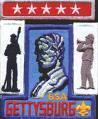
As a Boy Scout I walked the Gettysburg Trail. Heard again all about his speech. I got this badge.
It was my favorite 'optional' badge for about a year, and it had it's place on the right shirt pocket of my uniform. I liked it because it was made up of four separate badges. To earn all four parts you had to goto a museum, goto the cemetery and go on about a fourteen mile hike. Because we were hard-core, and probably because one of our leaders was some civil war buff or Lincoln fanatic, we added on an extra 6 miles to the hike. We did this in the freezing cold. I was just getting over strep throat at the time. It was one of my least favorite Boy Scout trips ever (Click if you want to find out what the two worse trips were).
As a Boy Scout I also went to Washington DC where I learned about Lincoln again, and I earned this badge for going on another historical trail.
I never cared for this one too much. Lincoln looks sort of deformed on it. (In future reviews maybe I will share more badges I earned for historical trails, there are a bunch more.) On this particular trip (which would be Boy Scout Washington DC trip 2- the first Washington DC trip was sooooo much cooler, we had to set up tents in pitch dark, no flashlights, yo! (seriously someone thought this shit up. We actually practiced pitching tents in the dark for weeks before this (insert your own joke here)), and we spent a lot of time at the National Air and Space Museum, which is just about the coolest place when you're an eleven year old boy (and pre-space shuttle explosion), but more importantly a friends dad got a small group of us on to an air force base and bought us stuff at the PX, again something that was really cool when you're eleven years old) (I promised myself I'd stay on track in this review, and I'm failing! Failing!!!! I'm just trying to make a point though, stay with me). Anyway, this particular trip, we went to Ford's Theatre and then the house across the street where they still had the bed and sheets that Lincoln died in. I saw where he was shot. I saw his blood. I once again heard about John Wilkes Booth. I visited the Lincoln Memorial.
You know what I never learned as kid? That a whole bunch of people got hung for the conspiracy for killing Lincoln. I don't think anyone ever said, Lone-Gun Man, but that was always the way it seemed to me. This is the story I remember of what happened. This crazy actor who is mad because the South lost shots Lincoln in the back of the head. He does a crazy leap from the Presidential Box where he breaks his ankle. He runs off and is chased and is soon caught up with when he's hiding in a barn. They burn the bad man in the barn.
I don't think I was a stupid kid. I liked history class. I was a Boy Scout who went on Historical Trails and learned stuff. And I don't ever remember hearing about these other people.
This book is technically a novel about John Wilkes Booth, but it's also about those other people.
If this weren't a re-issue of a book written in the early 1960's, I'd suspect that the author was trying to pull a fast one, trying to draw a lot of parallels between the war on terror and the Civil War.
You know another thing I don't remember learning in school? That Lincoln trampled on civil rights to wage the war. I'm sure I heard about the suspension of habeas corpus but it didn't really sink in what that meant at the time. I know I never heard that Freedom of the Press was kind of a joke, with it being considered a possible crime to write or publish critical stories of Lincoln and the war effort. I also didn't ever remember hearing that he was the President who started the draft. Of course he freed the slaves. And that was a good thing, but along with giving the start of civil rights to a slaves, he also trampled on personal liberties and rights and pushed aside portions of the Constitution to extend the powers of the Executive Branch in ways that are still problematic today. I'm not looking to argue if what he did was correct or not, history has generally judged that he was correct, but that is because he won the war. According to wikipedia he is consistently ranked as one of the three best Presidents ever. Who am I to argue?
But what if Lincoln hadn't been shot?
The Lincoln in this book wasn't a popular president. The war hadn't been that popular. But once he gets shot, all the resentment and ambivalence disappears and he becomes a hero, a martyr, someone for angry people to rally around and demand vengeance for.
Believe this or not, but that is the state that this novel is set in. Lincoln dies and people want vengeance. The person who seems to have wanted it most was Secretary of War Stanton (this is where all the mentions of civil liberties come in) who used all of the precedents that Lincoln had put in place to create a witch-hunt for the conspiracy he wanted to exist. So many people get arrested. Family members of Booth. His brother-in-law gets arrested because he wrote a letter to his sister that had been left unsealed that he could have read and maybe have helped stop the plot if only he had taken the letter out of the envelope and read it (is this for reals? My guess is yes, I did some research on some of the claims in the book and generally found that the author had done some research). All of the actors in the play Lincoln had been watching were arrested. Anyone that seems to have had any passing dealings with Booth got arrested. Most were let go, but a handful were tried for conspiracy.
It's not that some of those people weren't in fact guilty of conspiracy, but their trial and subsequent execution were a bizarre (travesty?) form of justice. The defendants were kept in solitary confinement with bags over their heads so that they couldn't possibly communicate with other people. They were tried in a military court with a judges hand chosen by Stanton. They had lawyers that they weren't generally able to consult with, and how had no time to prepare for any kind of defense and after they were found guilty (they were all found guilty, even the members of the conspiracy who had no evidence against them weren't acquitted, instead they were given six years of hard labor in a notorious Federal Prison in Florida where inmates routinely died of yellow fever) they were only told of their punishment a day before they were set to hang. Stanton was so afraid of them communicating with the outside world that even getting last rites administered was problematic.
I'm making this sound much more historical / 'revisionist' than the novel really is. It's really a very interesting look at the people involved in the assassination and with John Wilkes Booth. The re-occuring aside that bookends the story and is returned to throughout the main narrative is the effect John Wilkes' action had on his (prior to the assassination) more famous brother Edwin, who at the time was considered one of the greatest actors of Shakespeare. The manner that Edwin is haunted by the deeds of his brother add a nice layer to the story, and give a dimension beyond the assassination and the justice that follows.
I really enjoyed this novel. It is as good as Libra was about the Kennedy Assassination. Both novels succeed in giving some life to a person who we have heard mentioned so many times that they have become a one-dimensional stock characters in our national tragedies, but in giving them life and depth it adds a human aspect to the story, not necessarily a sympathetic side to the villain in the story, but just a reality to the myth or legend that these events have taken on. Yeah, neither one might necessarily be accurate, and they are both fiction so there are going to be liberties probably taken, but they both succeed in creating a person to understand and hold responsible. (ok, this last paragraph made much more sense in my head. I'm tired, and I can't be bothered enough to fix it right now).
Good Friday, 1865. It might well be the saddest day in American History. The day John Wilkes Booth cowardly shot Abraham Lincoln in the back of the head.
As Lincoln expired, the Secretary of Defense Edwin M. Stanton offered, 'Now he belongs to the ages.' This dramatic coda may have been a better acting performance than Booth ever accomplished on the stage. In this superb novel we learn that Stanton 'was a good Christian and a good hater.' He may have hated Lincoln most of all. But never mind that. Someone had to hang.
Booth, you may know, did not act alone. He would dispatch Lincoln personally; but he wanted to decapitate the rest of the head of the Union government. General Grant was supposed to be in the same theater box, but he declined, made excuses; anything to avoid an evening with Mrs. Lincoln. No matter. Booth sent his friend Payne to Secretary of State Seward's house. Herold would hold the horse's reins. Payne's gun misfired but he stabbed Seward repeatedly. Hearing the shouts, Herold fled. Atzerodt was to kill Vice-president Johnson. But Atzerodt was a drunk and didn't have the nerve. He slunk away.
Booth broke his leg jumping from the theater box to the stage. It was Dr. Mudd who splinted his leg. Union soldiers finally tracked Booth to a barn, surrounded it. Booth was not taken alive. But Stanton would have his hangings.
Arrested were Payne, and Herold, Atzerodt, Mudd. Also Spangler, Arnold, O'Laughlin and Mrs. Surratt. Stanton assured the trial was a farce. Only Spangler was set free, saved by the fact he never had a moustache. Arnold, Mudd and O'Laughlin would be sentenced to hard labor in the Dry Tortugas. For the other four a scaffold was built. The soldiers knocked out the beams supporting the trap and four bodies fell. One of the executed had had her dress bound around her 'so it would not billow immodestly as she dropped, and so she would not struggle.'
Stanton carried his hatreds well. The judges had recommended clemency for Mrs. Surratt. He buried their plea so President Johnson would never see it. Learning of it, Johnson fired Stanton. Stanton got himself re-instated and then drove the impeachment effort against Johnson.
All this is covered here. It's faithfully told. But it's oh so much more than that. Because who were The Judges of the Secret Court? Not the tribunal, we learn:
for it is the bystander who had to live with the crime, not the criminal. When criminals are caught, they die. It is the rest of us who have to go on living with what they have done, with what the world does, with what has been done to us. No, there was guilt in this world, yet somehow life makes us culpable.
----- ----- ----- -----
Booth was an actor, and from an acting family. No one played Hamlet better at the time than his brother Edwin. Edwin watches from afar but he adds Shakepearean flourishes to this script. But mostly, and often, this:
There's a special providence in the fall of a sparrow. If it be now, 'tis not to come; if it be not to come, it will be now; if it be not now, yet it will come: the readiness is all.
----- ----- ----- -----
And words, wonderful new words. Flibbertigibberts and tergiversations.
----- ----- ----- -----
Having nothing else to do, he slipped into the back pew of the nearest church. It was the sort of church, with pitch pine pews and no stove, fundamentally cold, in which the preacher, knowing nothing of it, is chronically given to deploring the world.
----- ----- ----- -----
It is a slightly different take than that of Doris Kearns Goodwin. Grittier and more cynical. Goodwin taught that Lincoln took his rivals, appointed them to his cabinet, and that they eventually revered him. Not so fast, Stacton paints. Lincoln was hated South and North. Some rivals never stopped conspiring. Death changed the biography:
Yesterday the papers would have interpreted that friendly voice as the bellowing of an incompetent fiend. But it cannot be denied: death makes a difference.
I am currently reading through David Stacton's entire oeuvre. He is an extraordinarily fine writer and he well deserves the title of a 'forgotten genius' though he does not deserve to be forgotten. I doubt many will agree with me but, if either longevity or decline of literary reputation was really connected to quality and not the whims of fashion Stacton's books would be read and Gore Vidal's novels forgotten. But I will save my comments about Stacton to the end of the review and concentrate on praising this fabulous novel.
'The Judges of the Secret Court' is about many things and to emphasise one thread over another is, inevitably, to do this very intelligent, tightly plotted novel (if only the graduates of creative courses could produce 250 page novels of such complexity) a disservice. But I am going to concentrate on the aspect of the novel that has attracted no attention either on GR, or in the mainstream reviews that appeared upon the novels republication, the tawdry 'conspiracy trial' in a kangaroo court that sentenced four people to hang and three others to terms of imprisonment which it was hoped they would not survive.
This trial was about politics, not justice. I find it impossible to imagine that readers in 1961 could not have found echoes of the trials of 'wreckers', 'saboteurs', 'Trotskyities' and others in the Soviet Union in the 1920s and 30s through to its Eastern European satellite states in the 1950s. But of course there were resemblances to recent events in the USA as well. Towards the end of the novel (page 242 in my copy) Stacton writes of the USA:
"...The civil war had made it an Imperium. Perhaps even Lincoln could not have checked that monstrous growth...the country, which had once seemed spacious, now merely seemed complex..."
If you swap the name of the war and the dead leader you will see a description of the USA in the 1950s and, in the complete absence of truth, justice or anything decent, in Edwin Stanton's actions the foretaste of another tinpot demagogue Joseph McCarthy.
David Stacton is too good a novelist to be vulgarly prescriptive about but if 'The Crucible' by Arthur Miller can be read as an allegory for McCarthyism then, in part, so can this novel. Stacton was always broader and more subtle in his portrayal of the clash of ideas and principals (see for example his very fine novel 'A Signal Victory' about the face off between the Maya and Spain in the Yucatan) and he works not through the impersonal forces of history but the lives of real people even if largely unknown ones.
Why were the themes and meaning of this novel not recognised at the time it was published? Partially because Stacton was barely published in the USA before his death. He was from California and when he left there he went to London not New York. He was never part of the cliques and fashions of the New York/East Coast literary world so was easy to ignore and forget once he died young.
I can't resist ending this review by quoting two brilliant character portraits from this novel. I am not the first on GR to do so but I don't care. The first is the description of a lawyer:
"He had a mouth modified by too much sucking at the public tit, and the result was an angry and petulant expression. On one hand, he posed as a person of probity. On the other, he wanted more. You could tell just by looking at him he was not happy to be here. He had chosen the wrong lost cause. To get a reputation as a fearless champion of lost causes, you must be canny to choose only that lost cause which people secretly long to find again. One look at the judges said he was in the wrong room."
The second is of Mrs. Surratt, an innocent woman who was doomed because of her son's association with Wilkes Booth:
"In the mirror she saw the face of a woman of forty-five, which was not fair, for she was not forty-five. The body may grow older, but alas, we do not. So we have to corset ourselves in. We have to be staid. We have to remember to control what was once charmingly instinctive, and the ageing body does something to our habitual gestures, it twists and confines them, so that we cannot make them with the same grace anymore. What had once been the craning of a coquettish girl had turned somehow into the snappish head-turning of a turtle surprised by an enemy it cannot see around the protective bulk of its carapace."
This is writing of a wonderful dexterity and insight. If it leaves you salivating for more then you are on the way to being Stacton aficionado. I have heard it said that whatever Stacton's qualities the days of the white male writer is over and it is time for all his ilk to disappear. If you believe such fatuous nonsense go and waste your time on fashions approved genres. But be warned, go down into the stacks of any university library and search out the shelves of unread and never to be read again 'proletarian' novels of the 1930s. These writings were based on cultural/political dictates of what writing should be about and who it should be written by. I see a similar future for many of today's fashionable writers.
(3.5) Great historical account of Lincoln's assassination told from the perspective of both John Wilkes and Edwin Booth. Acts of grandeur could be the best way to describe his fantastical beliefs, but what assassin is truly logical?
"...for it is the bystander who has to live with the crime, not the criminal. When criminals are caught, they die. It is the rest of us who have to go on living with what they have done, with what life has done, with what the world does, with what has been done to us."
This sums up the ultimate truth of this very incisive and interesting work of historical fiction. Nominally the book focuses on John Wilkes Booth and the before and after of his assassination of President Lincoln. I say nominally because the novel is more concerned with the emotional rhythms of the people orbiting Booth's universe like moons around a planet. We have the main co-conspirators such as Surrat, Payne, Herold and others. Then involved, but a further distance, are members of the Booth family. Followed by Lincoln's government officials (no love for poor, autocratic Stanton to be found here), and even common servants. We spend varying degrees of time inside the minds of all these players, sometimes even within the same paragraph, leading us to not be sure who we should be sympathetic too. Everyone? No one? Ultimately this is a novel illustrating the ripple effect of one man's actions on those around him. Booth famously claimed he did what he did for the sake of his country. This novel would argue that while that may very well be true, there were countless people in his radius who didn't share his beliefs and yet were forever judged by them long after he left the stage.
Ford jumps down to the stage: "The figure was so theatrically dressed, that it was as though a character from some other play had blundered into this one." "He had wobbled across that stage like a terrified spider shaken out of its lair."
"Mrs. Lincoln screamed. There was no mistaking that scream. It was what anyone who had ever seen her had always expected her to do."
"When something unexpected happened, one always asked for water if one were a woman, brandy if one was a man."
"the avenue, as usual, an accordion of dried mud."
"Booth had lain on his back, staring at the pendulous sky which sagged over him like the dingy sateen lining of a cheap coffin lid."
"(They) saw before them the ruin of an indoor man. Even after ten days in the woods, they wouldn't have looked like that."
In 1963, Time magazine included David Stacton on its list of best American writers, alongside John Updike, Joseph Heller, Phillip Roth and Bernard Malamud. But even then, Time noted that Stacton was nearly as unknown as possible for a writer who had written and received critical praise for a dozen novels. Not surprisingly, he fell out print and into obscurity until 2011 when the New York Review of Books reprinted this book, followed a year later by his original publisher Faber & Faber reprinting the rest of his novels.
I discovered Stacton by accident while researching a project and quickly became intrigued by his broad range of historical subjects and intense scrutiny of what made notorious and important people tick. He was as close to an 'out' gay man in the 40s and 50s as possible and I think you can see the bold, fearless, but sad life he lead in everything he wrote. He was usually drawn to the inner life of tragic historical figures or, rather, the tragic events that surrounded them. There is always a sense of doom and downfall that follows his characters, even as they are on their upward trajectory. They know, inherently, that the world will not allow it.
"Judges of the Secret Court" is superior historical fiction, set around the assassination of Lincoln, the flight and eventual death of John Wilkes Booth (hopefully that is not a spoiler!) and the aftermath of the kangaroo court set up to try and execute his accused conspirators for political gain. Lincoln himself, not beloved by either the North OR the South after the War, would become a martyr and forever lionized by the events Booth set in motion. Their legends were to become forever intertwined and pass into myth. Lincoln would be worshiped in a way that probably would not have occurred had he not been so dramatically murdered at a time when everyone thought the war was finally over.
For a novel written 60 years ago, I was struck by how relevant it is - and how much like contemporary popular fiction it reads. The events are told through a shifting, limited perspective of multiple character. We have Wilkes Booth, a preening narcissist, determined to be famous even if it is for infamy. Lacking any empathetic qualities, he is consumed with appearances and attractive poses, and views others' value only in the way they will support his starring role in life. We meet his brother Edwin Booth, also an actor - and a much better one at that. He would eventually be credited with the subsequent enduring portrayal of Hamlet being dressed in all black on stage. (Stacton's use of Shakespeare throughout the novel was a big perk for any theater nerd like me). We have the various people that Booth met and used to carry off his plot - and watch as the net tightens around them.
But probably the most striking feature of the novel is the portrayal of the Secretary of War, Edwin Stanton, and his deadly political ambitions. A hastily assembled military court that seems to be above the law, bodies thrown in jail and denied their rights before being rammed through court with barely a defense. Some of them guilty to a degree, others not. None with any hope of acquittal. Vengeance and power are usually driving forces in Stacton's novels, but probably displayed most effectively in "Judges". Stacton was a historian and a novelist who understood that ruthless ambition, whether it was from a murderer or a politician, could alter a nation forever.
I'll end my review with two of my favorite paragraphs:
A description of the pompous old gasbag lawyer called to defend some of the accused:
"He had a mouth modified by too much sucking at the public tit, and the result was an angry and petulant expression. On one hand, he posed as a person of probity. On the other, he wanted more. You could tell just by looking at him he was not happy to be here. He had chosen the wrong lost cause. To get a reputation as a fearless champion of lost causes, you must be canny to choose only that lost cause which people secretly long to find again. One look at the judges said he was in the wrong room."
And of Mrs. Surratt, an innocent woman who was doomed because of her son's association with Wilkes Booth:
"In the mirror she saw the face of a woman of forty-five, which was not fair, for she was not forty-five. The body may grow older, but alas, we do not. So we have to corset ourselves in. We have to be staid. We have to remember to control what was once charmingly instinctive, and the ageing body does something to our habitual gestures, it twists and confines them, so that we cannot make them with the same grace anymore. What had once been the craning of a coquettish girl had turned somehow into the snappish head-turning of a turtle surprised by an enemy it cannot see around the protective bulk of its carapace."
A fictionalized history of the events surrounding the death of Abraham Lincoln, with particular though not exclusive focus on the Booth clan. An engaging and evocative thriller about the roles we play, and our complicity in the show that unfolds around us. Very good.
Well-written historical novel about the Lincoln assassination. A lot about the Booth family that was very interesting. Slightly disappointed that "the Judges of the Secret Court" were not much of a character.
Allthough very low on dialog, the story was very engaging. There is a great deal of narration in this book and it requires a little bit extra concentration. Nevertheless, I really liked the authors way of telling the story and it's evident that he has done a lot of research on the subject. I like to read about this period of history (Lincoln, American civil war and its aftermath) and I found out a little more about all of those things from this novel. There are some very beautifully sentences in there that are well worth remembering. I would recommend the book to everyone who enjoys a good historical fiction novel, but some previous knowledge of the subject is necessary to fully enjoy the story.
David Stacton's "The Judges of the Secret Court" is one of the finest pieces of historical fiction I've read in a long time. Originally published in 1961 and newly resurrected by NYRB Classics, "Secret Court" takes a look at one of the most traumatic events in American history, the assassination of President Lincoln at the end of the Civil War with such attention to detail that I sometimes wondered whether this was a work of fiction or not.
The story opens in Edwin Booth's (the assassin's brother) Gramercy Park, New York City apartment in 1892, a year before his death. Recently retired from a stage career in which he was acclaimed as the great Shakespearean actor of his time, he is reading a manuscript sent to him by an aspiring playwright. It is a piece of fluff, "pish-tush" in Edwin's words. But he is struck by the title, "Judges of the Secret Court" and the title sends him on a sort of melancholy reverie, the sort where an old man's life may be said to flash before he eyes. And from there the heart of the story begins.
The reader is immediately taken back to April 14, 1865, the day Lincoln was shot. From there the story takes up very quickly through the assassination to Booth's flight and eventual death while being captured. The last third of the book takes the reader into the military tribunal where the trial of Booth's alleged co-conspirators. The book closes back in Edwin's Gramercy Park apartment.
There are a number of reasons why this book stands out for me as a great find. First, there is Stacton's attention to detail. Although a piece of fiction the picture Stacton paints of D.C. and the areas mentioned in John Wilkes Booth's flight from D.C. seem remarkably detailed and accurate. I am reading, as a companion piece to this book, Margaret Leech's Pulitzer Prize winning history of civil-war era DC Reveille in Washington: 1860-1865 (New York Review Books Classics) and Stacton's fictional description of D.C. and its inhabitants tracks Leech's historical account in every critical way. Stacton's writing is vivid without being florid and I felt as if I could almost see the dust bowls or muddy streets, smell the stench of overflowing drainage canals or be wary of the unsavory types that wandered through the streets.
Similarly, Stacton's characterizations of the players in this drama struck me as dead-solid perfect. Except for the playwright who submitted the manuscript to Edwin that serves as the entry point for the novel, all of the characters in Secret Court are real. Stacton goes for `straight history' here and creates a compelling narrative here not by introducing fictional characters to bounce off the real characters but by vesting these real figures with voices that drive the story. Stacton accomplishes this by speaking in the first person, or revealing the interior thoughts of all the characters in this drama. In the wrong hands this could result in dreadful, self-important prose but Stacton's language is so precise that the use of this overarching perspective works wonderfully. Last, Stacton's ability to sum up a character, be it one of the Booths, Mary Surratt, Dr. Mudd, Secretary of War Stanton, or Vice President Johnson, in a sentence or two as they enter the `drama' really set up everything that flowed from that character in the book.
The last third of the book, the trial of Booth's co-conspirators and everyone else swept up by Stanton in the aftermath of the assassination, had contemporary resonances for me that I don't think Stacton could have foreseen when he wrote the book. The assassination was a tragic event that had an undeniably seismic impact on American life and politics. In the traumatic days that followed Stanton declared martial law, arrested every actor in Ford's Theatre and everyone else he could get his hands on and prepared them for a military trial. Habeas corpus remained suspended and the prisoners were kept isolated in cells, bound and with burlap bags over their heads so they could not talk or otherwise communicate with everyone. The trial was handled in many respects like Stalin's famed show trials of the 1930s. As one of the judges is heard to say, "[t]he way to show innocence in this world, is to prove someone else guilty, and they had their orders and would obey them." I would not argue if any reader sees a parallel to events in the U.S. over the last ten years. As Edwin Booth says in his reverie, we may all be guilty or even innocent, but "who can prove it? For in fact no man is innocent at that bar. He is always accessory, willy-nilly, before or after some fact." As Edwin comes out of his reverie he notes that "there is no guilt in this world, yet somehow life makes us culpable. That is the meaning of the Judges of the Secret Court. No matter what we do, they are always there."
David Stacton's "Judges of the Secret Court" is a special book.
In one sense, a very conventional historical novel, centred on John Wilkes Booth's assassination of Lincoln. After which, a president whom by that point had been widely disliked (in the South for crushing them, in the North for being too merciful) is swiftly elevated to secular sainthood, while a killer who thought he'd be acclaimed as a hero sinks into an ever more ignominious state as he makes his botched escape. So far, so canonical. But, perhaps because I'm a Brit who knows little more of the story than Booth's own brief speech and the apocryphal question to Mrs Lincoln (who, in this account, didn't enjoy very much at all), a lot of the rest of it came as a surprise. I'd had no idea about the wider conspiracy to off the line of succession, or about the kangaroo court which followed, for genuine conspirators and the merely unlucky alike. The architect of this purge, the sinister Stanton*, is uncomfortably reminiscent of Beria in The Death of Stalin (and the two stories have a surprising overlap in mood, given this follows the murder of a great and good man, while that was about the long-overdue but natural death of a monster). There's a great suspicion of the mob, which is defined as pretty much any grouping of people, and a horrible sense of the inexorable, at odds with the trend for presenting historical moments to us with the awareness that, at the time, the actors must have felt they could have done otherwise. Not here, where everything is railroaded as surely as the funeral train, and the participants mostly feel that. I read it largely because John Crowley has mentioned Stacton as an inspiration for his invented novelist Fellowes Kraft, and in his introduction to this, as well as making some very solid technical points regarding Stacton's use of viewpoint, Crowley also talks about how Stacton was compared to Walter Pater's Marius. This book certainly has something of the same austere grandeur, but it's the shadows of Washington or a grotty barn rather than Marius' clear Mediterranean light. There are few laughs, and those distinctly hollow: there's not even much made of the fact that John Wilkes Booth had both a father and a brother called Junius Brutus, and yet, all nominative determinism notwithstanding, neither of them was the one who ended up killing the ruler. I don't regret reading this, but I don't think I'd read another; I always pictured Kraft as having more light and a kinder magic to him.
*Curious that Stacton, which was a name of Stacton's own choosing, should end up writing a book in which the villain's name is his own bar the merest rotation of one letter.
In my experience most works of historic fiction, at least those dealing with events beyond the living memory of the author, have a kind of double vision, focused not just on the era they explicitly describe, but also commenting upon or reacting to events closer to or contemporary with the time the book was written. Stacton’s novel, written in 1959 – 60, views the Lincoln assassination and attempted assassination of Secretary Seward, the hunt for the assassins their fellow conspirators, and the subsequent trial and executions through perspective of the red scare of the 1940s and 50s. Frightened and vengeful officials backed by a shocked and outraged public catch up the guilty and unfortunates who happen to have been in close proximity to the guilty and a hastily arranged military trial with a foregone verdict is performed, quickly followed by executions. Guilt by association, accusation by innuendo, and public shunning are used to punish those who manage to avoid or escape actual prosecution. Alas, as John Crowley notes in his introduction to the 2011 NYRB reprint, the parallels are even closer to our own day, with the War on Terror justifying civil rights violations of American citizens and the prisoners at Guantanamo Bay, apparently permanently imprisoned without hope of appeal, pardon, or trial. Stacton sticks very close to the documented facts of the case, but tells the story through a shifting point of view, encompassing dozens of characters’ viewpoints, sometimes changing the viewpoint within a paragraph. Occasionally a more detached voice is used to make pronouncements and observations, but that voice is seldom sustained for more than a sentence or two at a time. I found this style distracting and not particularly helpful in telling the story; I thought that limiting the number of viewpoint characters, or at least keeping them consistent within chapters, would have made the storytelling more effective. Stacton’s primary concern seems to be the injustices committed in the wake of the assassination, told through incident and character, and a less obtrusive style would have helped the reader to concentrate on that.
This is the second in a triptych of novels by Stacton dealing with crucial events and phases in the history of the Americas: the first, A Signal Victory, was set in Yucatan at the time of the Spanish Conquest and the third, Tom Fool, was based on the career of Wendell Wilkie. The Judges of the Secret Court focuses on the character of the man who assassinated President Lincoln. John Wilkes Booth was a failed actor whose head was filled with dreams and whisky-fumes. Escaping from Washington after the murder, confident of a hero’s welcome in the south, he died like a cornered animal in a Virginian barn. Sheer brilliance from a master of words. N.B. The Judges of the Secret Court has recently been republished by New York Review Books. David Stacton’s other novels are available from Faber Finds.
I picked up this book solely because of its intriguing title, but it turned out to be what some critics have called one of the finest books ever written about the Civil War, as well as a “long lost gem” that can be hard to track down.
While the novel’s pivotal moments take place early on when Lincoln is shot, most of the action takes place afterwards and involves not only John Wilkes Booth but his brother Edwin who is the most conscientious and introspective of all the characters in the novel. We meet him both at the beginning and the end of the book as he struggles to come to terms with the terrible thing his brother has done and the fact that “… it is the bystander who has to live with the crime, not the criminal. When criminals are caught they die. It is the rest of us who have to go on living with what they have done, with what life has done, with what the world does, with what has been done to us.”
The novel is fascinating in its portrayal of John Wilkes Booth and the events surrounding his frantic attempt to escape through the swamps of southern Maryland. But he is not the only villain in the book and as soon as he dies that dubious honor gets shared with Edwin Stanton, Lincoln’s Secretary of War. Once Lincoln is shot, Stanton emerges upon the scene to quickly take charge, intent on asserting his power to find and convict those he believes to be guilty of a conspiracy to assassinate the president.
Stracton paints Stanton in truly villainous colors, showing him to be merciless in hunting down anyone who could possibly have had even the most tangential part to play in a conspiracy and bringing to trial a cast of characters the reader begins to feel great sympathy for – especially Mary Surrat, owner of a boarding house in Washington D.C. who became the first woman to be executed by the United States Government. As for the trial itself, Stracton has this to say: “The trial was rigged. The trial was a mockery, Fear had made men liars. . . .this was not a court at all. It was merely a self-constructed viewing stand. Further the charges against the accused that they had maliciously, unlawfully and traitorously conspired.”
I need to talk to my historian brother-in-law to find out a little more about this – namely, what evidence exists that John Wilkes Booth was the master-mind behind a widespread conspiracy to assassinate Lincoln? And if there was such a plot were those who Stanton had hung actually guilty? And was the trial really rigged? The fascinating thing about reading good historical fiction is that it leads to questions like these.
Beyond these purely factual questions, lies a deeper one – just who are the judges of the secret court? I suspect one of Edwin Booth’s roles in this novel is to suggest that they are there lurking in the shadows for all of us, reminding us that life is full of things we’d rather not have to face up to, let alone be judged by. And that ultimately when terrible things happen – whether it’s an assassination of a president or an election of a corrupt one – we are left to bear the consequences because we’re the ones who have to live with what has happened. I suppose history is one long record of what that involves.
Having been made aware of author David Stacton by one of my friends here on Goodreads, I decided to give The Judges of the Secret Court a try. It is well worth the read. Stanton takes a story we all think we know well and invigorates the seemingly well worn story with vitality. While, strongly written throughout, Stacton really hits his stride in the last half of the novel, particularly in his incarnation of Edwin Booth. Wow! Edwin Booth, who might be seen as a historical footnote, becomes an amazingly compelling and rich figure, the man who played tragedian on stage, but also suffered tragedies off the stage which were the making of his infamous brother.
David Stacton was apparently quiet popular in his time but has become an obscure writer in the American canon. This is an author that certainly deserves a revival.
Even if I wasn't weirdly obsessed with the assassination of Abraham Lincoln as a child, I would have loved this book.
I found it in the clearance section of a bookstore, never having heard of it before, and then promptly forgot I owned it for several years. And in all that time, I don't think I even ever saw Stacton's name. It's a strange little gem of historical fiction, with some absolutely breathtaking writing, about the assassination and subsequent manhunt, arrests, and trials for the conspirators - or, in some cases, the "conspirators." It's a very character driven piece, attempting to draw out the thoughts and motives of a series of historical figures.
John Crowley's overlong "introduction" to this edition of the book subconsciously set me up to expect a lot more depth and craftsmanship than I was ever able to find within its pages. I strongly advise saving it for after you read the actual novel, if not just skipping it altogether.
I'd had this book on my Kindle for several years and have finally got around to reading it.
I am now obsessed with this author and will work my way through his other historical novels (just one of the genres he produced to great critical acclaim but little success) until I am over him......
Great companion piece to the film Jackie (2016) or the novel Libra. Taught me a lot about the Lincoln Assassination in general. Sorta pulpy for a historical novel.
This was not the usual kind of book I would have chosen to read on my own, but I stuck with it for my book club, even though I found it to be a somewhat disrespectful and voyeuristic look at the assassination of President Lincoln, and all that came during its aftermath when the conspirators were brought to what passed for justice then. By the end of this book, I was wondering just who were the good guys and who were the bad guys.
This book was historical fiction, which I like, since books in this genre are usually an entertaining way to learn about the past, assuming the author did his research. But I have to say, in the case of this book, which was for the most part accurate, I was not so much entertained as horrified. It was hard to believe that much of this really happened as portrayed. In school, I never learned much beyond the effect Lincoln's assassination had on the nation. I never learned about the capture and trial of those who had either participated in the various plots against Lincoln or those who were deemed guilty by associating with them. Nor did I know the effect that the assassination had on the family of John Wilkes Booth. By the end of this book, I learned more than I really wished to know.
The book alternates, in point of view, between an omniscient narrator and third person, sometimes in the same paragraph, with the reader either listening from the outside to judgmental rhetoric, or listening from inside the heads of each person, to what amounted to an endless litany of their vile thoughts. I thought this format was both jarring and claustrophobic.
This is not to say that I didn't get anything positive from this book. I learned much about that time period and the people populating it, not to mention what effect the suspension of habeas corpus had on the fate of those involved in what amounted to treason in a military court. And there were some interesting observations by the author about human nature and more. Here are a few of my favorites:
"In this life, we knot our own noose. But at least one might be allowed to kick away the box one's self."
"Where else but on a stage could a man be himself?"
"The way to show innocence is to prove someone else guilty."
"War had no meaning. It was an environment not an idea."
"The inevitable was something one watched with quiet eyes from a safe corner."
So two stars for this book for making me suffer through some excruciating inner monologues in a confusing format, though I did learn some things in the process, so I can't say the book wasted my time.
Though I love history, I am usually ambivalent to historical fiction. I find it a tad convenient when the main character, Johnny or Janie, just happens to see General Washington or Frederick Douglass or Clara Barton in the midst of some heroic enterprise. But David Stacton's "The Judges of the Secret Court" completely won me over.
The book, originally published in 1961, tells the story of John Wilkes Booth's assassination of President Lincoln and its aftermath. As far as I can tell, all the characters were real people, and the events in the plot happen as they did in real life. What makes the novel extraordinary is the way Stacton weaves back and forth between the different characters, revealing how one man's despicable actions affected so many others. Everyone around Booth, consciously or not, became entangled in his conspiracy. Many paid the ultimate price.
Stacton writes with penetration into the characters' thoughts and motivations, while also commenting from above on the universal human traits that his tale exemplifies. There is much detail without flowery language, and much tragedy without sentimentality. I have never read another novel quite like "The Judges of the Secret Court." Apparently Stacton wrote several others of a similar style dealing with far-flung periods of history including ancient Egypt, the Thirty Years' War, and even 1940s politician Wendell Willkie. I would eagerly read anything else by him. (This book's introduction informs me that he also wrote pulp novels under different pseudonyms.)
I highly recommend "The Judges of the Secret Court," a forgotten gem.
Edit: Moving this down to two stars because it really does not stack up to a lot of other books I read this year. I still enjoyed this book but want to record that this was the low end in terms of enjoyment and insight.
Right up my alley in terms of subject matter, fascinating historical nuggets throughout, but the execution is just kinda bleh. Edwin is the only character that gets truly sketched out, his arc is engaging and the conclusion is fulfilling. But, for a book about John Wilkes Booth, you don't actually come away with much of a sense of who the killer was. Vain and arrogant yes, but very little digging into why he came to be that way.
This is interesting to read in 21st century America because of how much Stacton's depiction of the post-Civil War government bureaucracy sounds like modern day critique of the Deep State. This sprawling information gathering administrative body of the War Department ends up infringing upon unwitting Americans within the general vicinity of Booth. It's hard to root against a Union govt fresh off winning the only moral war we ever waged, but Stacton paints a compelling picture of how clumsy and careless institutions can be in the rush to assess blame.
Usually I don't like historical fiction, perhaps because the authors so often feel compelled to demonstrate the depth and breadth of their research. So many little and large facts thrown into the mix. This one is different. It has a casual feel about the pace, plotting, and setting. Did John Wilkes Booth recite Shakespeare on the banks of a Maryland river while hoping to escape to Virginia? Probably, and while a history couldn't include that scene it sure is believable. I have no idea how much is precise, historically, but I have the sense it is pretty accurate and provides a very readable overview of the assissination of Lincoln and those who were rightfully and wrongfully caught in the vengeful government's net afterwards. The opening and closing chapters depict John Wilkes Booth's brother Edwin in the 1890s. I found these the least well integrated portions of the book.
When I think of the Frnech Revolution, all my mental images come from a Tale of Two Cities. I suspect this book will do the same for my sense of this cataclysmic event of American history.
A very psychologically-detail written book. But what fascinated me the most about this book is the concept that the denizens of Washington D.C. felt very ambivalent about Lincoln, even after the war was over. It was really his sudden death that turned him into hero/martyr. John Wilkes Booth comes off as a sympathetic and pathetic character in this books-- he expects to be a hero for all time. And thinks of his actions as if they were a play, as if he could do them all over again the next night and suffer no consequences.
I also like the the detail of Stanton's obsessive quest to capture Booth. It highlights what a different world we live in today when a select amount of people's desires really can change history.
Less effective I think is the Edwin Booth reminiscences, although how he (a character) comes up with the title definitely left me contemplating history, judgements, and how our values are useless to the future. A bit Kafkaesque, no?