

What do you think?
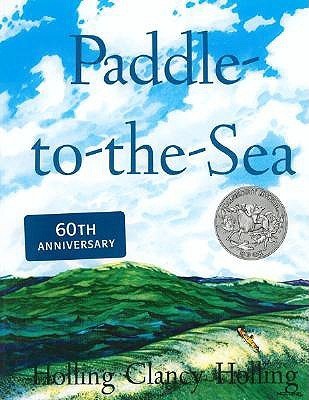
Paddle-to-the-Sea
A 1942 Caldecott Honor Book
A young Indian boy carves a little canoe with a figure inside and names him Paddle-to-the-Sea. Paddle's journey, in text and pictures, through the Great Lakes to the Atlantic Ocean provides an excellent geographic and historical picture of the region.
A young Indian boy carves a little canoe with a figure inside and names him Paddle-to-the-Sea. Paddle's journey, in text and pictures, through the Great Lakes to the Atlantic Ocean provides an excellent geographic and historical picture of the region.
64 pages, Paperback
First published September 9, 1941
About the author
Holling Clancy Holling
20 books80 followersBorn in Jackson County, Michigan, in 1900, Holling Clancy Holling graduated from the Art Institute of Chicago in 1923. He then worked in a taxidermy department of the Field Museum of Natural History in Chicago and spent time working in anthropology under Dr. Ralph Linton.
During this period, he married Lucille Webster, and within a year of their marriage accepted a position as art instructor on the first University World Cruise, sponsored by New York University. For many years, Holling C. Holling dedicated much of his time and interest to making books for children. Much of the material he used was known to him first hand, and his wife, Lucille, worked with him on many of the illustrations.
Sometimes listed as Holling C. Holling
During this period, he married Lucille Webster, and within a year of their marriage accepted a position as art instructor on the first University World Cruise, sponsored by New York University. For many years, Holling C. Holling dedicated much of his time and interest to making books for children. Much of the material he used was known to him first hand, and his wife, Lucille, worked with him on many of the illustrations.
Sometimes listed as Holling C. Holling
Ratings & Reviews
Friends & Following
Create a free account to discover what your friends think of this book!
Community Reviews
Displaying 1 - 30 of 516 reviews

May 11, 2018
I don't think this would make a great bedtime story as it would take about 30-45 minutes to read it aloud at least. It is a full page of text with a full picture. It would make a great first reader book for someone who wants to read a story if they enjoy more history things.
I really enjoyed this book. I found it charming and interesting and a story that drew me in. It was a fun journey exploring the lakes and waterways of the great lakes out to the sea. A young boy up in Canada makes a canoe with an Indian in it that will float. When the snow thaws, he sends it on it's journey to the sea with a message asking to help get the paddle man there. He travels all through the 5 great lakes and people help him out along the way and he sees all manner of things. He eventually makes it to France after 3 years and makes the International papers and the boy, now a teen sees that his little friend made the journey.
I really did enjoy this and there are maps to see where and how he went. I know this wouldn't be for everyone, but something about it really resonated with me and the hope and vision of his toy journey making it all the way to the sea. I'm glad I read this.
I really enjoyed this book. I found it charming and interesting and a story that drew me in. It was a fun journey exploring the lakes and waterways of the great lakes out to the sea. A young boy up in Canada makes a canoe with an Indian in it that will float. When the snow thaws, he sends it on it's journey to the sea with a message asking to help get the paddle man there. He travels all through the 5 great lakes and people help him out along the way and he sees all manner of things. He eventually makes it to France after 3 years and makes the International papers and the boy, now a teen sees that his little friend made the journey.
I really did enjoy this and there are maps to see where and how he went. I know this wouldn't be for everyone, but something about it really resonated with me and the hope and vision of his toy journey making it all the way to the sea. I'm glad I read this.

January 26, 2018
"I am Paddle To The Sea
Please put me back into the water"
An Indian boy, living on a river north of Lake Superior, writes this on the bottom of his carving of an Indian in a canoe, and sets Paddle on his way. Helped by the people he meets on the way, Paddle-to-the-sea travels through each of the Great Lakes on his way to the ocean.
Another wonderfully told and illustrated story from Holling Clancy Holling, who provides an emotional hook to the adventures of the inanimate Paddle, and serves as an excellent tour guide to the geography and history of places Paddle passes.
The past couple of days DS#1 (age 6) has attempted to go on strike in order to get an extra chapter, and, when we reached the end, wanted the last chapter read again. (I gave in to the latter - it was a great emotional capstone to Paddle's adventures.)
DD#1 (age 4) asked lots of questions, and those questions made it fairly obvious that she didn't understand most of what transpired. But, y'know, she was interested enough to ask lots of questions and paid attention throughout.
DS#2 (age 2) would occasionally drift by, note the pictures of the water, and ask plaintively where the fish, sharks, or plesiosaurs were.
Update - 2022.
Second pass. DD#1 (8) and DS#2 (6) loved it; DD#1 seemed to have some vague memories of the previous reading. DD#2 (4) would occasionally listen, but generally wandered off to draw jellyfish wearing tiaras.
Please put me back into the water"
An Indian boy, living on a river north of Lake Superior, writes this on the bottom of his carving of an Indian in a canoe, and sets Paddle on his way. Helped by the people he meets on the way, Paddle-to-the-sea travels through each of the Great Lakes on his way to the ocean.
Another wonderfully told and illustrated story from Holling Clancy Holling, who provides an emotional hook to the adventures of the inanimate Paddle, and serves as an excellent tour guide to the geography and history of places Paddle passes.
The past couple of days DS#1 (age 6) has attempted to go on strike in order to get an extra chapter, and, when we reached the end, wanted the last chapter read again. (I gave in to the latter - it was a great emotional capstone to Paddle's adventures.)
DD#1 (age 4) asked lots of questions, and those questions made it fairly obvious that she didn't understand most of what transpired. But, y'know, she was interested enough to ask lots of questions and paid attention throughout.
DS#2 (age 2) would occasionally drift by, note the pictures of the water, and ask plaintively where the fish, sharks, or plesiosaurs were.
Update - 2022.
Second pass. DD#1 (8) and DS#2 (6) loved it; DD#1 seemed to have some vague memories of the previous reading. DD#2 (4) would occasionally listen, but generally wandered off to draw jellyfish wearing tiaras.

March 18, 2021
My 7 yo son and I loved reading this together! We kept a map in the book so we could trace Paddle's journey and we kept a journal of notes on the back of everything he encountered on the way. A very special book and we learned a lot about the Great Lakes, and about Canada too.

September 22, 2011
I found this book the day before Bay Books, an independent bookseller, closed its doors in Concord, California. Perhaps I should say that the book found me. Why would I buy a children's book? It must have been the local book dragon whispering in my ear, for I am grateful for this great find.
The author takes us on a trip that starts in the great northern wastes of Canada, and we follow the carved toy through the wilderness and down in to the Great Lakes of the States. Along the way, we find out what the inside of a sawmill looked like and how Lake Superior resembles a wolf's head. Yes, a wolf's head.
If the kids want to have more read to them, tell them to go to sleep so you can read the book yourself in peace and quiet. It was sad to see yet another local bookstore leave us, but it brought me great happiness with my last purchase.
Book Season = Autumn
The author takes us on a trip that starts in the great northern wastes of Canada, and we follow the carved toy through the wilderness and down in to the Great Lakes of the States. Along the way, we find out what the inside of a sawmill looked like and how Lake Superior resembles a wolf's head. Yes, a wolf's head.
If the kids want to have more read to them, tell them to go to sleep so you can read the book yourself in peace and quiet. It was sad to see yet another local bookstore leave us, but it brought me great happiness with my last purchase.
Book Season = Autumn

April 14, 2009
Canadian Indian boy carves a small wooden canoe with a little figure in it, named Paddle-to-the-Sea. He places it on top of a snow-laden hill, and leaves. Soon the snow starts melting and Paddle starts on his voyage. He slides into a brook, leading to Lake Superior, and from there to the other Great Lakes.
This book is halfway between a regular picture book and an illustrated book. Each left-hand page is filled with text, a chapter, describing a stage of the voyage. These text pages are illuminated with small black and white drawings showing more of the location and the things that are described. (Educational!) The right-hand pages are reserved for glorious full-page colour illustrations.
Holling is very good at depicting menacing masses of water. His skies are also fine, although a little odd as the clouds seem to rise straight from the earth, like the flames of that forest fire. Luckily he doesn't shy away from the industrial landscape bordering the Great Lakes, because they have a special magic for me, being an inhabitant of a large port. The compositions remind me of Cas Oorthuys' photographs of post-war Rotterdam.
This book has a grandeur that's hard to put into words. Like a lone whale cruising deep down the Labrador Current, or something. The story is fueled by the powerful forces of nature. (And they appear even more powerful because the canoe is so little.) Man seems merely an extra in this humongous and mysterious theatre. *Seems*, because without human intervention Paddle wouldn't have reached his destination.
And so it is also a story about progress made possible by human cooperation. Something that was very much needed in 1941, when this book was published. It received a Caldecott honor the following year, but it deserved the medal, being vastly superior to Robert McCloskey's _Make Way for Ducklings_, which I will fillet in my next review.
This book is halfway between a regular picture book and an illustrated book. Each left-hand page is filled with text, a chapter, describing a stage of the voyage. These text pages are illuminated with small black and white drawings showing more of the location and the things that are described. (Educational!) The right-hand pages are reserved for glorious full-page colour illustrations.
Holling is very good at depicting menacing masses of water. His skies are also fine, although a little odd as the clouds seem to rise straight from the earth, like the flames of that forest fire. Luckily he doesn't shy away from the industrial landscape bordering the Great Lakes, because they have a special magic for me, being an inhabitant of a large port. The compositions remind me of Cas Oorthuys' photographs of post-war Rotterdam.
This book has a grandeur that's hard to put into words. Like a lone whale cruising deep down the Labrador Current, or something. The story is fueled by the powerful forces of nature. (And they appear even more powerful because the canoe is so little.) Man seems merely an extra in this humongous and mysterious theatre. *Seems*, because without human intervention Paddle wouldn't have reached his destination.
And so it is also a story about progress made possible by human cooperation. Something that was very much needed in 1941, when this book was published. It received a Caldecott honor the following year, but it deserved the medal, being vastly superior to Robert McCloskey's _Make Way for Ducklings_, which I will fillet in my next review.
September 5, 2013
"I am Paddle to the sea, please put me back in the water..."
This is another book I remember reading over and over. I can still picture some of the wonderful illustrations in my mind from this book. The cute little hand carved canoe on it's own adventure. It makes a strong case for taking care of the environment, beautiful pictures, and a wonderful "message in a bottle" type story-line.
I can see the little canoe and it's totem paddler stuck in the log about to get cut at the saw mill when the Lumberjack sees him. I can see Paddle passing beavers and deer and beautiful woodland creatures, even when the little indian boy sets him down in the snows on the mountain so he can ride the snow melt to the river.
Maybe I'm an old softie, but this was a memorable read for me.
This is another book I remember reading over and over. I can still picture some of the wonderful illustrations in my mind from this book. The cute little hand carved canoe on it's own adventure. It makes a strong case for taking care of the environment, beautiful pictures, and a wonderful "message in a bottle" type story-line.
I can see the little canoe and it's totem paddler stuck in the log about to get cut at the saw mill when the Lumberjack sees him. I can see Paddle passing beavers and deer and beautiful woodland creatures, even when the little indian boy sets him down in the snows on the mountain so he can ride the snow melt to the river.
Maybe I'm an old softie, but this was a memorable read for me.

October 2, 2022
2023: Last reading with my last Y1. 😭

January 20, 2021
I don't know how to rate this book, and it's difficult to write about it. The book was first published in 1941 and it is, of course, a book of its time with all the flaws we can see in retrospect. But it also has elements that transcend its time, and that is its strength.
It's the story of a canoe carved by a Native American child and set loose on the water, with an inscription on the bottom, urging its finders to help the boat to continue its journey to the sea. And so the canoe goes, traveling from place to place, pulled from desperate situations, gliding past a forest and a beaver pond and a marsh as well as a sawmill and a shipwreck and a forest fire. The story is surprisingly complex for a picture book. It's a story of a canoe set into motion with a purpose and its purpose relies on the work of many of others to see that purpose is fulfilled.
It's the story of a canoe carved by a Native American child and set loose on the water, with an inscription on the bottom, urging its finders to help the boat to continue its journey to the sea. And so the canoe goes, traveling from place to place, pulled from desperate situations, gliding past a forest and a beaver pond and a marsh as well as a sawmill and a shipwreck and a forest fire. The story is surprisingly complex for a picture book. It's a story of a canoe set into motion with a purpose and its purpose relies on the work of many of others to see that purpose is fulfilled.

July 28, 2018
50 years ago I was a bored and irritable 10 year old stuck looking for something to do and I climbed the stairs in the old Carnegie Library in Hayward, WI hoping to kill some time. Thankfully, I was able to ditch my little brother in the kiddie stuff an went looking for something, anything, that would relieve my boredom. Somehow, I stumbled on to this book. I was transformed. It kindled a lifelong love of the outdoors, travel and the environment.
The illustrations are magnificent. Look at the lighting how the little Indian boy is illuminated by the fire as he paints “Paddle to the Sea”.
“I am Paddle-to-the-Sea : Please put me back in the water” . The inscription may not be exact. I’m drawing on my memory banks from decades ago. It reached a quiet and introspective boy at precisely the right moment. This is a wonderful book to read aloud to little ones too. The pictures fire the imagination.
A while back, I bought a half dozen of this book and donated them to a library in Florida. While I don’t expect every child to embrace this story, if I was able to fire the imagination of 1 or 2 kids, it was totally worth it.
I'm not going to go over the details about a book that was written in 1941. This is a gentle and beautiful book to read to your child. Find a quiet place and time to share this with a smart young boy or girl, and you will both be enriched.

November 5, 2018
Full of lush descriptions of nature, you'll follow one wooden carving's journey from Lake Superior all the way to the Atlantic Ocean. And I don't know your child will want to try something similar from a river or stream you live next to. It sure would be fun!
Ages: 7+
Note: this book is wordier than most picture books so will take over 30 minutes to read (it is broken into chapters).
**Like my reviews? Then you should follow me! Because I have hundreds more just like this one. With each review, I provide a Cleanliness Report, mentioning any objectionable content I come across so that parents and/or conscientious readers (like me) can determine beforehand whether they want to read a book or not. Content surprises are super annoying, especially when you’re 100+ pages in, so here’s my attempt to help you avoid that!
So Follow or Friend me here on GoodReads! You’ll see my updates as I’m reading and know which books I’m liking and what I’m not finishing and why. You’ll also be able to utilize my library for looking up titles to see whether the book you’re thinking about reading next has any objectionable content or not. From swear words, to romance, to bad attitudes (in children’s books), I cover it all!
Ages: 7+
Note: this book is wordier than most picture books so will take over 30 minutes to read (it is broken into chapters).
**Like my reviews? Then you should follow me! Because I have hundreds more just like this one. With each review, I provide a Cleanliness Report, mentioning any objectionable content I come across so that parents and/or conscientious readers (like me) can determine beforehand whether they want to read a book or not. Content surprises are super annoying, especially when you’re 100+ pages in, so here’s my attempt to help you avoid that!
So Follow or Friend me here on GoodReads! You’ll see my updates as I’m reading and know which books I’m liking and what I’m not finishing and why. You’ll also be able to utilize my library for looking up titles to see whether the book you’re thinking about reading next has any objectionable content or not. From swear words, to romance, to bad attitudes (in children’s books), I cover it all!

March 12, 2023
This is one of those books, that if they bothered to read it, the woke crowd will want to edit. It mentions Indians, and French trappers (who talk a little lingo), and gives a great history of the northern Great Lakes. So if you want a classic book before it gets yanked for edits, better grab this one, especially if you live near one of the Great Lakes and love the history of this part of our country.
Written in 1941 and illustrated by the author, Paddle-to-the-Sea tells the story of a wooden Indian in a canoe, crafted by an Indian boy near Lake Nipigon, Canada, which sails all the way through the Great Lakes and up the St. Lawrence River to the Atlantic Ocean, where he is eventually brought up in a fisherman's net and ends up in France.
Along the way, Paddle-to-the-Sea experiences all the commerce, nature, and history of the northern edge of the United States where it adjoins Canada. At first, I thought this was going to be a picture book for younger children, but it is much more suited to middle grade children. Each page does show a full-color picture of what is happening to Paddle, but the facing page is the explanation of his adventures. A map at the back of the book details the journey.
He begins in a snowbank, which melts and thrusts him into the river. He watches a beaver dam being built, participates in the breakup of the ice that frees the river, meets a sawmill and is barely rescued from being sliced by the blade, and is dropped back into the river by a friendly lumberman. He then is propelled into Lake Superior, the largest lake in the world. The currents send him along the shoreline, where he crosses the international border twice, and drift him into a marshland. He observes the wildlife in the marsh for some time, but a heavy storm lifts him into the lake once again. He is caught by some fishermen, but slips through a hole in the dock and is once more on his way.
He is often washed ashore, observing the life, both human and animal, but storms wash him back out to the lake again. During the winter, as ice coats everything, Paddle witnesses a shipwreck and is washed ashore with the rescued men. A man from the Coast Guard takes time to repair and repaint Paddle and his canoe, and attaches a copper plate to the bottom of the canoe detailing its voyage and leaving room for other names to be scratched in the copper as Paddle continues his journey.
Paddle travels by dog sled for a while, and then by freighter, but is accidentally dropped into a sailor's laundry bag, which falls overboard. Washed ashore once again, Paddle is eventually freed by some dogs who tear into the bag and play with Paddle, but drop him near the shore, where he continues his journey. He loves the shore of Michigan, where he passes green pastures and grain fields, grapevines and orchards. Finally he is back to the northern shore and ready to continue his journey.
He witnesses a terrible forest fire, and is swept on ice through the frozen winter waves. When the ice breaks up again, a young girl in her father's boat carries him to Detroit and drops him into Lake Erie. He takes a great fall over Niagara and is caught for a while in the whirlpool. When he is rescued, kind people take him up the river to Toronto and Kingston. He is almost to the sea.
A little old lady near Montreal keeps him for the winter, using him to tell her grandson stories about Indians and French traders. In the spring, she sets him free, and he is swept into the Gulf of St. Lawrence and catches the Gulf Stream, which sends him by Newfoundland. A fishing boat brings him aboard with a load of fish and ends up in France.
A newspaper article about Paddle and his 3-year journey makes headlines in both countries, and eventually is read by a man on Lake Nipigon, where his journey began. As the man reads the article aloud, a young Indian man is listening. Here is what he says:
“In the canoe, the Indian smiled. Once he paused in a stroke, and rested his blade. For that instant he looked like his own Paddle. There was a song in his heart. It crept to his lips, but only the water and the wind could hear.
You, Little Traveler! You made the journey, the Long Journey. You now know the things I have yet to know. You, Little Traveler! You were given a name, a true name in my father’s lodge. Good Medicine, Little Traveler! You are truly a Paddle Person, a Paddle-to-the-Sea!”
Written in 1941 and illustrated by the author, Paddle-to-the-Sea tells the story of a wooden Indian in a canoe, crafted by an Indian boy near Lake Nipigon, Canada, which sails all the way through the Great Lakes and up the St. Lawrence River to the Atlantic Ocean, where he is eventually brought up in a fisherman's net and ends up in France.
Along the way, Paddle-to-the-Sea experiences all the commerce, nature, and history of the northern edge of the United States where it adjoins Canada. At first, I thought this was going to be a picture book for younger children, but it is much more suited to middle grade children. Each page does show a full-color picture of what is happening to Paddle, but the facing page is the explanation of his adventures. A map at the back of the book details the journey.
He begins in a snowbank, which melts and thrusts him into the river. He watches a beaver dam being built, participates in the breakup of the ice that frees the river, meets a sawmill and is barely rescued from being sliced by the blade, and is dropped back into the river by a friendly lumberman. He then is propelled into Lake Superior, the largest lake in the world. The currents send him along the shoreline, where he crosses the international border twice, and drift him into a marshland. He observes the wildlife in the marsh for some time, but a heavy storm lifts him into the lake once again. He is caught by some fishermen, but slips through a hole in the dock and is once more on his way.
He is often washed ashore, observing the life, both human and animal, but storms wash him back out to the lake again. During the winter, as ice coats everything, Paddle witnesses a shipwreck and is washed ashore with the rescued men. A man from the Coast Guard takes time to repair and repaint Paddle and his canoe, and attaches a copper plate to the bottom of the canoe detailing its voyage and leaving room for other names to be scratched in the copper as Paddle continues his journey.
Paddle travels by dog sled for a while, and then by freighter, but is accidentally dropped into a sailor's laundry bag, which falls overboard. Washed ashore once again, Paddle is eventually freed by some dogs who tear into the bag and play with Paddle, but drop him near the shore, where he continues his journey. He loves the shore of Michigan, where he passes green pastures and grain fields, grapevines and orchards. Finally he is back to the northern shore and ready to continue his journey.
He witnesses a terrible forest fire, and is swept on ice through the frozen winter waves. When the ice breaks up again, a young girl in her father's boat carries him to Detroit and drops him into Lake Erie. He takes a great fall over Niagara and is caught for a while in the whirlpool. When he is rescued, kind people take him up the river to Toronto and Kingston. He is almost to the sea.
A little old lady near Montreal keeps him for the winter, using him to tell her grandson stories about Indians and French traders. In the spring, she sets him free, and he is swept into the Gulf of St. Lawrence and catches the Gulf Stream, which sends him by Newfoundland. A fishing boat brings him aboard with a load of fish and ends up in France.
A newspaper article about Paddle and his 3-year journey makes headlines in both countries, and eventually is read by a man on Lake Nipigon, where his journey began. As the man reads the article aloud, a young Indian man is listening. Here is what he says:
“In the canoe, the Indian smiled. Once he paused in a stroke, and rested his blade. For that instant he looked like his own Paddle. There was a song in his heart. It crept to his lips, but only the water and the wind could hear.
You, Little Traveler! You made the journey, the Long Journey. You now know the things I have yet to know. You, Little Traveler! You were given a name, a true name in my father’s lodge. Good Medicine, Little Traveler! You are truly a Paddle Person, a Paddle-to-the-Sea!”

October 17, 2019
In twenty-seven brief "chapters" - each of which consists of a single page of text, decorated with black and white illustrations, and paired with a full-page color painting - Holling Clancy Holling sets out the story of "Paddle-to-the-Sea," a miniature wooden canoe carved by a young Indian boy in Nipigon country, Canada, and then sent out on a long journey toward the sea. As the canoe travels on its way, it journeys through all five of the Great Lakes, with detours and unexpected stops along the way, passing through many hands, and experiencing many years of adventure before eventually finding its way out the St. Lawrence River, and eventually, into the open sea.
An unexpectedly moving book, Paddle-to-the-Sea is both educational and engrossing, taking young readers on a geographic tour of the Great Lakes region of North America, from the rural Canadian wilderness north of Lake Superior, through all the various interconnected waterways - Lakes Superior, Michigan, Huron, Eerie, Ontario, and the rivers which connect them - and finally to the sea, while also presenting the many human activities, from farming to heavy industry, that surround these important bodies of water. Chosen as a Caldecott Honor Book in 1942, it has a great deal of visual appeal, particularly the full-color, full-page paintings. One especially nice detail is the comparison of the shape of each lake to some figure or object - I never noticed that Lake Superior looks like a wolf's head, Lake Michigan like a squash, or Lake Huron like a trapper with his pack upon his back!
I was a little afraid, going in, that the depiction of the Indian boy who created Paddle-to-the-Sea would be egregiously racist (as is so often the case, with vintage children's books including Native American themes), but although there is certainly an element of the "mystically spiritual Indian guide" in his depiction (and some rather choppy statements, that could be interpreted as stereotypical "Indian" speech), I think there is also just a healthy does of curious and creative boyhood in him. Fanciful though it may be, I found myself thinking, while reading this story, that the release of Paddle-to-the-Sea, and his subsequent journey, could be interpreted as a metaphor for our words and actions - how they go out into the world, and affect the people around us; and how, if crafted with care, they might do great things, and connect us to people far away.
It's that sense of connection, that Paddle-to-the-Sea brings, between disparate peoples in far-flung places, that most moved me in Holling's book, and led to my four-star rating. This is an advanced picture-book, so I would only recommend it to upper elementary school students and above, who are capable of reading more extended texts. I would also only recommend it with the caveat that the depiction of the Indian boy, although not egregiously offensive in my estimation, might still feel condescending to some, and be problematic for them. With that caveat understood, I'd say this makes a lovely introduction to the geography of the Great Lakes region, some fifty years ago, and still, to a great extend, today.
An unexpectedly moving book, Paddle-to-the-Sea is both educational and engrossing, taking young readers on a geographic tour of the Great Lakes region of North America, from the rural Canadian wilderness north of Lake Superior, through all the various interconnected waterways - Lakes Superior, Michigan, Huron, Eerie, Ontario, and the rivers which connect them - and finally to the sea, while also presenting the many human activities, from farming to heavy industry, that surround these important bodies of water. Chosen as a Caldecott Honor Book in 1942, it has a great deal of visual appeal, particularly the full-color, full-page paintings. One especially nice detail is the comparison of the shape of each lake to some figure or object - I never noticed that Lake Superior looks like a wolf's head, Lake Michigan like a squash, or Lake Huron like a trapper with his pack upon his back!
I was a little afraid, going in, that the depiction of the Indian boy who created Paddle-to-the-Sea would be egregiously racist (as is so often the case, with vintage children's books including Native American themes), but although there is certainly an element of the "mystically spiritual Indian guide" in his depiction (and some rather choppy statements, that could be interpreted as stereotypical "Indian" speech), I think there is also just a healthy does of curious and creative boyhood in him. Fanciful though it may be, I found myself thinking, while reading this story, that the release of Paddle-to-the-Sea, and his subsequent journey, could be interpreted as a metaphor for our words and actions - how they go out into the world, and affect the people around us; and how, if crafted with care, they might do great things, and connect us to people far away.
It's that sense of connection, that Paddle-to-the-Sea brings, between disparate peoples in far-flung places, that most moved me in Holling's book, and led to my four-star rating. This is an advanced picture-book, so I would only recommend it to upper elementary school students and above, who are capable of reading more extended texts. I would also only recommend it with the caveat that the depiction of the Indian boy, although not egregiously offensive in my estimation, might still feel condescending to some, and be problematic for them. With that caveat understood, I'd say this makes a lovely introduction to the geography of the Great Lakes region, some fifty years ago, and still, to a great extend, today.

January 20, 2012
I never read this book, or even heard of it, during childhood, and even as an adult, I wasn’t readily drawn to it. I’m surprised, therefore, by how much I liked it, and how much I took away from reading it. In the Canadian wilderness a boy carves a Paddle Person and sets him on a snowbank, hoping when the snow melts, the small boat will find its way to sea. The story then follows the boat on its journey through the Great Lakes and eventually to the Atlantic. What I liked most was the fact that so many people were willing to help Paddle on his way. He was plucked from the water several times, but always returned to continue his journey. This fact gave me a warm feeling about humanity, and made me wonder if something like this could actually happen in real life. I had some difficulty believing in the ending, where the young boy spots Paddle again at the end of his journey, but I do think it was the best ending for this particular tale. The book is beautifully illustrated, with lots of attention to detail, and lovely naturalistic colors. It would be a great book for teaching geography, and will appeal easily to any kid who has ever pondered where his nearest river leads.
February 13, 2014
I read this book to my seven and nine year old, and everyone enjoyed it. Most of the books that I have read to my children are ones that I remember enjoying from when I was younger, but this was my first time reading this wonderful story. We did not read it all at once, we only read one or two pages a day, but every day they were begging me to read more. No one was allowed to read a head but I could see both of my older children itching to pick it up and look through it. Now that we have finished they have both gone through to read it again on their own. That, to me, is a sign of a book worth owning. I thought the illustrations were beautiful, and especially enjoyed the maps and facts that were added on each page about the different areas through which dear Paddle-to-the-Sea was traveling. We learned a lot in an enjoyable way and are eagerly awaiting our next Holling Clancy Holling to arrive.

May 22, 2013
One day this book appeared in our house. What a wonder! I pored over the beautiful full page pictures and the maps at the front and back. Living in the UK I don't really think I had more than a hazy idea at that time of America or it's geography. Then we read the story. My heart was in my mouth when Paddle got stuck between the logs at the saw mill. The journey to the sea takes several years but this is not apparent until the last page where Paddle's creator sees him again as a grown man. A lovely book, a lovely story. Perhaps one day I will get to see the Great Lakes myself.

January 18, 2019
Wow. I don't know if I've ever actually read this book before. I kinda knew what it was about but it turned out to be a great little book. You have to find Paddle in all of the pictures. Meanwhile, it teaches about the economic of the Great Lakes region, including how sea locks work and how the block and tackle can be used to rescue sailors. Awesome little book. I'll read it to my grandkids someday. Everyone else seems to have already read this book, but what the heck. Glad I finally did.
January 7, 2009
My all-time favorite book from childhood. For years after reading it, I made plans for setting free little boats on various rivers. One idea was to attach a radio transmitter so I'd know one day my boat actually made it to the ocean. It hasn't happened yet...but I still dream...

January 31, 2014
Read this years ago with my daughters and we all loved it.

February 6, 2011
Holling C. Holling’s 1941 book Paddle-to-the-Sea was the first grand adventure story I read as a child. Not that I read it in 1941. I’m not that old. I read it in the 70′s. Nevertheless, decades later, I’ve not forgotten it or the sense of wonder it instilled in me. I still love adventure stories today. They never get old.
The book follows the journey of Paddle, a 12-inch, handmade pine canoe complete with a wooden Native American pilot, as it travels from Lake Nipigon, Canada all the way to the Atlantic Ocean and beyond. Each of the book’s 27 chapters includes ink sketches and watercolor paintings to compliment the text. The artwork alone tells the tale of Paddle’s journey, but the real details come to life by reading the book.
Paddle-to-the-Sea is one of those rare books that simultaneously entertains and educates. Moreover, it does so without being too obvious, heavy-handed, or condescending to its readers. Discover the wildlife of North America, investigate the workings of a sawmill, explore the Great Lakes, and meet people of many different nationalities — Paddle-to-the-Sea has it all. Give this book to a young reader on a rainy day. This one adventure will surely lead to a lifetime of reading exploration.
The book follows the journey of Paddle, a 12-inch, handmade pine canoe complete with a wooden Native American pilot, as it travels from Lake Nipigon, Canada all the way to the Atlantic Ocean and beyond. Each of the book’s 27 chapters includes ink sketches and watercolor paintings to compliment the text. The artwork alone tells the tale of Paddle’s journey, but the real details come to life by reading the book.
Paddle-to-the-Sea is one of those rare books that simultaneously entertains and educates. Moreover, it does so without being too obvious, heavy-handed, or condescending to its readers. Discover the wildlife of North America, investigate the workings of a sawmill, explore the Great Lakes, and meet people of many different nationalities — Paddle-to-the-Sea has it all. Give this book to a young reader on a rainy day. This one adventure will surely lead to a lifetime of reading exploration.

March 14, 2014
**** Caldecott Honor (1942) ****
I really enjoyed this story of a carved indian canoe making a journey from the Upper Great Lakes of Canada all the way to Atlantic Ocean and beyond. The color images are spectacular, and it's fun finding the canoe, named "Paddle-To-The Sea" in each picture. Not so great are the black & white images, which can be difficult to decipher, but are nonetheless interesting. Some have referenced the use of the word "injun" as a problem, but really it is not used derogatorily, and didn't bother me in the least.
I couldn't help thinking of the difference in the pollution during this time period, before plastic waste had become prevalent. If this journey were to happen today, how much more pollution and waste would have been included?
While a bit dated, and some rough spots here and there, overall an excellent adventure story with geographical and historical overviews. Really a very fun book.
I really enjoyed this story of a carved indian canoe making a journey from the Upper Great Lakes of Canada all the way to Atlantic Ocean and beyond. The color images are spectacular, and it's fun finding the canoe, named "Paddle-To-The Sea" in each picture. Not so great are the black & white images, which can be difficult to decipher, but are nonetheless interesting. Some have referenced the use of the word "injun" as a problem, but really it is not used derogatorily, and didn't bother me in the least.
I couldn't help thinking of the difference in the pollution during this time period, before plastic waste had become prevalent. If this journey were to happen today, how much more pollution and waste would have been included?
While a bit dated, and some rough spots here and there, overall an excellent adventure story with geographical and historical overviews. Really a very fun book.

March 24, 2019
We read-aloud over the course of a few days. Fascinating journey and believable. Much to learn here. Loved the ending!

August 7, 2023
Long picture book, excellent for teaching children about the geography of the Great Lakes (may need to rephrase some terms along the way as this was written in 1941). Illustrations and maps are fascinating too.

June 18, 2025
What a fascinating book! The kids really enjoyed each week getting another chapter to find out where Paddle to the Sea was. I was reading it aloud to my oldest but even the youngest kids were invested in Paddle getting to the sea.

March 23, 2021
This is our second time reading through this book very slowly, over the course of a whole school year, and mapping our way as we go (this time with my 1st and 3rd grader). What a lovely book. It has a special place in our hearts and is one of our favorite Holling C. Holling books.

October 19, 2023
Definitely not the first time I’ve read this book aloud, but somehow my 10 year old had missed hearing it so we’ve been reading it together slowly, one or two small sections a day. As with all Holling C Holling’s books, I think it’s the intricate illustrations and the map that we all love most.

April 21, 2026
We read this for homeschool this year and it was our favorite! Beautiful illustrations, great story, and my kids learned about geography as well. Quality living book.

April 7, 2013
49 months - I really enjoyed reading this with my daughter. I was expecting it to be about a real person paddling the Great Lakes but this idea is much more creative. A great geography lesson and lots of other learning too. Great vocabulary about nature. It would be fantastic to have a newer version of this book with more vivid colors in the illustrations. The art style is very much Group of Seven-esque. A good story to introduce my little dual citizen to natural connection and resources the two countries share.
We just finished reading this again. O is now 6 1/2 and H is 2 1/2. We just started homeschooling and have been studying US geography and history. This is a great read about the areas features, how water systems work, the names of the Great Lakes, major ports on the water ways, seasons and so much more. Such a good book. My only negative would be the choice to use the word injun but the story was written in the 1940's so although derogatory likely very common for the time period.
Found the book at the library book sale and just had to own it! What a find. Love reading this story!!
We just finished reading this again. O is now 6 1/2 and H is 2 1/2. We just started homeschooling and have been studying US geography and history. This is a great read about the areas features, how water systems work, the names of the Great Lakes, major ports on the water ways, seasons and so much more. Such a good book. My only negative would be the choice to use the word injun but the story was written in the 1940's so although derogatory likely very common for the time period.
Found the book at the library book sale and just had to own it! What a find. Love reading this story!!

March 12, 2022
Really quick listen. Appreciated the geographic points mentioned, but got flabbergasted when the narrator mispronounced my favorite Michigan island. It is spelled with an ending "C", but it's pronounced Mack-in-awe!
#64 on Time Magazine 100 Best Children's books
Beautiful illustrations on right hand page while the left hand page had the text and sketches to help the reader understand (like visual definitions). Many of those sketches demonstrated metaphors for the shapes of the Great Lakes.
#64 on Time Magazine 100 Best Children's books
Beautiful illustrations on right hand page while the left hand page had the text and sketches to help the reader understand (like visual definitions). Many of those sketches demonstrated metaphors for the shapes of the Great Lakes.
March 3, 2018
Beth (7): I like the ending part because it was happy and it was very surprising too. I thought it was a very long journey Paddle took! There were lots of dangerous seas and lakes along the way.
Noah (8): It was very exciting and I loved the end! I loved how he travelled through Lake Superior and Lake Huron and Lake Erie and Lake Michigan and Lake Ontario.
Noah (8): It was very exciting and I loved the end! I loved how he travelled through Lake Superior and Lake Huron and Lake Erie and Lake Michigan and Lake Ontario.
June 23, 2020
Wonderful story! We listened to the audiobook. Tells of a little boat that floats down a river, through the Great Lakes, and eventually to the sea. I especially loved that it referenced places I’ve been to (Apostle Islands, Lakes Superior and Michigan), but it would be great for anyone. I showed my kids a map of the Great Lakes so they kinda knew what was going on. Sweet and adventurous story.
Displaying 1 - 30 of 516 reviews