
What do you think?
Rate this book


***
a selection from:
CHAPTER 1:
Around quitting time, Tod Hackett heard a great din on the road outside his office. The groan of leather mingled with the jangle of iron and over all beat the tattoo of a thousand hooves. He hurried to the window.
An army of cavalry and foot was passing. It moved like a mob; its lines broken, as though fleeing from some terrible defeat. The dolmans of the hussars, the heavy shakos of the guards, Hanoverian light horse, with their fiat leather caps and flowing red plumes, were all jumbled together in bobbing disorder. Behind the cavalry came the infantry, a wild sea of waving sabretaches, sloped muskets, crossed shoulder belts and swinging cartridge boxes.. Tod recognized the scarlet infantry of England with their white shoulder pads, the black infantry of the Duke of Brunswick, the French grenadiers with their enormous white gaiters, the Scotch with bare knees under plaid skirts.
While he watched, a little fat man, wearing a cork sun-helmet, polo shirt and knickers, darted around the corner of the building in pursuit of the army.
"Stage Nine--you bastards--Stage Nine!" he screamed through a small megaphone.
The cavalry put spur to their horses and the infantry broke into a dogtrot. The little man in the cork hat ran after them, shaking his fist and cursing.
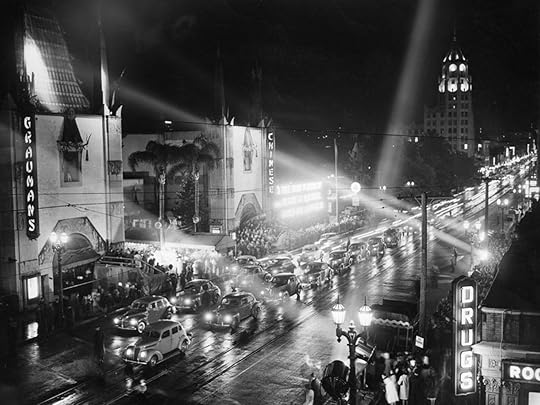
Tod watched until they had disappeared behind half a Mississippi steamboat, then put away his pencils and drawing board, and left the office. On the sidewalk outside the studio he stood for a moment trying to decide whether to walk home or take a streetcar. He had been in Hollywood less than three months and still found it a very exciting place, but he was lazy and didn't like to walk. He decided to take the streetcar as far as Vine Street and walk the rest of the way.
A talent scout for National Films had brought Tod to the Coast after seeing some of his drawings in an exhibit of undergraduate work at the Yale School of Fine Arts. He had been hired by telegram. If the scout had met Tod, he probably wouldn't have sent him to Hollywood to learn set and costume designing. His large, sprawling body, his slow blue eyes and sloppy grin made him seem completely without talent, almost doltish in fact.
Yes, despite his appearance, he was really a very complicated young man with a whole set of personalities, one inside the other like a nest of Chinese boxes. And "The Burning of Los Angeles," a picture he was soon to paint, definitely proved he had talent.
He left the car at Vine Street. As he walked along, he examined the evening crowd. A great many of the people wore sports clothes which were not really sports clothes. Their sweaters, knickers, slacks, blue flannel jackets with brass buttons were fancy dress. The fat lady in the yachting cap was going shopping, not boating; the man in the Norfolk jacket and Tyrolean hat was returning, not from a mountain, but an insurance office; and the girl in slacks and sneaks with a bandanna around her head had just left a switchboard, not a tennis court.
204 pages, Mass Market Paperback
First published January 1, 1939


She posed, quivering and balanced, on the doorstep and looked down at the two men in the patio. She was smiling, a subtle half-smile uncontaminated by thought. She looked just born, everything moist and fresh, volatile and perfumed.
Their boredom becomes more and more terrible. They realize that they’ve been tricked and burn with resentment. Every day of their lives they read the newspapers and went to the movies. Both fed them on lynchings, murder, sex crimes, explosions, wrecks, love nests, fires, miracles, revolutions, war. This daily diet made sophisticates of them.


"It was a mistake to think them harmless curiosity seekers. They were savage and bitter, especially the middle-aged and the old, and had been made so by boredom and disappointment... All their lives they had slaved at some kind of dull, heavy labor, behind desks and counters, in the fields and at tedious machines of all sorts, saving their pennies and dreaming of the leisure that would be theirs when they had enough."
They don't know what to do with their time. They haven't the mental equipment for leisure, the money nor the physical equipment for pleasure... Their boredom becomes more and more terrible. They realize that they've been tricked and burn with resentment... They have been cheated and betrayed. They have slaved and saved for nothing."
It is hard to laugh at the need for beauty and romance, no matter how tasteless, even horrible, the results of that need are. But it is easy to sigh. Few things are sadder than the truly monstrous.
“I'm going to be a star some day," she announced as though daring him to contradict her.
"I'm sure you..."
"It's my life. It's the only thing in the whole world that I want."
"It's good to know what you want. I used to be a bookkeeper in a hotel,
but..."
"If I'm not, I'll commit suicide.”
Only those who still have hope can benefit from tears. When they finish, they feel better. But to those without hope, whose anguish is basic and permanent, no good comes from crying. Nothing changes for them. They usually know this, but still can’t help crying.
Their boredom becomes more and more terrible. They realize that they’ve been tricked and burn with resentment. Every day of their lives they read the newspapers and went to the movies. Both fed them on lynchings, murder, sex crimes, explosions, wrecks, love nests, fires, miracles, revolutions, war. This daily diet made sophisticates of them. The sun is a joke. Oranges can’t titillate their jaded palates. Nothing can ever be violent enough to make taut their slack minds and bodies. They have been cheated and betrayed. They have slaved and saved for nothing.


It is hard to laugh at the need for beauty and romance, no matter how tasteless, even horrible, the results of that need are. But it is easy to sigh. Few things are sadder than the truly monstrous.


