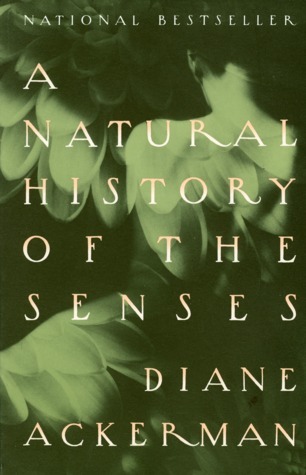
"Historia naturalna zmysłów" to wspaniała literatura. Autorka za przedmiot swego eseju wzięła rzecz pozornie prostą: działanie naszych, ludzkich zmysłów. Opisuje w sposób fascynujący ich pochodzenie, rozwój na tle zmian kultury, cywilizacji, tradycji, obyczaju, dominujących mód, a także różnych rodzajów wrażliwości poszczególnych osób. Dlaczego wydzieliny gruczołów wonnych pewnych zwierząt wzmagają pożądanie seksualne u ludzi? Dlaczego lubimy czekoladę? Jak mogło dojść do pierwszego pocałunku? Dlaczego tak chętnie słuchamy muzyki? To tylko kilka spośród wielu spraw, które omawia autorka. Dzieło napisane jest lekkim piórem, autorka nie stroni od umiejętnego i dowcipnego cytowania licznych dzieł z różnych epok, co powoduje, że lektura tej książki staje się nie tylko intrygującą wędrówką poznawczą, ale i fascynującym przeżyciem literackim.
Diane Ackerman has been the finalist for the Pulitzer Prize for Nonfiction in addition to many other awards and recognitions for her work, which include the bestsellers The Zookeeper’s Wife and A Natural History of the Senses.
The Zookeeper’s Wife, a little known true story of WWII, became a New York Times bestseller, and received the Orion Book Award, which honored it as, "a groundbreaking work of nonfiction." A movie of The Zookeeper’s Wife, starring Jessica Chastain and Daniel Brühl, releases in theaters March 31st, 2017 from Focus Features.
She lives with her husband Paul West in Ithaca, New York.
Over a decade ago I picked up a book that changed my life. It was Diane Ackerman's "A Natural History of the Senses", and her humanist, holistic, sensitive approach to that most basic of subjects; how we sense the world, was a revelation. Her writing was inclusive and funny, at once deep and yet accessible. She loved to explore complex issues like the olfactory system, or the sounding of whales, and to take the reader along on that exploration. Science was no longer dry and I was no longer excluded from it. I read it like a novel.
Since then I've lost two copies to 'borrowers' and given away five. Whenever I feel that I have nothing to say, I take this book from the shelf, read a few paragraphs about something, anything, and am immediately reminded that my ability to experience is a series of miracles. It may not inspire me immediately, but within a few hours I'll have seen or smelt, touched or heard or tasted something that I want to write about - and Ackerman will have worked her magic on me again.
A lot of thingys on senses. A lot of diverse material. Some of it rather extreme or nasty. And I was honestly going to rate this 3 stars but then I went to the paragraphs on sky and universe and they conquered me. A very good book to peruse at one's leisure to promote one's understanding of how our senses guide us, have been guiding us all along through this wonderful world.
Q: Автор книги о косметике «Секреты мэтра Алексиса из Пьемонта» (Les secrets de Maistre Alexis le Piémontais) уверял, что его туалетная вода сделает женщин привлекательными не то что на вечер, но прекрасными «навсегда». Весьма серьезная заявка; однако потенциальным потребительницам стоило бы прочесть и мелкий шрифт. Вот чудовищный рецепт из этой книги: «Возьми из гнезда птенца ворона и сорок дней откармливай его крутыми яйцами, после чего умертви и дистиллируй вместе с листьями мирта, тальком и миндальным маслом». Изумительно! Дама, несомненно, превратится в прекрасную ворону и навеки оседлает стреху, ну а на такие мелочи, как зловоние и непреодолимое желание процитировать Эдгара По, можно не обращать внимания. (c) Q: Однако странно то, что изготовители этих духов не указывают, чьи феромоны в них содержатся. Человеческих феромонов исследователи пока не обнаружили, а вот, скажем, свиные – нашли. Картина целого поколения молодых женщин, которые гуляют по улицам, умастившись свиными феромонами, представляется странной даже для Манхэттена. Предлагаю хулиганский рецепт: выпустите на Парк-авеню стадо свиноматок. Позвольте им смешаться с толпой женщин, использующих одеколон Pheromone. И вызывайте службу спасения. (c) Q: Один из коллег Гилберта, Джордж Прити, поставил эксперимент, в котором десять участниц через регулярные промежутки времени вдыхали запах пота других женщин. Через три месяца сроки менструаций у испытуемых стали совпадать со сроками у тех, чей пот использовался в эксперименте. В контрольной группе, где нюхали не пот, а алкоголь, менструальный цикл не изменился. Очевидно, что феромоны, которые переносит пот, способствуют синхронизации циклов. Поэтому у соседок по спальням или близких подруг кровотечения часто совпадают; этот феномен известен как эффект Макклинток (по имени заметившей его физиолога Марты Макклинток). Похоже, что существуют и другие эффекты. Если мужчина какое-то время связан с женщиной, волосы на его лице начинают расти быстрее, чем до того. Девочки, живущие в изоляции от мужчин (например, в закрытых школах-интернатах), достигают половой зрелости позже, чем их ровесницы, постоянно общающиеся с представителями другого пола. Матери и новорожденные младенцы распознают друг друга по запаху, поэтому некоторые врачи дают детям вдыхать материнский запах при введении наркоза перед операцией. Младенцы могут узнавать вошедшую в комнату мать по запаху, даже не видя ее. В сказке «Питер Пэн» Дж. М. Барри дети способны даже «чуять опасность» во сне. Матери школьников могут по запаху различать футболки, которые носят их дети. Отцам такие способности не присущи, но мужчины могут определять пол того, кто носил футболку. Феромоны действуют на людей. Но насколько сильно? (с) Q: Запахи пробуждают не только воспоминания, но также и наши дремлющие чувства; они балуют и радуют нас, помогают определиться с нашими представлениями о самих себе, будоражат чувственность, предупреждают об опасности, вводят в искушение, раздувают религиозный пыл, возносят до небес, приобщают к моде, погружают в роскошь. (c) Q: Для одного из экспериментов наняли множество домохозяек, чтобы те нюхали подмышки незнакомых им людей; в другом эксперименте, который финансировали изготовители женского гигиенического спрея, картина была еще необычнее. (c) Q: Природа развивается благодаря метисам. Девиз жизни: «Смешивайтесь тщательнее». (c) Q: Мы, кажется, неспособны жить в природе без того, чтобы заимствовать ее запахи и носить их с собой как талисманы, «присваивая» себе свирепость, магнетизм или энергию, которые свойственны их естественным обладателям. (c) Q: Людям, собирающимся на вечеринку в ночь с дождем и бурей, не требуется обильно пользоваться духами, потому что перед бурей они пахнут сильнее – влажность обостряет обоняние, и при низком давлении летучесть жидкостей повышается. Все-таки духи на 98 % состоят из воды и спирта – и лишь 2 % составляют жировые и ароматические молекулы. При низком давлении молекулы испаряются быстрее и могут покидать человеческое тело и переходить в воздух помещения со значительной скоростью. То же самое происходит, даже в солнечные дни, в городах, расположенных в горах, – например, в Мехико, Денвере или Женеве, где из-за высоты атмосферное давление всегда низкое. Идеальным местом и временем для того, чтобы ошеломить окружающих новыми духами, был бы ресторан El Tovar Lodge, примостившийся на головокружительной высоте более чем 2100 метров на краю Большого каньона, в преддверии бури.(c) Q: Для охотника за трюфелями прогулка по невидимой плантации может быть очень забавной, а для его свиньи – весьма печальной. Представьте: вот привлекательная здоровая свинья чует такого сексуального хряка, какого еще в жизни не встречала, только он почему-то сидит под землей. Возбужденная свинья принимается старательно рыть, но находит лишь странный пухлый гриб неправильной формы. Потом она обнаруживает еще одного хряка-супермачо где-то совсем близко от нее – опять под землей – и с еще большим неистовством зарывается в яму. Вероятно, она впадает в ярость от неудовлетворенного желания. В конце концов добытчик трюфелей укладывает грибы в мешок и тащит свинью домой, невзирая на то что вся роща позади дрожит от густых запахов заходящихся от вожделения кабанов, каждый из которых призывает ее к себе, но при этом упорно прячется. (c) Q: Небо – это единственная визуальная константа в нашей жизни, сложный фон для всех наших предприятий, мыслей и эмоций. И все же мы склонны воспринимать его как невидимое – как пустоту, а не вещество. Всю жизнь преодолевая прозрачные глубины воздуха, мы тем не менее редко изображаем его густым и тяжелым. Мы редко задумываемся о голубой иллюзии, именуемой небом. По-английски небо – «sky». «Skeu, – говорю я вслух то же слово, которым пользовались наши дальние предки; я стараюсь произносить его с тем же страхом и восхищением, какие могли звучать в их речи: – Skeu». Вообще-то так они называли покрытия любого рода. Небо для них было крышей, меняющей цвета. Неудивительно, что они поселили там своих богов, а те, как часто бывает у склочных соседей, в припадках гнева кидались – правда, молниями, а не посудой. Q: Посмотрите на собственные ноги. Вы стоите в небе. Говоря о небе, мы обычно задираем головы, но начинается-то оно на земле. Мы ходим сквозь него, кричим в него, собираем в нем опавшую листву, купаем собак и ездим на автомобилях. Оно попадает в нас с дыханием. С каждым вдохом мы вбираем в себя миллионы молекул неба, быстро нагреваем их и выдыхаем обратно в мир. В эти мгновения через нас проходят те же самые молекулы, которыми некогда дышали Леонардо да Винчи, Уильям Шекспир, Энн Брэдстрит или Колетт. Глубоко вдохните. Вспомните «Бурю». Мехи легких приводят воздух в движение, и он питает энергией наши клетки. Мы говорим «легкий как воздух», но ведь атмосфера отнюдь не легка – она весит пять тысяч триллионов тонн. Удержать ее на земле может лишь столь упрямая сила, как притяжение, – не будь ее, воздух улетел бы и рассеялся в бескрайних просторах космоса. (c) Q: Мы часто бездумно говорим о «пустом небе». Но небо никогда не пустует. В одной унции воздуха содержится тысяча миллиардов триллионов вращающихся атомов кислорода, азота и водорода, каждый из которых – это скопище электронов, кварков и призрачных нейтрино. Порой мы восхищаемся «спокойным» днем или «тихой» ночью. Но покоя нет ни в небе, ни где-либо еще, где жизнь встречается с материей. Воздух всегда трепещет в возбуждении, он полон летучих газов, выброшенных спор, пыли, вирусов, грибов и животных, которых треплют, завывая, неутомимые ветры. Существуют активные летуны – бабочки, птицы, летучие мыши и насекомые, – освоившие воздушные дороги, а есть летуны пассивные – осенние листья, пыльца, семена молочая, – которые просто дрейфуют. Небо, начинающееся на земле и распространяющееся во всех направлениях, – это объемное, зыбкое царство, в котором мы обитаем. Говоря, что наши отдаленные предки выползли на землю, мы забываем добавить, что в действительности они переместились из одного океана в другой, из верхних слоев воды – в нижние, придонные слои воздуха. (c) Q: Здесь, на побережье, господствуют ветры с запада; это хорошо видно по причудливым формам прибрежной растительности. Легкий устойчивый бриз с Тихого океана взметает степные травы в прическу «помпадур». Чуть дальше, в не таком открытом месте, я наткнулась на небольшой участок, ограниченный кру́гом голой земли. Выглядит так, будто кто-то воткнул в землю формочку для печенья, но это сделал ветер.(с) Q: Мы считаем ветер деструктивной силой – внезапным шквалом, срывающим крышу с оклахомской школы, – но ветер еще и терпеливый и умелый каменотес, который вырезает скалы, протачивает горные склоны, формирует пляжи, сбрасывает деревья и камни с гор или в русла рек. Ветер создает волны, хоть в чувственно выгнутых барханах Долины смерти, хоть вдоль непрерывно меняющихся побережий. (с) Q: На старинных картах северный ветер изображали в виде головы толстощекого взъерошенного человека с напряженным выражением лица, который, выпятив губы, дует изо всех сил. Согласно Гомеру, бог Эол жил в огромной пещере и держал ветры в кожаном мешке. Этот мешок он дал Одиссею, чтобы нужный ветер привел его корабль к дому, но спутники Одиссея открыли мешок, ветры вырвались на свободу, передрались и разбежались по миру, сея хаос. «Детьми утра» назвал ветры грек Гесиод. У древних китайцев слово «фун» означало и ветер, и дыхание, а для обозначения характера ветра у них было много слов. «Тиу» означало «качаться на ветру, как дерево». «Яо» – что-то плывущее с ветром, как пушинка. Имена ветров наделялись магической силой; они очень много говорят о настроениях, которые бывают у неба. Это и португальский венто де коадо, стоковый ветер с гор; и японский демонический вихрь цумидзи, и нежный мацукадзе – ветерок в соснах; это австралийский парадоксальный брикфилдер (так поначалу называли горячие ветра, которые несли пыль с кирпичных заводов, расположенных южнее Сиднея); и американский теплый и влажный чинук, приходящий с моря и названный в честь индейского племени, населявшего некогда Орегон; или снежная пурга, или обжигающий санта-ана, или сырой ваймеа на Гавайях; это и североафриканская горячая песчаная буря самум (от арамейского «самма» – яд); или сонда, срывающаяся с Анд в Аргентине и иссушающая пампу; черный страшный хабуб в долине Нила, летние бури или зимние бураны в России и освежающий летний этезиан в Греции; и швейцарский теплый порывистый фён, спускающийся с подветренных склонов гор; и французский сухой холодный мистраль («господствующий ветер»), проносящийся шквалом по долине Роны на Средиземноморское побережье; это знаменитый индийский муссон, само название которого означает климатический сезон; и белый шквал или «бычий глаз» у мыса Доброй Надежды; дерзкий вилливо на Аляске; или дату, вырывающийся на восток через Гибралтарский пролив; это певучий испанский солано, карибский харрикейн (от «хуракан» – «злой дух» на языке таина), шведский яростный фриск винд, ласковый тянь тянь фын – первый осенний ветерок в Китае и многие, многие другие. (с) Q: Вообще-то сначала с неба идет короткий пробный разряд; в ответ земля посылает вверх продолжительную вспышку, которая мгновенно нагревает воздух, и он взрывается воздушной волной – громом. Отсчитав секунды между вспышкой и громом, я делю их число на пять и узнаю приблизительное расстояние до вспышки. Сейчас это 11 с лишним километров. Звук проходит в секунду 331 метр. Если звук приходит одновременно с молнией, шансов прикинуть расстояние очень мало. (c) Q: Лоренс ван дер Пост смотрел в окно поезда на бескрайние степи и бесконечное небо Сибири. «Я думал, что никогда прежде не попадал в место, где было бы столько простора и столько неба», – писал он в «Путешествии в глубь России». Особенно его поразили «огромные грозовые тучи, движущиеся из темноты в сторону спящего города и похожие, благодаря судорожно мечущимся молниям, на сказочных лебедей, мчащихся к нам, размахивая шуршащими огненными крыльями». Русский друг, сопровождавший ван дер Поста в поездке, сообщил ему, что для таких молний в русском языке есть специальное название: «зарница». (c) Q: На планете Земля наступила ночь. Но это всего лишь причуда природы, следствие того, что наша планета вращается в пространстве со скоростью 1674 км/ч (на экваторе). В тот период, который принято называть «ночью», мы вглядываемся в потаенные глубины космоса, где существуют другие солнечные системы и где, возможно, тоже есть свои жители. Не воспринимайте ночь как отсутствие дня, считайте его некой разновидностью свободы. Отвернувшись от своего Солнца, мы видим сияние дальних галактик. Солнечный свет не слепит, мешая разглядеть звездный плащ Галактики, в которой мы обитаем. Черноту, которая, кажется, простирается между звезд без конца и края и даже уходит во времени вспять к Большому взрыву, мы зовем бесконечностью. Ночь – это мир теней. Все тени, которые можно увидеть ночью, создаются лунным светом или искусственным освещением, но ночь сама по себе – тень. (c)
Q:
За городом можно увидеть больше звезд, и ночь там похожа на перевернутый колодец, который становится все глубже и глубже. Если набраться терпения и дать глазам привыкнуть к темноте, можно разглядеть Млечный Путь, проходящий через все небо белесой полосой. Различные культуры объединяют звезды в разные созвездия; и с Млечным Путем у них связаны собственные легенды. Бушмены Калахари зовут его «хребтом ночи». У шведов это «зимняя дорога», ведущая в небесный край. У островитян с Гебрид – «тропа тайного народа». У норвежцев – «путь призраков». У патагонцев, почитающих своих нелетающих птиц, – «белая пампа, где призраки охотятся на нанду». Зато в городе куда легче отыскать самые известные созвездия – ведь там видно гораздо меньше звезд. (c) Q: Сколько же путешественников, заплутавших на суше или в море, с нетерпением ожидали ночи, рассчитывая отыскать с помощью Полярной звезды дорогу домой. И мы ищем ее на небе, уподобляясь нашим далеким предкам-кочевникам. Сначала нужно найти ковш Большой Медведицы и провести прямую через две крайних звезды. Тогда Полярная звезда покажется каплей сливок, упавшей с края перевернутого ковша. Если Большую Медведицу не видно, север поможет найти Кассиопея – созвездие, расположенное чуть ниже Полярной и похожее на W или М, в зависимости от времени года. Мне оно всегда казалось похожим на бабочку. Благодаря вращению Земли звезды проплывают по небу с востока на запад, поэтому стороны света можно определить и таким способом: неотрывно смотреть на какую-нибудь яркую звезду. Если будет казаться, что она поднимается, значит, вы смотрите на восток, а если снижается – то на запад. Когда я была скаутом, мы находили стороны света, втыкая в землю прямую палочку. Потом на несколько часов расходились заниматься своими делами и возвращались, когда тень от палочки достигала 15 сантиметров в длину. Поскольку солнце движется на запад, тень указывает на восток. Случалось использовать вместо компаса наручные часы – поверните их циферблатом вверх и направьте часовую стрелку на солнце. Держите сосновую иголку или травинку вертикально у края циферблата, чтобы тень лежала вдоль часовой стрелки. Юг окажется посередине между часовой стрелкой и двенадцатью часами. Существует много других способов определять стороны света, ведь скитания – одно из любимых занятий людей (но лишь в том случае, если они уверены, что смогут благополучно вернуться домой). Если у дерева, стоящего на открытом месте, одна сторона обильно заросла мхом, то, скорее всего, там север – мох предпочитает затененную сторону дерева. У пня годовые кольца с южной стороны будут шире. Имеет смысл также взглянуть на вершины сосен – они по большей части указывают на восток. Или, если вдруг вы знаете направление господствующих ветров, можно ориентироваться по согнутой ветром траве. (c) Q: Сейчас я не могу увидеть свет других планет, но знаю, что все они находятся на своих местах, равно как и астероиды, кометы, дальние галактики, нейтронные звезды, черные дыры и другие чудеса глубокого космоса. И представляю их себе с той же уверенностью, с какой Уолт Уитмен заявлял: «Яркие солнца, которые вижу, и темные солнца, которых не вижу, – на своем месте» (с) Q: Каждый день, независимо от времени года и погоды, я совершаю пятнадцатиминутные прогулки быстрым шагом, и все же оказалось, что чувствую себя и энергичнее и, в общем, счастливее, если зимняя прогулка приходится на раннее или хотя бы не очень позднее утро; так я и поступаю каждый день без исключения. (с) Q: Шишковидное тело (или «третий глаз», как с мистическим почтением именуют эту железу), по-видимому, непосредственно связано с нашим ощущением времен года, благополучия, наступления половой зрелости, количества производимого тестостерона или эстрогена и некоторых более тонких реакций организма на смену сезонов в природе. У мужчин наивысшая концентрация тестостерона наблюдается в начале второй половины дня (около 14 часов) в октябре; предполагаю, что дело здесь в том, что ребенок, зачатый в это время, родится летом, и у него будут наивысшие шансы на выживание. Конечно, далеко не все мужчины ждут для занятий любовью этого апогея осенней погоды, ведь либидо постепенно нарастает и в сентябре, а некоторое снижение происходит лишь к Рождеству.(с) Q: В японском лишь недавно появилось слово для синего. В былые времена слово «aoi» служило обобщающим понятием для целого ряда цветов – и зеленого, и синего, и фиолетового. В примитивных языках сначала появляются обозначения для черного и белого, затем добавляется красный, потом желтый и зеленый; во многих языках синий и зеленый объединяются, а некоторые народности не видят смысла различать остальные цвета спектра. У греков было очень мало слов для обозначения цветов, и ученые ведут ожесточенные споры о том, что именно Гомер имел в виду, говоря о «винноцветном море». Уэльсцы словом «glas» описывают цвет горного озера, которое может быть и голубым, и серым, и зеленым. На суахили «nyakundu» – и коричневое, и желтое, и красное. Племя яли с Новой Гвинеи не имеет прилагательного «зеленый», и листья у них бывают темными или светлыми. Английский язык может похвастаться множеством слов для синего и зеленого (в частности: лазурный, морской волны, бирюзовый, темно-синий, изумрудный, индиго, оливковый), мы часто спорим, синим или зеленым следует считать предмет, и, как правило, прибегаем к сравнениям: зеленый как трава или как горошек. Колористический запас английского языка заметно хромает, когда дело доходит до процессов, связанных с жизнью. Полагаю, нам стоит последовать примеру новозеландских маори, имеющих множество прилагательных для красного – всех оттенков красного, ярких и бледных, какими бывают цветы и фрукты, текущая и запекшаяся кровь. Нам требуется описать все разнообразие зеленых, от почти тыквенно-желтой с зеленоватым отливом поздней зимней травы до немыслимой яркости листвы в разгар лета, и все варианты распределения хлорофилла между этими крайностями. Нам нужны слова для множества цветов облаков, от жемчужно-розоватого во время заката над океаном во время штиля до электрического серо-зеленого цвета торнадо. Нужно обновить набор слов для коричневого, чтобы охватить все изыски древесной коры. И еще нам остро требуются обобщающие слова для изысканных цветов, которые меняются при ярком солнечном освещении, или бледнеют в искусственном, или насыщены чистым пигментом, или нежно купаются в лунном свете. (с) Q: Цвет существует не в мире, а в мозгу. (с)
This book was really hard to get through. The only reason I even finished it is that she did include a few really interesting facts about the senses. But her writing style is torturous!!!!! She writes in this really flowery style with way too many metaphors and adjectives that don't even make sense! Here's one: "Craving the dialect of cities, I forgot the way deer steal into the yard with their big hearts and fragile dreams". What??? There's no context for this and it doesn't make any sense. This happens once a paragraph, at least. Next, she goes on and on about how intensely she senses things. She basically says that she had an orgasm once when she saw a pretty landscape, and then she cried once while looking at a big piece of sulphur because the yellow color was so intense. She's either just lying or totally weird. And to end it all, she talks about how some great writers sensed things more intensely or differently that most people. And she has the audacity to include herself in the group of great writers! I hate her so much. Do not read this book.
Приходят читатели к автору и говорят: «Здрасте, расскажите нам, пожалуйста, о чувствах». Через 10 минут: «НЕТ, НЕ О ВАШИХ, НЕ О ВАШИХ!»
Во времена позднего российского глянца, когда он уже умирал, но это еще нельзя было понять по запаху, он как за дефибриллятор держался за формат и структуру, выдуманную там, на западе, в Изумрудном городе, где, как известно, трава зеленее. Согласно формату, никакой глянцевый лонгрид не мог обойтись без двух вещей – без зачина в духе: «Мы встречаемся в лобби отеля «Эксельсиор», и на (имя героини) - футболка от Кельвина Кляйна, туфли-лодочки от Маноло, нос - от такого-то пластического хирурга, ноги – собственность модели», когда нужно было поговорить со звездой о прописных истинах, согласованных ее публицистом, и без прилагательных, если вдруг кому-то заказывали колонку. Во всех остальных местах прилагательные нещадно резали, потому что когда в бокс с двумястами знаков надо впихнуть редакционную поддержку, цену, полное название бренда и какой-то смысл, то прилагательные моментально становились вполне себе отлагательными. Их всех, как на совочек, сметали в колонку. Там, обезумев от разворотных просторов (пусть даже и с картинкой на треть), они выносили себя из красной книги в красный угол. Было в этом что-то жизнеутверждающее, что-то бравурное, такой палисадничек с мальвами посреди утилитарного урбанизма. И, в общем, даже в этом была какая-то логика, какая-то завершенность, пусть вас и везут в катафалке по городу, но, как пел Вертинский, платье было надето, фиалки цвели. Check. Почему я все это вспомнила? Потому что прочла книгу Дианы Акерман A Natural History of the Senses – и это такой вот палисадничек с мальвами, разросшийся от разворота до четырехсот страниц непрерывной, надсадной красоты. Вся книга – это набор некоторых энциклопедических сведений, донельзя украшенный рассказами Акерман о том, как она проводила время в Антарктике, в амазонских лесах, на Бермудах, в дорогой квартире, и рассказы эти невыносимо напоминают отбивки за пресс-туры, только уходящие в закат без согласования с рекламодателями. Разумеется, книгу несколько извиняет то, что написана она была в девяностом году, когда формат еще не был лухари-дефибриллятором, а был свеж, молод и не верил ни в какое другое будущее, кроме глянцевого, но из 2021 это читается не просто дико. Это читается, увы, как некролог.
Touch me, taste me. Hear me, smell me, see me. Our senses form our most intimate connections. Even using them in writing evokes a sense of nearness, of vulnerability. In her book A Natural History of the Senses, Diane Ackerman explores each of our senses with rich, resplendent prose. Reading this increased my awareness of the physical sensations within and around me in a thorough and authentic way, so I would recommend it to any aspiring writer or anyone interested in mindfulness.
Not only does Ackerman each sense in a real and vibrant way, she also delves into the science and history behind each one. Ranging from the complexities of the nervous system underlying our skin cells to how the olfactory nerves that contribute to smell also affect taste, Ackerman proves the extensive nature of her research while still writing in clear, readable prose. She also explores how each sense affected cultures and societies in years past. The diversity of this book and how Ackerman discussed senses in a variety of axes deepened her already impressive, thoughtful writing.
Ackerman has experience with poetry, and you can tell from her lush use of language. While her thorough prose and long paragraphs may come across as off-putting at times, her control as a writer and as a researcher make A Natural History of the Senses well worth the read. Overall, I would suggest giving this one a shot if you want to get more int ouch with your physical world, or if you want a great example of how to articulate our senses - connections many of us have yet take for granted.
The more I read of this book, the more I wanted it to be over. I enjoyed the small tidbits of information and etymology facts dispersed far and too few between her grandiose anecdotes but I really couldn't get over how proud of herself Ackerman seems to be. It was just exhausting hearing about all the wonderful sensory experiences she's had. I get it. I've had my own, even if they weren't while exploring Antarctica or vacationing in the exotic middle-east as a college student. Uhg.
She didn't really stick to the senses, it was as if she just kind of chose random things to ramble on and on about and justified their inclusion because we use our senses to perceive them.. duh. And just when she would make an interesting comment that I'd love to hear more about, she'd jump to another off-the-wall topic. I really don't want to read anything else by her of such great length. Her poetry does it for me but this prose crap doesn't.
There were many excerpts from other authors dealing with the sensory world, like from Nabokov's Speak, Memory that just made me wish I'd chosen that book instead, as they do it much better than her...
Often overwhelmed by visual stimuli-- misses little. Check.
Can be instantly transported to a different time or place by a smell alone. Check.
Has been known to savor food, slowly, one bite at a time (or to indulge in a stolen bite of a decadent chocolate brownie at 2 a.m., letting the darkness intensify the flavor). Check.
Possesses a nearly incontrollable urge to touch-- smooth metal, jagged rock, velvety leaf or grass, cool marble. Check.
Will often be moved to tears, or conversely, thrown into joyous ecstasy at the mere sounds of notes, phrases, and music. Check.
Thank you, Ms. Ackerman, for defining what had me thinking I was always a bit odd. Now I know I'm simply a sensuist. A beautifully written, fascinating book on the celebration of the senses. Not only from a scientific standpoint (what makes us feel pain, what happens to our body when we laugh, cry, fear), but also from the marvelously different cultural and historical aspects.
A marvellous and unique insight into the sensual world, this is at the same time beautifully-written and immensely evocative. We take our senses so much for granted - and in literature, we often use them in such a limited, unimaginative capacity. This book serves as a reminder that each of our senses has its own very personal narrative; that memories and emotions are linked to specific physical triggers; and that by exploring these, we can become so much more aware of ourselves and of our surroundings, and experience more fully the amazing spectrum of what our senses offer us.
This book was my favorite research source when I was writing The School of Essential Ingredients. Diane Ackerman manages to make science poetic, and her metaphors can be astonishing. Such lush, playful descriptions -- whenever I needed to get back in the writing mood, I would read bits of it and feel my senses waking up.
This book was a disappointment. I expected a decently written, informative book on the history of human senses, and instead got a strange mix of facts, myths and incredibly self-indulgent personal narrative that I couldn't bring myself to care for.
I understand the book is 25 years old so some theories will be inevitably outdated, but Ackerman mixes scientific theories with bits of randomly picked interesting trivia that she clearly didn't bother to critically examine and some wide-spread folk beliefs that not even QI panellists would fall for. The writing style tries to be sensual and poetic, but sounded utterly pretentious to me (there is a limit to the number of times you can use 'robust' in 300 pages without sounding ridiculous and Ackerman crosses the point and leaves it far behind her). The whole book felt like a chance for the writer to brag about her fantastic life experiences (yes we get it, you got to tag Monarch butterflies and it was amazing, good for you!) while trying to pass her incredibly narrow, white-rich-American-heterosexual-woman point of view as the universal way of experiencing senses. It would work perfectly well as an autobiography or a personal narrative but not as something that aims to be sold as popular science.
Here's what Barbara Kingsolver has to say about Diane Ackerman: "[She:] begins each summer day 'by choosing and arranging flowers for a Zenlike hour or so.' She listens to music obsessively, then speed-walks for an hour, every single day. 'I don't know whether this helps or not,' she allows... 'My muse is male, has the radiant, silvery complexion of the moon, and never speaks to me directly.'"
Please read that last line again. A lot of this book sounds like that, although usually it's not quite so blatantly cheesy. But... It's close. This book was frustrating because there's so much interesting writing in it, but I was constantly derailed by Ackerman's sheer presence within her own writing. It's hyperbolic and three-quarters, which is fun in small doses but tiresome in the long run.
On the other hand, there was a lot of interesting information--even if it often seemed only loosely related to the theme--which was sometimes awesome and sometimes not so much. In the vision section, for instance, she discusses the vision problems of various artists and how that may have influenced their work: fascinating. However, she also spends pages writing about looking at the sea, which is a nice bit of writing but (given the onslaught of other distractions scattered throughout the book) sort of overdone. I also felt like a lot of scientific information was presented as simple fact when, from what I've gathered from other readings, it is nowhere near that clearcut. That alone made me approach virtually the entire book with deep distrust and more than a pinch of salt, and the prose couldn't quite stand up to my skepticism.
Verdict: pretty writing, some interesting insights, but in the end distractingly ornamented and rather scattered.
I was given this book as a high school graduation present from two retired high school teachers and it proved to be one of my all time favorites. It should be required reading for any human being. You will learn fascinating things like that we can identify only 10,000 different tastes and anything else you've ever wanted to know about your senses. It's fascinating and mind blowing.
Crammed with interesting tidbits and historical curiosities. Full of sensual descriptions and fascinating factoids. Did you know tattooed people live shorter lives because their skin can't breathe properly? That in business meetings, studies found that the person of higher status most often initiates a touch? This exploration of the five senses is a fascinating read.
But, unfortunately, it's quite choppy and too often reads like a laundry list of trivia with no proper transitions or general point.
What's worse is that it may not be entirely accurate, either.
The author was a finalist for the Pulitzer Prize for Nonfiction, but here she can't accurately quote a popular film. She quotes the protagonist in Lawrence of Arabia as saying, "The trick is not to mind," in that scene where he talks about pain as he puts out a burning match with his fingers. I've seen the movie and he actually says, "The trick, William Potter, is not minding that it hurts."
As a former newspaper reporter, it drives me nuts to see somebody paraphrasing and then using quotation marks around their inventions. Pulitzer, really? "No, effendi," to quote Lawrence.
In another chapter, the author talks about the houris in Islamic paradise and how they're made "entirely of sandalwood." I've read quite a bit on Islam and never heard this, so I researched and found that the houris are indeed made up of different wonderful scents. But not exclusively of sandalwood.
If I can't trust the author based on those two slips, then what else in the book should I take with skepticism?
Perhaps I'm too left-brained for this book, but for me, reading "A Natural History of the Senses" is like drowning in quicksand. Ackerman divides the book into six sections: Smell, Touch, Taste, Hearing, Vision and Synesthesia. There are many things I don't like about the book, but I will admit that she is consistent. By that I mean, that she consistently annoys me.
From the beginning she is over-the-top poetic in her narrative using flowery language and overusing literary imagery such as metaphors and similes. On the first page of "Smell" she writes, "Smells detonate softly in our memory like poignant land mines, hidden under the weedy mass of many years and experiences." This is a beautifully written simile in poetic narrative, but the style is overused.
She also likes to make lists and ends up creating LENGTHY sentences. On page 15 there is a sentence that is 31 lines long. In this particular example she seems to want us to know how well-read she is by listing every possible literary reference to smell. Ackerman makes these lists throughout the book, all of which are too long.
Furthermore, she doesn't write in a consistent tense. I can understand changing tenses from essay to essay, but all too often, she changes tenses within an essay. Typically, she will write in the first-person present tense to pull the reader into a particular moment of an experience. I understand her goal, but suddenly, she will take off in another direction, switching into third person past-tense only to return to first person present in order to continue describing her experience. This is awkward, confusing and distracting.
Other problems include the lack of scientific basis for her assumptions and the inclusion of too many irrelevent (albeit interesting) anthropological anecdotes. I can not possibly read past the "Hearing" section. It's rare that I don't finish a book, but I just can't take it anymore.
It’s strange how A Natural History of the Senses is written so poetically, yet it’s full of scientific studies and facts. One of my favorite facts that I wrote down so I wouldn’t forget it is that heart attack patients who have pets live longer than those without. Another cool fact from the section on smell is that people can tell just from smelling an article of clothing whether it was worn by a male or female, and a mother can tell if something was worn by her child based on smell as well.
This book gave me a lot of really inspirational quotes to write down as well. My favorites are as follows:
A mind that is stretched to a new idea never returns to its original dimension. –Oliver Wendell Holmes
and,
The bright suns I see and the dark suns I cannot see are in their place. –Walt Whitman
The Walt Whitman quote hit me pretty hard, I think. To me, it means that whether or not I understand it, everything is the way it’s supposed to be. (I dislike the quote “Everything happens for a reason,” because that sounds too cliché, but that’s basically what I mean here.) And maybe this isn’t true for everyone. Probably for most people it isn’t, because it doesn’t need to be. But it was true for Whitman, and I think it’s true for me, because I need it to be true. Otherwise, I don’t know how to accept my life. I have to believe that it has to be this way, it can only be this way, it was always going to be this way, and any other way wouldn’t be right, even if it would hurt less.
Shout out to Mr. Marano my high school art teacher who gave me this as a graduation present.
I guess it helps if you have a crush on the author of the book you are reading. What can I say? It happens. But smitten or not, this was a delight.
The first two books I reported on by poet turned naturalist Diane Ackerman chronicled her adventures in pursuit of rare and wonderful wildlife: bats, whales, penguins, etc.
In “A Natural History of the Senses” she turned inward, exploring we humans and the way we experience our world.
“We tend to see distant past through a reverse telescope that compresses it: a short time as hunter-gathers, a long time as “civilized” people. But civilization is a recent stage of human life, and, for all we know, it may not be any great achievement. It may not even be the final stage. We have been alive on this planet as recognizable humans for about two million years, and for all but the last two to three thousand we’ve been hunter-gathers. We may sing in choirs and park our rages behind a desk, but we patrol the world with many of a hunter-gather’s drives, motives, and skills,” writes Ackerman.
“Consciousness, the great poem of matter, seems so unlikely, so impossible, and yet here we are with our loneliness and our giant dreams.”
It really hasn’t been that long since we were sleeping in caves in family groups.
A sumptuous read about our historic reliance on taste, touch, smell, sight and our sense of hearing to get us through our world unscathed and sated.
A wonderful little book that make me happy to be alive... so I can watch sunflowers against the black sky of a coming storm, buy Diorissimo because of many childhood bouquets of Lily of the Valley, stroke the shaggy, shiny fur of a sleepy cat, listen to Turandot and feel as if I'm floating, dive down in a deep clear spring, remember what it felt like to hold our strong, happy toddler after his evening bath, watching flowers and peaches begin to glow just as the late afternoon light hits them...
Occasionally a book comes along that becomes a personal standard by which everything comparable is judged. Such is Ackerman's "Natural History of the Senses" for me. Every little natural thing becomes an object of interest with a story to tell. I have often wanted to sit with my feet up, at dusk, in a screened in porch, with Diane Ackerman by my side. She would, I am sure, sit quietly and observe, but when she did say something it would be extremely fascinating.
It took me a very long time to finish this book. I wanted to like it much more than I actually did. I've loved Ackerman's poetry and I really enjoyed The Zookeeper's Wife, a work of historical fiction by her. But A Natural History of the Senses, as a work of nonfiction, comes across as being completely without structure, except for being divided into sections according to each "sense." Each section holds dozens of brief (2-5 page) sub-sections tangentially related to that sense. Some of the tethers stretch very thin on those tangents.
The sub-sections I enjoyed most were the ones that featured actual historic and scientific details about that sense, its origins, how it developed differently among the different species. I was very interested in the various scientific institutes that research each sense. That is what I thought, based on the title, that this book would be about.
Unfortunately, there is far more random anecdotal reminiscing by Ackerman about the various sensory experiences she's had throughout her life -- the exotic trips to Antarctica, scuba-diving in the Bahamas, a spa in Bermuda, meals in Amazonian Brazil, etc. Ahhh, the rough life of a researcher! Also cloying were the several attempts at listing every aphorism or cliche related to a particular sensory experience.
Some of the favorable reviews of this book mention that the readers enjoyed skipping around the sections, reading here and there, opening at random. And that is probably the best way to experience this book. In trying to read it straight through, I believe it was sensory overload. Redundancies became all too obvious, points belabored. In skipping around, readers have a chance to sample here and there, never filling up on one menu item, ensuring the next time they return their appetites will still be there.
It is no surprise that author Diane Ackerman has also written several books of poetry. Her poet's sensibility is certainly put to good use here. She uses beautiful, evocative prose to consummate what is clearly a long-standing love affair with the five senses. Although this book is well-reasoned and researched, including much fascinating information about how the senses operate, this is not really a rigorously scientific book. Rather, it is a collection of essays that often have little apparent connection to each other apart from the particular sense under discussion. One moment we might be reading about the latest (at the time of publication) scientific findings about our sense of smell; on the next page we may encounter profiles of people who work as professional smellers for the perfume industry; from there we might move to Ackerman's own garden or a memory of time spent in a eucalyptus grove. The result is an interesting, highly idiosyncratic journey through our senses and what they mean to us.
At once history, biology, and anthropology this book explores the 5 senses from a variety of perspectives. Ackerman writes with intense imagery that can be beautiful or brutal. Memorable indeed was a discussion of the cultural evolution of flavor, complete with a medieval recipe for cooking a LIVE goose. I loved her discussion of how smell is the sense most closely linked to memory (which explains why sometimes, washing my hands in public bathrooms, I get instantly transported back to kindergarten through the power of the scent of the soap.) It's a fascinating read.
Interesantísimo libro que analiza sucesivamente la importancia y singularidad de cada uno de los sentidos a través de los cuales percibimos la realidad. No todos los capítulos son de igual valía, me gustaron especialmente los dedicados al olfato y al gusto, y bastante menos el dedicado al oído, aunque de todos modos en cualquiera de ellos se rescatan observaciones sutiles y agudas. A veces se cae excesivamente en lo anecdótico, y allí aparece lo menos interesante, pero en suma es un libro original y muy ameno que se disfruta mucho en casi todo su desarrollo.
This is a fascinating meander through the five senses. Ackerman's writing is so precise and lively, I picked up some fab new words from her, and was grossed out on the cannibalism specifics in the taste section. There isn't a lot of structure to pull you through this, but all of it is riveting and quirky. I think I see some seeds for "The Omnivore's Dilemma" in the taste section too.
this book has been more a [to read in short snatches at 2am when i'm tired but can't actually fall asleep] and it never fails to make me fall asleep so there's that...
anyway there were some interesting parts but i felt it was all very superficial in treatment and she'd move on before it got /rly/ interesting yet kept dwelling on themes i didn't care for. that's on me though i guess!
This book is difficult to categorize. The friend recommending it deemed it literary. It is that, the author, a sometime poet, writing beautifully. I place it under the sciences because it does actually consist of separate treatments of the five senses, the physiology and functions of each and how differently each has been treated across time and between cultures. This said, it is not a scientific book, more a reflection by a reflective person about what scientists have pointed out.
4.5 ⭐️ Un manjar, me atrapó, algo que usualmente no me pasa con los libros de no ficción. Es curioso leer sobre nuestros propios sentidos, es como si alguien te diera un mapa del lugar que has habitado toda tu vida. Me encantó.
A sexy cultural history of how we think about our five senses—particularly in the West but also when juxtaposed with other cultures, other civilizations, and even other species. Ackerman is a poet and a hobbyist naturalist, not a scientist or journalist, and so the book must be read with this in mind. I suspect some of the “studies” or “facts” here have been disproven or were thin to begin with, but that didn’t diminish my enjoyment of her lush, excitable prose and her poetic sensibilities. An enjoyable read and refresher, especially for the aesthetically minded layperson.