

What do you think?
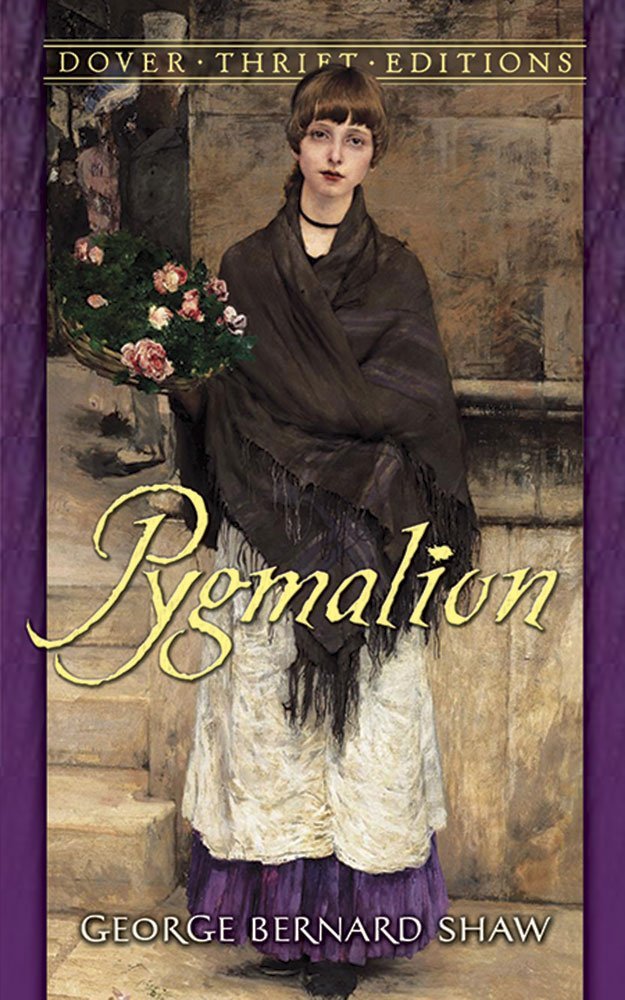
Pygmalion
One of George Bernard Shaw's best-known plays, Pygmalion was a rousing success on the London and New York stages, an entertaining motion picture and a great hit with its musical version, My Fair Lady. An updated and considerably revised version of the ancient Greek legend of Pygmalion and Galatea, the 20th-century story pokes fun at the antiquated British class system.
In Shaw's clever adaptation, Professor Henry Higgins, a linguistic expert, takes on a bet that he can transform an awkward cockney flower seller into a refined young lady simply by polishing her manners and changing the way she speaks. In the process of convincing society that his creation is a mysterious royal figure, the Professor also falls in love with his elegant handiwork.
The irresistible theme of the emerging butterfly, together with Shaw's brilliant dialogue and splendid skills as a playwright, have made Pygmalion one of the most popular comedies in the English language. A staple of college drama courses, it is still widely performed.
In Shaw's clever adaptation, Professor Henry Higgins, a linguistic expert, takes on a bet that he can transform an awkward cockney flower seller into a refined young lady simply by polishing her manners and changing the way she speaks. In the process of convincing society that his creation is a mysterious royal figure, the Professor also falls in love with his elegant handiwork.
The irresistible theme of the emerging butterfly, together with Shaw's brilliant dialogue and splendid skills as a playwright, have made Pygmalion one of the most popular comedies in the English language. A staple of college drama courses, it is still widely performed.
82 pages, Paperback
First published October 16, 1913
About the author
George Bernard Shaw
2,500 books4,288 followersGeorge Bernard Shaw stands as one of the most prolific and influential intellectuals of the late nineteenth and early twentieth centuries, a man whose literary output was matched only by his fervent commitment to social reform. Rising from a modest background in Dublin to become a global icon of letters, Shaw redefined the purpose of the stage, transforming it from a place of mere entertainment into a forum for rigorous intellectual debate and moral inquiry. His unique "Shavian" style—characterized by sharp-witted dialogue, paradoxical reasoning, and a relentless assault on Victorian hypocrisy—ensured that his voice resonated far beyond the footlights. As a playwright, critic, and philosopher, he remains a singular figure in history, being one of only two individuals to have been honored with both a Nobel Prize in Literature and an Academy Award. This rare crossover of high-art recognition and mainstream cinematic success speaks to his versatility and the enduring relevance of his narratives. His dramatic work, which includes over sixty plays, often tackled the most pressing issues of his day, from the rigid structures of the British class system to the complexities of gender roles and the ethical dilemmas of capitalism. In masterpieces like Pygmalion, he used the science of phonetics to demonstrate the artificiality of class distinctions, a theme that would later reach millions through the musical adaptation My Fair Lady. In Man and Superman, he delved into the philosophical concepts of the "Life Force" and the evolution of the human spirit, while Major Barbara forced audiences to confront the uncomfortable relationship between religious idealism and the industrial military complex. Beyond his theatrical achievements, Shaw was a foundational force in political thought, serving as a leading light of the Fabian Society. His advocacy for gradual socialist reform, rather than violent revolution, helped shape the trajectory of modern British politics and social welfare. He was instrumental in the creation of the London School of Economics, an institution that continues to influence global policy and economic theory. Shaw was also a formidable critic, whose reviews of music and drama set new standards for the profession, characterized by an uncompromising honesty and a deep knowledge of the arts. His personal lifestyle was as distinctive as his writing; a committed vegetarian, teetotaler, and non-smoker, he lived with a disciplined focus that allowed him to remain productive well into his ninth decade. He was a man of contradictions, often engaging in provocative public discourse that challenged the status quo, even when his views sparked intense controversy. His fascination with the "Superman" archetype and his occasional support for authoritarian figures reflected a complex, often elitist worldview that sought the betterment of humanity through radical intellectual evolution. Despite these complexities, his core mission was always rooted in a profound humanitarianism and a desire to expose the delusions that prevented society from progressing. He believed that the power of the written word could strip away the masks of respectability that hid social injustice, and his plays continue to be staged worldwide because the human foibles he satirized remain as prevalent today as they were during his lifetime. By blending humor with gravity and intellect with accessibility, Shaw created a body of work that serves as both a mirror and a compass for modern civilization. His legacy is not just in the scripts he left behind, but in the very way we think about the intersection of art, politics, and the individual’s responsibility to the collective good. He remains the quintessential public intellectual, a man who never feared to speak his mind or to demand that the world become a more rational and equitable place.
Ratings & Reviews
Friends & Following
Create a free account to discover what your friends think of this book!
Community Reviews
Displaying 1 - 7 of 7 reviews
March 24, 2026
dinlediğimiz hikâye aslında çok eski. pygmalion kadınlardan hoşlanmaz ve kimseyle evlenmek istemez, bunun yerine kusursuz bir kadın yaratır ve kendi yarattığı bu kadına âşık olur. shaw’un yarattığı dünyadaysa mermer yoktur ancak o eski hikâyenin gölgesi hâlâ üzerinde gezinir.
henry higgins adeta sesleri avlayan bir adam. kelimeleri bir cerrah titizliğiyle yakalar, harfleri aynı titizlikle dinler. ve bir gün yağan yağmurun altında çiçekçi bir kıza rastlar. kızın sesi öyle pürüzlü, kelimeleri öyle yamuktur ki, higgins de pygmalion gibi heykeltıraşlığa soyunur. ancak elindeki malzeme bir taş değil, insandır. insanı değiştirenin aksanı olduğuna inanır higgins, eğer eliza'nın o pürüzlü aksanını silip yerine başka bir aksan koyarsa 'kusursuz' kadına ulaşacaktır. sanki insanın kaderi yalnızca birkaç sesin biçimine bağlıymış gibi. bu oyun ilerledikçe toplumun da aslında kendi kurduğu 'kusursuzluk' idealleriyle oyunun içinde olduğunu fark ederiz. sanki herkes birbirini dinleyip bir sınıf, bir kimlik, bir etiket biçiyor gibi. ne acı. bunun için pygmalion'u biraz illüzyona benzettim; bir balo salonuna giriyoruz ve orada herkes rolünü çok iyi oynuyor, herkes kusursuz, kusurlara tahammülü yok kimsenin, gülüşler bile bu kusursuzluğun içine gizlenmiş. yine de o kusursuzluğun altındaki insanı gerçekten değiştirmek mümkün değil. ve eliza dönüştükçe oyunun seyri de değişir. pygmalion bize heykelin canlanmasını anlatır, shaw ise aslında canlanan şeyin bir heykel olmadığını. çünkü eliza bir 'eser' olarak kalmayı reddeder, frankenstein’ın yaratığı gibi isyanın eşiğinde. o, bir noktada kendi hikâyesini baştan yazmak istiyor, tüm kusursuz kusurlarına rağmen.
aslında toplum dediğimiz şey dev bir tiyatro sahnesi ve bizler de sürekli bir oyun içerisindeyiz. sürekli prova yapıyoruz; doğru ve düzgün kelimeleri seçersek başka bir hayata geçebileceğimizi sanıyoruz belki de. shaw burada bizi tiye alıyor hem de bizimle oynuyor. bu oyunda shaw'a hak veriyorum. çünkü insanı biçimlendirmeye çalışan herkes, bir gün gerçekten konuşmaya başlayacağı anla yüzleşmek zorunda kalır; tıpkı frankestein gibi.
●
the story we're listening to is actually a very old one. pygmalion dislikes women and refuses to marry anyone, so instead he creates a perfect woman and falls in love with the figure he has made. in shaw’s world there is no marble, yet the shadow of that ancient story still lingers over everything.
henry higgins is almost a man who hunts for sounds. he catches words with the precision of a surgeon and listens to letters with the same care. and one day, under the pouring rain, he encounters a flower girl. her voice is rough, her words crooked and higgins (like pygmalion) sets himself to sculpting. but the material in his hands isn't stone, it is a human being. higgins believes that what changes a person is their accent; if he can erase eliza’s rough accent and replace it with another, he will arrive at the 'perfect' woman. as if a person’s fate depended only on the shape of a few sounds. as the play unfolds, we begin to realize that society itself is also part of this game, with its own carefully constructed ideals of perfection. it feels as if everyone is listening to one another only to assign a class, an identity, a label. how painful that is. for that reason pygmalion reminded me a little of an illusion: we enter a ballroom where everyone performs their role perfectly, everyone appears flawless, no one tolerates imperfections, even the smiles seem hidden inside that perfection. yet it is impossible to truly change the human being beneath that polished surface. and as eliza transforms, the direction of the play begins to change as well. pygmalion tells the story of a statue coming to life, but shaw shows us that what awakens is not a statue at all. because eliza refuses to remain a 'work of art', standing on the edge of rebellion like frankenstein’s creature. at some point she wants to rewrite her own story from the beginning, despite all her perfectly imperfect flaws.
in truth, what we call society is a vast theatrical stage and we're all constantly performing within it. we keep rehearsing, believing perhaps that if we choose the right and proper words we might step into another life. shaw gently mocks us here—and plays with us as well. and in this game, i find myself agreeing with him. because anyone who tries to shape a human being must one day face the moment when that person truly begins to speak; just like frankenstein.
henry higgins adeta sesleri avlayan bir adam. kelimeleri bir cerrah titizliğiyle yakalar, harfleri aynı titizlikle dinler. ve bir gün yağan yağmurun altında çiçekçi bir kıza rastlar. kızın sesi öyle pürüzlü, kelimeleri öyle yamuktur ki, higgins de pygmalion gibi heykeltıraşlığa soyunur. ancak elindeki malzeme bir taş değil, insandır. insanı değiştirenin aksanı olduğuna inanır higgins, eğer eliza'nın o pürüzlü aksanını silip yerine başka bir aksan koyarsa 'kusursuz' kadına ulaşacaktır. sanki insanın kaderi yalnızca birkaç sesin biçimine bağlıymış gibi. bu oyun ilerledikçe toplumun da aslında kendi kurduğu 'kusursuzluk' idealleriyle oyunun içinde olduğunu fark ederiz. sanki herkes birbirini dinleyip bir sınıf, bir kimlik, bir etiket biçiyor gibi. ne acı. bunun için pygmalion'u biraz illüzyona benzettim; bir balo salonuna giriyoruz ve orada herkes rolünü çok iyi oynuyor, herkes kusursuz, kusurlara tahammülü yok kimsenin, gülüşler bile bu kusursuzluğun içine gizlenmiş. yine de o kusursuzluğun altındaki insanı gerçekten değiştirmek mümkün değil. ve eliza dönüştükçe oyunun seyri de değişir. pygmalion bize heykelin canlanmasını anlatır, shaw ise aslında canlanan şeyin bir heykel olmadığını. çünkü eliza bir 'eser' olarak kalmayı reddeder, frankenstein’ın yaratığı gibi isyanın eşiğinde. o, bir noktada kendi hikâyesini baştan yazmak istiyor, tüm kusursuz kusurlarına rağmen.
aslında toplum dediğimiz şey dev bir tiyatro sahnesi ve bizler de sürekli bir oyun içerisindeyiz. sürekli prova yapıyoruz; doğru ve düzgün kelimeleri seçersek başka bir hayata geçebileceğimizi sanıyoruz belki de. shaw burada bizi tiye alıyor hem de bizimle oynuyor. bu oyunda shaw'a hak veriyorum. çünkü insanı biçimlendirmeye çalışan herkes, bir gün gerçekten konuşmaya başlayacağı anla yüzleşmek zorunda kalır; tıpkı frankestein gibi.
●
the story we're listening to is actually a very old one. pygmalion dislikes women and refuses to marry anyone, so instead he creates a perfect woman and falls in love with the figure he has made. in shaw’s world there is no marble, yet the shadow of that ancient story still lingers over everything.
henry higgins is almost a man who hunts for sounds. he catches words with the precision of a surgeon and listens to letters with the same care. and one day, under the pouring rain, he encounters a flower girl. her voice is rough, her words crooked and higgins (like pygmalion) sets himself to sculpting. but the material in his hands isn't stone, it is a human being. higgins believes that what changes a person is their accent; if he can erase eliza’s rough accent and replace it with another, he will arrive at the 'perfect' woman. as if a person’s fate depended only on the shape of a few sounds. as the play unfolds, we begin to realize that society itself is also part of this game, with its own carefully constructed ideals of perfection. it feels as if everyone is listening to one another only to assign a class, an identity, a label. how painful that is. for that reason pygmalion reminded me a little of an illusion: we enter a ballroom where everyone performs their role perfectly, everyone appears flawless, no one tolerates imperfections, even the smiles seem hidden inside that perfection. yet it is impossible to truly change the human being beneath that polished surface. and as eliza transforms, the direction of the play begins to change as well. pygmalion tells the story of a statue coming to life, but shaw shows us that what awakens is not a statue at all. because eliza refuses to remain a 'work of art', standing on the edge of rebellion like frankenstein’s creature. at some point she wants to rewrite her own story from the beginning, despite all her perfectly imperfect flaws.
in truth, what we call society is a vast theatrical stage and we're all constantly performing within it. we keep rehearsing, believing perhaps that if we choose the right and proper words we might step into another life. shaw gently mocks us here—and plays with us as well. and in this game, i find myself agreeing with him. because anyone who tries to shape a human being must one day face the moment when that person truly begins to speak; just like frankenstein.

August 9, 2016
Saçma sapan olmadıkları müddetçe romantik komedi türünde film izlemeyi çok severim. My Fair Lady de izlemekten çok keyif aldığım filmlerdendir. Hal böyle olunca Bernard Shaw'un "Dört Oyun" ismiyle yayımlanan kitabının ikinci oyunu olan Pygmalion'a başlarken oldukça heyecanlıydım. Oyunu okumaktan da en az filmi izlemek kadar zevk aldım. Filmle mukayese edecek olursam film, daha çok seyirciyi çekebilmek için olsa gerek, romantizm sosu daha bol bir film. Oyun bu yönüyle biraz eksik kalıyor filme göre; fakat oyunda İngiliz toplumunun sınıflı yapısını çok daha net şekilde görüyor, Shaw'un toplum eleştirilerini çok daha açık şekilde okuyorsunuz. Shaw, okuyucuyu / izleyiciyi gülümsetirken anlatmak istediğini de gayet başarılı bir şekilde anlatıyor. Dediğim gibi, zevkle okudum. Yakın geçmişte oyun Bursa DT tarafından sahnelenmiş sanırım, izleyebilmeyi çok isterdim. Umarım bir gün izleme fırsatı bulabilirim.

January 4, 2022
Cok kisa ve asiri akici bir kitap. Verdigi sosyal mesajlar etkileyici ve ilginc. Insani dusunduruyor, ben cok sevdim.

December 23, 2024
Filmini henüz izlemedim ama kitabı okurken çiçekçi kız Audrey Hepburn olarak kafamda canlandı. Kısa, sevimli bir oyun.
May 30, 2026
Veeee ikinci kitap da bitiyor…
Tiyatro okumayı seviyorum sanırım.
Tiyatro okumayı seviyorum sanırım.

January 18, 2014
Zengin oğlan fakir kız :D

February 27, 2020
Realism içimdeki romantiği öldürüyor resmen :P
Displaying 1 - 7 of 7 reviews