

What do you think?
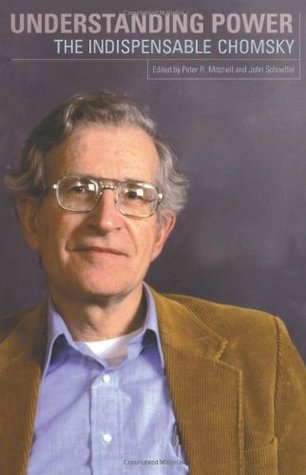
Understanding Power: The Indispensable Chomsky
A major new collection from "arguably the most important intellectual alive" (The New York Times). Noam Chomsky is universally accepted as one of the preeminent public intellectuals of the modern era. Over the past thirty years, broadly diverse audiences have gathered to attend his sold-out lectures. Now, in Understanding Power, Peter Mitchell and John Schoeffel have assembled the best of Chomsky's recent talks on the past, present, and future of the politics of power. In a series of enlightening and wide-ranging discussions, all published here for the first time, Chomsky radically reinterprets the events of the past three decades, covering topics from foreign policy during Vietnam to the decline of welfare under the Clinton administration. And as he elucidates the connection between America's imperialistic foreign policy and the decline of domestic social services, Chomsky also discerns the necessary steps to take toward social change. With an eye to political activism and the media's role in popular struggle, as well as U.S. foreign and domestic policy, Understanding Power offers a sweeping critique of the world around us and is definitive Chomsky. Characterized by Chomsky's accessible and informative style, this is the ideal book for those new to his work as well as for those who have been listening for years.
416 pages, Paperback
First published June 1, 2002
About the author
Noam Chomsky
1,011 books17.5k followersAvram Noam Chomsky is an American professor and public intellectual known for his work in linguistics, political activism, and social criticism. Sometimes called "the father of modern linguistics", Chomsky is also a major figure in analytic philosophy and one of the founders of the field of cognitive science. He is a laureate professor of linguistics at the University of Arizona and an institute professor emeritus at the Massachusetts Institute of Technology (MIT). Among the most cited living authors, Chomsky has written more than 150 books on topics such as linguistics, war, and politics. In addition to his work in linguistics, since the 1960s Chomsky has been an influential voice on the American left as a consistent critic of U.S. foreign policy, contemporary capitalism, and corporate influence on political institutions and the media.
Born to Ashkenazi Jewish immigrants (his father was William Chomsky) in Philadelphia, Chomsky developed an early interest in anarchism from alternative bookstores in New York City. He studied at the University of Pennsylvania. During his postgraduate work in the Harvard Society of Fellows, Chomsky developed the theory of transformational grammar for which he earned his doctorate in 1955. That year he began teaching at MIT, and in 1957 emerged as a significant figure in linguistics with his landmark work Syntactic Structures, which played a major role in remodeling the study of language. From 1958 to 1959 Chomsky was a National Science Foundation fellow at the Institute for Advanced Study. He created or co-created the universal grammar theory, the generative grammar theory, the Chomsky hierarchy, and the minimalist program. Chomsky also played a pivotal role in the decline of linguistic behaviorism, and was particularly critical of the work of B.F. Skinner.
An outspoken opponent of U.S. involvement in the Vietnam War, which he saw as an act of American imperialism, in 1967 Chomsky rose to national attention for his anti-war essay "The Responsibility of Intellectuals". Becoming associated with the New Left, he was arrested multiple times for his activism and placed on President Richard M. Nixon's list of political opponents. While expanding his work in linguistics over subsequent decades, he also became involved in the linguistics wars. In collaboration with Edward S. Herman, Chomsky later articulated the propaganda model of media criticism in Manufacturing Consent, and worked to expose the Indonesian occupation of East Timor. His defense of unconditional freedom of speech, including that of Holocaust denial, generated significant controversy in the Faurisson affair of the 1980s. Chomsky's commentary on the Cambodian genocide and the Bosnian genocide also generated controversy. Since retiring from active teaching at MIT, he has continued his vocal political activism, including opposing the 2003 invasion of Iraq and supporting the Occupy movement. An anti-Zionist, Chomsky considers Israel's treatment of Palestinians to be worse than South African–style apartheid, and criticizes U.S. support for Israel.
Chomsky is widely recognized as having helped to spark the cognitive revolution in the human sciences, contributing to the development of a new cognitivistic framework for the study of language and the mind. Chomsky remains a leading critic of U.S. foreign policy, contemporary capitalism, U.S. involvement and Israel's role in the Israeli–Palestinian conflict, and mass media. Chomsky and his ideas are highly influential in the anti-capitalist and anti-imperialist movements. Since 2017, he has been Agnese Helms Haury Chair in the Agnese Nelms Haury Program in Environment and Social Justice at the University of Arizona.
Born to Ashkenazi Jewish immigrants (his father was William Chomsky) in Philadelphia, Chomsky developed an early interest in anarchism from alternative bookstores in New York City. He studied at the University of Pennsylvania. During his postgraduate work in the Harvard Society of Fellows, Chomsky developed the theory of transformational grammar for which he earned his doctorate in 1955. That year he began teaching at MIT, and in 1957 emerged as a significant figure in linguistics with his landmark work Syntactic Structures, which played a major role in remodeling the study of language. From 1958 to 1959 Chomsky was a National Science Foundation fellow at the Institute for Advanced Study. He created or co-created the universal grammar theory, the generative grammar theory, the Chomsky hierarchy, and the minimalist program. Chomsky also played a pivotal role in the decline of linguistic behaviorism, and was particularly critical of the work of B.F. Skinner.
An outspoken opponent of U.S. involvement in the Vietnam War, which he saw as an act of American imperialism, in 1967 Chomsky rose to national attention for his anti-war essay "The Responsibility of Intellectuals". Becoming associated with the New Left, he was arrested multiple times for his activism and placed on President Richard M. Nixon's list of political opponents. While expanding his work in linguistics over subsequent decades, he also became involved in the linguistics wars. In collaboration with Edward S. Herman, Chomsky later articulated the propaganda model of media criticism in Manufacturing Consent, and worked to expose the Indonesian occupation of East Timor. His defense of unconditional freedom of speech, including that of Holocaust denial, generated significant controversy in the Faurisson affair of the 1980s. Chomsky's commentary on the Cambodian genocide and the Bosnian genocide also generated controversy. Since retiring from active teaching at MIT, he has continued his vocal political activism, including opposing the 2003 invasion of Iraq and supporting the Occupy movement. An anti-Zionist, Chomsky considers Israel's treatment of Palestinians to be worse than South African–style apartheid, and criticizes U.S. support for Israel.
Chomsky is widely recognized as having helped to spark the cognitive revolution in the human sciences, contributing to the development of a new cognitivistic framework for the study of language and the mind. Chomsky remains a leading critic of U.S. foreign policy, contemporary capitalism, U.S. involvement and Israel's role in the Israeli–Palestinian conflict, and mass media. Chomsky and his ideas are highly influential in the anti-capitalist and anti-imperialist movements. Since 2017, he has been Agnese Helms Haury Chair in the Agnese Nelms Haury Program in Environment and Social Justice at the University of Arizona.
Ratings & Reviews
Friends & Following
Create a free account to discover what your friends think of this book!
Community Reviews
Displaying 1 - 1 of 1 review

March 20, 2023
Bu kitap gerçekten gözlerimi açtı. Günümüz dünyasında güç dengelerinin nasıl olduğunu, demokrasinin varlığında nasıl propaganda yapılabildiğini anlatıyor kitap çoğunlukla. Bunu da Amerika dış siyaseti üzerinden yapıyor.
Amerika'nın diğer ülkelere zarar verdiği hakkında biraz fikrim vardı ama bu seviyede olduğunu bilmiyordum. Soykırımı desteklemekten devlet destekli darbelere o kadar çok şey yapmış ki neredeyse kitabın yarisi bunları anlatmaktan ibaret.
Kısaca kitaba göre her ne kadar Amerika demokrasi ile secilse de pratikte zengin bir elit kesimin iradesinin yönettiğini iddia ediyor. Dünyadaki tüm ülkelerde buna benzer bir durum var diyor ama kitap Amerika'ya odaklanıyor. Bununla alakalı belli bulgular sunuyor. Dış siyasetin de sebebini üçüncü dünya ülkelerini küresel ekonomik sisteme bağlama çabası olduğunu söylüyor. Bu kadar şiddetin sebebi herhangi bir halkçı hareketin başarılı olmasını engellemek çünkü başarılı bir halkçı hareket olması diğer ülkelere de örnek olabilir ve bu da büyük şirketler için çalışanlardan daha az kar elde etmek anlamına geliyor.
Sonlara doğru böyle giderse çevresel açıdan da nasıl bir tehlike olduğundan bahsediyor. Mevcut sistemin sadece kar amaçlı olmasından dolayı doğayi tüketerek yok edeceğini söylüyor. Bununla alakalı kanıtları da bence baya ikna edici.
Kitapta anlatılan bir sürü şey var o yüzden hepsini incelemeye sığdırmak imkansız. Ancak çok iyi ve gayet rahat anlaşılır bir kitap. Amerika yakın tarihini bir Amerikalınin eleştirel bakış açısından görmek istiyorsanız kesinlikle okunması gereken bir kitap. Bu kadar kötü şeyden bahsetse de kitap halkçı özgürlükçü hareketlerin başarılı olacağı konusunda da baya umut verici. Yetişkin olan herkese tavsiye ederim bu kitabı.
Amerika'nın diğer ülkelere zarar verdiği hakkında biraz fikrim vardı ama bu seviyede olduğunu bilmiyordum. Soykırımı desteklemekten devlet destekli darbelere o kadar çok şey yapmış ki neredeyse kitabın yarisi bunları anlatmaktan ibaret.
Kısaca kitaba göre her ne kadar Amerika demokrasi ile secilse de pratikte zengin bir elit kesimin iradesinin yönettiğini iddia ediyor. Dünyadaki tüm ülkelerde buna benzer bir durum var diyor ama kitap Amerika'ya odaklanıyor. Bununla alakalı belli bulgular sunuyor. Dış siyasetin de sebebini üçüncü dünya ülkelerini küresel ekonomik sisteme bağlama çabası olduğunu söylüyor. Bu kadar şiddetin sebebi herhangi bir halkçı hareketin başarılı olmasını engellemek çünkü başarılı bir halkçı hareket olması diğer ülkelere de örnek olabilir ve bu da büyük şirketler için çalışanlardan daha az kar elde etmek anlamına geliyor.
Sonlara doğru böyle giderse çevresel açıdan da nasıl bir tehlike olduğundan bahsediyor. Mevcut sistemin sadece kar amaçlı olmasından dolayı doğayi tüketerek yok edeceğini söylüyor. Bununla alakalı kanıtları da bence baya ikna edici.
Kitapta anlatılan bir sürü şey var o yüzden hepsini incelemeye sığdırmak imkansız. Ancak çok iyi ve gayet rahat anlaşılır bir kitap. Amerika yakın tarihini bir Amerikalınin eleştirel bakış açısından görmek istiyorsanız kesinlikle okunması gereken bir kitap. Bu kadar kötü şeyden bahsetse de kitap halkçı özgürlükçü hareketlerin başarılı olacağı konusunda da baya umut verici. Yetişkin olan herkese tavsiye ederim bu kitabı.
Displaying 1 - 1 of 1 review