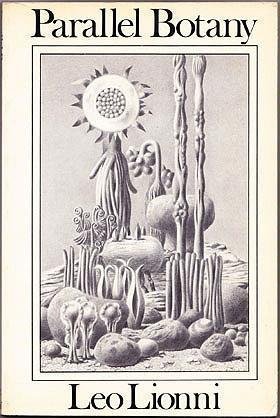
The first full-scale guide to the world of parallel plants - a vast, extremely peculiar and completely imaginary plant kingdom. Leoni presents all the fabulous lore and scholarship surrounding parallel plants, tells tales of the great parallel plant hunters, furnishes transcriptions of legends and folk tales relating to parallel plants, and provides elegant and scientifically-accurate drawings of each nonexistent plant species (remarkable because some of the species are invisible!) A unique, definitive and hilarious book.
Leo Lionni wrote and illustrated more than 40 highly acclaimed children's books. He received the 1984 American Institute of Graphic Arts Gold Medal and was a four-time Caldecott Honor Winner--for Inch by Inch, Frederick, Swimmy, and Alexander and the Wind-Up Mouse. Leo Lionni died in October of 1999 at his home in Tuscany, Italy, at the age of 89.
Leo Lionni has gained international renown for his paintings, graphic designs, illustrations, and sculpture, as well as for his books for children. He was born in Holland in 1910 of Dutch parents, and although his education did not include formal art courses (in fact, he has a doctorate in economics from the University of Genoa), he spent much of his free time as a child in Amsterdam's museums, teaching himself to draw.
Lionni's business training gradually receded into the background as his interest in art and design grew. Having settled in Milan soon after his marriage in 1931, he started off by writing about European architecture for a local magazine. It was there that he met the contacts who were to give him a start as a professional graphic designer. When he moved to America in 1939, Lionni was hired by a Philadelphia advertising agency as art director. Later he became design director for the Olivetti Corporation of America, and then art director for Fortune magazine. At the same time, his reputation as an artist flourished as he began to exhibit his paintings and drawings in galleries from New York to Japan.
Lionni launched his career as an author/illustrator of books for children in 1959. Originally developed from a story he had improvised for his grandchildren during a dull train ride, Little Blue and Little Yellow was the first of what is now a long list of children's picture books, including four Caldecott Honor Books.
Fiquei algo surpreendido, na banca de alfarrabista da Feira da Ladra, quando vi este livro de relance. Um bem encadernado manual de botánica, pensei, irresistível de espreitar as ilustrações científicas. Mas algo não batia certo. O texto que ia saltitando com os olhos parecia-me em tudo a secura da análise científica, mas as ilustrações eram bizarras. A saltar à vista, a capa, e se se perguntam porque é que um livro de botânica é ilustrado com uma capa a fazer lembrar o surrealismo de Yves Tanguy, pensam como eu. Suspeitei que havia no livro mais do que aparentava, e arrisquei a compra (sendo Feira da Ladra, não falamos de nenhuma fortuna). Algum tempo depois, saboreando um café na manhã quente de dezembro, fui às interwebs em busca do autor deste manual botânico. Percebi que a minha intuição estava correta, que estava perante algo muito diferente do que prometia ser.
Leo Lionni foi escritor de livros infantis e editor de arte em publicações internacionais. Este livro é uma curiosa sátira poética às ciências naturais, um détournement elegante e discreto. No estilo, replica a aridez do discurso científico, cruzando descrição factual, referênciação bibliográfica e dados complementares. Mas, na verdade, são pseudo-factos, pseudo-dados, todo o livro é um exercício de desconstrução poética surrealista. Perfeitamente credível para quem não percebe de botânica, o que o torna, também, um poderoso aviso sobre a forma como é fácil explorar a pseudo-intelectualidade para sustentar falsas credibilidades e, com isso, espalhar o que hoje chamamos de desinformação.
O tema do livro são as plantas efémeras, não pelos caprichos da natureza, mas por serem de uma natureza que está para lá da nossa realidade e tempo. Plantas fugazes, que só se deixam entrever por lentes especiais, quase impossíveis de estudar porque resistem à sua fixação no tempo. Vegetação esotérica, de estranhas proprieades, que se esfuma ao toque humano. Como vos disse, surrealismo poético transmutado em discurso pseudo-científico.
A acompanhar o delírio discreto do texto, ilustrações de perfeito surrealismo fora de contexto, retratando as fugazes plantas paralelas, ou os usos e costumes de tribos inexistentes em geografias irreais. Apesar da óbvia sátira, o livro nunca se descose, é sempre mantido o tom de onirismo em realismo científico. É sátira elegante e poética, não ironia rude.
Este achado de um acaso totalmente apropriado ao tema do livro, vai diretamente para a minha estante de curiosidades literárias esquecidas, e dos livros que embora não sendo assumidos como tal, são claramente exercícios de ficção fantástica.