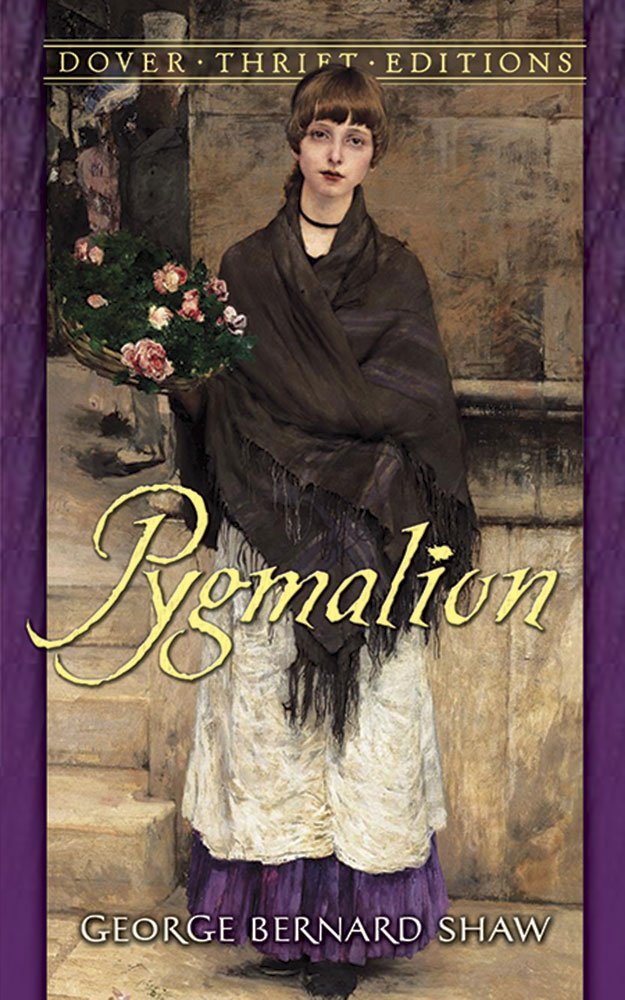
Enduring Literature Illuminated by Practical Scholarship An idealistic professor transforms an unsophisticated Cockney girl into a refined young lady in this classic drama set in turn-of-the-century London. This Enriched Classic Edition includes: • A concise introduction that gives readers important background information • A chronology of the author's life and work • A timeline of significant events that provides the book's historical context • An outline of key themes and plot points to help readers form their own interpretations • Detailed explanatory notes • Critical analysis including contemporary and modern perspectives on the work • Discussion questions to promote lively classroom and book group interaction • A list of recommended related books and films to broaden the reader's experience Enriched Classics offer readers affordable editions of great works of literature enhanced by helpful notes and insightful commentary. The scholarship provided in Enriched Classics enables readers to appreciate, understand, and enjoy the world's finest books to their full potential. Series edited by Cynthia Brantley Johnson (back cover)
George Bernard Shaw stands as one of the most prolific and influential intellectuals of the late nineteenth and early twentieth centuries, a man whose literary output was matched only by his fervent commitment to social reform. Rising from a modest background in Dublin to become a global icon of letters, Shaw redefined the purpose of the stage, transforming it from a place of mere entertainment into a forum for rigorous intellectual debate and moral inquiry. His unique "Shavian" style—characterized by sharp-witted dialogue, paradoxical reasoning, and a relentless assault on Victorian hypocrisy—ensured that his voice resonated far beyond the footlights. As a playwright, critic, and philosopher, he remains a singular figure in history, being one of only two individuals to have been honored with both a Nobel Prize in Literature and an Academy Award. This rare crossover of high-art recognition and mainstream cinematic success speaks to his versatility and the enduring relevance of his narratives. His dramatic work, which includes over sixty plays, often tackled the most pressing issues of his day, from the rigid structures of the British class system to the complexities of gender roles and the ethical dilemmas of capitalism. In masterpieces like Pygmalion, he used the science of phonetics to demonstrate the artificiality of class distinctions, a theme that would later reach millions through the musical adaptation My Fair Lady. In Man and Superman, he delved into the philosophical concepts of the "Life Force" and the evolution of the human spirit, while Major Barbara forced audiences to confront the uncomfortable relationship between religious idealism and the industrial military complex. Beyond his theatrical achievements, Shaw was a foundational force in political thought, serving as a leading light of the Fabian Society. His advocacy for gradual socialist reform, rather than violent revolution, helped shape the trajectory of modern British politics and social welfare. He was instrumental in the creation of the London School of Economics, an institution that continues to influence global policy and economic theory. Shaw was also a formidable critic, whose reviews of music and drama set new standards for the profession, characterized by an uncompromising honesty and a deep knowledge of the arts. His personal lifestyle was as distinctive as his writing; a committed vegetarian, teetotaler, and non-smoker, he lived with a disciplined focus that allowed him to remain productive well into his ninth decade. He was a man of contradictions, often engaging in provocative public discourse that challenged the status quo, even when his views sparked intense controversy. His fascination with the "Superman" archetype and his occasional support for authoritarian figures reflected a complex, often elitist worldview that sought the betterment of humanity through radical intellectual evolution. Despite these complexities, his core mission was always rooted in a profound humanitarianism and a desire to expose the delusions that prevented society from progressing. He believed that the power of the written word could strip away the masks of respectability that hid social injustice, and his plays continue to be staged worldwide because the human foibles he satirized remain as prevalent today as they were during his lifetime. By blending humor with gravity and intellect with accessibility, Shaw created a body of work that serves as both a mirror and a compass for modern civilization. His legacy is not just in the scripts he left behind, but in the very way we think about the intersection of art, politics, and the individual’s responsibility to the collective good. He remains the quintessential public intellectual, a man who never feared to speak his mind or to demand that the world become a more rational and equitable place.
please god laat mij nooit meer een presentatie doen waarin ik het woord glow-up gebruik en de film geek charming bespreek en het creëren van AI vergelijk met parenting there’s a shavian pygmalion everywhere for those with eyes to see 😭
De vindingrijke hervertelling van een oude Griekse mythe, later geadapteerd tot de populaire musical My Fair Lady.
Het verhaal boeide me al toen ik in de tweede klas hier een verkorte versie van zag, en ik had lang het voornemen het stuk in zijn geheel te lezen. Het idee dat mensen kunnen worden omgevormd, en dan met name via taal, intrigeert me. Zeker wanneer je hier machtsrelaties bij betrekt. Twee hoge heren leren een meisje van lage stand hoe degelijk te spreken. Het gaat hier duidelijk om prestige; de manier van spreken van de machtige is de 'juiste' manier, en via taal leer je ook 'juiste' manier van denken.
Ik vond het daarom heel verrassend dat de meesterlijke taalkundige Higgins zo'n gigantische klootzak is, en dat hij niets geeft om manieren. Op het eerste gezicht spreekt dit het idee tegen dat er een samenhang is tussen taal en wil. Maar Higgins is meer een uitzondering. Als gigantische cynicus ziet hij het allemaal als spel. Hij ziet de onzinnigheid in van het machtsvertoon van de hogere klasse (al profiteert hij er wel van). Hij wil niet dat iedereen spreekt als de elite, dat zou enkel de taalkundige diversiteit verminderen. Hij neemt de uitdaging alleen aan om zijn talenten te tonen. Hierdoor adopteert Eliza weliswaar de taal van de elite, maar niet de manieren.
En wanneer het spel klaar is, staat ze in een moeilijke situatie. Ze heeft geleefd in de illusie van de elite, maar weet dat dat haar leven niet is. Ze kan niet terug naar een armoedig bestaan, maar ook niet echt verder in het welvarende leven (behalve misschien als echtgenote van een rijke man, wat het seksistische in het verhaal benadrukt). Haar verlangens zijn gevormd naar het prestigieuze, maar voor haar is die nagenoeg onbereikbaar.
Het eindigt gelukkig goed voor haar, met het huwelijk tussen haar en Freddy. Al met al een menselijk en geruststellend einde. Dit stuk voelde voor me ook als een pleidooi voor menselijkheid. Eliza's was woedend op Higgins omdat hij haar enkel zag als een pronkstuk, een machine. En hier slaat het terug op de Griekse mythe. De liefde van Pygmalion voor zijn standbeeld was er een van macht, van bezit, van trots. Het dehumaniseert het object. Eliza is echter geen machine, maar nog steeds mens, en kiest voor Freddy. Die is niet in staat haar te veranderen, maar is gewoon lief voor haar. De boodschap is lief en simpel: liefde is geen krampachtige beeldvorming in romantische idealen; het is nooit dwingend en altijd ongedwongen.
In plaats van een happy ending: • Eliza ontwikkelt eigen wil en autonomie. • Ze weigert Higgins’ bezit of creatie te blijven. • De vraag wordt: van wie is een mens eigenlijk?
Daarmee bekritiseert Shaw: • het Britse klassensysteem • het idee dat taal sociale waarde bepaalt • mannelijke controle over vrouwelijke identiteit
Het beroemde punt van Shaw is dat de transformatie vooral in de ogen van de maatschappij zit: als iemand anders spreekt, behandelen mensen je anders. En ook: dat je van de hogere klasse bent, betekent niet automatisch dat je nobel bent; Higgins is een hork. En dat mensen van een lagere klasse ook allerlei bijzondere kwaliteiten kunnen hebben.
De titel Pygmalion is dus een ironie: • Higgins denkt dat hij de schepper is. • Maar uiteindelijk “schept” Eliza zichzelf.
This entire review has been hidden because of spoilers.
Voor het eerst in lange tijd weer eens een boek in het Engels gelezen. En wat voor Engels! Het verhaal van Eliza Doolittle is overbekend, ook uit de musical My Fair Lady. Maar het blijft interessant om te lezen en na te denken over de "maakbaarheid" van de mens en de ontreddering die met de veranderingen kunnen samenhangen. Nawoord ook zeer de moeite waard.