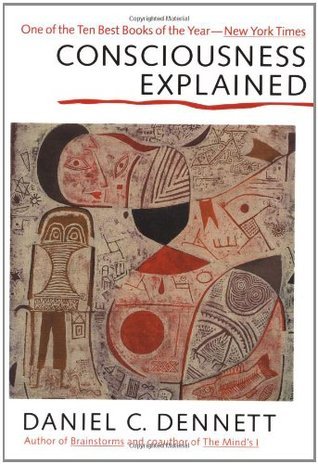
"Brilliant...as audacious as its title....Mr. Dennett's exposition is nothing short of brilliant." --George Johnson, New York Times Book Review
Consciousness Explained is a a full-scale exploration of human consciousness. In this landmark book, Daniel Dennett refutes the traditional, commonsense theory of consciousness and presents a new model, based on a wealth of information from the fields of neuroscience, psychology, and artificial intelligence. Our current theories about conscious life-of people, animal, even robots--are transformed by the new perspectives found in this book.
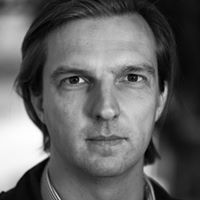
Daniel Clement Dennett III was a prominent philosopher whose research centered on philosophy of mind, science, and biology, particularly as they relate to evolutionary biology and cognitive science. He was the co-director of the Center for Cognitive Studies and the Austin B. Fletcher Professor of Philosophy at Tufts University. Dennett was a noted atheist, avid sailor, and advocate of the Brights movement.
Dennett received his B.A. in philosophy from Harvard University in 1963, where he was a student of W.V.O. Quine. In 1965, he received his D.Phil. from Christ Church, Oxford, where he studied under the ordinary language philosopher Gilbert Ryle.
Dennett gave the John Locke lectures at the University of Oxford in 1983, the Gavin David Young Lectures at Adelaide, Australia, in 1985, and the Tanner Lecture at Michigan in 1986, among many others. In 2001 he was awarded the Jean Nicod Prize, giving the Jean Nicod Lectures in Paris. He has received two Guggenheim Fellowships, a Fulbright Fellowship, and a Fellowship at the Center for Advanced Studies in Behavioral Science. He was elected to the American Academy of Arts and Sciences in 1987. He was the co-founder (1985) and co-director of the Curricular Software Studio at Tufts University, and has helped to design museum exhibits on computers for the Smithsonian Institution, the Museum of Science in Boston, and the Computer Museum in Boston. He was a Humanist Laureate of the International Academy of Humanism and a Fellow of the Committee for Skeptical Inquiry.
Dit is ongetwijfeld één van de boeken die mij het meest heeft beïnvloed. Ja, het is filosofie. Ja, het is wetenschap. Ja, bij momenten is het droge lectuur. Maar elk nieuw inzicht in hoe je hersens werken, hoe je brein werkt, hoe het allemaal zo geëvolueerd is, en wat dat dan betekent voor concepten als vrije wil, identiteit, zekerheid, enz. is het allemaal meer dan waard.