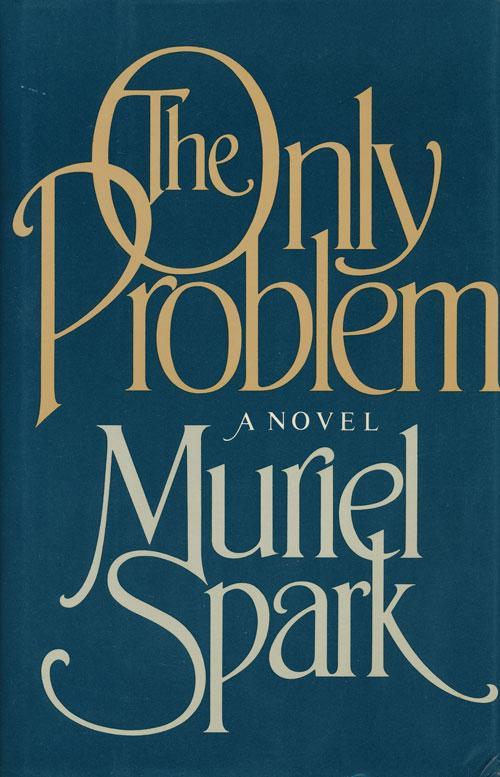
Harvey Gotham, a wealthy man in his midthirties writing a monograph on the "Book of Job," is told by police that his wife Effie, a member of a terrorist group, has bombed banks and commited murder and he finds that he loves Effie all the more
Dame Muriel Spark, DBE was a prolific Scottish novelist, short story writer and poet whose darkly comedic voice made her one of the most distinctive writers of the twentieth century. In 2008 The Times newspaper named Spark in its list of "the 50 greatest British writers since 1945".
Spark received the James Tait Black Memorial Prize in 1965 for The Mandelbaum Gate, the Ingersoll Foundation TS Eliot Award in 1992 and the David Cohen Prize in 1997. She became Dame Commander of the Order of the British Empire in 1993, in recognition of her services to literature. She has been twice shortlisted for the Booker Prize, in 1969 for The Public Image and in 1981 for Loitering with Intent. In 1998, she was awarded the Golden PEN Award by English PEN for "a Lifetime's Distinguished Service to Literature". In 2010, Spark was shortlisted for the Lost Man Booker Prize of 1970 for The Driver's Seat.
Spark received eight honorary doctorates in her lifetime. These included a Doctor of the University degree (Honoris causa) from her alma mater, Heriot-Watt University in 1995; a Doctor of Humane Letters (Honoris causa) from the American University of Paris in 2005; and Honorary Doctor of Letters degrees from the Universities of Aberdeen, Edinburgh, London, Oxford, St Andrews and Strathclyde.
Spark grew up in Edinburgh and worked as a department store secretary, writer for trade magazines, and literary editor before publishing her first novel, The Comforters, in 1957. The Prime of Miss Jean Brodie, published in 1961, and considered her masterpiece, was made into a stage play, a TV series, and a film.
"Il romanzo più metafisico di Muriel Spark". Indubbiamente. Eppure, benché si parli apertamente del problema del Male, diversamente dal solito e in modo particolarmente serio - nel limite di quanto Dame Spark lo consenta -, creando addirittura una vera e propria analogia metaforica, in realtà si è sempre al nocciolo di tantissimi (di tutti?) i romanzi di Muriel: la realtà che trascolora nell'opera letteraria che di volta in volta è presente nel romanzo. Qui questa è nientemeno che il Libro di Giobbe, e così come Sir Quentin in "Atteggiamento sospetto" "diventa" Warrender Chase del romanzo che la protagonista sta scrivendo, qui Harvey "diventa" il Giobbe sul cui libro sta spendendo anni di studio. È credente - come tutti i protagonisti della Spark, cattolica e scrittrice proprio perché cattolica - e come tutti i protagonisti della Spark si trova a lottare con una scrittura che lo scrive, per così dire (infinita variazione sul tema esposto fin dai "Consolatori" [guardacaso, di nuovo Giobbe]), che però raramente in M.S. è Dio - indifferente, probabilmente - e spesse volte è il Male. O comunque il Male è ciò che di volta in volta s'indaga e s'incarna in questi romanzi, nonostante il tono apparentemente leggero e witty. Qui, però, il tema è dichiarato. Schermato dalla finzione letteraria (sempre che una frase del genere abbia senso per la Spark che passa libro dopo libro a dimostrarci come la realtà sia finzione letteraria e viceversa e come l'una modifichi l'altra - e questa è metafisica), ma dichiarato: Giobbe, la sofferenza, il Male. "The only problem", infatti. Il 'problema' con questa donna invece è che i suoi romanzi sono macchine talmente ben congegnate e intelligenti, ma scritte in modo talmente scorrevole e britannicamente arguto, che si viene trascinati nella lettura e una volta che la si finisce si corre il rischio di pensare che sia stato solo un libro passatempo, e ci si perde così il vero genio che nasconde.