

What do you think?
C. G. Jung Obra Completa #11d
Answer to Job
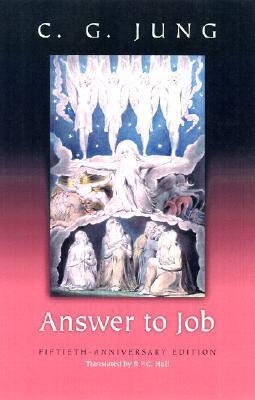
Jung has never pursued the "psychology of religion" apart from general psychology. The unique importance of his work lies rather in his discovery and treatment of religious, or potentially religious, factors in his investigation into the unconscious as a whole and in his general therapeutic practice. In Answer to Job, first published in Zurich in 1952, Jung employs the familiar language of theological discourse. Such terms as "God," "wisdom," and "evil" are the touchstones of his argument. And yet, Answer to Job, perhaps Jung's most controversial work, is not an essay in theology as much as it is an examination of the symbolic role that theological concepts play in a person's psychic life.
121 pages, Paperback
First published January 1, 1952
About the author
C.G. Jung
1,923 books12.3k followersCarl Gustav Jung (/jʊŋ/; German: [ˈkarl ˈɡʊstaf jʊŋ]), often referred to as C. G. Jung, was a Swiss psychiatrist and psychotherapist who founded analytical psychology. Jung proposed and developed the concepts of extraversion and introversion; archetypes, and the collective unconscious. His work has been influential in psychiatry and in the study of religion, philosophy, archeology, anthropology, literature, and related fields. He was a prolific writer, many of whose works were not published until after his death.
The central concept of analytical psychology is individuation—the psychological process of integrating the opposites, including the conscious with the unconscious, while still maintaining their relative autonomy. Jung considered individuation to be the central process of human development.
Jung created some of the best known psychological concepts, including the archetype, the collective unconscious, the complex, and synchronicity. The Myers-Briggs Type Indicator (MBTI), a popular psychometric instrument, has been developed from Jung's theory of psychological types.
Though he was a practising clinician and considered himself to be a scientist, much of his life's work was spent exploring tangential areas such as Eastern and Western philosophy, alchemy, astrology, and sociology, as well as literature and the arts. Jung's interest in philosophy and the occult led many to view him as a mystic, although his ambition was to be seen as a man of science. His influence on popular psychology, the "psychologization of religion", spirituality and the New Age movement has been immense.
The central concept of analytical psychology is individuation—the psychological process of integrating the opposites, including the conscious with the unconscious, while still maintaining their relative autonomy. Jung considered individuation to be the central process of human development.
Jung created some of the best known psychological concepts, including the archetype, the collective unconscious, the complex, and synchronicity. The Myers-Briggs Type Indicator (MBTI), a popular psychometric instrument, has been developed from Jung's theory of psychological types.
Though he was a practising clinician and considered himself to be a scientist, much of his life's work was spent exploring tangential areas such as Eastern and Western philosophy, alchemy, astrology, and sociology, as well as literature and the arts. Jung's interest in philosophy and the occult led many to view him as a mystic, although his ambition was to be seen as a man of science. His influence on popular psychology, the "psychologization of religion", spirituality and the New Age movement has been immense.
Ratings & Reviews
Friends & Following
Create a free account to discover what your friends think of this book!
Community Reviews
Displaying 1 - 1 of 1 review

November 19, 2022
più conosci il mondo, più ti avvicini a dio, più dio diventa uomo. soli fronte all'orrore, gli ebrei vedono il dio preadamitico. poi, con giobbe, ci si chiede perché le cose stiano così. contestare dio è metterlo sullo stesso piano nostro, cioè incarnarlo: un uomo ha discusso con dio! weilianamente, questo processo passerà per la grecia. come? no spoiler
questo libro ha diversi sensi. uno di questi è che la sintesi cristiana ama e teme dio al contempo. la cosa più bella però sono le inversioni di senso, i rovesciamenti di prospettiva che di solito si trovano a fine capitolo, e che puntellano il libro col gesto di decorarlo. riflettendo il contenuto, la teologia si trasforma in psicologia di massa. seconda parte meno bella della prima, ma grande descrizione dell'apocalisse di giovanni
questo libro ha diversi sensi. uno di questi è che la sintesi cristiana ama e teme dio al contempo. la cosa più bella però sono le inversioni di senso, i rovesciamenti di prospettiva che di solito si trovano a fine capitolo, e che puntellano il libro col gesto di decorarlo. riflettendo il contenuto, la teologia si trasforma in psicologia di massa. seconda parte meno bella della prima, ma grande descrizione dell'apocalisse di giovanni
Displaying 1 - 1 of 1 review