

What do you think?
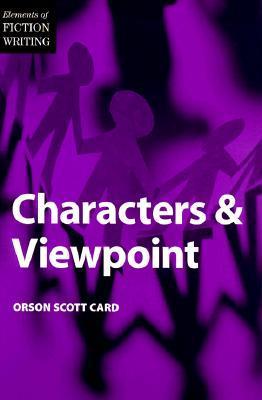
Elements of Fiction Writing
Characters & Viewpoint
Vivid and memorable characters aren't born: they have to be made.
This book is a set of tools: literary crowbars, chisels, mallets, pliers and tongs. Use them to pry, chip, yank and sift good characters out of the place where they live in your memory, your imagination and your soul.
Award-winning author Orson Scott Card explains in depth the techniques of inventing, developing and presenting characters, plus handling viewpoint in novels and short stories. With specific examples, he spells out your narrative options–the choices you'll make in creating fictional people so "real" that readers will feel they know them like members of their own families.
You'll learn how to:
-Draw the characters from a variety of sources, including a story's basic idea, real life–even a character's social circumstances.
-Make characters show who they are by the things they do and say, and by their individual "style".
-Develop characters readers will love–or love to hate.
-Distinguish among major characters, minor characters and walk-ons, and develop each one appropriately.
-Choose the most effective viewpoint to reveal the characters and move the storytelling.
-Decide how deeply you should explore your characters' thoughts, emotions and attitudes.
This book is a set of tools: literary crowbars, chisels, mallets, pliers and tongs. Use them to pry, chip, yank and sift good characters out of the place where they live in your memory, your imagination and your soul.
Award-winning author Orson Scott Card explains in depth the techniques of inventing, developing and presenting characters, plus handling viewpoint in novels and short stories. With specific examples, he spells out your narrative options–the choices you'll make in creating fictional people so "real" that readers will feel they know them like members of their own families.
You'll learn how to:
-Draw the characters from a variety of sources, including a story's basic idea, real life–even a character's social circumstances.
-Make characters show who they are by the things they do and say, and by their individual "style".
-Develop characters readers will love–or love to hate.
-Distinguish among major characters, minor characters and walk-ons, and develop each one appropriately.
-Choose the most effective viewpoint to reveal the characters and move the storytelling.
-Decide how deeply you should explore your characters' thoughts, emotions and attitudes.
182 pages, Paperback
First published January 1, 1988
About the author
Orson Scott Card
847 books21.1k followersOrson Scott Card is an American writer known best for his science fiction works. He is (as of 2023) the only person to have won a Hugo Award and a Nebula Award in consecutive years, winning both awards for his novel Ender's Game (1985) and its sequel Speaker for the Dead (1986). A feature film adaptation of Ender's Game, which Card co-produced, was released in 2013. Card also wrote the Locus Fantasy Award-winning series The Tales of Alvin Maker (1987–2003).
Card's fiction often features characters with exceptional gifts who make difficult choices with high stakes. Card has also written political, religious, and social commentary in his columns and other writing; his opposition to homosexuality has provoked public criticism.
Card, who is a great-great-grandson of Brigham Young, was born in Richland, Washington, and grew up in Utah and California. While he was a student at Brigham Young University (BYU), his plays were performed on stage. He served in Brazil as a missionary for the Church of Jesus Christ of Latter-day Saints (LDS Church) and headed a community theater for two summers. Card had 27 short stories published between 1978 and 1979, and he won the John W. Campbell Award for best new writer in 1978. He earned a master's degree in English from the University of Utah in 1981 and wrote novels in science fiction, fantasy, non-fiction, and historical fiction genres starting in 1979. Card continued to write prolifically, and he has published over 50 novels and 45 short stories.
Card teaches English at Southern Virginia University; he has written two books on creative writing and serves as a judge in the Writers of the Future contest. He has taught many successful writers at his "literary boot camps". He remains a practicing member of the LDS Church and Mormon fiction writers Stephenie Meyer, Brandon Sanderson, and Dave Wolverton have cited his works as a major influence.
Card's fiction often features characters with exceptional gifts who make difficult choices with high stakes. Card has also written political, religious, and social commentary in his columns and other writing; his opposition to homosexuality has provoked public criticism.
Card, who is a great-great-grandson of Brigham Young, was born in Richland, Washington, and grew up in Utah and California. While he was a student at Brigham Young University (BYU), his plays were performed on stage. He served in Brazil as a missionary for the Church of Jesus Christ of Latter-day Saints (LDS Church) and headed a community theater for two summers. Card had 27 short stories published between 1978 and 1979, and he won the John W. Campbell Award for best new writer in 1978. He earned a master's degree in English from the University of Utah in 1981 and wrote novels in science fiction, fantasy, non-fiction, and historical fiction genres starting in 1979. Card continued to write prolifically, and he has published over 50 novels and 45 short stories.
Card teaches English at Southern Virginia University; he has written two books on creative writing and serves as a judge in the Writers of the Future contest. He has taught many successful writers at his "literary boot camps". He remains a practicing member of the LDS Church and Mormon fiction writers Stephenie Meyer, Brandon Sanderson, and Dave Wolverton have cited his works as a major influence.
Ratings & Reviews
Friends & Following
Create a free account to discover what your friends think of this book!
Community Reviews
Displaying 1 - 1 of 1 review

May 25, 2012
Ho cercato di affrontare questo libro il più modestamente possibile, ma per buona parte ho arrancato. Dice ovvietà e ci si sofferma pure facendo molti esempi, alcuni generici scritti da lui, altri riferiti a film e libri che o ho già visto/letto, o devo ancora vedere/leggere (e in questo caso ho saltato per evitare spoiler), o così sconosciuti che neanche li ho mai sentiti nominare (e in questo caso ho letto ma non sempre sono sicuro di aver afferrato il senso).
Ad esempio, se mi dici che un personaggio simile al lettore suscita simpatia, ma che se è troppo simile annoia, e quindi la soluzione è che sia quel tanto bizzarro da attirare l'attenzione, be', si sapeva, no? Lo stesso vale per cose come la tensione sessuale o il sacrificio e altri temi simili, tutti elementi di cui anni di telefilm e film insegnano il funzionamento – anche perché si ricollegano al principio generale secondo cui una storia è riguardo un problema, quindi se i due personaggi si innamorano e il sentimento è lampante e contraccambiato e non ci sono ostacoli, o se l'eroe vuole fare l'eroe a buffo e si sacrifica senza sentire il sacrificio come tale, è naturale che il lettore/spettatore si senta deluso e non abbia più ragione di andare avanti.
Altre cose mi sono sembrate meno ovvie, come quella sul tipo di storia e su come la scelta influenzi anche la caratterizzazione dei personaggi: a pensarci rientra sempre nelle basi, ma le spiegazioni dell'autore sono state utili.
La parte sul punto di vista è la migliore e la più stringata, tanto che al confronto col resto sembra tirata via. Però dice tutto quello che c'è da dire e lo dice bene, gli esempi e le immagini sono calzanti, i consigli buoni. Non c'è un punto di vista o un tempo migliore di un altro, bisogna solo conoscere le opzioni a disposizione e scegliere cosa è più adatto alla storia che si vuole raccontare.
Ad esempio, se mi dici che un personaggio simile al lettore suscita simpatia, ma che se è troppo simile annoia, e quindi la soluzione è che sia quel tanto bizzarro da attirare l'attenzione, be', si sapeva, no? Lo stesso vale per cose come la tensione sessuale o il sacrificio e altri temi simili, tutti elementi di cui anni di telefilm e film insegnano il funzionamento – anche perché si ricollegano al principio generale secondo cui una storia è riguardo un problema, quindi se i due personaggi si innamorano e il sentimento è lampante e contraccambiato e non ci sono ostacoli, o se l'eroe vuole fare l'eroe a buffo e si sacrifica senza sentire il sacrificio come tale, è naturale che il lettore/spettatore si senta deluso e non abbia più ragione di andare avanti.
Altre cose mi sono sembrate meno ovvie, come quella sul tipo di storia e su come la scelta influenzi anche la caratterizzazione dei personaggi: a pensarci rientra sempre nelle basi, ma le spiegazioni dell'autore sono state utili.
La parte sul punto di vista è la migliore e la più stringata, tanto che al confronto col resto sembra tirata via. Però dice tutto quello che c'è da dire e lo dice bene, gli esempi e le immagini sono calzanti, i consigli buoni. Non c'è un punto di vista o un tempo migliore di un altro, bisogna solo conoscere le opzioni a disposizione e scegliere cosa è più adatto alla storia che si vuole raccontare.
Displaying 1 - 1 of 1 review