

What do you think?
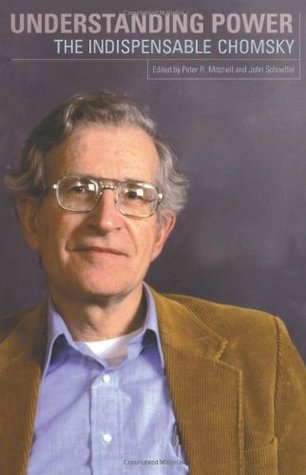
Understanding Power: The Indispensable Chomsky
A major new collection from "arguably the most important intellectual alive" (The New York Times). Noam Chomsky is universally accepted as one of the preeminent public intellectuals of the modern era. Over the past thirty years, broadly diverse audiences have gathered to attend his sold-out lectures. Now, in Understanding Power, Peter Mitchell and John Schoeffel have assembled the best of Chomsky's recent talks on the past, present, and future of the politics of power. In a series of enlightening and wide-ranging discussions, all published here for the first time, Chomsky radically reinterprets the events of the past three decades, covering topics from foreign policy during Vietnam to the decline of welfare under the Clinton administration. And as he elucidates the connection between America's imperialistic foreign policy and the decline of domestic social services, Chomsky also discerns the necessary steps to take toward social change. With an eye to political activism and the media's role in popular struggle, as well as U.S. foreign and domestic policy, Understanding Power offers a sweeping critique of the world around us and is definitive Chomsky. Characterized by Chomsky's accessible and informative style, this is the ideal book for those new to his work as well as for those who have been listening for years.
416 pages, Paperback
First published June 1, 2002
About the author
Noam Chomsky
1,011 books17.5k followersAvram Noam Chomsky is an American professor and public intellectual known for his work in linguistics, political activism, and social criticism. Sometimes called "the father of modern linguistics", Chomsky is also a major figure in analytic philosophy and one of the founders of the field of cognitive science. He is a laureate professor of linguistics at the University of Arizona and an institute professor emeritus at the Massachusetts Institute of Technology (MIT). Among the most cited living authors, Chomsky has written more than 150 books on topics such as linguistics, war, and politics. In addition to his work in linguistics, since the 1960s Chomsky has been an influential voice on the American left as a consistent critic of U.S. foreign policy, contemporary capitalism, and corporate influence on political institutions and the media.
Born to Ashkenazi Jewish immigrants (his father was William Chomsky) in Philadelphia, Chomsky developed an early interest in anarchism from alternative bookstores in New York City. He studied at the University of Pennsylvania. During his postgraduate work in the Harvard Society of Fellows, Chomsky developed the theory of transformational grammar for which he earned his doctorate in 1955. That year he began teaching at MIT, and in 1957 emerged as a significant figure in linguistics with his landmark work Syntactic Structures, which played a major role in remodeling the study of language. From 1958 to 1959 Chomsky was a National Science Foundation fellow at the Institute for Advanced Study. He created or co-created the universal grammar theory, the generative grammar theory, the Chomsky hierarchy, and the minimalist program. Chomsky also played a pivotal role in the decline of linguistic behaviorism, and was particularly critical of the work of B.F. Skinner.
An outspoken opponent of U.S. involvement in the Vietnam War, which he saw as an act of American imperialism, in 1967 Chomsky rose to national attention for his anti-war essay "The Responsibility of Intellectuals". Becoming associated with the New Left, he was arrested multiple times for his activism and placed on President Richard M. Nixon's list of political opponents. While expanding his work in linguistics over subsequent decades, he also became involved in the linguistics wars. In collaboration with Edward S. Herman, Chomsky later articulated the propaganda model of media criticism in Manufacturing Consent, and worked to expose the Indonesian occupation of East Timor. His defense of unconditional freedom of speech, including that of Holocaust denial, generated significant controversy in the Faurisson affair of the 1980s. Chomsky's commentary on the Cambodian genocide and the Bosnian genocide also generated controversy. Since retiring from active teaching at MIT, he has continued his vocal political activism, including opposing the 2003 invasion of Iraq and supporting the Occupy movement. An anti-Zionist, Chomsky considers Israel's treatment of Palestinians to be worse than South African–style apartheid, and criticizes U.S. support for Israel.
Chomsky is widely recognized as having helped to spark the cognitive revolution in the human sciences, contributing to the development of a new cognitivistic framework for the study of language and the mind. Chomsky remains a leading critic of U.S. foreign policy, contemporary capitalism, U.S. involvement and Israel's role in the Israeli–Palestinian conflict, and mass media. Chomsky and his ideas are highly influential in the anti-capitalist and anti-imperialist movements. Since 2017, he has been Agnese Helms Haury Chair in the Agnese Nelms Haury Program in Environment and Social Justice at the University of Arizona.
Born to Ashkenazi Jewish immigrants (his father was William Chomsky) in Philadelphia, Chomsky developed an early interest in anarchism from alternative bookstores in New York City. He studied at the University of Pennsylvania. During his postgraduate work in the Harvard Society of Fellows, Chomsky developed the theory of transformational grammar for which he earned his doctorate in 1955. That year he began teaching at MIT, and in 1957 emerged as a significant figure in linguistics with his landmark work Syntactic Structures, which played a major role in remodeling the study of language. From 1958 to 1959 Chomsky was a National Science Foundation fellow at the Institute for Advanced Study. He created or co-created the universal grammar theory, the generative grammar theory, the Chomsky hierarchy, and the minimalist program. Chomsky also played a pivotal role in the decline of linguistic behaviorism, and was particularly critical of the work of B.F. Skinner.
An outspoken opponent of U.S. involvement in the Vietnam War, which he saw as an act of American imperialism, in 1967 Chomsky rose to national attention for his anti-war essay "The Responsibility of Intellectuals". Becoming associated with the New Left, he was arrested multiple times for his activism and placed on President Richard M. Nixon's list of political opponents. While expanding his work in linguistics over subsequent decades, he also became involved in the linguistics wars. In collaboration with Edward S. Herman, Chomsky later articulated the propaganda model of media criticism in Manufacturing Consent, and worked to expose the Indonesian occupation of East Timor. His defense of unconditional freedom of speech, including that of Holocaust denial, generated significant controversy in the Faurisson affair of the 1980s. Chomsky's commentary on the Cambodian genocide and the Bosnian genocide also generated controversy. Since retiring from active teaching at MIT, he has continued his vocal political activism, including opposing the 2003 invasion of Iraq and supporting the Occupy movement. An anti-Zionist, Chomsky considers Israel's treatment of Palestinians to be worse than South African–style apartheid, and criticizes U.S. support for Israel.
Chomsky is widely recognized as having helped to spark the cognitive revolution in the human sciences, contributing to the development of a new cognitivistic framework for the study of language and the mind. Chomsky remains a leading critic of U.S. foreign policy, contemporary capitalism, U.S. involvement and Israel's role in the Israeli–Palestinian conflict, and mass media. Chomsky and his ideas are highly influential in the anti-capitalist and anti-imperialist movements. Since 2017, he has been Agnese Helms Haury Chair in the Agnese Nelms Haury Program in Environment and Social Justice at the University of Arizona.
Ratings & Reviews
Friends & Following
Create a free account to discover what your friends think of this book!
Community Reviews
Displaying 1 - 7 of 7 reviews
Want to Read
March 13, 2025In gran parte letto
This entire review has been hidden because of spoilers.
December 20, 2023
Libro comprensibile, che, tra le altre cose, ridimensiona il mito dei libri che devono essere incomprensibili se trattano di certi temi. Le teorie esposte, prima fra tutte quella che vuole il profitto come obiettivo unico dei grandi detentori di capitale, e la politica al servizio di questi ultimi praticamente in tutto il mondo, mi sono sembrate sempre più convincenti man mano che sono andato avanti nella lettura. Mi sarebbe piaciuta una maggior citazione delle fonti a sostegno di alcune delle affermazioni più spregiudicate, ma credo che un personaggio dell'autorevolezza di Chomsky non faccia troppe affermazioni a casaccio. Ho avuto la sensazione, ma solo in pochissimi passaggi, di una leggera forzatura dei concetti, ma lui stesso in più di un passaggio esorta alla lettura critica e diffidente di qualsiasi testo, compresi i suoi, quindi credo che meriti ampiamente la fiducia che gli si concede. Un libro che ha dato forma ai miei pensieri nebulosi su chi comanda per davvero, e che a mio parere descrive un assetto mondiale e una spiegazione di molti eventi storici in un modo molto vicino alla realtà. Tutti quelli che guadagnano meno di qualche centinaio di migliaia di euro all'anno dovrebbero leggerlo. Figuriamoci quelli, come me, che ogni giorno si chiedono perché chi guadagna di meno deve contribuire di più al sostentamento del motore planetario. Critico e cinico nei confronti della realtà, ma con un fondo di "ottimismo razionale" che io ho trovato corroborante.

April 1, 2023
Bellissimo saggio. Il migliore che abbia letto di Chomsky. Peccato che sia stato scritto nel 2002 e quindi perde un po' di attualità. Ma rimane comunque molto utile da leggere.
Chomsky racconta e circostanzia una quantità praticamente continua e infinita di malefatte terroriste degli Stati Uniti in giro per il mondo. Da questo punto di vista alle volte è quasi troppo. Come un pugno allo stomaco. Nel suo cinismo/realismo mi ha ricordato il più recente Harari
Molto interessante anche la sua visione di finto dibattito democratico destra-sinistra che secondo lui c'è nella "democrazia" americana.
Spazia anche su altri argomenti: scienza, filosofia, sociologia. Rimanendo sempre interessante.
Consigliatissimo
Chomsky racconta e circostanzia una quantità praticamente continua e infinita di malefatte terroriste degli Stati Uniti in giro per il mondo. Da questo punto di vista alle volte è quasi troppo. Come un pugno allo stomaco. Nel suo cinismo/realismo mi ha ricordato il più recente Harari
Molto interessante anche la sua visione di finto dibattito democratico destra-sinistra che secondo lui c'è nella "democrazia" americana.
Spazia anche su altri argomenti: scienza, filosofia, sociologia. Rimanendo sempre interessante.
Consigliatissimo

May 28, 2024
Tratta di argomenti di cui sentiamo in giro fin troppo poco. È stato essenziale per lo sviluppo di alcune mie idee su cose che precendentemente ingnoravo o di cui, più semplicemente, non ero al corrente.
L'unico difetto del libro è che parla di argomenti che andrebbero approfonditi più nel dettaglio.
Consigliatissimo.
L'unico difetto del libro è che parla di argomenti che andrebbero approfonditi più nel dettaglio.
Consigliatissimo.
June 13, 2011
Inquietante e spaventoso. A volte si dice senza pensarci troppo "la realtà supera la fantasia", ma leggendo questo libro ci si rende conto di quanto sia vero. Sconsigliato a chi soffre di crisi depressive e di manie di persecuzione, perché potrebbe portare al suicidio. L'autore (o meglio "il protagonista") esprime naturalmente la sua opinione su molti dei punti discussi, e si tratta di un punto di vista da "anarchico". Su ogni argomento si può concordare o meno, ma i fatti che riporta sono perlomeno verificabili e documentati e descrivono una situazione descrivibile solo con le prime due parole di questa recensione.
December 29, 2010
Semplicemente apre gli occhi sui media

August 2, 2017
Dopo aver letto le prime 40 pagine di questo libro, mi sono fermato un attimo a riflettere e mi sono accorto di una cosa: avevo capito di più sulla situazione geopolitica mondiale negli ultimi 30 minuti che in 30 anni di telegiornali e carta stampata. Non sto esagerando.Da bambino, guardando in tv le notizie sulla situazione in medioriente, non riuscivo mai a seguire il filo degli avvenimenti. Pensavo "è roba troppo complicata, non posso sperare di capirla". Ma ero solo un bambino. Adesso ho 30 anni, ho avuto la fortuna di poter studiare e prendere una laurea, ma la situazione non è cambiata. Guardo raffiche di servizi giornalistici sugli attentati in Israele/Palestina, ma continuo a non...
Continua qui:http://figura4.com/review/show/68-cap...
Continua qui:http://figura4.com/review/show/68-cap...
Displaying 1 - 7 of 7 reviews