

What do you think?
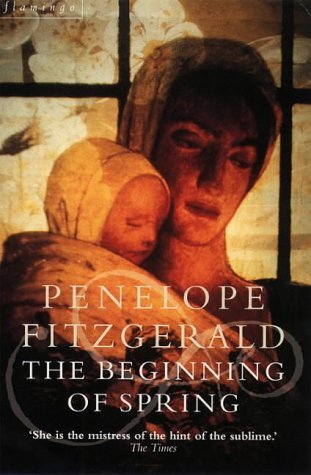
The Beginning of Spring
In March 1913, Frank Reid's wife abruptly leaves him and Moscow for her native England. Naturally, she takes their daughters and son with her. The children, however, only make it as far as the train station - and even after returning home remain unaffected by their brief exile.
"They ought either to be quieter or more noisy than before," their father thinks, "and it was disconcerting that they seemed to be exactly the same." Frank's routines, however, drift into disorder as he tries desperately to take charge of life at home and work. Even his printing plant is suddenly confronted by the specters of modernization and utter instability.
In Penelope Fitzgerald's fiction, affection and remorse are all too often allied, and desire and design seem never to meet. Frank wants little more than a quiet, confident life - something for which he is deeply unsuited, and which Russia certainly will not go out of her way to provide.
'The Beginning of Spring' is filled with echoes of past wrongs and whispers of the revolution to come, even if the author evokes these with abrupt comic brio. (In one disturbance, "A great many shots had hit people for whom they were not intended.")
As ever, Fitzgerald makes us care for - and want to know ever more about - her characters, even the minor players. Her two-page description of Frank's chief type compositor, for instance, is a miracle of precision and humor, sympathy and mystery. And the accountant Selwyn Crane - a Tolstoy devotée, self-published poet, and expert at making others feel guilty -is a sublime creation. His appetite for do-gooding is insatiable.
After one fit of apparent altriusm, "Selwyn subsided. Now that he saw everything was going well, his mind was turning to his next charitable enterprise. With the terrible aimlessness of the benevolent, he was casting round for a new misfortune." As she evokes her household of tears and laughter, Fitzgerald's prose is as witty as ever, rendering the past present and the modern timeless. - Kerry Fried
"They ought either to be quieter or more noisy than before," their father thinks, "and it was disconcerting that they seemed to be exactly the same." Frank's routines, however, drift into disorder as he tries desperately to take charge of life at home and work. Even his printing plant is suddenly confronted by the specters of modernization and utter instability.
In Penelope Fitzgerald's fiction, affection and remorse are all too often allied, and desire and design seem never to meet. Frank wants little more than a quiet, confident life - something for which he is deeply unsuited, and which Russia certainly will not go out of her way to provide.
'The Beginning of Spring' is filled with echoes of past wrongs and whispers of the revolution to come, even if the author evokes these with abrupt comic brio. (In one disturbance, "A great many shots had hit people for whom they were not intended.")
As ever, Fitzgerald makes us care for - and want to know ever more about - her characters, even the minor players. Her two-page description of Frank's chief type compositor, for instance, is a miracle of precision and humor, sympathy and mystery. And the accountant Selwyn Crane - a Tolstoy devotée, self-published poet, and expert at making others feel guilty -is a sublime creation. His appetite for do-gooding is insatiable.
After one fit of apparent altriusm, "Selwyn subsided. Now that he saw everything was going well, his mind was turning to his next charitable enterprise. With the terrible aimlessness of the benevolent, he was casting round for a new misfortune." As she evokes her household of tears and laughter, Fitzgerald's prose is as witty as ever, rendering the past present and the modern timeless. - Kerry Fried
188 pages, Paperback
First published January 1, 1988
About the author
Penelope Fitzgerald
44 books836 followersPenelope Mary Fitzgerald was a Booker Prize-winning novelist, poet, essayist and biographer from Lincoln, England. In 2008 The Times listed her among "the 50 greatest British writers since 1945". The Observer in 2012 placed her final novel, The Blue Flower, among "the ten best historical novels". A.S. Byatt called her, "Jane Austen’s nearest heir for precision and invention."
Ratings & Reviews
Friends & Following
Create a free account to discover what your friends think of this book!
Community Reviews
Displaying 1 - 1 of 1 review

December 23, 2022
La cara, trasandata mamma Mosca, frastornata dalle campane delle sue quattro volte quaranta chiese, riparo indifferentemente di fabbriche, bordelli e cupole dorate, intralciata da Greci e Persiani e paesani smarriti e seminaristi sparsi lungo le linee tramviarie, concentrata sulla sua cittadella santa, ma protesa verso l’esterno con un maleodorante salto oltre i boulevard verso la cerchia di dormitori di operai e i capolinea ferroviari, dove i monasteri pregavano ancora, e da ultimo verso un anello di porcili, orti di cavoli, strade sterrate, gabinetti all’aperto, dove Mosca si lasciava sprofondare, apparentemente con sollievo, in un villaggio.
Romanzo molto originale, come lo sono sempre quelli di Penelope Fitzgerald. L’ambientazione, Mosca 1913, è davvero interessante e vivida. Storia e personaggi sono particolari, insoliti, fuori dagli schemi. La trama è sorprendente dall’inizio alla fine. Un tipografo viene improvvisamente abbandonato dalla moglie, senza una parola, e lasciato a sbrigarsela con tre bambini. Sforzandosi di non pensare alla fuggitiva, cerca di organizzarsi per tirare avanti, in attesa di un ritorno o di una spiegazione; ma scoprirà che le cose non stanno come credeva. Le relazioni tra le persone, sembra dirci l’autrice, sono sempre diverse, sempre uniche, spesso irrazionali, e non sappiamo mai cos’hanno in testa gli altri. Tutti a Mosca sanno ogni cosa di me, ripete più di una volta Frank, uomo onesto e pieno di buona volontà, ma a quanto pare è l’unica persona trasparente della città. Perfino il suo fido braccio destro Selwyn, probo moralista tolstoiano, nasconde dei segreti. I bambini hanno poca parte, ma il personaggio della maggiore Dolly è un bellissimo schizzo, una bambina vera - così raro nei libri. E la città è sempre quel gorgo di surreali assurdità che conosciamo dagli autori slavi e che, nella letteratura, affascina sempre. La simpatia che l’autrice esprime per Mosca, lei che vive nel paese più diverso, è analoga a quella che dichiarò per la scelta dei suoi personaggi, disorientati, ostinati, perdenti. La vita è complicata, imprevedibile e bizzarra: “Apri la porta, dicono i russi, ed ecco i guai.”
Non il suo migliore romanzo, a tratti eccessivamente enigmatico, ma sempre meritevole.
Romanzo molto originale, come lo sono sempre quelli di Penelope Fitzgerald. L’ambientazione, Mosca 1913, è davvero interessante e vivida. Storia e personaggi sono particolari, insoliti, fuori dagli schemi. La trama è sorprendente dall’inizio alla fine. Un tipografo viene improvvisamente abbandonato dalla moglie, senza una parola, e lasciato a sbrigarsela con tre bambini. Sforzandosi di non pensare alla fuggitiva, cerca di organizzarsi per tirare avanti, in attesa di un ritorno o di una spiegazione; ma scoprirà che le cose non stanno come credeva. Le relazioni tra le persone, sembra dirci l’autrice, sono sempre diverse, sempre uniche, spesso irrazionali, e non sappiamo mai cos’hanno in testa gli altri. Tutti a Mosca sanno ogni cosa di me, ripete più di una volta Frank, uomo onesto e pieno di buona volontà, ma a quanto pare è l’unica persona trasparente della città. Perfino il suo fido braccio destro Selwyn, probo moralista tolstoiano, nasconde dei segreti. I bambini hanno poca parte, ma il personaggio della maggiore Dolly è un bellissimo schizzo, una bambina vera - così raro nei libri. E la città è sempre quel gorgo di surreali assurdità che conosciamo dagli autori slavi e che, nella letteratura, affascina sempre. La simpatia che l’autrice esprime per Mosca, lei che vive nel paese più diverso, è analoga a quella che dichiarò per la scelta dei suoi personaggi, disorientati, ostinati, perdenti. La vita è complicata, imprevedibile e bizzarra: “Apri la porta, dicono i russi, ed ecco i guai.”
Non il suo migliore romanzo, a tratti eccessivamente enigmatico, ma sempre meritevole.
Displaying 1 - 1 of 1 review