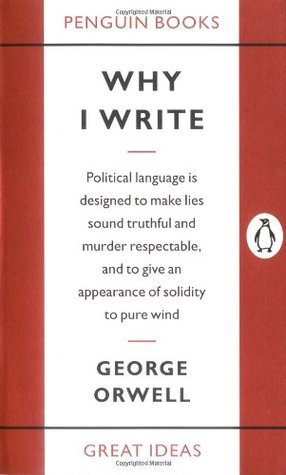
Whether puncturing the lies of politicians, wittily dissecting the English character or telling unpalatable truths about war, Orwell's timeless, uncompromising essays are more relevant, entertaining and essential than ever in today's era of spin.
Contents: "Why I Write", first published 1946 "The Lion and the Unicorn", first published 1940 "A Hanging", first published 1931 "Politics and the English Language", first published 1946
Eric Arthur Blair was an English novelist, poet, essayist, journalist and critic who wrote under the pen name of George Orwell. His work is characterised by lucid prose, social criticism, opposition to all totalitarianism (both fascism and stalinism), and support of democratic socialism.
Orwell is best known for his allegorical novella Animal Farm (1945) and the dystopian novel Nineteen Eighty-Four (1949), although his works also encompass literary criticism, poetry, fiction and polemical journalism. His non-fiction works, including The Road to Wigan Pier (1937), documenting his experience of working-class life in the industrial north of England, and Homage to Catalonia (1938), an account of his experiences soldiering for the Republican faction of the Spanish Civil War (1936–1939), are as critically respected as his essays on politics, literature, language and culture.
Orwell's work remains influential in popular culture and in political culture, and the adjective "Orwellian"—describing totalitarian and authoritarian social practices—is part of the English language, like many of his neologisms, such as "Big Brother", "Thought Police", "Room 101", "Newspeak", "memory hole", "doublethink", and "thoughtcrime". In 2008, The Times named Orwell the second-greatest British writer since 1945.
Why I Write : 4/5 Skemmtilegt lýsing á líf Orwells og ástæður eða áhugahvöt sem fengu hann til þess að skrifa greinar og bækur. Það kom mig á óvart að allar fjórar ástæðurnar eru eðlislíkar þeim sem kveiktu áhuga minn á lestur og höfðaði því greinin til mín
The Lion and The Unicorn: 4/5 Áhugavert innsýn í menningu Englands í seinni stríðs árunum. Orwell telur á þessum tíma að eina leiðin til að sigra Hitler og fasima væri sósalísk bylting í Englandi. Hann telur einnig að það hefði verið hægt að koma veg fyrir ris fasisma í Evrópu ef auðugir valdamenn Englands hefði ekki litið fram hjá eðli fasismans í nafni gróða. Nú er ég ekki sérstaklega fróður í þeim atburðum sem áttu sér stað fyrir WW2 og hef því enga hugmynd um hvort Orwell hefur rétt fyrir sér eða ekki. Greinin vakti áhuga á að skoða betur heimspólitíkini sem átti sér stað fyrir WW2.
A Hanging: 3/5 Ágætis prósi um reynslu Orwells að fyglja fanga að gálganum.
Politics and the English Language: 3/5 Ágætis punktar um mikilvægi góða tungumála notkun. Athugasemd hans við notkun orða sem gefa af sér vísindalegan blæ til þess að fela hlutdrægni staðhæfingunnar á ennþá við í dag.