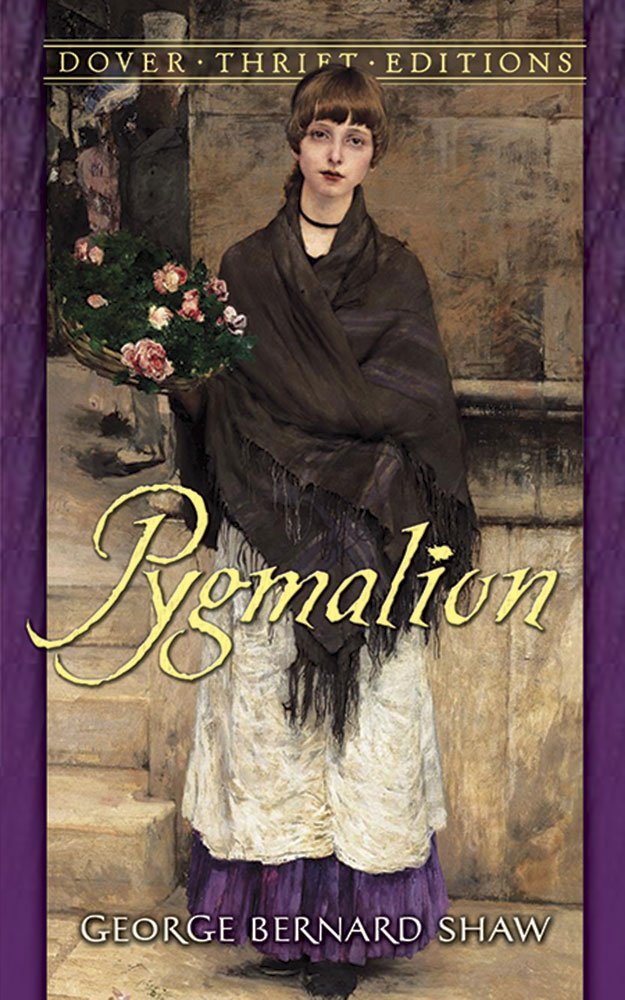
Enduring Literature Illuminated by Practical Scholarship An idealistic professor transforms an unsophisticated Cockney girl into a refined young lady in this classic drama set in turn-of-the-century London. This Enriched Classic Edition includes: • A concise introduction that gives readers important background information • A chronology of the author's life and work • A timeline of significant events that provides the book's historical context • An outline of key themes and plot points to help readers form their own interpretations • Detailed explanatory notes • Critical analysis including contemporary and modern perspectives on the work • Discussion questions to promote lively classroom and book group interaction • A list of recommended related books and films to broaden the reader's experience Enriched Classics offer readers affordable editions of great works of literature enhanced by helpful notes and insightful commentary. The scholarship provided in Enriched Classics enables readers to appreciate, understand, and enjoy the world's finest books to their full potential. Series edited by Cynthia Brantley Johnson (back cover)
George Bernard Shaw stands as one of the most prolific and influential intellectuals of the late nineteenth and early twentieth centuries, a man whose literary output was matched only by his fervent commitment to social reform. Rising from a modest background in Dublin to become a global icon of letters, Shaw redefined the purpose of the stage, transforming it from a place of mere entertainment into a forum for rigorous intellectual debate and moral inquiry. His unique "Shavian" style—characterized by sharp-witted dialogue, paradoxical reasoning, and a relentless assault on Victorian hypocrisy—ensured that his voice resonated far beyond the footlights. As a playwright, critic, and philosopher, he remains a singular figure in history, being one of only two individuals to have been honored with both a Nobel Prize in Literature and an Academy Award. This rare crossover of high-art recognition and mainstream cinematic success speaks to his versatility and the enduring relevance of his narratives. His dramatic work, which includes over sixty plays, often tackled the most pressing issues of his day, from the rigid structures of the British class system to the complexities of gender roles and the ethical dilemmas of capitalism. In masterpieces like Pygmalion, he used the science of phonetics to demonstrate the artificiality of class distinctions, a theme that would later reach millions through the musical adaptation My Fair Lady. In Man and Superman, he delved into the philosophical concepts of the "Life Force" and the evolution of the human spirit, while Major Barbara forced audiences to confront the uncomfortable relationship between religious idealism and the industrial military complex. Beyond his theatrical achievements, Shaw was a foundational force in political thought, serving as a leading light of the Fabian Society. His advocacy for gradual socialist reform, rather than violent revolution, helped shape the trajectory of modern British politics and social welfare. He was instrumental in the creation of the London School of Economics, an institution that continues to influence global policy and economic theory. Shaw was also a formidable critic, whose reviews of music and drama set new standards for the profession, characterized by an uncompromising honesty and a deep knowledge of the arts. His personal lifestyle was as distinctive as his writing; a committed vegetarian, teetotaler, and non-smoker, he lived with a disciplined focus that allowed him to remain productive well into his ninth decade. He was a man of contradictions, often engaging in provocative public discourse that challenged the status quo, even when his views sparked intense controversy. His fascination with the "Superman" archetype and his occasional support for authoritarian figures reflected a complex, often elitist worldview that sought the betterment of humanity through radical intellectual evolution. Despite these complexities, his core mission was always rooted in a profound humanitarianism and a desire to expose the delusions that prevented society from progressing. He believed that the power of the written word could strip away the masks of respectability that hid social injustice, and his plays continue to be staged worldwide because the human foibles he satirized remain as prevalent today as they were during his lifetime. By blending humor with gravity and intellect with accessibility, Shaw created a body of work that serves as both a mirror and a compass for modern civilization. His legacy is not just in the scripts he left behind, but in the very way we think about the intersection of art, politics, and the individual’s responsibility to the collective good. He remains the quintessential public intellectual, a man who never feared to speak his mind or to demand that the world become a more rational and equitable place.
Naskah drama komedi, yang dari judul dan blurb-nya sempat bikin tersesat (≧◡≦)
Ceritanya tentang seorang profesor ahli fonetik yang bertaruh dengan sahabatnya, bahwa ia sanggup mengajari seorang gadis penjual bunga, sampai si gadis bakalan dianggap sebagai duchess oleh 'masyarakat kelas atas' yang selalu memandang kelas itu.
Kocak, adegan Higgins bisa nebak daerah asal setiap orang yang ngomong ke dia jadi ngingetin sama kondisi yang terjadi sehari-hari di sini, di mana aksen bicara seseorang bisa langsung 'membongkar' asal-usulnya.
Pas aku lagi ngantri beli nasi goreng, misalnya. Si penjual bisa langsung nebak suku asal dan daerah asal mas-mas driver ojol yang juga lagi beli. Padahal suku dan daerahnya beda, karena seperti kata si mas-mas, "Nggih, saya memang blasteran. Bapak Jawa, ibu Madura."
Di bagian dramanya, terasa kocak di awal. Lalu makin lama makin pahit. Si profesor tipe orang yang perlu ditendang keras-keras supaya sadar kalau dia ngga berurusan dengan patung pahatan, tapi dengan manusia yang punya hati.
Yang paling menarik justru bagian awal kata pengantarnya, di mana si pengarang membeberkan berbagai kekurangan di bahasa Inggris 。゚( ゚^∀^゚)゚。
Untuk penutupnya ... (´・ᴗ・ ` ) hmm, rasanya aku sudah senang dengan ending dari drama itu sendiri, yang bersifat , tapi sebagai pengarang mungkin Bpk. Shaw ini termasuk 'egois' ya (⁀ᗢ⁀) Haha, ini anggapanku pribadi. Aku membayangkan pengarang berpikir seperti ini, (≧◡≦) Jadi, penutupnya memang benar-benar menutup semuanya, termasuk imajinasi penonton/pembaca. Tapi tetap menarik rasanya ikut 'menjalani' jalan pikiran pengarang, yang menentukan ini dan itu demi 'melengkapi' dramanya (⌒ω⌒)
Eliza Doolittle bertemu dengan Kolonel Pickering dan Henry Higgins saat sedang berjualan bunga di pinggir jalan. Lewat percakapan kedua pria itu, Eliza mendengar Higgins yang menyatakan bahwa dia mampu mengubah Eliza menjadi seorang wanita terhormat hanya dengan mengubah cara bicaranya. Melihat ini sebagai kesempatannya untuk memperoleh hidup yang lebih baik, Eliza bertemu dengan Higgins di rumah pria itu dan memintanya untuk mengajarinya cara berbicara wanita kelas atas.
Naskah drama yang kemudian diadaptasi menjadi film My Fair Lady (dengan Audrey Hepburn sebagai Eliza). Versi audiobook-nya sangat membantu untuk mendengar perubahan cara berbicara Eliza sebelum dan sesudah belajar dengan Higgins.