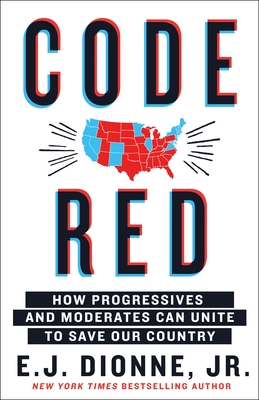
CODE RED is both a political science treatise and an historical overview of the actions of administrations, both Democratic and Republican, that have led the United States to the debacle we are facing today. As I was reading, I reflected several times on the fact that even five years ago I would have given this book, and any like it, a pass. At that time I was a voter but not overly concerned about politics per se. I had some strong feelings about specific actions of government, but I didn't feel the need to spend time studying the issues or going out to protest. Since the leadup to the 2016 election, the subsequent Electoral College win, and all that has transpired since the inauguration, I find myself devouring books that purport to explain the chaos or provide coherent accounts of obscured events.
E. J. Dionne, Jr. is one of my favorite guests on prime time MSNBC. He is erudite and always brings his journalistic analysis to the table. Having once studied a bit of journalism myself, I am aware of the tenets of the discipline's basic who, what, where, when, and sometimes why process that separate reporting from editorializing. Dionne seems to always put reporting above his opinion even in the fraught world of cable news. Even in opinion pieces, he manages to look at both sides with a certain amount of dispassionateness.
Although Chapter 1 seems to be aimed at political scientists and other such wonks, there are some valuable gems for the average voting citizen, or perhaps even more so for the non-voting citizen that needs to become informed. In other words, the numbers are thoughtfully explained.
I find it rewarding to have opinions that I formed over the years proven true. Dionne examines the ways in which the Reagan, Clinton, George W. Bush, and Obama administrations aided the current administration's rise to power. As an information technology support specialist, I had one overriding tenet by which I did my job… 'if it ain't broke, don't fix it.' in reading CODE RED, I understand more fully that our government and politics are 'broke' and in dire need of fixing. The status quo is not working for too many Americans, most notably the economy, and this has led to a breakdown between Washington policies and kitchen table realities. Understanding and repairing the many inequities will require a united front on the part of Democrats who will need to finally understand that liberals and progressives are really working toward a single goal. The goal of the Democratic Party is the betterment of life for all Americans. That includes affordable health insurance, an infrastructure in good repair, an immigration policy that treats those who are already here with dignity and respect while providing a path to citizenship, and transparency and decency in government.
I recommend this book to anyone who wants to try and understand how we got to this space as a nation. There are places you may find yourself confounded by the presentation of polling numbers and statistics, but I can emphasize enough that the text before and after such sections are readable and do much to explain those conundrums facing the American electorate today.