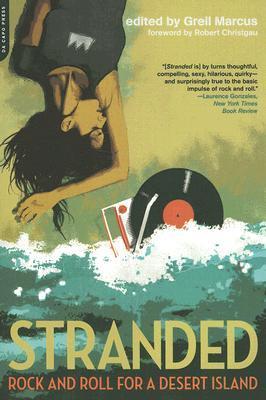
Rock n Roll as myth is one of the key themes that runs through these critics’ contributions. While this is surely unintentional, it’s also logical given editor Greil Marcus’ ongoing fascination with pop-as-myth. Marcus’ enduring insight is that pop, by definition a disposable commercial product and myth, nevertheless sometimes succeeds in transcending itself into becoming true.
In that spirit, the best pieces are those in which the writers step out of their typical role as critics and into the role of fans; while still acknowledging rock n roll as artifice, they are still vulnerable to share their undying love for an album, band, or artist, in ways that music rings true to them personally.
As John Rockwell succinctly puts it: “Pop music has always been about emotional release, about passionate responses to artists who might not rank at the very top of our rational hierarchies” (190).
That’s not to say that they are less critical or analytical. One of the best pieces is Simon Frith’s critical fandom of the Rolling Stones.
Less successful are the pieces in which the writers maintain their critics’ cool and never let their guard down, as in Langdon Winner’s too-cool-for-school homage to Trout Mask Replica, and Dave Marsh’s joke playlist.
Then there are those that fall in-between, like John Rockwell’s writing on Linda Ronstadt, who wrings his hands by filling his fandom with so many qualifiers and admissions that it ultimately renders his piece as sort of limp and pathetic.
The passages below are the insights that gave me better understanding of some music, magnified my zeal for music I already love, and caused me to appreciate other’s zeal for the music they love:
** Langdon Winner’s inspiring take on Captain Beefheart’s “Trout Mask Replica”
“…the vision of Trout Mask Replica is fundamentally that of an American primitive surrealist. The land he asks us to visit is one we already know very well. It is not, as many of his fans have supposed, outer space or the realm of late 1960s hippie, psychedelic weirdness for weirdness’ sake. To accompany Captain Beefheart on this journey is to re-experience the nature and artifice of the American continent through a vast project of surrealistic reclamation” (61).
** Here is Tom Carson’s right-on take on The Ramones, in his piece on their “Rocket to Russia” album:
“…the band set the attitude: a comic resentment toward the rest of the world, a defiant pleasure in trashiness, and the tawdry excesses of urban lowlife. Punks, in the original sense of the word, were the sort of people who were such hopeless losers that they couldn’t even be convincing as outlaws; far from romanticizing that status, the Ramones glorified their own inadequacy. Their leather jackets land strung-out, streetwise pose weren’t so much an imitation of Brando in The Wild One as a very self-conscious parody—they knew how phony it was for them to take on those tough-guy trappings, and that incongruousness was exactly what made the pose so funny and true. And yet they were genuinely sexy, too; in spite of everything, they were cool. American myths are never so immediately recognizable, and irresistible, as when they’re turned into a joke” (108).
“They were raised on the pop-culture religion; they believed in the Top 40 as the melting pot of the teenage American dream, where clichés and junkiness and triviality take on the epic sweep of a myth and the depth of a common unconscious. But they themselves were minority artists, working far outside the mainstream, and that, paradoxically, gave them the freedom to live out everyone’s private fantasy that the Top 40 really told the truth, instead of being the shoddy compromise it always actually was; they were also sophisticated modern ironists, working with all the alienation and distance that implied. Rocket to Russia isn’t imitation Top 40; it’s a fan’s vision of what the Top 40 ought to be” (109).
** I thank Simon Frith for finally settling the question of the Rolling Stones for me.
“I’ve always heard them as petit bourgeois jesters, who’ve taken delight in standing morality on its head but retained a touchy egotism, a contempt for the masses that they share with any respectable small shopkeeper. Their rebellion has been a grand gesture, an aesthetic style without a social core. It is a politically ambiguous position and the Stones’ sharp worldliness has always been confused by childishness, sexism, a surly individualism. The British punk point—“No more Stones in ’77!”—rests on the angry argument that however excitingly the Stones say it, they have nothing socially significant to say. I share the instincts of this argument, but then I listen to Beggars Banquet again and know that the punks have got it all wrong. The Stones’ best music remains the source of rock’s greatest energy an joy, and even for the punks—especially for the punks—the Stones’ remain the greatest symbol of rock and roll possibility. …Don’t the grace and power and dignity of Beggars Banquet depend on its social detachment?” (37-38).
** It was more inspiring reading about Bruce Springsteen than listening to his music. Ariel Swartley on Springsteen’s “The Wild, The Innocent…”
“He hasn’t only learned from masters. But it’s not the knee-jerk nostalgia of teen-scene verité he’s after in his authentic dialogue and his blasts from a past that never seems so bright except in retrospect. He treats rock and roll history as our common language, our shared mythology, and thereby reinforces rock and roll’s promise of community. Spectoral echo (James) Brownian motion, Dion-ysian brawl—he triggers memories like you were a jukebox and he was the man with all the quarters; plays it like a slot machine and wins. Hell yes, he exploits rock and roll’s past, just like he exploits the language itself—turning it inside out, digging for the metaphors under the surface of conversation” (52).
“Yeah, it sounds hokey, but faith in these songs isn’t just some smarmy, self-help estuary. It’s noting more or less than an act of imagination (like the songs themselves)….So buy the vision. Believe the lady’s sawed in half. Be willing to be made a fool” (57).