From the best-selling author of Sexual Personae and Break, Blow, Burn and one of our most acclaimed cultural critics, here is an enthralling journey through Western art’s defining moments, from the ancient Egyptian tomb of Queen Nefertari to George Lucas’s volcano planet duel in Revenge of the Sith.
America’s premier intellectual provocateur returns to the subject that brought her fame, the great themes of Western art. Passionately argued, brilliantly written, and filled with Paglia’s trademark audacity, Glittering Images takes us on a tour through more than two dozen seminal images, some famous and some obscure or unknown—paintings, sculptures, architectural styles, performance pieces, and digital art that have defined and transformed our visual world. She combines close analysis with background information that situates each artist and image within its historical context—from the stone idols of the Cyclades to an elegant French rococo interior to Jackson Pollock’s abstract Green Silver to Renée Cox’s daring performance piece Chillin’ with Liberty. And in a stunning conclusion, she declares that the avant-garde tradition is dead and that digital pioneer George Lucas is the world’s greatest living artist. Written with energy, erudition, and wit, Glittering Images is destined to change the way we think about our high-tech visual environment.
Camille Anna Paglia is an American social critic, author and teacher. Her book, Sexual Personae: Art and Decadence from Nefertiti to Emily Dickinson, published in 1990, became a bestseller. She is a professor of humanities and media studies at the University of the Arts in Philadelphia, Pennsylvania.
She has been variously called the "feminist that other feminists love to hate," a "post-feminist feminist," one of the world's top 100 intellectuals by the UK's Prospect Magazine, and by her own description "a feminist bisexual egomaniac."
I’ve never read Camille Paglia before, so I was unaware of the fuss. There are rumors of controversy, or at least of controversial utterances. Some of it is definitional apparently, like this nugget on the Goodreads author page for Paglia:
She has been variously called the "feminist that other feminists love to hate," a "post-feminist feminist," one of the world's top 100 intellectuals by the UK's Prospect Magazine, and by her own description "a feminist bisexual egomaniac."
I’m reminded that Jerry Jeff Walker calls himself “a hairy-ass hillbilly”, which is funnier and, to my mind, equally profound.
Which is to say, I don’t know anything about post-feminist feminists or who they hate. What I do know, after reading Glittering Images, is that Paglia has a great eye for art and knowledge of art history. Reading this is like having a personal tour of art history, from antiquity to today, by a patient, enthusiastic, brilliant teacher.
This book is lovingly produced, the pictured works in very high quality. The attendant essays are instructive, even if I wasn’t always seeing what she was seeing. She takes us from the Tomb of Nefertari, the Porch of Maidens, the Book of Kells, through the usual suspects (Titian, Manet, Monet, Picasso and Pollock), and on to the Symbolists, Surrealism, Art Deco, Pop and Performance Art. She ends with George Lucas’ Star Wars. You don’t have to agree with her theory of art evolution to be entertained and the better for the journey.
If for nothing else, this book should be read for the paragraph that begins: Penises have proved troublesome in Western art. To which I would add, And not only there. This allows Paglia to utter the phrase “the unruly adult penis presents the artist with knotty challenges.” I’ve now learned that in Greek art and culture, “a small penis was valued as a mark of intellect; a large penis was thought comical and animalistic.” Just saying.
Highly recommended.
Thanks again to Goodreads, as this was another Giveaway winner!
Camille Paglia has had a great influence on me ever since I stumbled across a used copy of "Sex, Art and American Culture" in high school. I'm pretty sure she saved me from a narrow, feminist way of thinking with that book. Then "Break, Blow, Burn" taught me how to read poetry, something you think I would have picked up after a liberal arts education.
Now we've got "Glittering Images," written in short accessible essays. I'm not a visual person and never really slowed down to appreciate artwork and put it in cultural context. Paglia chooses 29 pieces of art, each meant as an introduction to a major style. It kindled an interest in visual arts for me, and I'm sure I'll revisit the book often. Particularly enlightening are the essays on Manet, Lempicka and Eleanor Antin.
As a side note, if you have a chance to see Paglia speak, don't miss it! She is sharp-tongued and hilarious and insightful.
Ahhh Camille...Miss Paglia, if you're nasty, Professor Paglia if you're delinquent...
I don't know all that much when it comes to art, to be honest. I know enough maybe to be conversant in it but not for very long. The good rule of thumb, I find, when you're going through a topic you're not super-versed on is to be guided by someone whose work you know well. At least, that way you can separate the gold from the dross, the inquisitiveness from the prejudices, the rants from the chamber music.
With Paglia, at least I know what I'm getting, what I'm in for. I have always loved her work, even when she is being deliberately outre or just plain gobsmackingly outrageous. The thing is, behind all the bravura and the score-settling there beats the heart of an aesthete and a spunky, well-versed, take-no-prisoners, fast talking Italian gal from upstate New York. I love her for her passion, her razor-sharp judgments and her brisk, lucid, consistently insistent prose style.
Here, she lets herself loose on some of her favorite or at least most interesting works of art from ancient days to...er...George Lucas. One of her stated goals for this book is to try and revitalize art criticism for a new generation. No attention paid in under-funded schools, no quarter given by revanchist Right-wing voices blathering on talk radio, no time or patience in your average media-addled 20-something's brain, no vigor or humility from (what she considers to be) a desiccated, sulky, pretentious coterie of artists...what's a lonely aesthete to do?
Well, pull yourself up a seat beside professor Paglia and let her put on her curator hat and guide you through some of the most interesting- and, more important, interestingly explained- works of art the human race has ever scratched or fashioned or blotted for your viewing pleasure.
The book itself is pretty sharp, too- nicely firm, embossed pages, clear and generous presentations of the works themselves. It fits easily in the hand and is much less cumbersome than a lot of the other art books that one finds kicking around used book stores or basement apartments. This was all part of the design, according to Paglia, and it was well worth the effort.
Her critical eye is as sharp as ever- always in touch with historical or cultural trends, lively and detailed and very much in keeping with the Talmudic style of interpretation. Paglia guides you through your viewing experience bit by bit, always wrapping up her insights with a pointed, evocative, well-considered apercu.
I do have to call her out on her over-bearing insistence that George Lucas is the greatest living artist, though. I get it- popular appeal is no guarantee of hackery, and the Star Wars franchise is damn near timeless, etc...but c'mon! The Revenge of the Sith? That's the best the art world can do? Nah. Not buying it.
Paglia delights in spectacle, rich coloration and takes a refreshingly childlike joy in big explosions and ornate expressionism...all that's cool, no question, but...a statement that grand(iose) can't help but reek of provocation for provocation's sake. Much more helpful to the reader and the art community as a whole to either find another pop(ular) source of vision or champion an artist who could use the exposure, not to mention the payday.
Polishing Lucas's throne will not do when you've just come off a stimulating, accessible, incisive and enlivening survey of Donatello, Titian, Manet, Picasso, Pollock, Magritte, and so on.
She was really kind and attentive and pleased to meet me, when I met her. My copy is autographed, which was worth the priciness of the package on a rather dire budget. She did, after all, sort of change my life...
Back when I was knee high to Jimmy Page, I used to read pretty much nothing other than guitar magazines. I'm not super-musical, other than a burning desire to hear everything I can from any genre I can, but I can fake it on a six-string as well as I need to. For some reason, people constantly assume I'm a musician but that's neither here nor there.
Anyway, Guitar World was doing one of their perennial 'Stairway To Heaven' issues (I mean, honestly, good tune and all that, but AGAIN?) and they included a little subsection that had a nicely done line-for-line breakdown of the lyrics by you-know-who. I read it about a 100 times, and I swear it got me thinking about this poetry and fiction stuff in a way I never had before. Made it cool, I suppose, or at least less rote or forbiddingly academic. Plus, it took the art of literary interpretation and analysis and applied it to a popular song- who'dathunkit?
I told her about that, pretty much word-for-word, and she lit up when she heard it. I told her about a book I was (am!) writing about comparing different writers and different musicians and how literature can enhance music as well as the other way around. She loved it, she seemed genuinely interested, and she did that sort of neck-snap thing that some women do when they want to make a sassy point and said "I'm going to bring that up more often"- it was a real nice moment, sort of a just-between-you-and-me, conspiratorial wink.
I asked if I could communicate with her at all and she indicated how it could be done, asking for the proper spelling of my name and such. I tried to follow up with the event coordinator but due to the randomness of such a thing and my own tentativeness and cold feet, it was not to be. Ah, me. Still, it was worth it for the story.
Paglia makes a solid attempt at providing a suitable raison d'etre for the art book in our era -- in an "age of vertigo," wherein "mass media are a bewitching wilderness," Paglia reasonably asserts that "we must relearn how to see." However, this is not The Work of Art in the Age of Digital Reproduction, and Paglia is no Walter Benjamin. Despite this somewhat promising introduction, which soon devolves into a curious and surprising curmudgery about how film is better than digital and painting is dead (surprising because of her later endorsement of insipid newness, like Antin's "100 Boots"), this is nothing more than a bland set of short essays that reads like a greatest hits of undergraduate textbooks, with slightly narrower focus given the one-work-at-a-time format. Paglia declines to provide any sort of citations or bibliography, because listing her sources "would take another volume." Probably more accurately, it would reveal a lack of any serious archival research or review of the literature; which is fine, but admitting it would undermine her high-minded pretense.
In the introduction she also explicitly aligns herself against a straw-man version of Marxist criticism, which "reduces art to ideology," and aligns herself with "the great tradition of German philology." She also counts herself among the devotees of Panofsky's iconology, and presumably she hopes to bring a many-layered analysis of this sort to bear on the works she has chosen. Unfortunately, each chapter reads like a more-or-less competent (as in, some are and some are not) magazine piece. She writes well on Manet, on Pollock, on a few others. There is some creativity of choice -- Lempicka is an interesting inclusion, and the Grosz drawing she chose definitely merits particular attention. On the other hand, she's clearly out of her element discussing ancient and Byzantine art, and she chooses some mediocre Italian Renaissance and Mannerist painters to the exclusion of anything from Northern art until van Dyck -- himself not terribly interesting. If the task is to learn to see, I think Van Eyck or Breugel are far more instructive than Bronzino, or even Titian. And if you can't bear to let the Italians go, for god sakes skip the Rococo.
Her selections of and chapters on Antin and Cox barely merit serious consideration -- they read as lists of silly things people did when they couldn't think of anything meaningful to do but still wanted to be artists. However, more provocative than any "happening," or Cox's ninety-nine hour photoshop job that is less sophisticated than your average LOLcat is Paglia's declaration that Lucas is the greatest living artist. In Paglia's attempt to teach us how to see anew, we are informed that after transferring to USC, "Lucas was bitten by the filmmaking bug." Gripping stuff.
What becomes clear reading Paglia's chapter is that she is a fangirl who is slightly abashed that she is compelled to sing the praises of Star Wars so publicly, so she has to place it in a lineage to which it doesn't belong in order to imbue it with significance. So we are informed that Lucas' aerial battles are "significant works of modern kinetic art whose ancestry is in Marcel Duchamp's readymades and Alexander Calder's mobiles." No, they're not. The opening battle of Revenge of the Sith "cuts optical pathways that are as graceful and abstract as the weightless skeins in a drip painting by Jackson Pollock." Sure, if that's the analogy you want to use, but why so invested in namedropping canonical artists? Why not just say it's fast and elegant and you like it, especially when it's playing in a loud theater?
It's unclear exactly why the lava battle of Revenge of the Sith is the greatest artwork of our time. Sometimes Paglia's case rests on the newness of it's composite prop-digital production. But if newness is the criteria, I refer you again to LOLcats. In her introduction, Paglia warns that while "[her] postwar generation could play with pop because we had solid primary-school education, geared to the fundamentals of history and humanities..." and therefore, presumably, were solidly constituted subjects who could withstand a wry performance of relativism and gleeful wallowing in consumerist excess, nowadays we ain't built that way, and we desperately need to construct meaning, not tear it down. Yet her case for Lucas' greatness rests more on how pretty the red lava is than on any great meaning the work has. Perhaps she aims at a virtuosic erasure of the division between high and low art, but as she herself points out that division is already gone. What persists is her need to justify the some-people-still-think-it's-low art by reference to the it's-safely-considered-high art. Despite the general thrust of her opening manifesto, Paglia seems incapable of treating Star Wars as the art object it is: one that entertains the masses, gives them an alternate world to inhabit, sells a lot of things, is ripe for parody, inspires people to dress up, and so on. Whatever it is, it is completely different than anything Jacque-Louis David or Bernini could pull off. And whatever it is, Paglia fails to account for it, or fails to even perceive the challenge that this presents to her narrative of a succession of art objects, all somehow in dialogue with one another (whether intentionally or not).
Reading this book brought home how terrible visual arts education is in our public school system. I'm guessing that due to our Protestant heritage -- with its emphasis on the written word -- we focus almost exclusively on written artistic works while visual art and music fall by the wayside. In my public K-12 education, I had zero -- ZERO -- instruction in art history. It wasn't until I got to college and on a whim took took Introduction to Western Art, taught by Dr. Pat Craig at CSU Fullerton, that an entire new world opened up to me. It was the best college class I ever took.
In the introduction, Paglia says one of her goals is to open up visual art to the conservatives she hears routinely denouncing it on talk radio. In France and Italy, everyone believes that art belongs to them; why shouldn't that be the case here? In a series of short essays, she writes in clear, accessible language about the history of the work and provides her own commentary. It's a great template for a blog and I hope people are inspired by her example to do it themselves.
As for the essays themselves, am I always persuaded by her conclusions? No, certainly not, but that's beside the point. I want to discuss art with people who are passionately engaged, regardless of whether I like the same things as them. Paglia shows how it's done.
this book is an excellent overview of the history of art, and even if you disagree with some assertions, she is never less than compelling, educated, original and challenging in her arguments. did not enjoy art history much when I had to take it at u- but here it is fascinating, particularly in the range of modern art, art from the 19th century through the wider net of the twentieth, up to her championing of Revenge of the Sith and George Lucas's films as current great art...
this is an overview, as such the evolution of art and the changing roles, politics, the immediate and personal to the metaphysical pretence of various art, and it is fascinating to read it all in one book that does not cripple the bearer under the weight. but then, the reproductions require size, and are excellent here. that art can be seen to be freeing itself from museums, from powerful collectors, from patrons, the church or the wealthy, to suffusing the way we live it, is an encouraging narrative. on the one, there has never been so much art accessible, so much art made, so much art experienced every day in our postmodern world. on the other, as she argues in her introduction, there continues together a lamentable dearth of educated public appreciation or support of the arts...
in a way, whether you need to see again the artwork examined to see what she mentions, or if the title is enough, or the artist's name is enough, can be indicative of the power of chosen work. and Star Wars? doubt that anyone who has seen it ever need see it again, to remember the power of that climactic light sabre duel over the volcanic rivers of Revenge...
My new favorite non-fiction book of the year! One isn't just dazzled by Paglia's scholarship, but also illuminated by the broad spectrum of art works she focuses on. Show-offy academia at its best; the slick pages glitter. Borrowed it from the library; I'd like to own this book.
I was trying to explain Camille Paglia to my millennial wife, and after a pause started with "In the nineties, when being a provocateur didn't just mean being a dickhead...". And the introduction here had me bristling, with its sweeping statements about how art only makes the headlines nowadays for thefts or auctions (which turns out only to be applicable to America, in which case perhaps, but even then that Americocentrism galls), its prodding at straw-man 'liberals', its muttering about all those flashing screens rotting the young people's brains. Yes, I'd heard rumours that nowadays she occasionally associated with everyone's favourite propagator of inaccurate information about lobsters, the boy Peterson (seriously, why are daddy issues so much less attractive on males?). But had she really fallen this far? Well, not quite. Because she intersperses those Roger-Scruton-in-heels moments with passages jabbing at conservative philistinism, and even while she's muttering about the baleful effect of Marxism and post-structuralism, she pauses to praise the work of one Marxist art critic whom she considers a great influence on her own work. Yes, there is a touch of Chris Morris' responsible middle-class heroin user in the way she deprecates the lack of canonical grounding in modern education, yet feels she herself has the hinterland to legitimise finishing a survey of Western art with George Lucas – and the prequels, at that! But for the most part this is a solid introduction to a broad and fairly inarguable through-line from ancient Egypt to the 20th century. Obviously it leaves out some stuff which merits a place, and includes some one might query, but then any selection of 30 pieces to cover millennia inevitably will. Sometimes, as with avoiding the hits in her selection from Caspar David Friedrich's work, the choice is deliberately unexpected – but no less valid for all that (I'd seen and loved the stuff that gave us a decade of action movie posters, but never the precursor to modern art he made from a ship destroyed almost unto abstraction by inexorable ice). Sure, she's stronger on some periods than others – but who isn't? She always did have a way with an eye-catching phrase, and the writing is often very good, but seldom all that shocking in its assertions – you'd find more controversial takes in Simon Schama. At least, until the modern day, where, as well as the aforementioned Sith, things get stranger. More than half of the book covers art from 1900 onwards, and while Monet and Picasso are here (the latter's maidens of Avignon get a take which, while not definitive, is certainly not without interest – not least in going into the artist's own dislike of that title), so too are some more peculiar picks, like George Grosz. Still, particularly as we near the present day, some of the selections are very interesting, including the likes of Eleanor Antin, of whom I'd never heard but whose 100 Boots is excellent both in itself and as an encapsulation of a moment and trends. If anyone is coming to Paglia from lobster-boy, they'll probably get a start at how female, black and queer her recent canon skews, and a good thing too. Yes, there are errors scattered around, like referring to Wordsworth as an atheist which, if it was ever true, didn't stay that way, though dear heavens anyone who's attempted his later work might well wish it so. Though, to Paglia's credit, a note at the end says that she used no research assistants and any errors are her own. Sure, I know the last bit is ubiquitous, but it's said here with more force than the usual polite handwave. And beyond the outright errors, there are an awful lot of statements here which could do with a bit, or sometimes a lot, of qualification. But remember, this is meant to be a primer, and if you try to take every nuance into account in a primer, you tend to end up with a vague mush which leaves the novice none the wiser about the broad sweep of whatever it was they wanted to learn about. Far better to give them a general sense of what's afoot, and let them learn as they investigate further that it's a bit more complicated. And this is an excellent first read on its subject, even as it would be a terrible only read on the subject.
I read (and re-read) all of Paglia's books voraciously. I date my intellectual independence from the point when I read her first chapter of Sexual Personae (1990). After a 5 year break following her brilliant poetry book (Break Blow Burn), I ordered this book as soon as I heard about the release date. I have a Kindle but I ordered the physical paper version because the painting reproductions are beautiful and the paper quality is glossy, and indeed the book is well-made overall; a rare example. Paglia presents 29 short essays about world art. I love all of them and plan on re-reading them intermittently throughout my life. This book is a keeper. If you've been turned off by her essays on Salon.com or other outlets, I recommend approaching with fresh eyes. She is, after all, an art teacher first and foremost. This is a solid art history book for beginners and collectors.
I loved the introduction, and was hoping more of the rest of the book... She arbitrarily selected 29 artworks to cover thousands years of Art... but the artworks were well located in their historical and stylish contexts. It's a great book to have an overview of art history, even though I had to read it with Google open to check the mentioned artworks... And what a disappointing end... George Lucas "supreme artist" of the 21st century... Seriously??
Read if you already read Gombrich's "The Story of Art" and you've got nothing better to do. Good for the pretentious Star Wars fan and discovering a few overlooked pieces of art.
I was happy to see Paglia return to the style she used to such great effect in 'Sexual Personae", that being full-on academic mode -- In her analysis of the art (and artists) featured in "Glittering Images". I was already familiar with many of the artists discussed by Paglia in this book, but was not necessarily a fan of those included herein. However, even if I didn't, like, understand, or agree with whatever Paglia elucidated about each of her subjects -- I appreciated the depth of detail that she made use of, in her examination of her selected highlights from the history of Western art. In general, I'm interested in most of the subjects about which she writes, if for no other reason -- Than the way in which she approaches those subjects ..... In my last apartment, I had a poster of "Queen Nefertari and the Goddess" on my kitchen wall, having just a vague notion of the historical / cultural context of this image. Thanks to Paglia, I was able to expand my perception of this iconic work (among others that appear in "Glittering Images") by means of the precise analysis she provided.
Despite being impressed with a couple of works, in the first third of the book (i.e. "Saint John Chrysostom and "The Book of Kells") "Glittering Images" began to command more of my attention, starting with the chapter covering "Sea of Ice" (Caspar David Friedrich). In her examination of "Sea of Ice", Paglia foresees the future development of abstract art. That chapter, along with the four chapters following "Sea of Ice", ending with Georg Grosz -- Constitute the highlight of the book for me. I was already an admirer of George Grosz' paintings, and their satirical content, before reading this book -- But had been unfamiliar with his drawings and the technique he used to create them ..... Additionally, I found the chapter on Jackson Pollock to be compelling; regarding Abstract Expressionism, Paglia states the following: "Abstract Expressionism was the last authentically avant-garde style in painting" (p. 147). The chapter on Pop Art / Andy Warhol caught my attention as well; as I was born in 1960, the blatant influence of Pop Art on American culture, during my first decade was inescapable. Although I've never been especially enamored of Warhol -- Paglia's analysis of "Marilyn Diptych" helped to gain a renewed appreciation for that work, in which beauty (as well as "glitter") decays into nothingness.
Years ago, when I read one of the early reviews of "Glittering Images" -- I was surprised to find out that Paglia considered George Lucas to be a master artist. I didn't see Lucas' trilogy ("Phantom Menace", "Attack of the Clones" and "Revenge of the Sith") until after "Revenge of the Sith" was released in cinemas; I initially had no interest in viewing those films. It was only after a friend pointed out the underlying political / geopolitical metaphors within "Revenge of the Sith", that I finally went to see it; I ended up enjoying the entire trilogy. In this way, I came to understand why Paglia holds "Revenge of the Sith" in such high regard. On p. 188 of the book's final chapter, Paglia offers the following description: "..... three hundred special effects, combining cutting-edge, high-definition digital cameras, lenses, and editing techniques with old-fashioned artisanal model making ....." went into the making of the "Red River" sequence of "Revenge of the Sith". And as a result of that process, the "Red River" sequence on its own -- Stands as a towering achievement.
Over the years, I've run into Camille Paglia's essays at unexpected times, and I seem to always come away thoughtful and, occasionally, amused. Clearly coming from a perspective distant from my own, politically and culturally a member of East Coast academia, I never the less found her insights and way of putting things provocative.
When I heard that her newest book argued that George Lucas was one of greatest, if not the greatest, of modern artists, I was intrigued. First off, because I've been a Star Wars fan since I was a child making light sabers out of wrapping paper tubes. And second, because I've occasionally, like many other fans, wondered if Lucas had lost his way with the Prequels.
How does an art critic find Lucas, who has turned Star Wars into one of the most profitable franchises in history, to be an artist?
Of course, I was intrigued.
Paglia's Glittering Images: A Journey Through Art from Egypt to Star Wars is a survey of art through history, with each entry a selection of an era. Paglia describes the piece of art, starting in the bronze era and passing through ancient Greece, the middle ages, the Renaissance, and so on. Each entry is two to three pages long and provides background and narrative, analysis and context for the work. The writing is fluid, colorful, and, like I had found in Paglia before, intriguing.
I'm not an art critic, let alone an art historian. At best, I can appreciate a few pieces of well known art. What I found in Paglia was an informative survey of art through the ages. In the introduction Paglia argues that what we are losing in our quest to get to the top of the education ladder is an appreciation of what art has brought us to where we are.
It's fascinating reading, even if there are a few pieces of art from the modern era looked--to me--more like spatters of paint than art.
I recommend it, whether you are an experienced art critic or a novice, as I am.
And Lucas? I'll let you discover on your own why Paglia thinks he is today's greatest living artist.
Camille Paglia has a direct, plain-sensical way of writing that I've always admired. Glittering Images is essentially an abbreviated art history course, great for those of us who never took art history but have over the years gained a fair amount of knowledge of the subject matter. She chooses 29 key images, a somewhat idiosyncratic selection, but not wacky, and gives us a few pages on the artist, the world in which he or she lived, his or her other works, key features of this work, and why it's important. You'll be familiar with most of the artists, but some will probably be new to you. A great example is in a chapter called "Elegance at Ease," where we meet John Wesley Hardrick, an African American painter from Indianapolis, whose 1930 portrait of Xenia Goodloe, a dress designer for the Indianapolis-based department store L.S. Ayres, signifies all kinds of things about the upward mobility of blacks at that time. Paglia informs us that Hardrick was an extremely prolific portraitist, and probably most of his works are as yet scattered around the country and unknown. Her most controversial selection has to be the last, the battle between Anakin Skywalker and Obi-Wan Kenobi in George Lucas's Revenge of the Sith, the third part of the much-reviled Star Wars prequel trilogy. While the imagery Paglia lavishes praise on did not impress me that much when I saw the film, I do have the uncommon opinion that this is the best of the six movies. I love the way the film's end dovetails perfectly with the first film, rechristened "A New Hope". I recommend this book for people at all levels of knowledge of art history. You'll learn something, or you'll gain a few new perspectives, and/or you'll find some viewpoints to argue about.
like most things involving art, this book left me flummoxed. as a reasonably well-adjusted male of thirty-three years, i worry about a great many things. castration isn't one of them, yet that word shows up four distinct times in this slideshow-styled review (i.e. about four pages of commentary for each still) of thirty works, with an emphasis on the past two centuries. my appreciation for the works and writeups varied (I was delighted to be introduced to Tamara de Łempicka's Art Deco Portrait of Doctor Boucard, 1928; Renee Cox's 1998 Chillin' With Liberty was less impressive; Andy Warhol remains a king of frippery, best remembered for his patronage of the Velvet Underground, and inclusion of 1962's Marilyn Diptych made me grunt with irritation). sometimes paglia found things i didn't see, but could admit; sometimes she seems plainly wrong (if Doctor Boucard is truly holding a "blood-red vial", the hardback's color reproduction is a sad state of affairs); sometimes she's spot-on and made me sit up with wonder at what i'd missed.
her Introduction is provocative, but a tendency towards sweeping statements and indictments without data or even examples turned me off.
ordered after reading Simon Doonan's Slate article, "Why the Art World Is So Loathsome: Eight theories."
Camille Paglia's "Glittering Images" is a well-written, thoroughly researched, thoughtful introduction to western art.In the introduction of the book, she bemoan "The current caferteria-style curriculum" found in even some of America's best colleges and universities. Instead,she argues for a common core remiscent of E.D. Hirsch's "culutural literacy or the Allan Bloom's emphasis on the classics. As she said in her recent book talk at the Louisville Public Library, she values and prefers a chronological approach to studying the humanities. In this book, she takes the reader on a survey of western art going from the ancient Egyptians to George Lucas and Star Wars.
Since this book was written for a general audience, there are no footnotes and few citations. Although the chapters are short, Paglia packs an amazing amount of information in each one. As usual she is just as engaging and witty as she was in "Sexual Personae" and "Vamps & Tramps." She combines scholarship with a social conscience.
I highly recommend this book to both those who know little about western art and those who would like a good refresher course. Now, I only wish she would publish an amended book that would have color plates of the many works of art that she mentions. This is a good read.
I thought this book was great. I love art history, particularly when commented on by someone other than art historians. Passionately argued, brilliantly written, and filled with Paglia’s trademark audacity, Glittering Images takes us on a tour through more than two dozen seminal images, some famous and some obscure or unknown—paintings, sculptures, architectural styles, performance pieces, and digital art that have defined and transformed our visual world. She combines close analysis with background information that situates each artist and image within its historical context—from the stone idols of the Cyclades to an elegant French rococo interior to Jackson Pollock’s abstract Green Silver to Renée Cox’s daring performance piece Chillin’ with Liberty. And in a stunning conclusion, she declares that the avant-garde tradition is dead and that digital pioneer George Lucas is the world’s greatest living artist.
Paglia's books always impress through the display of vast erudition - this is no exception.
In a series of short essays that each use one piece of art as a focal point, Paglia sweeps through the history of art in various forms, introducing the chosen artist, the predominant culture of the time, and some of the context in which the art was received. She also draws attention to some of the features and symbolism that is used within the artistic piece, while pointing out details and techniques that are used. Some of the choices of artists (e.g., Grosz, Antin) seem somewhat out-of-place in a book that contains artists such as Titian; one gets the sense that the author enjoys pushing boundaries.
An awesome read. I loved Paglia’s style and strident, contrarian tone. I strongly approve of her canonization of Revenge of the Sith as the most powerful recent work of contemporary art.
“The Mustafar duel, which took months of rehearsal, with fencing and saber drills…was executed by Hayden Christensen and Ewan McGregor at lightning speed. It is virtuosic dance theater, a taut pas de deux between battling brothers, convulsed by attraction and repulsion. Their thrusts, parries, and slashes are like passages of aggressive speech. It is one of the most passionate scenes ever filmed between two men, with McGregor close to weeping.”
Leider wirklich nur mittelmäßig. Während die Bilder alle relevant sind, überzeugen die jeweiligen Texte nur hin und wieder ganz. Manche sind gar als alleinstehende Beschreibungen geradezu inhaltsleer oder für eine Einordnung ungeeignet. Zusätzlich ist ihre Phobie vor der „Postmoderne“ und „den Marxisten“ überall spürbar. Nichtsdestoweniger: Paglia teilt meine Kunstauffassung und sie ist eine Koryphäe.
This is one of the best books on the subject of "art" that I have ever read. Prof Paglia has picked 29 art works across the history of mankind and critiqued them in insightful essays that introduce the life of the artist, the historic context of the artistic style represented (impressionism, cubism, realism, etc.), and the interpretation of the featured art work and its impact on culture. She gives many more examples from the artist's works for additional understanding wherever applicable. This magnificent book made me understand more about art than anything I've seen or read till date.
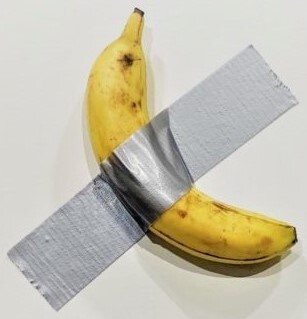
Tracing the trajectory of art, without ever defining it, so that the more recent absurdities are not ruled out, across thirty five centuries and with a focus on Europe and then America, this book is a primer on the discipline, phenomena and tradition. A thorough reading might just allow the reader to connect a banana taped to a white wall with the Stonehenge itself.
I've been in a reading rut lately (I swear to god I've started seven novels in the past two weeks, and I'm probably not gonna finish any of them, so sue me), so I looked for a book with big pretty pictures. And I found this one! It's alright!
A lot of Camille Paglia's opinions are kinda dumb, the sort of "I'M A PROVOCATEUR" shit that she often criticizes in the pages of "Glittering Images." Fortunately (or unfortunately, if you like to write people and things off on the basis of a couple of tweets you read on the internet), she's got some really GOOD ideas, too. "Glittering Images" is mostly good stuff. It's like a companion piece to "Break Blow Burn," her sharp, serious, but fun take on the history of poetry, only this time the subject is visual art. The book attempts to capture the story of Western painting, sculpture, and photography in less than 200 hundred pages. It does the "Good Paglia" thing, alternating between smart new takes on old canonical shit that everyone thinks they know about (Picasso's "Les Demoiselle Avignon," David's "Death of Marat") and smart new takes on kinda fresh, interesting stuff that more stuffy critics have ignored up to now (Tamara de Lampicka's Art Deco portraits are appraised, as are several works by African American artists).
It's all pretty delightful to take in, and then the last chapter comes around. Like "Break Blow Burn," "Glittering Images" attempts to shake the canon up in its final pages. Only this time, instead of Joni Mitchell's "Woodstock" (which obviously rules), we get George Luca's "Revenge of the Sith"... Umm. It's a testament to Paglia's confidence and rigor as a scholar that she somehow makes the impossibly turgid, stupid-ass prequel trilogy of Star Wars seem interesting. But George Lucas as the greatest artist of the latter part of the 20th century?
From just the introduction alone (which readers should not skip over), it is instantly recognizable that this book is written by someone who both cares passionately about her subject and is also profoundly knowledgeable in regards to it. Ms. Paglia comes with an array of skills that made me yearn for a full fictional novel from her - she has an excellent command of the English language and she is able to confer passion from herself onto her readers. It made me want to go out instantly and read more about Art History. I found myself so enamored of her writing that it would help promote my opinion of the art works she chose to highlight in her chapters. I would initially feel just a vaguely positive reaction towards a piece, but then, after her description, would flip back to look at the painting or piece and find an intensely more passionate response. Her poetic summaries gently guide you through what there is to love and admire about a piece.
All of this is undeniably a good thing. The part where the book wavers (in my opinion) is in regards to less conventional forms of art. Ms. Paglia lovingly describes each movement and each piece she addresses. This can sometimes come off as bombastic and pretentious. For some readers not already steeped in art culture, it can be an especially tedious slog through the last few chapters of the book. (Also, despite whatever the back cover claims, this book is subtle like a sledgehammer. It has many fine traits but subtlety is not one of them).
All told then, it's a great read and I would recommend it to anyone interested in art or history. It does come in a bit of a "sample platter" style so don't expect to come away with too much in the way of in-depth analysis, but it is definitely a good starting point for anyone looking to learn.
This is a fun book. Natuarlly. I do not think Camille Paglia knows how to be boring. Whereas most histories of art focus on schools and eras, she picks a representative work and focuses on a series of single works of art. This gives her discussion greater concreteness and an immediacy lacking in most such histories of art. The first half of the book deals with art before the twentieth century. The next quarter with Picasso to Warhol and the final quarter with contemporary art. The closer she moves to the present, the more she loses her focus on single works and the broader her discussion. I loved her book because her focus on single masterpieces rather than schools of thought forced her to look, really look closely at the art. She chooses a number of unfamiliar works and the surprises of some her choices is part of the fun of the book. That and the fact that it is full of surprising insights into works I thought I knew cold. I would have loved the book even more if she had been able to stay with a concret focus on individual works all the way thru.
This was a fascinating, unusual book, and my first by Camille Paglia. In a relatively small, slim volume, she takes the reader on a sweeping tour of the history of Western art. Each chapter contains a photograph of a piece of art, and then a short essay. Although I diverged with Paglia in some of her opinions, her insights were invariably illuminating. I really loved that she devoted an unusually large portion of the book to more modern art, and most of the modern pieces she used were new to me. I will admit that I initially picked up this book for its titular promise to treat Star Wars as serious art, and yes, I was tempted to turn to the end and read the Star Wars essay first. I didn't, and I'm glad I read the rest of the book first to give me context, because the Star Wars essay was great, and I think I understood it better than I would have if I'd just flipped to the end and read it. This book is totally worth a read, whether you're interested in Star Wars or art or both.
1) I may agree with Paglia's opinion but it's not a persuasive argument for someone who doesn't already agree with Paglia's opinion on art education.
2) Paglia is an agnostic who wants to preserve religious art because its symbols are important to humanity (my paraphrase). I'd like to suggest that there is a deeper reason why the symbols are important to humanity. Paglia ought to ask the philosophical and theological questions that this brings up.
3) Good writing doesn't make up for superficial thinking nor does it create a strong argument.
4) Many religious people view their temples and churches as sacred--belonging or reflecting a religious significance. As a believer, I object to people viewing temples and churches as mere cultural artifacts.
Ela me fez transportar, de forma breve e reflexiva, por vinte e nove momentos da História da Arte com muito gosto! Seu discurso, tanto por seu posicionamento político, quanto pela aberta contextualização artista-obra-contexto, é pautado no eixo Europa e América do Norte. Apesar disso, apreciei sua coragem em dar relevância a produções de artistas pouco difundidos aqui no Brasil (acredito que por questões de segregação midiática de gênero, sexual ou racial). Seu capítulo final foi um verdadeiro convite às produções de George Lucas, as quais também confesso nunca ter dado muita importância. Recomendo!