

What do you think?
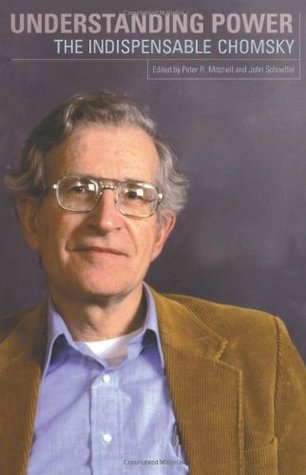
Understanding Power: The Indispensable Chomsky
A major new collection from "arguably the most important intellectual alive" (The New York Times). Noam Chomsky is universally accepted as one of the preeminent public intellectuals of the modern era. Over the past thirty years, broadly diverse audiences have gathered to attend his sold-out lectures. Now, in Understanding Power, Peter Mitchell and John Schoeffel have assembled the best of Chomsky's recent talks on the past, present, and future of the politics of power. In a series of enlightening and wide-ranging discussions, all published here for the first time, Chomsky radically reinterprets the events of the past three decades, covering topics from foreign policy during Vietnam to the decline of welfare under the Clinton administration. And as he elucidates the connection between America's imperialistic foreign policy and the decline of domestic social services, Chomsky also discerns the necessary steps to take toward social change. With an eye to political activism and the media's role in popular struggle, as well as U.S. foreign and domestic policy, Understanding Power offers a sweeping critique of the world around us and is definitive Chomsky. Characterized by Chomsky's accessible and informative style, this is the ideal book for those new to his work as well as for those who have been listening for years.
416 pages, Paperback
First published June 1, 2002
About the author
Noam Chomsky
1,011 books17.5k followersAvram Noam Chomsky is an American professor and public intellectual known for his work in linguistics, political activism, and social criticism. Sometimes called "the father of modern linguistics", Chomsky is also a major figure in analytic philosophy and one of the founders of the field of cognitive science. He is a laureate professor of linguistics at the University of Arizona and an institute professor emeritus at the Massachusetts Institute of Technology (MIT). Among the most cited living authors, Chomsky has written more than 150 books on topics such as linguistics, war, and politics. In addition to his work in linguistics, since the 1960s Chomsky has been an influential voice on the American left as a consistent critic of U.S. foreign policy, contemporary capitalism, and corporate influence on political institutions and the media.
Born to Ashkenazi Jewish immigrants (his father was William Chomsky) in Philadelphia, Chomsky developed an early interest in anarchism from alternative bookstores in New York City. He studied at the University of Pennsylvania. During his postgraduate work in the Harvard Society of Fellows, Chomsky developed the theory of transformational grammar for which he earned his doctorate in 1955. That year he began teaching at MIT, and in 1957 emerged as a significant figure in linguistics with his landmark work Syntactic Structures, which played a major role in remodeling the study of language. From 1958 to 1959 Chomsky was a National Science Foundation fellow at the Institute for Advanced Study. He created or co-created the universal grammar theory, the generative grammar theory, the Chomsky hierarchy, and the minimalist program. Chomsky also played a pivotal role in the decline of linguistic behaviorism, and was particularly critical of the work of B.F. Skinner.
An outspoken opponent of U.S. involvement in the Vietnam War, which he saw as an act of American imperialism, in 1967 Chomsky rose to national attention for his anti-war essay "The Responsibility of Intellectuals". Becoming associated with the New Left, he was arrested multiple times for his activism and placed on President Richard M. Nixon's list of political opponents. While expanding his work in linguistics over subsequent decades, he also became involved in the linguistics wars. In collaboration with Edward S. Herman, Chomsky later articulated the propaganda model of media criticism in Manufacturing Consent, and worked to expose the Indonesian occupation of East Timor. His defense of unconditional freedom of speech, including that of Holocaust denial, generated significant controversy in the Faurisson affair of the 1980s. Chomsky's commentary on the Cambodian genocide and the Bosnian genocide also generated controversy. Since retiring from active teaching at MIT, he has continued his vocal political activism, including opposing the 2003 invasion of Iraq and supporting the Occupy movement. An anti-Zionist, Chomsky considers Israel's treatment of Palestinians to be worse than South African–style apartheid, and criticizes U.S. support for Israel.
Chomsky is widely recognized as having helped to spark the cognitive revolution in the human sciences, contributing to the development of a new cognitivistic framework for the study of language and the mind. Chomsky remains a leading critic of U.S. foreign policy, contemporary capitalism, U.S. involvement and Israel's role in the Israeli–Palestinian conflict, and mass media. Chomsky and his ideas are highly influential in the anti-capitalist and anti-imperialist movements. Since 2017, he has been Agnese Helms Haury Chair in the Agnese Nelms Haury Program in Environment and Social Justice at the University of Arizona.
Born to Ashkenazi Jewish immigrants (his father was William Chomsky) in Philadelphia, Chomsky developed an early interest in anarchism from alternative bookstores in New York City. He studied at the University of Pennsylvania. During his postgraduate work in the Harvard Society of Fellows, Chomsky developed the theory of transformational grammar for which he earned his doctorate in 1955. That year he began teaching at MIT, and in 1957 emerged as a significant figure in linguistics with his landmark work Syntactic Structures, which played a major role in remodeling the study of language. From 1958 to 1959 Chomsky was a National Science Foundation fellow at the Institute for Advanced Study. He created or co-created the universal grammar theory, the generative grammar theory, the Chomsky hierarchy, and the minimalist program. Chomsky also played a pivotal role in the decline of linguistic behaviorism, and was particularly critical of the work of B.F. Skinner.
An outspoken opponent of U.S. involvement in the Vietnam War, which he saw as an act of American imperialism, in 1967 Chomsky rose to national attention for his anti-war essay "The Responsibility of Intellectuals". Becoming associated with the New Left, he was arrested multiple times for his activism and placed on President Richard M. Nixon's list of political opponents. While expanding his work in linguistics over subsequent decades, he also became involved in the linguistics wars. In collaboration with Edward S. Herman, Chomsky later articulated the propaganda model of media criticism in Manufacturing Consent, and worked to expose the Indonesian occupation of East Timor. His defense of unconditional freedom of speech, including that of Holocaust denial, generated significant controversy in the Faurisson affair of the 1980s. Chomsky's commentary on the Cambodian genocide and the Bosnian genocide also generated controversy. Since retiring from active teaching at MIT, he has continued his vocal political activism, including opposing the 2003 invasion of Iraq and supporting the Occupy movement. An anti-Zionist, Chomsky considers Israel's treatment of Palestinians to be worse than South African–style apartheid, and criticizes U.S. support for Israel.
Chomsky is widely recognized as having helped to spark the cognitive revolution in the human sciences, contributing to the development of a new cognitivistic framework for the study of language and the mind. Chomsky remains a leading critic of U.S. foreign policy, contemporary capitalism, U.S. involvement and Israel's role in the Israeli–Palestinian conflict, and mass media. Chomsky and his ideas are highly influential in the anti-capitalist and anti-imperialist movements. Since 2017, he has been Agnese Helms Haury Chair in the Agnese Nelms Haury Program in Environment and Social Justice at the University of Arizona.
Ratings & Reviews
Friends & Following
Create a free account to discover what your friends think of this book!
Community Reviews
Displaying 1 - 3 of 3 reviews
September 23, 2025
alles was man wissen sollte
December 12, 2025
„Understanding Power“ ist eine umfassende Sammlung von Vorträgen/Vorlesungen Noam Chomskys, der als einer der bedeutendsten Intellektuellen der modernen Ära gilt. Peter Mitchell und John Schoeffel haben dafür zentrale, bislang unveröffentlichte Beiträge ausgewählt, in denen Chomsky die politischen Entwicklungen der letzten drei Jahrzehnte – von der Vietnam-Ära bis zum Abbau sozialstaatlicher Leistungen unter Clinton – radikal neu interpretiert. Er zeigt die enge Verzahnung zwischen imperialistischer US-Außenpolitik und dem gleichzeitigen Rückbau innenpolitischer Sozialprogramme auf und formuliert Schritte, die gesellschaftlichen Wandel möglich machen könnten. Mit seinem Fokus auf politischem Aktivismus, Medienkritik sowie der Analyse der inneren und äußeren Machtmechanismen gilt „Understanding Power“ als ein Buch, das sowohl Einsteigerinnen einen fundierten Zugang bietet als auch Kennerinnen seines Werks als „definitive Chomsky“-Darstellung überzeugt.
Vor dem Hintergrund der aktuellen politischen Verwerfungen in den USA – etwa der zunehmenden Polarisierung, der Aushöhlung demokratischer Institutionen und der aggressiver werdenden außenpolitischen Rhetorik – wirkt „Understanding Power“ heute fast unheimlich vorausschauend. Chomskys Analysen der strukturellen Machtmechanismen erklären nicht nur vergangene Entwicklungen, sondern werfen auch ein erhellendes Licht auf die Spannungen der Gegenwart, in denen alte Muster der Einflussnahme in neuen Formen wiederkehren.
Vor dem Hintergrund der aktuellen politischen Verwerfungen in den USA – etwa der zunehmenden Polarisierung, der Aushöhlung demokratischer Institutionen und der aggressiver werdenden außenpolitischen Rhetorik – wirkt „Understanding Power“ heute fast unheimlich vorausschauend. Chomskys Analysen der strukturellen Machtmechanismen erklären nicht nur vergangene Entwicklungen, sondern werfen auch ein erhellendes Licht auf die Spannungen der Gegenwart, in denen alte Muster der Einflussnahme in neuen Formen wiederkehren.

November 23, 2020
Einer der wichtigsten intellektuellen Denker unserer Zeit!
Chomky ist ein weltbekannter Linguist und er nutzt seine Recherchefähigkeiten, um die amerikanische Hegemonialmacht zu kritisieren. Der Großteil der sozialen Ungleichheiten, dem Leid und den Kriegen auf der Welt geht auf die Rechnung der USA.
In dem er sich auf interne Regierungsdokumente (mittlerweile veröffentlicht oder geleaked) beruft, zeigt er in seiner scharfen Analyse das Zusammenspiel von der wirtschaftlichen Elite, den Politikern und den Massenmedien. Wie diese Institutionen entstanden sind, wie sie funktionieren und wie sie sich durch bewusste und unbewusste Schaffung von Illusionen selber am Leben erhalten (zum Nachteil des größten Bevölkerungsteils). Bei aller Kritik bleibt Chomsky erstaunlich "neutral" und zeigt seine Beobachtungen statt persönlichen Bewertungen.
Für jeden, der sich über das Thema "Macht" informieren möchte und verstehen will, welche Hintergründe und Motive die (wirtschafts-)politischen Entscheidungen haben, ein muss!
(Die Rezension wird dem Buch nicht gerecht)
Chomky ist ein weltbekannter Linguist und er nutzt seine Recherchefähigkeiten, um die amerikanische Hegemonialmacht zu kritisieren. Der Großteil der sozialen Ungleichheiten, dem Leid und den Kriegen auf der Welt geht auf die Rechnung der USA.
In dem er sich auf interne Regierungsdokumente (mittlerweile veröffentlicht oder geleaked) beruft, zeigt er in seiner scharfen Analyse das Zusammenspiel von der wirtschaftlichen Elite, den Politikern und den Massenmedien. Wie diese Institutionen entstanden sind, wie sie funktionieren und wie sie sich durch bewusste und unbewusste Schaffung von Illusionen selber am Leben erhalten (zum Nachteil des größten Bevölkerungsteils). Bei aller Kritik bleibt Chomsky erstaunlich "neutral" und zeigt seine Beobachtungen statt persönlichen Bewertungen.
Für jeden, der sich über das Thema "Macht" informieren möchte und verstehen will, welche Hintergründe und Motive die (wirtschafts-)politischen Entscheidungen haben, ein muss!
(Die Rezension wird dem Buch nicht gerecht)
Displaying 1 - 3 of 3 reviews