

What do you think?
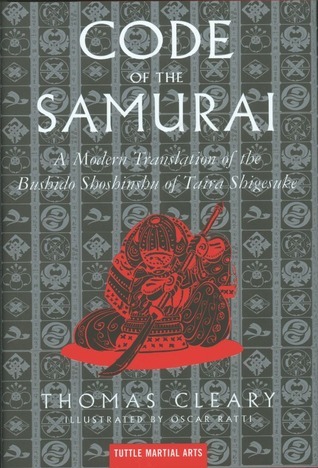
Code of the Samurai: A Modern Translation of the Bushido Shoshinshu of Taira Shigesuke
Learn the ways of the Japanese Bushido Code with this very readable, modern translation of the Bushido Shoshinshu .
Code of the Samurai is a four-hundred-year-old explication of the rules and expectations embodied in Bushido , the Japanese Way of the Warrior. Bushido has played a significant role in shaping the behavior of modern Japanese government, corporations, society, and individuals, as well as in developing modern Japanese martial arts within Japan and internationally.
The Japanese original of this book, Bushido Shoshinshu , ( Bushido for Beginners ), has been one of the primary sources on the tenets of Bushido , a way of thought that remains fascinating and relevant to the modern world, East and West. This handbook, written after five hundred years of military rule in Japan, was composed to provide practical and moral instruction for warriors, correcting wayward tendencies and outlining the personal, social, and professional standards of conduct characteristic of Bushido , the Japanese chivalric tradition.
With a bright, conversational narrative by Thomas Cleary, and powerfully evocative line drawings by master illustrator Oscar Ratti, this book is indispensable to corporate executives, students of Asian Culture, martial artists, or anyone sincerely interested in Japan and its people.
Code of the Samurai is a four-hundred-year-old explication of the rules and expectations embodied in Bushido , the Japanese Way of the Warrior. Bushido has played a significant role in shaping the behavior of modern Japanese government, corporations, society, and individuals, as well as in developing modern Japanese martial arts within Japan and internationally.
The Japanese original of this book, Bushido Shoshinshu , ( Bushido for Beginners ), has been one of the primary sources on the tenets of Bushido , a way of thought that remains fascinating and relevant to the modern world, East and West. This handbook, written after five hundred years of military rule in Japan, was composed to provide practical and moral instruction for warriors, correcting wayward tendencies and outlining the personal, social, and professional standards of conduct characteristic of Bushido , the Japanese chivalric tradition.
With a bright, conversational narrative by Thomas Cleary, and powerfully evocative line drawings by master illustrator Oscar Ratti, this book is indispensable to corporate executives, students of Asian Culture, martial artists, or anyone sincerely interested in Japan and its people.
128 pages, Hardcover
First published January 1, 1943
Ratings & Reviews
Friends & Following
Create a free account to discover what your friends think of this book!
Community Reviews
Displaying 1 - 1 of 1 review

October 12, 2013
Nepatrný náhled do východní filozofie a s ní spjaté Cesty bojovníka. Snadné čtivo, které ovšem dostatečně popíše základní myšlenky tohoto postoje k životu, a proto bych jej doporučil do povinné četby na SŠ (vzdušný zámek). Oblíbený úryvek z knihy:
"Když si ale budeš příliš jistý svým životem, potíže tě budou neustále provázet. Začneš se nudit a staneš se nepozorným a líným člověkem. Budeš zanedbávat i ty nejdůležitější a nejnaléhavější záležitosti, nemluvě ani o těch méně podstatných posláních, vše budeš odkládat na další den a přitom lživě tvrdit, že úkol je již vykonán. A co nejhůře, budeš mít tendence přesouvat svá poslání na druhy ze svého oddílu. Nakonec se ti vše začne hromadit, a tobě nezbude nic víc než jen beznaděj. Jde o chybu, jež pochází z přesvědčení, že na všechno je neustále dost času, a ty by ses měl této chyby vyvarovat."
"Když si ale budeš příliš jistý svým životem, potíže tě budou neustále provázet. Začneš se nudit a staneš se nepozorným a líným člověkem. Budeš zanedbávat i ty nejdůležitější a nejnaléhavější záležitosti, nemluvě ani o těch méně podstatných posláních, vše budeš odkládat na další den a přitom lživě tvrdit, že úkol je již vykonán. A co nejhůře, budeš mít tendence přesouvat svá poslání na druhy ze svého oddílu. Nakonec se ti vše začne hromadit, a tobě nezbude nic víc než jen beznaděj. Jde o chybu, jež pochází z přesvědčení, že na všechno je neustále dost času, a ty by ses měl této chyby vyvarovat."
Displaying 1 - 1 of 1 review