

What do you think?
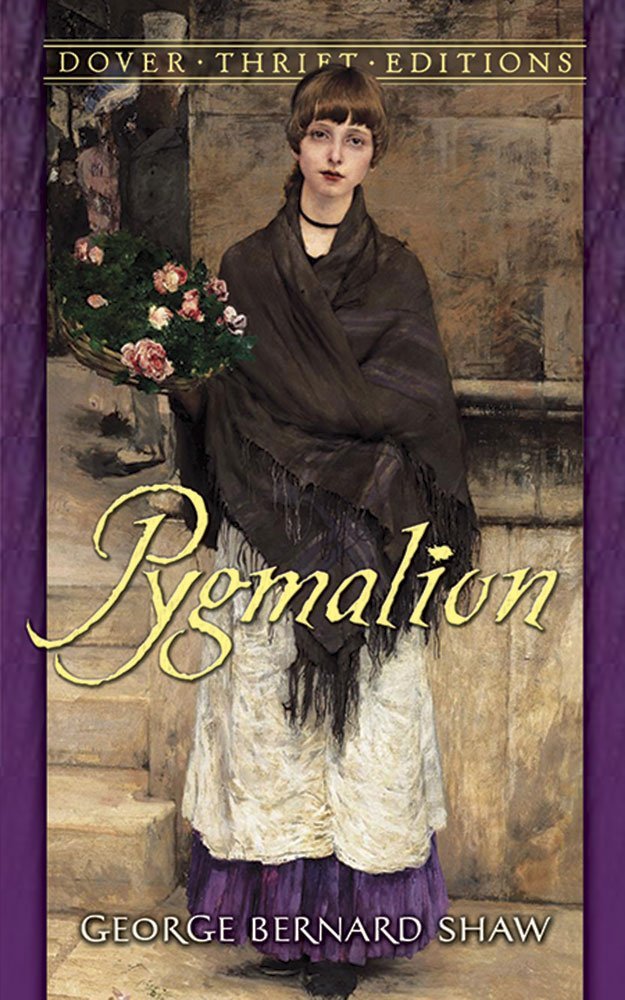
Pygmalion
One of George Bernard Shaw's best-known plays, Pygmalion was a rousing success on the London and New York stages, an entertaining motion picture and a great hit with its musical version, My Fair Lady. An updated and considerably revised version of the ancient Greek legend of Pygmalion and Galatea, the 20th-century story pokes fun at the antiquated British class system.
In Shaw's clever adaptation, Professor Henry Higgins, a linguistic expert, takes on a bet that he can transform an awkward cockney flower seller into a refined young lady simply by polishing her manners and changing the way she speaks. In the process of convincing society that his creation is a mysterious royal figure, the Professor also falls in love with his elegant handiwork.
The irresistible theme of the emerging butterfly, together with Shaw's brilliant dialogue and splendid skills as a playwright, have made Pygmalion one of the most popular comedies in the English language. A staple of college drama courses, it is still widely performed.
In Shaw's clever adaptation, Professor Henry Higgins, a linguistic expert, takes on a bet that he can transform an awkward cockney flower seller into a refined young lady simply by polishing her manners and changing the way she speaks. In the process of convincing society that his creation is a mysterious royal figure, the Professor also falls in love with his elegant handiwork.
The irresistible theme of the emerging butterfly, together with Shaw's brilliant dialogue and splendid skills as a playwright, have made Pygmalion one of the most popular comedies in the English language. A staple of college drama courses, it is still widely performed.
82 pages, Paperback
First published October 16, 1913
About the author
George Bernard Shaw
2,500 books4,288 followersGeorge Bernard Shaw stands as one of the most prolific and influential intellectuals of the late nineteenth and early twentieth centuries, a man whose literary output was matched only by his fervent commitment to social reform. Rising from a modest background in Dublin to become a global icon of letters, Shaw redefined the purpose of the stage, transforming it from a place of mere entertainment into a forum for rigorous intellectual debate and moral inquiry. His unique "Shavian" style—characterized by sharp-witted dialogue, paradoxical reasoning, and a relentless assault on Victorian hypocrisy—ensured that his voice resonated far beyond the footlights. As a playwright, critic, and philosopher, he remains a singular figure in history, being one of only two individuals to have been honored with both a Nobel Prize in Literature and an Academy Award. This rare crossover of high-art recognition and mainstream cinematic success speaks to his versatility and the enduring relevance of his narratives. His dramatic work, which includes over sixty plays, often tackled the most pressing issues of his day, from the rigid structures of the British class system to the complexities of gender roles and the ethical dilemmas of capitalism. In masterpieces like Pygmalion, he used the science of phonetics to demonstrate the artificiality of class distinctions, a theme that would later reach millions through the musical adaptation My Fair Lady. In Man and Superman, he delved into the philosophical concepts of the "Life Force" and the evolution of the human spirit, while Major Barbara forced audiences to confront the uncomfortable relationship between religious idealism and the industrial military complex. Beyond his theatrical achievements, Shaw was a foundational force in political thought, serving as a leading light of the Fabian Society. His advocacy for gradual socialist reform, rather than violent revolution, helped shape the trajectory of modern British politics and social welfare. He was instrumental in the creation of the London School of Economics, an institution that continues to influence global policy and economic theory. Shaw was also a formidable critic, whose reviews of music and drama set new standards for the profession, characterized by an uncompromising honesty and a deep knowledge of the arts. His personal lifestyle was as distinctive as his writing; a committed vegetarian, teetotaler, and non-smoker, he lived with a disciplined focus that allowed him to remain productive well into his ninth decade. He was a man of contradictions, often engaging in provocative public discourse that challenged the status quo, even when his views sparked intense controversy. His fascination with the "Superman" archetype and his occasional support for authoritarian figures reflected a complex, often elitist worldview that sought the betterment of humanity through radical intellectual evolution. Despite these complexities, his core mission was always rooted in a profound humanitarianism and a desire to expose the delusions that prevented society from progressing. He believed that the power of the written word could strip away the masks of respectability that hid social injustice, and his plays continue to be staged worldwide because the human foibles he satirized remain as prevalent today as they were during his lifetime. By blending humor with gravity and intellect with accessibility, Shaw created a body of work that serves as both a mirror and a compass for modern civilization. His legacy is not just in the scripts he left behind, but in the very way we think about the intersection of art, politics, and the individual’s responsibility to the collective good. He remains the quintessential public intellectual, a man who never feared to speak his mind or to demand that the world become a more rational and equitable place.
Ratings & Reviews
Friends & Following
Create a free account to discover what your friends think of this book!
Community Reviews
Displaying 1 - 10 of 10 reviews

August 11, 2025
Més que fer una traducció de Pygmalion, de Bernard Shaw, al català, que no hauria tengut tant de sentit, en Joan Oliver en va fer una adaptació: situa l'acció a la Barcelona de la dècada de 1950, i es fixa tant en el vocabulari de la protagonista com en la pronunciació, cosa que té més sentit en català que no en anglès. El resultat va ser una obra excepcional, amb uns personatges que ho broden, molt divertida de llegir, i probablement encara més divertida de veure representada a l'escenari. Una feina magistral de n'Oliver.

November 25, 2024
M'ha encantat. Super entenedor i basat en el mite de Pigmalió, que no coneixia del tot.
No només tracta d'un expert en fonètica que aposta canviar de classe social a una florista sense sostre i cridanera, només educant-la amb el "bon català".
Va tant enllà, que el mestre és superat per l'obra.
Els personatges preciosos i el català de carrer molt graciós. Li he agafat molt carinyo a llegir el teatre. Admeto que m'agrada molt el final, la Roseta té més cap que llengua. I en Jordana al final del dia és un home bo per dins, però maleducat jeje
La rallada mental és com no es pot haver enamorat, si ha construït des de zero la seva dona ideal en tots els aspectes? És inventar-te la teva pròpia trampa per caure.
No només tracta d'un expert en fonètica que aposta canviar de classe social a una florista sense sostre i cridanera, només educant-la amb el "bon català".
Va tant enllà, que el mestre és superat per l'obra.
Els personatges preciosos i el català de carrer molt graciós. Li he agafat molt carinyo a llegir el teatre. Admeto que m'agrada molt el final, la Roseta té més cap que llengua. I en Jordana al final del dia és un home bo per dins, però maleducat jeje
La rallada mental és com no es pot haver enamorat, si ha construït des de zero la seva dona ideal en tots els aspectes? És inventar-te la teva pròpia trampa per caure.
This entire review has been hidden because of spoilers.
September 23, 2026
Efectivament, és literatura

July 30, 2012
És un llibre molt bo, no em pensava que m'agradaria tant. A més a més, una vegada el vam acabar a classe ens van passar la pel·lícula "My Fair Lady" i va quedar molt completa la lectura.

June 28, 2021
Molt interessant, alguns punts s'assemblen a la actualitat. No he llegit l'edició de la imatge, sino la d'Edicions 62.
July 7, 2022
Llegit segons la traducció de Xavier Bru de Sala, Edicions de la Magrana (1997). Lectura pendent especialment pel mite que representa, i amb passatges divertits i elaborats. Lectura força lleugera.

January 18, 2026
El llibre està basat en el mite grec de Pigmalió, un escultor que crea l’estàtua de la seva dona perfecta i se n’enamora. Entre les diverses adaptacions d’aquest mite s’hi troba l’obra de teatre «Pygmalion» de George Bernard Shaw, en què l’escultor seria Mr. Higgins, un lingüista anglès especialitzat en fonètica, i la seva creació seria l’Eliza Doolittle, una noia de classe baixa que ven flors. Aleshores, Joan Oliver (Pere Quart) va traduir/adaptar l’obra de G. B. Shaw a la cultura catalana (llengua, localitats, personatges i referents), ampliant i retallant escenes de l’original.
Un dels aspectes que més m’ha cridat l'atenció ha estat la manera de distingir el català culte del vulgar, perquè, a diferència de l’anglès, que té un accent ja associat a la classe treballadora (el cockney), el català no en té cap de concret. Així, doncs, per marcar aquesta distinció, ha escrit el parlar de la Roseta (Eliza) tal com sonaria: «elssuis» per dir ‘els ulls’ o «fai» per ‘faig’… D’altra banda, m’he trobat que amb el senyor Jordana (Mr. Higgins) hi havia paraules que desconeixia i llavors em plantejava si era perquè 1) jo personalment no les sé i punt, 2) han caigut en desús (l’obra és del 1986) o 3) són intencionadament més «refinades» i poc familiars—segurament deu ser una barreja d’aquests tres factors.
Deixant de banda la part lingüística, «Pigmalió» és, al capdavall, una comèdia i, efectivament, hi ha hagut moments que m’han fet riure, sobretot els moments en què intervenia la senyora Jordana. Tanmateix, hi havia alguna frase o escenes misògines en què em feien bastant «cringe», encara que fos perquè el personatge és així.
Per exemple:
«FONTANELLA: Quina opinió teniu de les dones?
JORDANA: Coneixeu algun home que la tingui bona? […] sempre que una dona s’ha interessat per mi, no ha tardat a tornar-se gelosa, exigent i insuportable. I si he estat jo qui s’ha interessat per ella, aleshores he estat jo qui s’ha tornat egoista i despòtic. Les dones ho trasbalsen tot i són sempre una nosa.»
Un dels aspectes que més m’ha cridat l'atenció ha estat la manera de distingir el català culte del vulgar, perquè, a diferència de l’anglès, que té un accent ja associat a la classe treballadora (el cockney), el català no en té cap de concret. Així, doncs, per marcar aquesta distinció, ha escrit el parlar de la Roseta (Eliza) tal com sonaria: «elssuis» per dir ‘els ulls’ o «fai» per ‘faig’… D’altra banda, m’he trobat que amb el senyor Jordana (Mr. Higgins) hi havia paraules que desconeixia i llavors em plantejava si era perquè 1) jo personalment no les sé i punt, 2) han caigut en desús (l’obra és del 1986) o 3) són intencionadament més «refinades» i poc familiars—segurament deu ser una barreja d’aquests tres factors.
Deixant de banda la part lingüística, «Pigmalió» és, al capdavall, una comèdia i, efectivament, hi ha hagut moments que m’han fet riure, sobretot els moments en què intervenia la senyora Jordana. Tanmateix, hi havia alguna frase o escenes misògines en què em feien bastant «cringe», encara que fos perquè el personatge és així.
Per exemple:
«FONTANELLA: Quina opinió teniu de les dones?
JORDANA: Coneixeu algun home que la tingui bona? […] sempre que una dona s’ha interessat per mi, no ha tardat a tornar-se gelosa, exigent i insuportable. I si he estat jo qui s’ha interessat per ella, aleshores he estat jo qui s’ha tornat egoista i despòtic. Les dones ho trasbalsen tot i són sempre una nosa.»

September 23, 2024
feia molt que no llegia teatre i ho trobava a faltar! llibre lleuger, curiós i entretingut. com a fan de la fonètica m'ha agradat molt i, a més, sento que els personatges tenen personalitats molt característiques que et fan gaudir de la història intensament (en aquesta casa ADOREM la roseta, quina tia tan basada bof).
cal destacar que alguns personatges tenen un polsim excessiu de misogínia però la majoria del llibre és molt xulo i el recomano al 100%! se m'ha fet curt 🤧
cal destacar que alguns personatges tenen un polsim excessiu de misogínia però la majoria del llibre és molt xulo i el recomano al 100%! se m'ha fet curt 🤧

September 18, 2021
primer llibre del segon any, primera sorpresa. phonetics + comedy + myth
magradat com higgins modela a eliza a través del llenguatge i el coneixement, les reflexions que fa eliza dels diferents punts de tractament i la declaración de souls. mha sorpres positivament: mho he passat gratament be llegint-lo
magradat com higgins modela a eliza a través del llenguatge i el coneixement, les reflexions que fa eliza dels diferents punts de tractament i la declaración de souls. mha sorpres positivament: mho he passat gratament be llegint-lo

May 9, 2023
m’ha agradat
son uns masclistes i classistes de merda durant tot el llibre però al final m’agrada com acaba
m’ha sorprès com ha acabat i fins i tot m’ha arribat a agradar el Jordana
i bueno la Roseta és preciosa, amb el seu caràcter fort i les seves opinions, valors i valentia
he de dir que per molt que odiï a l’elisabet aquets llibre ha sigut una bona elecció, encara que ella segurament no ha fet res
son uns masclistes i classistes de merda durant tot el llibre però al final m’agrada com acaba
m’ha sorprès com ha acabat i fins i tot m’ha arribat a agradar el Jordana
i bueno la Roseta és preciosa, amb el seu caràcter fort i les seves opinions, valors i valentia
he de dir que per molt que odiï a l’elisabet aquets llibre ha sigut una bona elecció, encara que ella segurament no ha fet res
Displaying 1 - 10 of 10 reviews