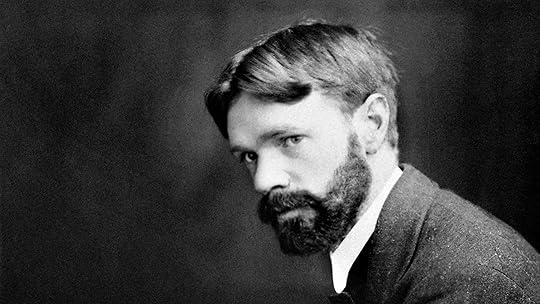
It's sad to say, but D.H. Lawrence, who along with Virginia Woolf, Doris Lessing, and Jeanette Winterson, is the most significant English novelist of the twentieth century, isn't getting read all that much anymore. Professor Worthen's arguments - with which I agree - indicate that the reason why this is so is because DHL has been done in since roughly 1970 by various members of theoretical schools that see his work as anti-feminist, sexist, and, in some cases, fascist.
The labeling of DHL, however, comes from an essential misreading of his work. As Professor Worthen rightly points out, DHL deserves to be read as a philosopher and Romantic - as a very introspective novelist who tries to work out his own problems and those of society in literature (DHL was extremely prolific and wrote compelling novels, short stories, plays, poems, letters, essays, nonfiction books, travel literature, etc.). One has to read all of DHL to understand fully the breadth and scope of his achievement and the way in which he knowingly creates cognitive dissonance in the minds of his readers. In other words, DHL writes to make you uncomfortable. Writers of transgressive literature - "outsiders" - tend to do that.
Professor Worthen's brilliant thesis is that DHL is now the outsider that he once was when he was still alive and publishing books such as The Rainbow, Women in Love, and Lady Chatterley's Lover. These three novels and many of DHL's other works demonstrate that he was an experimenter on the level of Joyce and Woolf, but because his prose was so accessible in its experimental qualities (he's a greater and more poetic Hemingway), it was easier for the authorities to ban and, in the case of The Rainbow, burn his work.
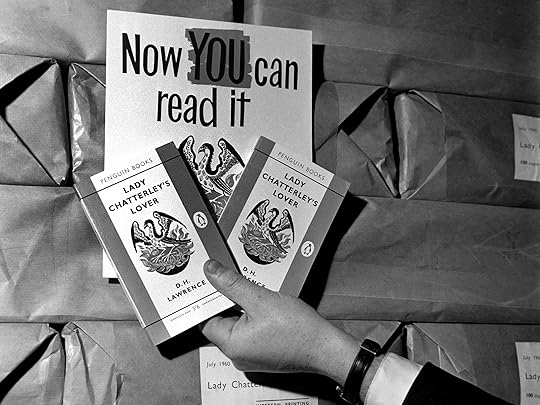
After experiencing a revival of interest that peaked in the 1960s, well after his death from tuberculosis and the 1928 original publication of Chatterley, due to the publication of the unexpurgated edition of Chatterley, DHL has gone into decline - largely because of Kate Millett's wrongful attack and misreading of his work in 1970.
Millett read DHL as a didactic and sexist writer and completely missed the point that most of his works make no claim for an ARRIVAL AT THE TRUTH. Rather, his books strive to be dialogic - that is, he writes them to make his readers think about sexual, gender, class, political, and other issues. It's DHL's faith in his readers' abilities to think through problems - to read novels, as he says in his novel, Kangaroo - as "thought adventures." His "thought adventure" philosophy of the novel should remind the reader of Plato and his Republic.
In addition to his knowing attempt to create cognitive dissonance, DHL is an extremely poetic writer. He thinks in images, so that his body of work reads in a similar way to Whitman's Leaves of Grass. All his writings - from The White Peacock to Apocalypse - show the development of a living, breathing human being who engages in the process of living. Now, we all know that this process, as Whitman taught us, entails the exploration of the contradictions - all the loveliness and ugliness - that dominate human consciousness. DHL is so radically experimental because he attempts to find a poetic language in which to convey the emergence of consciousness - that is, what it's like to be alive and grow in the world. Whitman, Kerouac, and Thomas Wolfe are the only other writers of whom I can think who work in a similar vein, and they, with the definite exception of Whitman, are outsiders now, still not accepted by the theory jocks and members of the academy who wrongly dismiss their achievement.
And what was DHL's achievement? What did he do that no one in the English novel had done before and, with the exception of Winterson, done since? He, as Professor Worthen correctly argues, tries to create a language in which he can write the life of the body. He begins to do this with The Rainbow - his first truly experimental novel, which got banned and burned in England in 1915.
Please read The Rainbow and its companion piece Women in Love, if you haven't already done so. You'll find work as risky as Joyce's and Woolf's best novels - and just as experimental. You'll also be blown away by DHL's brilliant use of poetic imagery, repetition, and rhythms to attempt the impossible - the re-creation of the life of the body in language. When you read these two books, you'll also notice that DHL is a very religious and spiritual writer, one who, in effect, tries to write new Old and New Testaments for the modern age. How bold, gutsy, and courageous can a writer get?
Professor Worthen's book, in closing, is a wonderful and accessible way to get you started with DHL and to understand DHL's importance as a prophetic writer, who really is the Blake of the previous century. Of course, it pales in comparison to the three-volume Cambridge biography, which was co-authored by Worthen himself, Kinkead-Weekes, and Ellis, but it's a good place to start.