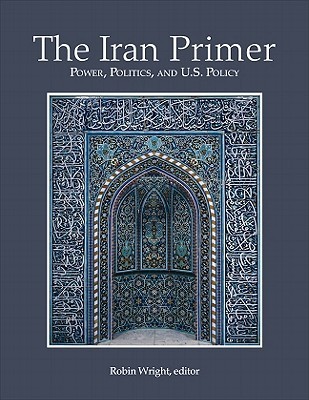
Edited by Robin Wright, this compendium provides top-level briefings by 50 seasoned experts on Iran (both Iranian and Western authors) from some twenty foreign policy think tanks, eight universities, and six U.S. administrations. The authors present a wide range of views, offering factual information for ready reference, thoughtful analysis, and context. Since Iran's 1979 revolution, the West has struggled to understand what drives the Islamic Republic and how to deal with it. The challenge now looms even larger in the face of Iran's controversial nuclear program, the disputed 2009 election, growing human rights violations, and angry rhetoric. For Americans, Iran is one of the most stereotyped and least understood countries in the world. Relations have been cut off since shortly after the 1979 takeover of the U.S. Embassy. Three decades later, the dispute over Iran's nuclear program is sparking even deeper debates on policy, said Wright. Iran has always been an important geostrategic country, but today it represents a more complex challenge than other hotspots Afghanistan, Iraq and North Korea for several The Islamic Republic will be pivotal to global events in the early 21st century because of its resources, ideology, weaponry, allies and location. Featuring 50 aspects of this pivotal state, The Iran Primer : Lays out little-known facts on Iran and provides analysis of key events, trend lines; major leaders and political movements; Details Iran's foreign relations with a dozen nearby countries or regions; Chronicles U.S.-Iran relations under six American presidents from the perspective of those who crafted the policy; Probes the West's options in dealing with Iran in the future; and, Offers extensive appendices, including a who's who of Iran's political elite and four detailed timelines on key events since the 1979 revolution. This briefing book is a practical and accessible go-to resource for practitioners, policymakers, academics, and students, as well as a fascinating wealth of information for anyone interested in understanding Iran's pivotal role in world politics. Geneive Abdo, Michael Adler, Ali Alfoneh, David Albright, Shaul Bakhash, Henri J. Barkey, Mehrzad Boroujerdi, Rachel Brandenburg, Daniel Brumberg, Shahram Chubin, Patrick Clawson, Juan Cole, Michael Connell, Anthony H. Cordesman, Suzanne DiMaggio, James Dobbins, Michael Eisenstadt, Michael Elleman, Haleh Esfandiari, Farideh Farhi, Hadi Ghaemi, Jubin Goodarzi, Richard N. Haass, Stephen J. Hadley, Kevan Harris, Steven Heydemann, Emile Hokayem, Mark N. Katz, Geoffrey Kemp, Mehdi Khalaji, Ellen Laipson, Matthew Levitt, John Limbert, Suzanne Maloney, Omid Memarian, Abbas Milani, Mohsen Milani, Fareed Mohamedi, Afshin Molavi, Alireza Nader, Tara Nesvaderani, Semira N. Nikou, John S. Park, Kenneth M. Pollack, Walter Posch, Korush Rahimkhani, Bruce O. Riedel, Karim Sadjadpour, Gary Sick, Steven Simon, Jason Starr, Andrea Stricker, Robin Wright, Dov S. Zakheim
Robin B. Wright is an American foreign affairs analyst, author and journalist who has covered wars, revolutions and uprisings around the world. She writes for The New Yorker and is a fellow of the U.S. Institute of Peace and the Woodrow Wilson Center. Wright has authored five books and coauthored or edited three others.
It's not going to win awards for writing-- the book reads like a high-level dossier prepared for some executive by staffers-- but it's well organized and does a good job of summarizing Iran's political power players, Iran/Iraq war, and info of that sort. It's overly focused on Iran's nuclear ambitions though-- this is definitely Iran as viewed through the lens of US policy.
Fairly comprehensive overview, and I actually enjoyed the dry style. In fact I found it annoying whenever some editorializing creeped in. Hardly anything about the pre-revolution period (including of course little mention about how the CIA was meddling about supporting an unpopular monarchy and completely failed to see the revolution coming). My take aways are that their theocracy structure for government is wholly fucked up and frightening, and that most Westerners probably know jack about the realities in Iran. The place is bizarre and complex to me. Still I feel l Ike I have a much better sense of what roles Iran plays in the region. I'm hoping to discover a similar publication on China now.
A very straightforward and comprehensive overview of Iran-US power dynamics, mostly focused on the last 60 years. Essentially a compilation of 50 two-to-three page briefers on a variety of topics - so the writing isn't riveting, but it isn't meant to be anyway.