“We cannot do without Fanny Howe.” —Ange Mlinko, The Nation
Here a gun might go off, There perhaps a broom would brush away the sticks of spring. It was not your fault where you were dropped Or where you took your first steps. —from “After Watching Klimov’s Agoniya”
In Fanny Howe’s latest collection of poems, she beckons us toward the origins of both our collective knowing and our misperception. These poems move from one country to another and from one archetypal position—parent, grandparent, child—to another in the wake of the twentieth century. Certain movies provide an almost religious resolution to questions and experiences. “I don’t blame the children for anything,” Howe writes in one poem. “Their century is like a director who prefers his script to his actors.” With startling revelation and lyrical power, Come and See urges us to observe the world anew.
Fanny Quincy Howe was an American poet, novelist and short story writer. She was raised in Cambridge, Massachusetts. Howe wrote more than 20 books of poetry and prose. Her major works include poetry such as One Crossed Out, Gone, and Second Childhood; the novels Nod, The Deep North, and Indivisible; and collected essays such as The Wedding Dress: Meditations on Word and Life and The Winter Sun: Notes on a Vocation. Howe received praise and official recognition: she was awarded the 2009 Ruth Lilly Poetry Prize by the Poetry Foundation. She also received the Gold Medal for Poetry from the Commonwealth Club of California. In addition, her Selected Poems received the 2001 Lenore Marshall Poetry Prize from the Academy of American Poets for the most outstanding book of poetry published in 2000. She was a finalist for the 2015 International Booker Prize. She also received awards from the National Endowment for the Arts, the National Poetry Foundation, the California Arts Council, and the Village Voice. She was professor of writing and literature at the University of California, San Diego and lived in Cambridge, Massachusetts.
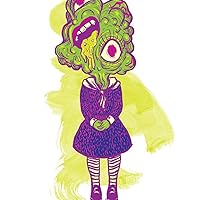
This book of poetry was amazing. It has the power to transform your view of reality and give you an alternate perspective, an invitation to "Come and See" things in a totally different way. Even the cover art is beautifully surrealistic.
This was the first collection of Howe’s that I’ve read. Being totally unfamiliar with her work, I have to admit that I was pleasantly surprised by her stream-of-consciousness style of poetry. This collection reminded me quite a bit of Arda Collins’ Daylight, although the subject matter was vastly different. I liked how Howe used her poems as vehicles to process her thoughts and often-philosophical ponderings. The cover image, too, was provocative and surreal in a Barryman sort of way that resonated with me. I couldn’t reconcile the titular “poem” (which was more of a mini-essay than a poem) with my preconceived notions of poetry, but I did enjoy this overall. How ballsy to end your book with lines from Paul Celan! Plenty of blurb-worthy lines here, for those that like that like I do. Lots of ordinary, but vivid moments I loved, too (dumplings in a tin, a grandmother reading to her grandson in bed, etc.).
Favorites: “You can only confess once. / After that, there is very little to say about a hurting, especially a lost chance.”
“God, grant me the eternity / to complete this path: ... Sitting on a wall / outside a bank, waiting for a child.”
"I have humiliated myself/ so I can participate in the city" (6)
"You can never/ persuade one person that another/ is a liar. People prefer the liar." (27)
"I cry because my tear is glass" (29)
"Every old misery holds interest./ Father got worried when I went to the far left/ And called me self-indulgent. Mother laughed/ When I became a Catholic. She didn't believe it. I left the/ blackened house/ And walked in the dark, throwing ballast overboard/ For the sake of future solitariness./ To the seeker all objects are lonely and dangerous" (35)
"Great films begin in chaos./ They are made in order to show the abyss emerging into laws" (35)
"Words know everything. That's why my fingers shake" (35)
"Certain Gnostics achieve ecstacy through random and frantic sex/ But love aches its way through the interstices./ Sticks there like a dent in an inchworm's back./ You can't take it out because it is the thing itseld./ Love is the green in green. Does this explain its pain?" (36)
"Since love came over and knocked me down,/ Then kicked me in the side and fled,/ I have suffered from a prolonged perplexity./ God is the object of my wonder and the closest to me./ Especially near sleep. My sheets are like the wings of a/ guardian angel./ There is no other fabric so near to my feelings./ I haunt a dark cathedral, its single light come from the/ gift shop" (36)
"This way his childhood survived, the way dinosaurs/ became birds" (38)
"Absolutely nothing happened except recognition that left/ an ache" (40)
"My underground studio/ is comfortable and clean but I'm on my own/ with this poem and the world situation,/ and the pigeons who warble" (42)
"A star is just a smudge/ on magnified glass./ I have never been/ more disappointed" (45)
"I traveled to the page where scripture meets fiction./ The paper slept but the night in me woke up"(48)
"I love God and the ferry too," wrote Kerouac/ Only that which exists can be spoken of" (49)
"Some long-ago light is pulsating in a trout's heart/ on a laboratory dish./ That light has entered all the holes,/ no matter how small, because it is the light that wants to live" (55)
"The heavens were never a hidden metaphysics/ but the stars in their circuits/ and our eyes until blinded by sunset:/ An Ayurvedic cure./ Many choose to get high/ rather than struggle/ with wickedness. Scatter rugs/ to our mother's chair/ lead us like bridges to Islam/ built from mist and sun" (75)
"You don't want to say too much about such an image. It arrives at a level equivalent to the dreamer's and will not be relieved of its mystery through words" (82)
"How do people stay sane when others, just like themselves, behave in unrecognizable ways?" (86)
"The vow to protect an image is a way of transcending the days you pass through by holding something that is not yet realized in human form, holding it against you, in secret" (88)
"Poetry doesn't just help someone survive, it is a survivor itself: fluid, protean, as it passes through walls, and brings a particular beat to a way of thinking and being" (90)
"Ideally poetry reveals the face of justice through syntax, balance, image. That is, the harmony strung between two disparate images" (90)
"A miracle can be the appearance of another person rising out of an emptiness we are beginning to accept as permanent" (91)
A tough one for me. Seems like you need to have been a student of other writers to really understand or appreciate the writing here. I am no academic, so all the pieces missed me completely. I did like a handful of lines like the Earth is a magic carpet if you lay down and look at the clouds pass by.
Most of the material was a slog for me to get through. I finished the book just to finish a book. I did my enjoy reading this. But it wasn’t awful to the point I quit the book.
She deftly juxtaposes the fabulist with the realist. A line I'm still puzzling over and devastated by: "Where one sees Narnia // the other sees a nuclear winter." This woman is tapped into our century. And her concern with how, to borrow from her culminating lyric essay/ars poetica/manifesto, the ideal world of poetry with its representation of the "face of justice through syntax, balance, image" interacts with the "disharmony" and "proliferation of images" of our times seems salient and perceptive.
I had the extreme pleasure of hearing her read recently and she was sharp and witty. My favorite moment: when a lady from the audience asked her what question she would like to be asked, she said, without skipping a beat, "Would you like a drink?"
If this had been a disquisition on the brutality of our political world, it wouldn't have held interest. Instead, FH has -- may I say? -- 'processed' the weight of oppression she's noted and given her reader incisive verbal dislocations that have unusual power.
Call this 'experimental'. By which I would mean not simply 'conversational' or 'self-revelatory' or 'narrative'. There's moral direction in the disjoints. There's human perspective in odd juxtapositions. Very fresh. You have to hear this as political thrust, but it rises far above just that, gaining from an artistic skill probably beyond the hearing of an unfortunate number of people.
A reader's change of pace, as might a listener's in setting aside an important hour for Bartok after too much of another person's Top 40.
While this is a nice book of poetry, it can but just a little bit confusing at times. But I think that's a part of it's charm for me. When you are reading a poem and suddenly all the parts come together and you realize just what the poem is about. This book probably isn't for everyone, but it does make for a good little read, and I'm sure I'll read it again in the future.
I received this book as part of the Goodreads Giveaway. I find some parts of the book confusing. Sometimes I seem to get lost in the transition of the subject with the same stanza.