Nothing is new or original in Christianity. All features and components of what is now known as Christianity were present in mythologies that flourished before Jesus is alleged to have lived, and this book shows how those myths evolved into today's religion.
John Glover Jackson (April 1, 1907 – October 13, 1993) was an educator, lecturer, author, and man of principle. He was born on April 1, 1907, into a family of Methodists. In old age, he averred he had been an atheist since he became old enough to think. The family minister once asked him when he was small, "Who made you?" After some thought he replied from his own realization, "I don't know."
He lived for nearly fifty years in New York City, lecturing at the "Ingersoll Forum" of the American Association for the Advancement of Atheism (1930–1955). During a parallel period he wrote articles for the Truth Seeker magazine. From 1932 to 1972 he was a writer and associate of the Rationalist Press Association in London, England. A pioneer in the field of African and Afro-American studies, he taught such courses from 1971 to 1980 at Rutgers University, New York University, and in Illinois.
As another reviewer said, this is a great springboard to ask questions from. It gives you the knowledge you need to investigate further into the pagan influences on Christianity. In fact, Christianity is so deeply influenced by pagan religions that you could say it is just the latest pagan religion. It is different in that it spread successfully due to its aggressive proselytizing nature and its adoption by the Roman empire and its militarily competent successors.
Some pieces of evidence are doubtful, like the alleged existence of a Babylonian or Assyrian tablet depicting a pre-Christian passion play of Baal. Supposedly, the Christ passion story is derived from this, which is alleged to be displayed in the British Museum. I was willing to believe this at first, but I have sought and have yet to find any evidence of such a tablet. Perhaps if any of my fellow readers visit that museum, you could be so kind as to confirm its existence for me. That would be greatly appreciated.
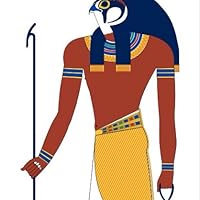
Babylonian/Assyrian tablet aside, there is plenty of evidence in this book to demonstrate the correlation between the Christ story and other myths such as Horus, Hercules, Simon of Cyrene, Apollo, Adonis, Mithras, Perseus, Prometheus, Krishna etc.
Horus in particular has two forms, a young version (1-12 years old) and an adult version (from 30). This is the same 18-year gap we see in Jesus’s life. Why are their stories so similar?
One of the most impressive pieces of evidence in this book is the correlation between Jesus’s death and resurrection and the light and dark periods of the moon (dark for three days), the movement of the sun through the zodiacal signs, it’s high position in the summer and it’s low position in the winter. It’s particularly interesting how the signs Virgo, Bootes and Hydra may correspond to Eve, Adam and the serpent.
The four evangelists Matthew, Mark, Luke and John correspond to the Zodiac (lion, bull, man and scorpio/eagle). This makes me wonder if the four writers really existed or were just concocted by the ecclesiastical authorities to conform with accepted myths at the time. The 12 disciples also seem to correspond to the Zodiac.
An important point is that the Ethiopians developed the original myths which then spread to Egypt and finally the surrounding areas, evolving as they went. Considering that we came to being in Africa, Ethiopians could be credited with the development of the first civilizations and many of the ideas that later spread to Christianity.
This work may be criticized for going too far in its assertions and using many rare 19th century-age sources, but I would disagree with that. There may be some truth to the former, but just because many of Jackson’s sources are from a less developed time doesn’t mean they are worthless. In some ways, the 19th and 18th centuries were more advanced than we are now, namely, because people were eagerly researching questions of the origins of Christianity for the first time and people used to read more rather than being addicted to Instagram and the like. The areas in which those centuries were less advanced are too obvious to mention.
I will continue my research through books on mythology and Dr. Richard Carrier’s book on the historicity of Jesus.
A publication that shouldn't be taken as fact, instead a springboard for asking questions and digging deeper. Much of the information is outdated yet captivating.
Quite an amount of information was manipulated, so the author could force through his point. To be specific - the part about similarities between Christianity and other religions consisted mostly of made up ''facts'' which (obviously) fitted into the premeditated goal (which the author had).
Although some of the points made sense, by that time I was already discouraged and my opinion couldn't be that much affected. It's no wonder that religions (in general) bring more doubts than certainties, but making up stuff about them just to support your theory? That's a no-no. I'm quite astonished how this book could be rated that high, but I guess it's a common case considering how Zeitgeist is viewed.
This book was okay. I was looking forward to reading it but it didn’t tell me anything new. If you are a newcomer to the subject then it would be a great book. If you are a student of this subject. Read Kersey Graves of Gerald Massey for more fleshed our details.
A disappointing book on an important subject. Jackson, a lecturer of African history and African American studies, wrote this in the 1980s, and relied upon sources that were outdated even then. Also, the method of presentation is rather amateurish. In other words, it is hard to believe that an actual academic wrote the book. Jackson has a two-part thesis. The first is that the stories, both from the Bible and from extra-biblical documents, and the rituals associated with "the Christ" in the classical Roman period were all hand-me-downs from prior civilizations such as the Babylonians, Sumerians, Chaldeans, and most especially the Egyptians. The second is that all of these myths and rituals date back even further to the supposed African origins of civilization. The first part of the thesis is consistent with the more general theory that Jesus was never a living person, but always a myth. It is an older idea than some might think. Jackson relies upon sources on this point that range from the 1830s to the 1960s. The second part of the thesis is by far the more dubious, especially given that Jackson uses pretty much the same sources to support it that he uses to support the Jesus-myth thesis. Jackson got caught up in the Africanist theories that were catching hold in some circles during the 1980s, and at the end of the book goes way into the deep end with this theory. Thus, Jackson wrongly believes that ancient Egyptians were originally and entirely Black Africans from Ethiopia, that the original "humans" were African Pygmies who spread across the world, even into South America, and are the originals of virtually all the ethnic types known today. The age of his sources is part of the problem, as these sources had no access to modern archaeological, linguistic, and genetic research that reveals a much different account of the origins of language and culture, that is both older and more diverse than Jackson accounts for. The sad thing is that Jackson would have had access to some of this information in the 1980s, but chooses not to use it. There are similar problems with his sources for the Jesus-myth argument in that many of them are simply wrong about key evidence. Jackson notes a couple of these errors, such as the mistaken belief in the 1800s that the names Krishna and Christ were etymologically related. However, he ignores other etymological naming errors from his sources. The argument often rests on superficial similarities, such as the number 4 (i.e. any time one gets 4 of something, such as four Gospel authors, they must, merely because of the number, refer to the 4 compass points). Again, a look at more recent scholarship in his own day would have corrected many of these errors and actually bolstered the Jesus-myth argument. The major disappointment, though, is the method of presentation. Jackson himself writes very little. Instead, he give short previews of long quotations, all the while remarking upon how admirable and scholarly his sources are. Thus, the quotations are doing all the heavy lifting, while Jackson can rely upon inference and argument from authority to make his case. As scholarship goes, that is pretty slipshod. Had Jackson used more up-to-date sources, he could have made a stronger argument and provided more insight about both about the origins of Christian mythography and the developments of culture in Africa.
Lots of really interesting information. I liked the focus on Afrocentrism, and Jackson did this without being overly polemical, but simply explaining the true history of ancient religions and their many African origins. There was a lot about ancient astronomy/astrology, and their connection to harvests, myths and behaviours. I'm not sure how many of the early Christian myths can be derived from astrology since I don't know enough about early (2nd-4th century) Christianity (as in, I know the basics, but not how all the traditions actually developed and all the surrounding pagan influences). It sounds like many scholars have been studying all these things for a couple hundred years, but we don't hear much about it. There's probably way more to Egyptology than I've even ever heard, and I've gone through the Great Courses 48-lecture Egypt series. This isn't surprising, considering Egyptian history goes back many thousands of years.
I think what I found most interesting about this book was that so many religious ideas originate from the movements of the stars, sun and planets. It seems that the ancients really, really kept track of these, and oriented themselves on them. We've lost that today. I think maybe we orient ourselves today based on the clock, and calendar, which are metaphysical - where is the clock? It's a concept in our heads. But the ancients oriented themselves based on the movements in the sky, and they 'felt' the drifting of the sun toward its solstices, and anticipated its return to its 'proper place', and what all that meant for life and seasons and harvests. I was surprised how ubiquitous death and resurrection are in just about all parts of the world, pre-dating Christianity, and the idea of being dead for 3 days, which may have its origin in the phases of the new moon, as well as the winter solstice. I was never really taught this growing up. Also, December 25 seems to have a long history in pagan beliefs as it relates to the new birth of the sun. It seems that Horus may have been the reason for the season long before Yesus came along.
There are a few parts of this book that seem a bit rambly, and at times the scholarship feels outdated (hard to put my finger on, but I think it's the way Jackson treats certain sources uncritically rather than weighing the evidence in a more Bayesian approach), but other than that it was great.
This is a great read for anyone who is a student of history. It’s hard to argue that the author has an agenda. John Jackson has simply compiled historical data that provides clear evidence of religious stories, myths, practices, traditions, and beliefs that are remarkably similar in nature to Christianity, but existed long before Christianity. Some of the historical accounts and explanations of certain belief systems are convoluted, and at times I felt like it was “too much”. Perhaps that’s because I didn’t need a whole lot of detail on some of these belief systems - it was enough, for me personally, to hear the focal points of the religions and see how similar they were to Christianity. As somebody who grew up in fear of what the Christian God would do to me if I didn’t follow the Bible, this book restores my confidence in my decision to walk away from Christianity and the Bible. It’s clear to me that I didn’t walk away from “the truth”. The best part of the book is the last chapter where he provides more detailed commentary of all of the information he presented. It’s in this commentary that the author so wonderfully articulates the confusion that exists in the minds of many deep thinkers, people who can clearly see that there’s SOME THING out there that’s greater than all of us, people who are still mostly governed by reason.
The preface makes it clear that much of the information relied on by Jackson, and many of the archaeological claims that he presents, are in dire need of updating. We've made a lot of advances in our understanding of early humans since 1985. Some of his claims are wrong.
It's still an interesting read, and it presents some thoughtful arguments. Many are well-established and highly plausible. Others are not so strong.
Information--evidence--changes and grows and develops. This creates new hypotheses to explore. It's good to know where we came from and how we got here.
Was Jesus derived from Horus? Probably. Among others. There are too many analogues in mythology for Christianity to not be another branch along the mythological line.
Are there pieces of wisdom within Christianity that help people lead and live better lives? Probably.
Can you be a decent human without religion? Probably.
One the most insightful reads I’ve read and I’m not a fan or history lol. This book was revealing and inspiring. Can’t wait to indulge deeper into the topic. The only reason I didn’t give it 5 stars was the way the information was presented. I feel like a lot of wasn’t needed to substantiate claims. For example, the book compares Christianity to other religions to validate that Christianity is “unoriginal” in essence. However, they literally go through each imitation of about 4 different religions for each claim. Those moments made it difficult for me to stay attentive. All in all, it was worth the read.
I thought this book was very informative. I have a different way of thinking after reading this book. I have to begin questioning everything that I have been taught. I am beginning to question the validity of my previous educators.
"Many Christians denounce paganism as false religion. If this is correct, then Christianity is also false, for it is of pagan origin, and if one is not true then neither is the other." -
This book will explode everything you thought about religion
From an academic point of view, a very well done book. I think Christian apologetics has answers to some questions, but of course it depends on the openness of individual Christians. What I miss here is the omission of the theory of "The Gospel in the stars", which could give partial answers in the area of astrology and mythology which is on the side of the Christian tradition. It is certainly worth considering that the Gospel was written in the stars as Seiss and other adherents of this theory write about it. The message of the stars and the coming savior can be given from different perspectives. It depends on which tradition you hold to. It also depends on the denominations that have different perspectives on this. The rituals of the Catholic Church are not much different from those of ancient Egypt or Sumer. There are many academic papers written about this as well. It is certainly worth pondering and it is up to each of us to seek the truth in these dark times. Chuck Missler in his teachings and books can defend the Christianity and answer many questions to those who will lost the faith after the reading this book.
This contained interesting information about ancient religions, but it was very poorly written. I really wanted to give it two stars, because it was a bit of a chore to get through, but I decided to give it more because it looks like a lot of research went into it. Still, the author didn't do a good job making the material interesting, and I really don't think he proved his premise, that Christianity is based on more ancient religions. Oh, I believe that to be true, as I've read other books on the subject, and I'm an atheist, but I think this book does a poor job of tying it all together. He cites a lot of other sources without giving a whole lot of background on them.