

What do you think?

The beautiful: an introduction to psychological aesthetics
This is a reproduction of a book published before 1923. This book may have occasional imperfections such as missing or blurred pages, poor pictures, errant marks, etc. that were either part of the original artifact, or were introduced by the scanning process. We believe this work is culturally important, and despite the imperfections, have elected to bring it back into print as part of our continuing commitment to the preservation of printed works worldwide. We appreciate your understanding of the imperfections in the preservation process, and hope you enjoy this valuable book.
- GenresNonfiction
174 pages, Paperback
First published January 1, 1974
About the author
Vernon Lee
417 books132 followersViolet Paget, known by her pen name Vernon Lee, is remembered today primarily for her supernatural fiction and her work on aesthetics. An early follower of Walter Pater, she wrote over a dozen volumes of essays on art, music, and travel, poetry and contributed to The Yellow Book. An engaged feminist, she always dressed à la garçonne, and was a member of the Union of democratic control.
Her literary works explored the themes of haunting and possession. The English writer and translator, Montague Summers described Vernon Lee as "the greatest [...] of modern exponents of the supernatural in fiction."
She was responsible for introducing the concept of empathy (Einfühling) into the English language. Empathy was a key concept in Lee's psychological aesthetics which she developed on the basis of prior work by Theodor Lipps. Her response to aesthetics interpreted art as a mental and corporeal experience. This was a significant contribution to the philosophy of art which has been largely neglected.
"The Lie of the Land", in the voume "Limbo, and other Essays", has been one of the most influential essays on landscaping.
Additionally she wrote, along with her friend and colleague Henry James, critically about the relationship between the writer and his/her audience pioneering the concept of criticism and expanding the idea of critical assessment among all the arts as relating to an audience's (or her personal) response. She was a strong, though vexed, proponent of the Aesthetic movement, and after a lengthy written correspondence met the movement's effective leader, Walter Pater, in England in 1881, just after encountering his famous disciple Oscar Wilde. Her interpretation of the movement called for social action, setting her apart from both Wilde and Pater.
Her literary works explored the themes of haunting and possession. The English writer and translator, Montague Summers described Vernon Lee as "the greatest [...] of modern exponents of the supernatural in fiction."
She was responsible for introducing the concept of empathy (Einfühling) into the English language. Empathy was a key concept in Lee's psychological aesthetics which she developed on the basis of prior work by Theodor Lipps. Her response to aesthetics interpreted art as a mental and corporeal experience. This was a significant contribution to the philosophy of art which has been largely neglected.
"The Lie of the Land", in the voume "Limbo, and other Essays", has been one of the most influential essays on landscaping.
Additionally she wrote, along with her friend and colleague Henry James, critically about the relationship between the writer and his/her audience pioneering the concept of criticism and expanding the idea of critical assessment among all the arts as relating to an audience's (or her personal) response. She was a strong, though vexed, proponent of the Aesthetic movement, and after a lengthy written correspondence met the movement's effective leader, Walter Pater, in England in 1881, just after encountering his famous disciple Oscar Wilde. Her interpretation of the movement called for social action, setting her apart from both Wilde and Pater.
Ratings & Reviews
Friends & Following
Create a free account to discover what your friends think of this book!
Community Reviews
Displaying 1 - 4 of 4 reviews

September 22, 2014
Three men stop on a hike to look at the mountain behind them.
The engineer says, we could bring so much efficiency here with a highway and a cable-car.
The scientist says, the way this mountain must have been formed is fascinating.
The aesthete just gazes, annoyed at how the others are ruining his view with their talk.
Vernon Lee (nom de plume of Violet Paget, 1856-1935) uses this parable to open this book of aesthetical musings. My summary of it follows.
•Aesthetic appreciation is neither practical nor scientific.
•Beauty refers to an aspect of a thing, rather than the thing itself. (There are certain obvious metaphysical commitments here - in particular, Kant's Critique of Judgement casts a shadow over many of these ideas. Paget studied under Walter Pater, and was a product of the then-dominant British Idealism which Russell and Moore were about to smash. Russell's own semantic descriptivism inhabits a totally different universe from this.)
•Taking in colour is passive, but seeing shapes is active - it's how we order the colour.
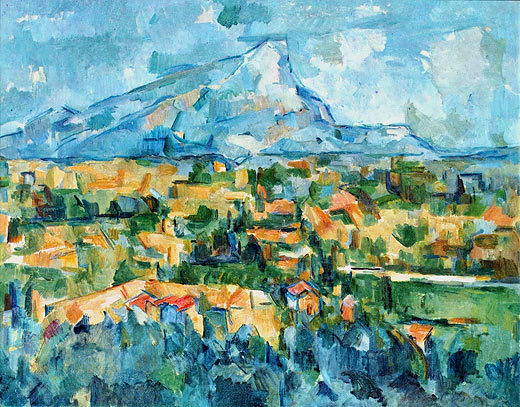
•An 'aspect' is: sensations grouped into relations.
•Perceiving beauty takes memory, to hold together the various parts (i.e. the Kantian manifold of intuition). This accounts for things like symmetry and rhythm.
•Einfühlung (empathy) is the psychological effect whereby the lines of a drawing are invested with an ongoing, non-innate sort of character, which "irradiates even the most practical, the apparently least contemplative, moments and occupations of our existence".
•This empathy has a reiterative character, which gives ongoing attraction to beautiful aspects, and in its abstract nature accounts for its existing sub specie aeternitatis ("fond lover, never. never canst thou kiss" - Keats).
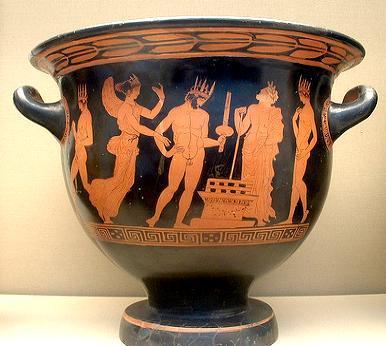
•Though we don't yet know for sure, it's reasonable to assume that historically, creating shapes preceded representations of things.

•Representing things includes cubic shape and locomotion.
•The point of art is to make you look back to it, it serves not to convey information or utility (though it may do both) and be disposed of, but to be cherished and returned to.
•These rules are for art, but they can be applied to music and literature as well (harmony is three-dimensionality in music, plot is the same in literature).
•Often the hassle of having to respond to things as things, or the natural fluctuation of aesthetic interest,
detract from one's readiness for aesthetic contemplation.
•For this reason, aesthetic appreciation can come much easier to one who deals with art daily, even for profit; yet often eludes and frustrates gallery-goers...
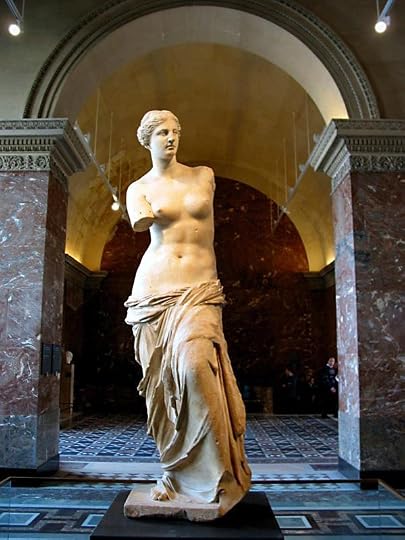
•...were it not for the transferability of aesthetic experience. Emotion can be attached to one art form, and transferred to another. It also explains why a critic's dismissal of an artwork can take away from one's own emotional perception of it.

I thought I'd add in a graph I drew which incorporates some of these ideas into a broader definition of art and the place of non-beautiful art.
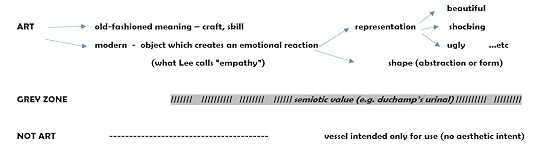
PS I'm the first person to review this on here! Hopefully this will help to increase interest in Romantic Idealism, in a time in which Scientific Positivism chases down humanist ideals like a little boy with a butterfly net.
The engineer says, we could bring so much efficiency here with a highway and a cable-car.
The scientist says, the way this mountain must have been formed is fascinating.
The aesthete just gazes, annoyed at how the others are ruining his view with their talk.
Vernon Lee (nom de plume of Violet Paget, 1856-1935) uses this parable to open this book of aesthetical musings. My summary of it follows.
•Aesthetic appreciation is neither practical nor scientific.
•Beauty refers to an aspect of a thing, rather than the thing itself. (There are certain obvious metaphysical commitments here - in particular, Kant's Critique of Judgement casts a shadow over many of these ideas. Paget studied under Walter Pater, and was a product of the then-dominant British Idealism which Russell and Moore were about to smash. Russell's own semantic descriptivism inhabits a totally different universe from this.)
•Taking in colour is passive, but seeing shapes is active - it's how we order the colour.
•An 'aspect' is: sensations grouped into relations.
•Perceiving beauty takes memory, to hold together the various parts (i.e. the Kantian manifold of intuition). This accounts for things like symmetry and rhythm.
•Einfühlung (empathy) is the psychological effect whereby the lines of a drawing are invested with an ongoing, non-innate sort of character, which "irradiates even the most practical, the apparently least contemplative, moments and occupations of our existence".
•This empathy has a reiterative character, which gives ongoing attraction to beautiful aspects, and in its abstract nature accounts for its existing sub specie aeternitatis ("fond lover, never. never canst thou kiss" - Keats).
It is no poetic metaphor or metaphysical figment, but mere psychological fact, to say that if the interlacing circles and pentacles of a Byzantine floor-pattern absorb us in satisfied contemplation, this is because the modes of being with which we are obliged to invest them are such as we vainly seek, or experience only to lose, in our scattered or hustled existence.
•Though we don't yet know for sure, it's reasonable to assume that historically, creating shapes preceded representations of things.
•Representing things includes cubic shape and locomotion.
•The point of art is to make you look back to it, it serves not to convey information or utility (though it may do both) and be disposed of, but to be cherished and returned to.
•These rules are for art, but they can be applied to music and literature as well (harmony is three-dimensionality in music, plot is the same in literature).
•Often the hassle of having to respond to things as things, or the natural fluctuation of aesthetic interest,
detract from one's readiness for aesthetic contemplation.
A reader will...report days when his aesthetic appreciation has begun with the instant of entering a collection of pictures or statues, indeed sometimes pre-existed as he went through the streets noticing the unwonted charm of familiar objects, other days when enjoyment has come only after an effort of attention; others when, to paraphrase Coleridge, he saw, not felt, how beautiful things are; and finally...days upon which only shortcoming and absurdities have laid hold of his attention.
•For this reason, aesthetic appreciation can come much easier to one who deals with art daily, even for profit; yet often eludes and frustrates gallery-goers...
•...were it not for the transferability of aesthetic experience. Emotion can be attached to one art form, and transferred to another. It also explains why a critic's dismissal of an artwork can take away from one's own emotional perception of it.
I thought I'd add in a graph I drew which incorporates some of these ideas into a broader definition of art and the place of non-beautiful art.
PS I'm the first person to review this on here! Hopefully this will help to increase interest in Romantic Idealism, in a time in which Scientific Positivism chases down humanist ideals like a little boy with a butterfly net.
April 12, 2020
“I suppose you're a painter and regretting you haven't brought your sketching materials?" said the scientific man, always interested in the causes of phenomena, even such trifling ones as a man remaining quiet before a landscape.
"I reckon you are one of those literary fellows, and are planning out where you can use up a description of this place"—corrected the rapid insight of the practical man, accustomed to weigh people's motives in case they may be turned to use.
"I am not a painter, and I'm not a writer"—exclaimed the third traveller, "and I thank Heaven I'm not! For if I were I might be trying to engineer a picture or to match adjectives, instead of merely enjoying all this beauty. ”
__________
I found the section on empathy interesting, but otherwise I found Lee/Paget's ideas to not agree with my own perceptions and ideas around Beauty and Art, or to state things I already took as given.
Worth a skim.
__________
This little book, like the great branch of mental science to which it is an introduction, makes no attempt to "form the taste" of the public and still less to direct the doings of the artist. It deals not with ought but with is, leaving to Criticism the inference from the latter to the former. It does not pretend to tell how things can be made beautiful or even how we can recognise that things are beautiful. It takes Beauty as already existing and enjoyed, and seeks to analyse and account for Beauty's existence and enjoyment. More strictly speaking, it analyses and accounts for Beauty not inasmuch as existing in certain objects and processes, but rather as calling forth (and being called forth by) a particular group of mental activities and habits. It does not ask: What are the peculiarities of the things (and the proceedings) which we call Beautiful? but: What are the peculiarities of our thinking and feeling when in the presence of a thing to which we apply this adjective?
But, superficial or overwhelming, this kind of satisfaction connected with the word Beautiful is always of the Contemplative order.
Now although leisure and freedom from cares are necessary both for play and for aesthetic appreciation, the latter differs essentially from the former by its contemplative nature.
I cannot remember any things which do not present quite as many displeasing aspects as pleasing ones. The most beautiful building is not beautiful if stood on its head; the most beautiful picture is not beautiful looked at through a microscope or from too far off; the most beautiful melody is not beautiful if begun at the wrong end. . . . Here the Reader may interrupt: "What nonsense! Of course the building is a building only when right side up; the picture isn't a picture any longer under a microscope; the melody isn't a melody except begun at the beginning"—all which means that when we speak of a building, a picture, or a melody, we are already implicitly speaking, no longer of a Thing, but of one of the possible Aspects of a thing; and that when we say that a thing is beautiful, we mean that it affords one or more aspects which we contemplate with satisfaction.
Hence we come to the conclusion, paradoxical only as long as we fail to define what we are talking about, that what we contemplate as beautiful is an Aspect of a Thing, but never a Thing itself. In other words: Beautiful is an adjective applicable to Aspects not to Things, or to Things only, inasmuch as we consider them as possessing (among other potentialities) beautiful Aspects. So that we can now formulate: The word beautiful implies the satisfaction derived from the contemplation not of things but of aspects.
. . . drawing in deeper draughts of exquisitely scened air.
An analogous active process undoubtedly distinguishes listening from mere hearing.
attention and memory . . . these two, let us unscientifically call them faculties, are what chiefly distinguishes perception from sensation.
It is not only possible, but extremely common , to perform processes without being aware of performing them.
The rising of which we are aware is going on in us.
Hence the mysterious importance, the attraction or repulsion, possessed by shapes, audible as well as visible, according to their empathic character; movement and energy, all that we feel as being life, is furnished by them in its essence and allowed to fill our consciousness. This fact explains also another phenomenon, which in its turn greatly adds to the power of that very Empathy of which it is a result. I am speaking once more of that phenomenon called Inner Mimicry which certain observers, themselves highly subject to it, have indeed considered as Empathy's explanation, rather than its result. In the light of all I have said about the latter, it becomes intelligible that when empathic imagination (itself varying from individual to individual) happens to be united to a high degree of (also individually very varying) muscular responsiveness, there may be set up reactions, actual or incipient, e.g. alterations of bodily attitude or muscular tension which (unless indeed they withdraw attention from the contemplated object to our own body) will necessarily add to the sum of activity empathically attributed to the contemplated object. There are moreover individuals in whom such "mimetic" accompaniment consists (as is so frequently the case in (as is so frequently the case in listening to music) in changes of the bodily balance, the breathing and heart-beats, in which cases additional doses of satisfaction or dissatisfaction result from the participation of bodily functions themselves so provocative of comfort or discomfort.
. . . empathic imagination by allowing us to live in the modes of the intensest and most purposeful and most harmonious energy.
Such are the satisfactions and dissatisfactions, impersonal and unpractical, we can receive, or in reality, give ourselves, in the contemplation of shape.
. . . the half-parted lips and slightly thrown-back head, the drawn-in breath and wide-opened eyes, with which we are won’t to meet opportunities of aesthetic satisfaction.

April 14, 2020
Hard going, text is dated, but still interesting to see how ideas have changed over time.

October 23, 2023
0.5 stars.
Boring, badly written, pretentious and pedestrian. Stoped at 28%.
Boring, badly written, pretentious and pedestrian. Stoped at 28%.
Displaying 1 - 4 of 4 reviews