Edited by Frank L. Huntley, this volume pairs the complete texts of both "Hydriotaphia (Urn Burial)" and "The Garden of Cyrus" published together (as they were in the original edition in 1658). With modernized spelling, punctuation, and an ample glossary, this edition is also extremely well annotated and includes an introduction, a list of principal dates in the life of Sir Thomas Browne, and a bibliography.
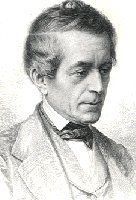
Sir Thomas Browne (1605–1682) was an English polymath and author of works on various subjects, including science, medicine, religion and esoteric.
Browne's writings display a deep curiosity towards the natural world, influenced by the scientific revolution of Baconian enquiry. Browne's literary works are permeated by references to Classical and Biblical sources as well as the idiosyncrasies of his own personality. Although often described as suffering from melancholia, his writings are also characterised by wit and subtle humour, while his literary style is varied, according to genre, resulting in a rich, unique prose which ranges from rough notebook observations to polished Baroque eloquence.
After graduating M.A. from Broadgates Hall, Oxford (1629), he studied medicine privately and worked as an assistant to an Oxford doctor. He then attended the Universities of Montpellier and Padua, and in 1633 he was graduated M.D. at Leiden.
Browne's medical education in Europe also earned him incorporation as M.D. from Oxford, and in 1637 he moved to Norwich, where he lived and practiced medicine until his death in 1682. While Browne seems to have had a keen intellect and was interested in many subjects, his life was outwardly uneventful, although during the Civil War he declared his support for King Charles I and received a knighthood from King Charles II in 1671.
I always forget that I can write what I learned from a book here. I learned here that bugs are produced by trees. I'm not sure how this is done, but I think from the sap, bugs are produced. Different trees create different bugs, one bug a tree though. I think that is done in a similar way that animals reproduce, which I learned from Aristotle, where the male ejaculates a very very little version of itself into the woman where she heats it up till it's ready to be brought into the world. I personally enjoy learning all of my science from books written at least a few hundred years ago, it's much more interesting that the crappolla they teach us now.
''A dialogue between two infants in the womb concerning the state of this world, might handsomely illustrate our ignorance of the next, whereof mehinks we yet discourse in Pluto's den, and are but embryo philosophers.''
''In vain we hope to be known by open and visible conservatories...If they died by violent hands, and were thrust into their urns, these bones become considerable, and some old philosophers would honour them...if they fell by long and ages decay, they fall into indistinction, and make but one blot with infants.''
''But the long habit of living indisposeth us for dying.''
This exemplary book requires a reader with natural curiosity, someone willing to explore Greek mythology, The Bible, philosophy, world history, and the English language. While I was literally reading this one book, I became aware that I was uncovering thousands of years worth of stories, unfolding infinitely around me, making this essay meta-non-fictional. Is that a thing? It is now. Patient through this essay, because the reward of revelations & learning (really, purely, learning) is well worth the minorly-cumbersome 17th century English.
This book unfolds in modicums of centuries: from Greek gods to Roman emperors to burial urns uncovered in England, to the worlds of the dead and our psyche. Have you considered where our obsessions with glory stem from? Or the death rituals of cultures throughout history? Or how to break the ego? Or why humans are so invested in the idea of an afterlife? If any of these questions seem worth exploring to you (as they did to me), read this!
I should also say this is one of the highest rated works of non-fiction of all time. Browne was a genius, thousands of years before his time, and is still relevant today. Especially today.
Some epitaph, perhaps, should bear these lines from Browne, that "But the quincunx of heaven runs low, and 'tis time to close the five ports of knowledge." Socrates' opposite, this poet of observation, who owns but that "rational conjecture may leave handsome gashes," then goes on to gash admirably. Such is the boundless curiosity of this contemporary of Donne, a man who rushed to the North Sea coast to see a beached whale, who navigated time's vasty layers as easily as a spade delves the Norfolk soil. Browne finds all the grace of nature in the solisequeous contra-rotations of the white-flowered bindweed and in eternity's face takes comfort in the nearness of two dear friends' burial urns. His brief treatises are perhaps the closest I shall brush to genius freely musing.
It is itself a big ol’ quincunx (how meta)! Very interesting example of early scientific synthesis and exploration. Browne’s writing flows through very poetic passages that pop up spontaneously. The ending of the second essay is particularly funny and beautiful. It is its own quincunx, and is just about how he is getting sleepy writing this essay and should get to bed soon.
Half fascinating, half mind-numbing Browne fixes his eyes upon an object - the urn, the natural mathematical pattern (whose name I can’t remember) and gets drawn in, enchanted, fascinated, distracted - his prose circles round these subjects, an exercise in ekphrasis - something deathly in this practice, just like the urn? He comes up against a memento mori just as his prose comes up against its own more deathly double, or a reminder of how flat, depthless and deathly it can be - the pictorial (the anxiety of the prose writer that his work is just as flat as the pictorial).