Jump to ratings and reviews
Rate this book

A God and His Gifts

Rate this book
First published in 1963, A God and his Gifts was the last of Ivy Compton-Burnett's novels to be published in her lifetime and is considered by many to be one of her best. Set in the claustrophobic world of Edwardian upper-class family life, it is the story of the self-willed and arrogant Hereward Egerton. In his marriage to Ada Merton he maintains a veneer of respectability, but in other relationships he steps beyond the bounds of conventional morality with both comic and tragic results…

173 pages, Paperback

First published January 1, 1963

2 people are currently reading
186 people want to read

About the author

Ivy Compton-Burnett

21 books132 followers
Dame Ivy Compton-Burnett, DBE was an English novelist, published (in the original hardback editions) as I. Compton-Burnett. She was awarded the 1955 James Tait Black Memorial Prize for her novel Mother and Son.

Ratings & Reviews

What do you think?
Rate this book

Friends & Following

Create a free account to discover what your friends think of this book!

Community Reviews

5 stars
25 (32%)
4 stars
28 (36%)
3 stars
13 (16%)
2 stars
7 (9%)
1 star
4 (5%)
Displaying 1 - 23 of 23 reviews
Profile Image for Orsodimondo.
2,466 reviews2,441 followers
October 6, 2023
ALLA LARGA DA DIO ANCHE SE PORTA DONI


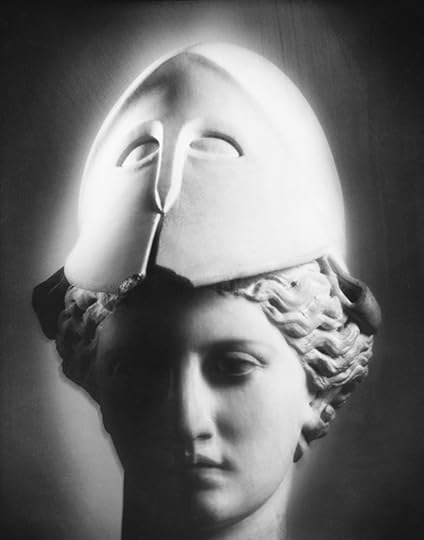
Mimmo Jodice: Atena, 1993.

Non è facile raccontare la trama di un romanzo di Ivy Compton-Burnett perché sono tutti composti per lo più di scene relativamente separate le une dalle altre e la trama per la Grande Signorina è un pretesto per scatenare il suo innovativo linguaggio.
E anche perché, come ha detto Alberto Arbasino che l’ha molto apprezzata e conosciuta e incontrata, e me l’ha fatta scoprire e amare:
Ivy Compton-Burnett, grande fra i più grandi narratori del nostro secolo, è anche, tipicamente, “autore di un solo romanzo”, però moltiplicato per venti, giacché ha ‘riscritto’ (praticamente) lo stesso straordinario romanzo, con verve allucinatoria, con smisurata perfidia, per almeno quarant’anni, un anno sì e uno no.


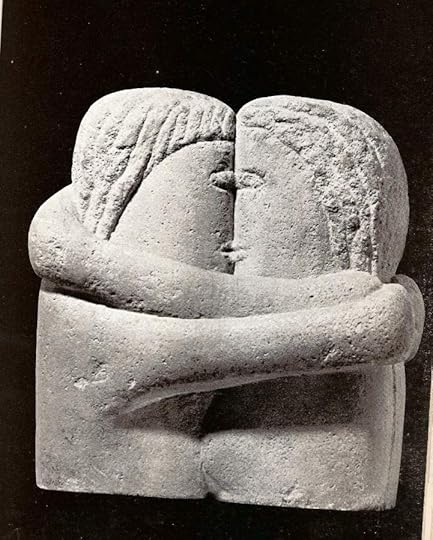
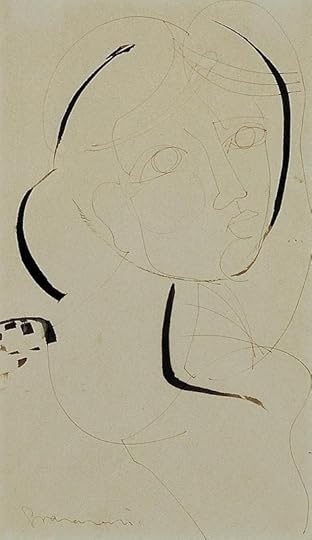
Constantin Brancusi: Il bacio. Lo stesso artista del disegno sulla copertina della mia edizione.

Privilegiava unità di tempo, di azione e di spazio: di solito una casa, al massimo due, uno o due nuclei familiari, la servitù. E riempiva i suoi romanzi di incesti. Edipo a go go.
Il che ha ovviamente fatto molto pensare alla tragedia greca sulla quale Compton-Burnett si era laureata.
Condiva, però, il tutto con massiccia dose d’ironia: leggendola si ride come guardando un film di Buster Keaton.


Constantin Brancusi.

In questo romanzo del 1963 (il suo penultimo) il protagonista è un romanziere, Hereward, patriarca di una famiglia che lo considera un dio più per il carisma che per la virtù. Hereward si intrattiene volentieri carnalmente con la sorella della moglie e con le donne dei figli. E quindi, seppure tecnicamente non si tratta di incesto, anche qui il sesso è terreno, tenebroso, tutto meno che divino.
Riducendo le didascalie all’osso, Compton-Burnett racconta la sua storia, se tale si può definire, dividendola per capitoli come se fossero “lente scansioni” di una lunga conversazione protratta per anni, per una vita intera.

Doveva essere un bell'originale chi ha inventato l'innocenza dei bambini.

Profile Image for Jonathan.
1,010 reviews1,239 followers
February 2, 2022
The object of her critique in this one is that male "genius" artist (think Picasso, Hemingway etc) who are excused their affairs, their abuse, their petty demands, because of that "genius" - their god-like gifts - which, allegedly, place them outside and above our petty morality. He has special privileges as a genius.

He is a famous and popular writer, and so, inevitably, when his sons bring home women to become wives, they are overawed by the specimen of so-called masculine artistic power before them, and lengthy periods alone with the great man end up precisely where you would expect.

His self-image as the exceptional, self-sacrificing giant of art, allows him to justify any behaviour:

“I am a man, as not all men are. If I have lived a man’s life, what other life should I have led? I have carried a man’s burdens, given up a man’s gains, done the work of men. It is my nature that enables me to do it. It is the force in me that carries me on. All force may at times go astray. I have cheered the homes of thousands. I have served our family home. I have judged easily, pardoned much, helped others to fulfil their lives. I will help them still. I will still understand and give. Would some men ask a return?”

- that old excuse of "I cant help it - I had to use my power and privilege to sleep with those younger women because I am such a powerful, virile, man, filled with urges etc etc" has even greater resonance post #metoo

It is as wonderfully well done as all her books, though perhaps a little light at times - like she was skipping quickly over things that she found inessential to the work - which meant it did not really get under my skin as much as some of her others. But as a work which jabs needles into such men and such dynamics, it is to be celebrated and treasured.
Profile Image for Markus.
281 reviews95 followers
July 2, 2021
Sehr sophisticated und sehr british ... wahrscheinlich sollte man das Original lesen.
Profile Image for Samuel Gordon.
85 reviews1 follower
August 20, 2022
What can I say? Yet another weirdly entertaining novel that is mostly dialogue - with very little clues as to who's saying what- that oddly works like gangbusters! When will Ivy Compton-Burnett get her flowers? She's long overdue for the kind of recognition and praise critics heap on far lesser authors IMHO.
Profile Image for alessandra falca.
569 reviews34 followers
February 3, 2017
Non è il primo libro di Ivy Compton-Burnett che leggo. Quando la trovo la divoro. La puoi odiare (devo averlo già scritto...) ma io la amo. Mi piace. Mi piace molto. La trovo di un intelligenza stilistica geniale. E mi porta maniacalmente dentro i suoi giochi. Perché di giochi si tratta: linguistici, di relazione, di parole che come dice Giorgio Manganelli nell'introduzione a questo Oscar Mondadori, è difficile rendere in traduzione,perché ha modi squisitamente propri dell'inglese.
"Si ha sempre l'impressione che non si parli di nulla, che anzi non si parli neppure, ma si facciano esercizi su quel che si può fare con il linguaggio" dice ancora Manganelli, ed è per quello che io la leggo con estrema piacevolezza. Mi strabilia, mi diverte, tutto è falso e tutto è vero.
Andate a googlarla se non la conoscete, questo è il suo ultimo libro scritto in vita di diciannove, tutti romanzi, tutti interscambiabili e bellissimi. Ma io sono di parte. Instant Fav.
- "Ah, siete tutti qui! Questa tiritera è un chiodo fisso! Il motivo, naturalmente. Le parole non hanno senso. "
- "Esistono parole che non l'abbiano?" disse Zillah al fratello.
Profile Image for Alex Sarll.
7,079 reviews363 followers
Read
June 10, 2015
Successful Edwardian author Hereward Egerton (yes, the name is probably meant to suggest egotism; no, that's certainly not the daftest moniker here) has affairs with his wife's sister and his son's intended, seemingly less from honest lust than from staggering self-regard. For reasons ill-defined beyond much finicky yet vague discussion of Hereward's 'scale' (not a euphemism), his family all seem keen to carry on with their routine regardless. The tale is told almost entirely in dialogue, which is rarefied without provoking much thought, and terribly witty without ever quite being funny. One could almost see Jane Austen ending up writing something like this, had she lived another century, her artificiality and tiny canvases becoming ever more pronounced and mannered. Mainly, though, I found myself reminded of Community's ever-so-British sitcom within a sitcom, Cougarton Abbey.
Profile Image for Kilian Metcalf.
985 reviews24 followers
July 20, 2015
One either hates or loves Ivy Compton-Burnett. I love her writing, even though I am clueless half the time about what exactly is going on. There is a flow to her prose, which is composed almost entirely of unattributed dialogue. I usually have no idea who is saying what and to whom, but I love the feel of the language bypassing my mind in its stream-of-consciousness style.

It tickled me that one of the writers that Norman, the bookmobile attendant in Alan Bennett's The Uncommon Reader, offers the queen is Ivy Compton-Burnett. I wonder if her majesty liked her book and which one it was.

I've read two of her books and would love to read another, but the price point for the ereader version is just too high right now. I'd love to read Manservant and Maidservant, but there is no electronic version available. Too bad. I'd pay big bucks for that one. I put it on my wish list.
1,965 reviews15 followers
Read
March 3, 2024
Lady Violet Powell speaks highly of this one, as a novel which breaks the tendency towards 'coasting' which might fairly be said to inform the later products of Compton-Burnett's oeuvre. I'm not as sure as Powell, though I see why she speaks well of it. Among the characters is yet another 3-year-old boy with a kind of early perspicacity, and some more women taken for granted--even exploited--by the patriarchy. There are problems with wills, lies and secrets. The tyrant this time is an author whose general approach to life is that he must be allowed to do anything he likes as it is all potentially important for her creativity. Anything he likes generally constitutes young women (one wonders how long the 2-year-old will be safe), usually as brought into the family by his sundry sons. He's awful. The fact that the book ends with the 3-year-old expressing incestuous intent is also rather disturbing, suggesting that the problems plaguing this family are not going away--even if, of course, the 3-year-old is speaking without cognizance of his error. Disturbing. And still funny.
Profile Image for Lucynell .
489 reviews38 followers
April 26, 2020
Book 21


Ivy Compton Burnett
A God and His Gifts
1963

3/5

This is my first Ivy Compton Burnett book. Some say they're all the same. Strange, complex, and demanding, they are not easy to read. She's not a very well known writer. It's mostly dialogue. It's usually set in a room or two. People come and go. There's little distinction between any while they talk. Even the children, as one critic noted, speak like Henry James. The dialogue is spirited, sharp, and brimming with innuendo and suggestions and is quite funny. I'll read more if I can find them, sure.
Profile Image for Rosemary.
2,203 reviews101 followers
November 16, 2020
Ivy Compton-Burnett is an acquired taste, with her books consisting almost entirely of dialogue, firmly rooted in dysfunctional middle- to upper-class Victorian and Edwardian families. They can be very funny, although sometimes cruelly so, if the style is not an issue for you. This is a particularly light-hearted one, with main character Hereward Egerton, a writer, wreaking havoc with his amorous attentions to women within and without his family.
Profile Image for Lauren Albert.
1,834 reviews192 followers
May 30, 2018
On my mom's gravestone it says "mother to all" and perhaps it should say "father to all," more literally, on Hereward's. He's very prolific. He's a writer after all. Leaving aside that the dialogue is confusing (one often doesn't know who is speaking and who is in the room), it is also rather absurd. Why is everyone so agreeable to Hereward's being the father of his supposed grandchild AND his supposed niece?
This entire review has been hidden because of spoilers.
30 reviews3 followers
July 8, 2012
I read this because I was so shocked by "A House and Its Head" and was curious if all of Ms. Compton-Burnett's work is so primly salacious. On the evidence of this slim volume, it is. Beyond mannered, and the kind of comedy that is amusing only in a very cerebral way, but it's a nice portrait of the writer as monster of ego.
Profile Image for Corey.
Author 85 books282 followers
April 30, 2014
There's no one else like her. She does dialog better than most playwrights.
Profile Image for George.
3,284 reviews
January 20, 2025
3.5 stars. An odd, original short novel mainly in dialogue about an arrogant, self willed, adulterer, Hereward Egerton, an author living in the mansion of his Edwardian upper class family.

Hereward is married to Ada Merton and they have three sons. Hereward lives a life where his reputation is kept secret within the family. Hereward has intimate relationships with his wife’s sister, Emmeline, and his son’s future wife, Hetty.

I found some of the dialogue witty and clever but at other times, annoying. A novel of repressed family hatred’s and loves, and brutal truth telling.

This book was first published in 1963.
Profile Image for Mark.
1,179 reviews167 followers
January 20, 2008
All, right, I've given Ms. Compton-Burnett six chapters and I'm ready to throw in the towel.

It's not just that the subject matter holds little interest for me: cultured English gentry whining and posing about their family relationships. It's that the prose is so utterly artificial that I can hardly relate to it.

In this novel, the Merton and Egerton families are thrown together by a marriage that is about as calculated and loveless as one could imagine, and the entire thing, with only the slightest of narrative transitions, is done in dialogue.

And what a dialogue it is: If any real people ever spoke like this, I would be utterly at sea with them, not to mention baffled and offended half the time. It is, in fact, like a stilted stage play clothed as prose.

In a very public engagement proposal, Hereward Egerton approaches Ada Merton, and this is what ensues:

Ada: "Why, I did not know that proposals took place in public like this."

Hereward: "They do not. This is not a usual one. It offers what is usual, but it asks more. You would share a home with my parents and my sister. Share me with her, and give her a part of yourself. You see why I make it in your father's hearing. It seemed that he should know the whole."

And then her father interjects: "I have no objection to him as a son. As my daughter's husband it is hard to be sure.
He asks, as he says, more than other men. Is he to give any more? You have a stable nature; I have valued it, my dear. He is more uncertain, and as I judge, could be carried away. If there are risks in the future, are they his or yours?"

Ada: " They are mine, father. I face them with open eyes ...."

And so forth and so on. Ivy Compton-Burnett's world, in its own way, is as bizarre as any created by a science fiction master, or so it seems to someone light years away from the midcentury drawing rooms of British snobbery.


Profile Image for Bob.
899 reviews82 followers
November 10, 2010
Like the others of her books I am familiar with, an aristocratic late Victorian family talks for 200 pages in a way that is just a few steps over the line of parody. The book could really be a play (albeit a long one) - all the significant action takes place offstage and is then discussed, there are no descriptive passages except for indications of how the characters move while talking, no verb other than "said" ever accompanies the (frequently skipped) indication of which character is speaking - and so on.

"Is capital exactly money?...It is a large amount, that brings in small ones without getting any less. And the small ones are spent; and their being so small leads people into debt. But it seems kind and clever of capital. We should not ask any more."
Profile Image for Laura.
416 reviews27 followers
March 1, 2017
I was kind of reluctant to pick up this one because of the title, but I wanted some Compton-Burnett and this was the only one the local libraries have that I hadn't read yet. But the title is only metaphorical, so it's all right. God = a horny writer family man and his gifts = the many children -- some secret, some not -- he fathers through various mothers. I'm pretty sure he was also going to try to sleep with one of his daughters, too, or am I reading too much into it? The conversation is fascinatingly bizarre and mysteriously insightful as always -- might've even done without the plot.
This entire review has been hidden because of spoilers.
Profile Image for Susan.
2,584 reviews
did-not-finish-dnf
September 26, 2021
DNF - NOT for me - I need a book with some description in it. Not people yapping and yapping. I couldn't tell when one person left the room or maybe they didn't because the next thing you know, they were popping into the conversation again! Boys who were 7 talking like old men - wait now they are 16 - two pages ago they were 7 but still talking like old men. No interest in finishing this one.
Profile Image for Leigh.
Author 9 books31 followers
Read
December 11, 2014
Abandoned. I just couldn't do it.
190 reviews
March 31, 2016
A truly bonkers Dame Ivy work. I really struggled with this one. And suddenly she was writing "toddler talk". Surreal.
Profile Image for sally.
110 reviews
Want to read
July 19, 2012
Recommended by Maria Bustillos (by John Waters)
Displaying 1 - 23 of 23 reviews

Can't find what you're looking for?

Get help and learn more about the design.