Lars Gustafsson, one of Sweden’s leading men of letters, is known in the English-speaking world primarily for his novels and short stories, but he is also a distinguished poet with ten discrete volumes published to date in addition to the collective edition of his work for the years 1950-1980. In The Stillness of the World Before New Selected Poems, readers will recognize in Gustafsson’s verse the playful erudition and imaginative philosophizing that give his fiction its unique appeal. Gustafsson, writes editor Christopher Middleton, “has remained distinctively a poet, insofar as his novels and essays usually combine exploratory and fabulous features with keen observation, a fascination with character in conflict as the subjective (or existential) axis of history, and a delight in story for its own complex or simple sake.” The selections for The Stillness of the World Before Bach were made by Christopher Middleton of the University of Texas at Austin in close association with the author, with whom he also collaborated for his own versions of many of the poems. Other translations were contributed by Robin Fulton, Philip Martin Yvonne L. Sandstroem, and Harriett Watts.
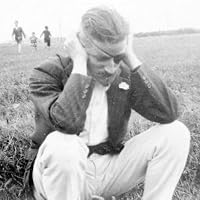
Lars Gustafsson was a Swedish poet, novelist and scholar. He completed his secondary education at the Västerås gymnasium and continued to Uppsala University; he received his Licentiate degree in 1960 and was awarded his Ph.D. in Theoretical Philosophy in 1978. He lived in Austin, Texas until 2003, and has recently returned to Sweden. From 1983 he served as a professor at the University of Texas at Austin, where he taught Philosophy and Creative Writing, until May 2006, when he retired. In 1981 Gustafsson converted to Judaism.
This book you can read once but rereading it would be comfortable as an old friend. Each tightly packed poem makes sense (some other's poetry doesn't many any) and there's a lot for wonderment ("the topographical labyrinth" and imagination ("So all mortals glide in the interior / of their own picture, somewhere in the twilight, and for this gliding there is no name." There's a poem 'Didapper', which takes its theme of the diving bird's appearance and disappearance further into the affect of sky above and sea below on the bird's cognition. The book's introduction notes the author's "erudition" in the poems, and he's comfortable with the connection of prehistory to now ("That world glimmers one foot under language; / full fathom five a father lies") Maybe these phrases "...in the light gray, / the indefinite, there we could live" and "...By what right / do we despise a liberty whose nature / consists in gently loosing every bond?" depict his rationalism.
La poesía de Gustafsson conjuga delicadas y sutiles observaciones sobre la naturaleza con reflexiones sobre la creatividad y actividad humana, para generar una especie de contemplación meditativa sobre nuestro lugar en el esquema general de las cosas. Me pareció bastante hermoso el rol que juegan los pájaros en muchos de los poemas: un encuentro con una alteridad que de alguna forma es, también, imagen nuestra. Quizás el único defecto de la obra es una ocasional sobre-intelectualización muy cercana a la pedantería.
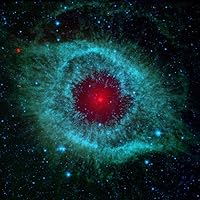
The Starred Sky... The starred sky, the fixed stare of the galaxies. The universe stubbornly upholding enormous distances against our just-as-eager strivings to see the world as small, possible to survey, trafficable for signals and observations. Quantum logic in physics and chemistry. The same thing: matter's obstinate refusal to be anything but probabilities, shadows that sweep under distant cliffs at sunset, sudden gusts that run through a single aspen in the groove and leave it almost still. And our stubborn eager battle for a substance, for particles, individualities, things that refuse to exist in the physical world. This world of distances and shadows and random leaps between the spectral lines, this frighteningly still dance is what I mean by the world's stillness before Bach.
All time is eaten up by thoughts of time that's past, or something that will happen soon. Hope, and remembrance for the rest.
This selection brings together some of Gustafsson's most enigmatic, philosophical, and meditative poetry, populating a world of "distances and shadows" with birds, dogs, and a stillness that permeates everything. The poems only get better as the book goes along, and his work after 1975 is especially strong. Standouts include "On All That Glides in the Air," "The Decisive Battle," and, of course, the collection's eponymous poem.
lars gustafsson writes sometimes like a poet, sometimes like a novelist. his work is best when it’s contained, compact, focused, without the unnecessary perambulations of the longer poems which take us further and further away from the core of the poem until, eventually, everything becomes too obfuscated and entire stanzas obsolete; this sort of thing is especially prevalent in mid-to-late 20th century verse, i presume as some kind of reaction to the fragmentation of the high modernists, i.e., this their ‘addition’ to the fragmentation technique in modernism, but it almost always falls incredibly flat (ashberry is really the only one to nail this and transform it into something different and interesting, and now everyone is trying to catch up with ashberry and the cycle goes on and on and on ad infintium). i, for some reason, hold an especial loathing for the sestinas. now, sestinas are incredibly difficult to write so bravo, i guess, on completing a couple, but just b/c the form is difficult doesn’t automatically confer upon the poem aesthetic value or truth or beauty + he wasn’t even brave with his choice of words for the form’s repetition. for all my complaining, i actually quite liked this collection, as will be evidenced by the amount of poems i took pictures of to remember, cited here:
Eel and Well “In the province of Skåne there was a custom: into their deep black wells they put small eels from the sea. And these eels spend their lives imprisoned in the wells deep blackness. They keep the water crystal-clear and clean. When sometimes the well-eel is brought up in the bucket, white, frighteningly big, blind, coiling in and out of the riddles of its body, without knowledge, everyone hurries to sink it back again. Otten I see myself not just in the well-eel's place but as both eel and well. Imprisoned in myself, and yet this self is something else: I'm there. I wash it with my wriggling, muddy, white-bellied presence in the dark.”
Streams of Particles… “Streams of particles. Polarizations. Large magnetic fields that sweep like storms through enormous masses of dust and seek out all those grains that have a certain fiery gold brilliance.
Eddies that dance through black water, that rest in nothing and, swift as lightning, grow very hot.
Gases that cool just as swiftly and fall like hundreds of thousands of small, sharp, desolate drops.
The deepest layers of the soul look exactly the same as the universe in its totality.
Just so an ever-more-animated dream goes through the body of the big white dog.”
The Stillness of the World Before Bach “There must have been a world before the Trio Sonata in D, a world before the A minor Partita, but what kind of a world? A Europe of vast empty spaces, unresounding, everywhere unawakened instruments where the Musical Offering, the Well-tempered Clavier never passed across the keys. Isolated churches where the soprano line of the Passion never in helpless love twined round the gentler movements of the flute, broad soft landscapes where nothing breaks the stillness but old woodcutters' axes, the healthy barking of strong dogs in winter and, like a bell, skates biting into fresh ice; the swallows whirring through summer air, the shell resounding at the child's ear and nowhere Bach nowhere Bach the world in a skater's stillness before Bach.”
Sonnet I “Out of nothingness. Ex nihilo. A song starts slowly. Music from the stone. From stone contracted by the evening. Tone sung by the siren stone. Ex nihilo.
River, tent, and branch, white bones dispersed from cattle carcass here all things possess shadows condensed into a nothingness. The sharp-edged shadows are the things reversed.
As sharp as if a caged lark flew some place under the ground. Here things and shadows fall together, meet, and are compressed. The slow
song of stone: this day of light and space which makes each day before it seem too small. A song starts slowly. Tone ex nihilo.”
Sonnet XVII “Autumn storm, warm wind. Trees hide the moon. Glimpse of the feeble-minded boy at table, scraping the last out of his bowl. This earth, this warm wind. Now from a darkening lake
a raw smell comes, as from a drowned body floating unrecovered. And, made for life, I walk through grass, hunting a word: one word to express the damp autumnal smell, the moon
which watches anxiously over it all, the night which only deepens, the window's yellow square lighting a patch of garden, the damp earth
that smells of rotting pears, the cat that lurks cunningly in the bushes. There was no rain. I needed such a word.”
Sonnet XXIII “Your eyes. I knew it. I had kept nothing more: your eyes only. Every other feature was memory, and memory had stopped at the minute of parting like a watch, and more
it could not tell. Hounds baying, more and more faintly as the pack drew off. Another landscape, as in Brueghel: jumbled together, the sounds of crows, dogs, axes. Snow. And still more
snow, which covers everything. At twilight the ponds freeze. After a year I saw you. You came towards me, truth and memory
first wavered, then rushed stumbling forward: surely the light from snow is the most silent light? Same sorrow in the eye, same memory.”
Snow “Early, in the light grayness after snowfall I heard the child murmuring rhymes and halfwords.
It was a language from a stranger's mouth, lighter than ours, more gentle, falling like snow.
In lovers' faces for a helpless moment there's a glimpse of something, before they know they love
and change everything back to what it was. When glass bursts you hear a special sound
and cracks run through frozen lakes, no bird flies so swiftly.
I cannot count the dawns I've seen, and none was matched by the day that followed.
It goes by. It doesn't wait. The crack runs.
But in the light gray, the indefinite, there we could live. You know the look of snow just when it's fallen.”
Man darf hier keine klassischen Gedichte erwarten. Gustafsson erzählt vielmehr Geschichten von alltäglichen Gefühlen. Dabei bleibt er in seiner Sprache und hinsichtlich seinen thematischen Andeutungen ein Vertreter des klassischen Bürgertums. Doch macht er dies m.E. nicht um abzugeben oder unverständlich zu sein, sondern vielmehr deswegen, um seinem ganz persönlichen Empfinden Ausdruck zu verleihen. Er lädt uns ein, dieses nachzuempfinden. Eine Passage bleibt für mich unvergesslich:
„[…] jemand streicht mir ganz einfach übers Haar
und für drei Minuten bin ich völlig glücklich,
danach falle ich weiter
ohne Halt […].“
Manchmal erscheint ein Gedicht beim erneuten Lesen in einem ganz anderen Licht. Wenn es sich dann einmal mir offenbart hat, umgab mich das Gefühl, selbst verstanden zu werden. Gustfasson wurde mir so ein weit entfernter Freund, den ich niemals traf, aber mit dem ich sehr viel teile.
Not gonna lie, I loved Stillness of the World Before Bach: New Selected Poems for about two hundred pages and then felt it run out of gas. Lars Gustafsson front-loads all the good stuff, and the back half just coasts on goodwill. Still worth the ride. Recommend for readers who care more about the journey, skip if you hate a limp finish.