My Sisters Made of Light follows three generations of a Pakistani family as they make their way through life in the political, social, and religious maze that is their motherland. This novel pulls readers into the compelling, heartbreaking, and often terrifying world of honor crimes against women in Pakistan through the life and family history of Ujala. Ujala decides to follow the path for which her mother has prepared her and pushes aside fears for her own safety to help other women escape from the impossible situations in which they find themselves. Dorothy Allison, author of the critically acclaimed Bastard Out of Carolina, says, "[Jacqueline St. Joan] brings to her story what she brought to the law, a conviction that life is full of both struggle and purpose and that grace comes to us when we have no reason to expect it."
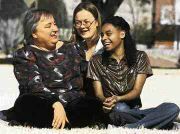
Jacqueline St. Joan is an award-winning poet, travel writer, teacher, and lawyer. She has worked as a domestic violence advocate, a county judge, a law professor, and a child and human rights advocate in a variety of public and private settings, which have earned her a number of professional awards.
Her literary interests focus on the intersection of law, literature and the voices of contemporary women. She is co-editor of Beyond Portia: Women, Law, and Literature in the United States (Northeastern University Press). Her writings have been appeared in a variety of print and online media, including Ms., The Denver Quarterly, Harvard Women’s Law Journal, Empire Magazine, The Denver Post, and Thinking Women, Chrysalis.
She has won writing awards from Colorado Council on the Humanities, Rocky Mountain Women’s Institute, Chrysalis Reader, Rocky Mountain Modern Language Association, University of Colorado, and the Denver Press Club, among others.
Following her travels in Pakistan, she became the Public Education Chair of the Asian American Network Against Abuse of Human Rights, an NGO in the U.S. that works to support Pakistani efforts to end human rights violations. Half of her proceeds from the sale of this book will be donated to SOIL, a grass-roots community organization in Pakistan, to pay for the construction of a safe shelter for abused women and children.
She teaches Women & the Law at Metropolitan State College of Denver, where the germ of this novel was nurtured by her students during her 2002 course, Women Writing About the World After Sept 11th. During that semester she was befriended and inspired by a Pakistani teacher she met in the U.S., but who has now returned to Pakistan where she continues to help women who are survivors of honor crimes and other injuries.
My Sisters Made of Light is Jacqueline St. Joan’s first novel.
To say this book is about honor killings would be to underrate it by a considerable margin, because it is a complete book with compelling characters and a real story. But honor killing and the terror of unrelenting, murderous hatred, represent the harsh fire in which the people of this novel are tested and by which they are revealed. The story begins, in fact, with the honor killing of a girl: her uncle sets her afire and burns her body to ashes. Honor killing: a woman who brings dishonor on her family is murdered by a member of the family, usually a male. A father may kill a daughter, sometimes as painfully as possible, and will in cultures where honor killing itself is deemed honorable, have the assistance of others. What dishonors a family in these cultures? Adultery and other sexual activities, certainly, and in that case the state itself may do the killing if the family doesn’t do it first, as the luminous country Iran has made clear. Even suspicion without evidence may trigger these murders. A woman’s disobedience of the males in her family–choosing her own husband, for example– is definitely ground for re-establishing family honor by killing her. Even western style dress or too many bangles could be enough. (As I write this, an Arizona man, recently naturalized as a citizen, is in the news; ran over and killed his daughter; she wore blue jeans and refused to marry her father’s choice of a groom, an Iraqi.) St. Joan’s story is set in Pakistan, one of the countries most noted for honor killings, but they are not limited to Pakistan or to Muslims, although the Middle East and South Asia are major regions commonly associated with them. In fact, since I’ve started reading about the disturbing practices of some countries, I’ve kept coming back to the fact that so many of them have been represented in our country, too. I’m appalled to think that India has widespread virtual slavery, but then we had the real thing ourselves. I’m appalled to think that the Turks force-marched Armenian women and children to their death on the claim that this was necessary lest they side with the Russians against Turkey or engage in armed revolt. But Americans forced the Cherokees out of choice lands and into Oklahoma (before anyone knew that oil was to be found there); and icons like Kit Carson drove the dignified Navahos from northern Arizona to one of the barest spots on earth in New Mexico and then penned them up. In my lifetime, we penned up American’s of Japanese descent. And killing women? We have a horrible record of domestic violence and abuse of the elderly. Still, I think the cultural basis may not be the same in each case, which perhaps brings us to the question whether the honor killing are the result of culture or the result of religion? And on this point, St. Joan ends her book with a very interesting argument in the Shariah (religious) Court about whether culture introduced the honor killings and corrupted religious interpretations by its force, or whether honor killing is a religious ideal in Islam. Whatever you think of that, it is hard not to think that religion and culture are twisted together like strands in a rope. I give the book a lot of credit for raising the issue, which could be raised about the Christian religions, too. (Was the Church just following culture in burning that other St. Joan and all those who went to the stake before and after her?) However, I want to make it clear, that this is a not a philosophical novel, and that while I loved the ways St. Joan raised this issue of culture or religion, it is not one deeply explored. Do that in your free time. What makes this good fiction is not the activist agenda against honor killings. St. Joan is an activist, but it’s a good novel anyway; real characters you come to care about confront terror and death. I was struck, too, by her observed detail. She visited Pakistan for this novel, but it was a visit, I think, not years of living there. Yet all the details are convincing. She knows what is on the kitchen shelf and what a communal outdoor living room is like for women who live in one room. Writing about a culture foreign to our own has certain consequences, and one of them is be that as readers we might allow ourselves to enjoy some things that would be over the top for us in fiction set in America. Kulraj is the father of daughters who try to rescue women from honor killings and hide them, endangering themselves in the process. The daughters become known as the “she-lions of Punjab” for their courage and strength. But Kulraj himself only stays home and prays and offers his love and wisdom to them. I loved the guy as St. Joan created him. But I might have put the novel down if he had been an American in Kansas. By looking at an unmistakably human family in a foreign culture, we might accept feelings and ways of expression that we would not accept at home, and perhaps enjoy it. The novel isn’t perfect. I wish it had been longer, at least enough to prepare us a little for the role the eldest sister played and her own development as a person. I can’t be sure about the courtroom scene, but without preparation in the text, I, as an American academic lawyer, found some aspects of it a little hard to believe (but not a hard as a couple of TV legal dramas I’ve watched lately)! I’d recommend this book for almost anyone. Women are the main characters and the strongest, but they are women as human beings. Men are free to enjoy this book, too. And half the proceeds go to the building of a women’s shelter in Pakistan.
To say this is a story about honor killings would be like saying MLK's biography is the story of an assassination. This is the story of women taking on unfathomable risks to spare not only particular women but also to bring about the profound changes required to bring an end to these cultural practices. Beautifully written, rich in context and heartbreaking in courage selflessness.
The premise of this book is saddening to think about and has been done before in a million different ways, so I wasn't expecting much of it to be honest. I mean, honor killings in Pakistan. The author of this book writes each sentence like poetry with such vivid images you can almost smell the delicious food or feel the acid burning your own skin. Each story is woven so well into the others that you're sometimes reading a story within a story, that's actually within a story. And you stop feeling like a superior Westerner. There are so many parallels to women feeling inferior to men in society: the Western world is not exempt. And there are so many beautiful things about the relationships with men and women that are so universal. I even found myself admiring one of the characters who wants to hug someone but can't and is so excited to marry her so she never has to cry alone again. I don't know I just found this book to be really touching and inspiring with only moments of the sadness and harshness I anticipated. Highly recommend.
Learned a lot about the life and extreme vulnerability of women in Pakistan. Book is a fictionalized story written by a Colorado female lawyer based on actual accounts of a Pakistani grassroots teacher studying here after 9/11. Gives the reader a closer look at a world we rarely see and find hard to understand - an intimate journey into the lives of one family’s members and the many individual women who cross their paths as they confront the beauties and betrayals of their Pakistani culture.
Author's first novel. A family tree helps some with characters. Book's next edition would benefit from a list of characters with identities. It is also not written in chronological order. There is a book website that has a link for book review questions. Would like them to add the list of characters to that resource. Pakistani names, and family titles are unfamiliar to us.
I did not like this book. It wasn't the horrifying and very sad realities of the story. I expected that -- real-life stories of honor killings are in the news every day. Maybe that was the biggest problem I had with the book. I began reading it thinking that it was a real life story, and then discovered it was fiction written by a non-Pakistani. I've read too many novels lately that take too many liberties with facts and truths, and I just felt like I couldn't trust this book to be totally honest. But I didn't feel like the book was all that well written, either. I could handle the flashbacks okay, but I did lose track of the characters. I didn't like the ending, either. I had to re-read it a few times because it felt like a chunk of the story went missing. In any case, I would have much rather read a real-life account of survival.
I met Jacqueline St. Joan in a Lighthouse Writers Workshop in Denver, in which we discussed one chapter of this novel. It is the story of Ujala/Baji, a women's rights activist in Pakistan who is jailed for her efforts. St. Joan herself has spent a lot of time in Pakistan working with aid organizations and survivors of human rights violations. I loved this novel, the way the chapters went from Ujala's story, told to a female warden in prison, to her parents' story and those of some of the women Ujala tried to protect. That structure gives a sense of how things are changing and how they remain the same, how some parts of Pakistan are much less friendly to women than others. Two of my favorite parts of the novel were the story of Ujala's parents' courtship, and Ujala's conversations with her late mother. A well-written, emotionally gripping book.
Somewhat facile but engaging. I couldn't put it down. Although there were a number of cultural / factual inaccuracies (like the fact that a funeral for one of the characters seemed to be taking place days after the murder), Jacqueline did such a good job overall of invoking Pakistan that I double checked the author's name more than once. It's a depressing topic, but the lead character had enough spunk and poetry that the book wasn't only depressing. And the way the plot was woven with flashbacks and narration made it a compelling read. What will happen now?
i won this book as a first-reads. i started as soon as it arrived in the mail and other than going to work, i cant seem to put the book down! it's wonderfully written and seems to bring out every emotion under the sun! will update my review upon finishing this book.
I bought this book at a reading that the author gave for her second novel. The reading piqued my interest in both books. After I picked this one up, I could hardly put it down. I have not read a book that is as exquisitely written in a long time. The author draws the characters in a way that makes you feel like you are there in the room with them, as if they are friends or family. I started to look at Baji as my Baji and Abbu as my own Abbu. The author describes the locations in ways that make you feel like you can smell the food cooking and the flowers in the garden. It may seem odd to put it this way but I felt like I was reading a movie.
It is clear that the author has a deep understanding of the complexities of life as a woman in Pakistan and a deep caring for the women who have to navigate those complexities. She gives us characters that understand the contradictions in their society and their responses to them at both the personal level and the greater political level. I highly recommend this book. I would also note that the author donates half of her proceeds from the book to a grassroots Pakistani organization for construction of a safe shelter for women and children escaping abuse.
3-1/2 stars This is a complicated story and I was appreciative of the Family Tree in the beginning of the book. The story includes a lot of detail about the daily lives of women in Pakistan and the terrible mental and physical pain they suffer due to the idea in that culture that women have little value. It is difficult to absorb all of it and I had to pace myself.
This fictionalized story based on real facts gave me a peek into the culture of Pakistan. Overall, I found the book easy to read. It captured and held my attention.
I really appreciated the maps and family tree at the beginning of the book. As I struggled with unfamiliar names and the jumping from time to time, it helped me stay focused on the story. I did wish for a small glossary of vocabulary so I didn't have to stop to look things up or just make a best guess and go on.
I appreciated the tones of this book as it dealt with very sensitive issues. Although it does describe the various honor killings, they were handled respectfully and without unnecessary detail that would turn it lurid.
Ms. St. Joan's depiction of the American journalist and her interaction with the community is noteworthy and, I suspect, very accurate.
The reader's ability to think and come to healthy conclusions was also respected. At a conference I attended a few years ago, one of the speakers reminded us to always be careful to understand the context before determining the good guys and bad, that to apply the mores of the society in which we live to another in a previous time or a diffferent place can easily lead us to wrong conclusions. That has become one of my own measures when reading about these types of issues and I felt the book helped me understand more of that context.
Jacqueline St. Joan visited El Paso on 2/12/2011 to talk with us about her book. She read several passages as well. I appreciate that she took the time to stop and talk with us. "Life-long feminist" she may be, but she didn't come across as a rabid zealot and the book was written in the same tone. I enjoyed spending the time with this dedicated, compassionate author whose passion was approachable and understandable without being overwhelming.
It is truly unfortunate that the current political climate will keep me from visiting this vibrant country. I hope peace is restored between us all in my lifetime.
I should have loved this book.. After all, it is about a strong Pakistani woman who rescues other Pakistani women from unfortunate situations with their husbands or brothers or fathers. See, in Pakistan, honor killings are still acceptable. If you are a woman and you are seen speaking to your cousin, your brother can stab you or throw acid on you. You disobey your father one one minor thing, you can be left for dead in the street.
The road to hell is paved with good intentions, however, and Ujala's helping others lands her in jail with the possibility of execution. Enter her sisters, also strong women. Mina gives speeches on a women's radio station, Faisa (sp) is a lawyer attempting to fight for the underdog, in this case, women. Ujala's own mother disobeyed her family and barely survived an honor killing.
Really, the stories and the characters are wonderful. The reasons I didn't LOVE this book is one, it jumps back and forth way too much. It goes from a jail in 1996 back to when Ujala was a teacher back to jail back to Nafeesa's story 38 years before, up to a rescue mission, back to jail, back to a failed romance and her mother's ill health. ALL OVER THE PLACE!
Two, Too much religious debate for my taste.
A quote from Ujala's father that I really like, "No one is happy without struggle. Only after death do we not struggle... Talk to your mind and tell it that you are a good person and it should not mistreat you this way by entertaining all these angry thoughts. Look at your mind and watch its door open. Then you can laugh at hate and anger as they run away. Peace will reappear."
Truly, those words are food for thought and I wish it was that easy.
I won this book from the giveaways section of this Web site and I have to say I'm very happy I did. I'm not finished with it yet, but I've found it very engrossing and hard to put down. The characters in the book are well developed and the plot moves along nicely. So far I'd compare it to A Thousand Splendid Suns.
More when I finish the novel.
Update:
I finished the novel some time ago, but neglected to flesh out this review. This book is well worth the it, and you'll come away feeling sorrow for the world the women in it live in. I found that the writing style and detail really took me away, and I felt as if I was there watching like a fly on the wall. I would recommend the book for anyone who has an interest in Middle East culture, politics, life and history.
I'll keep my eye out for more works by Jacqueline St. Joan.
I read this for my book group -- it's one of those books I would not have picked up if it hadn't been a monthly selection. More impressive for educating us about "honor" killings than for the writing itself, My Sisters Made of Light none-the-less has lyric and self-revelatory moments and most importantly gives us a glimpse of life in Pakistan, making this country seem less like an impossibly, far-away place.
The topic is important, significant and profound - the treatment of women under extreme shariah law in Pakistan. But the writing style/rhythm is confusing because she keeps switching chronology and switching topics from one paragraph to the next. I kept confusing what was present tense and what was past tense. The wory could have been told more simply, but the weight of the issue still came through.
Reminded me of "In the Time of the Butterflies"....sisters in Pakistan working towards womens' rights. Always good to read things like this to appreciate the freedoms that women have in our country; that I often take for granted. The story didn't pull me into the book...but it is a worthwhile read.
I thought this was a good story with beautiful writing, but somehow I just couldn't get into it as much as I would have liked. I will say that I was moved towards the ending of the story. For some reason I just had higher expectations. My thought is that you can probably find better stories on the subject.
This book by a Colorado author who spoke at a Colorado Press Women's event is a wrenching tale of the fate of women in modern day Pakistan, which is still a third-world country. St. Joan revealed in her talk that the story is based on the experiences of people she met while traveling in Pakistan, and her personal attachment to the characters shows.
This novel brings an important issue to the American reader: honor crimes and killings in Pakistan. Well researched and written, it traces 3 generations of a family and its struggle with and against the oppression of women in Pakistan. Don't miss it! Available at Amazon.com
Mrs. St. John is a wonderful writer...I thoroughly enjoyed the experience...her ability to relate a subject not common to me pulled me along in the story to the point I very much looked forward to my nightly read..well done
Loving it so far!!! Great read. One of the reviews of her book compared her witing to Nicholas D. Kristof. Half of the proceeds of her book go toward the construction of a safe shelter in Pakistan for women and children escaping abuse!
Inspiring story about courageous sisters fighting honor crimes in Pakistan. Intentionally fiction to protect the women, but still gives a strong sense of what the culture is like.
Extremely accurate depiction of crimes against women in Pakistan, "honor" crimes, and women who are taking a stand against them. Well researched, writen and thoughtful.