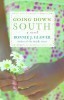
From the author of The Middle Sister comes a heartwarming tale of second chances and the unparalleled love between mothers and daughters.
When fifteen-year-old Olivia Jean finds herself in the “family way,” her mother, Daisy, who has never been very maternal, springs into action. Daisy decides that Olivia Jean can’t stay in New York and whisks her away to her grandmother’s farm in Alabama to have the baby–even though Daisy and her mother, Birdie, have been estranged for years. When they arrive, Birdie lays down the law: Sure, her granddaughter can stay, but Daisy will have to stay as well. Though Daisy is furious, she has no choice.
Now, under one little roof in the 1960s Deep South, three generations of spirited, proud women are forced to live together. One by one, they begin to lose their inhibitions and share their secrets. And as long-guarded truths emerge, a baby is born–a child with the power to turn these virtual strangers into a real, honest-to-goodness family.
All right - it is hard not to feel like a parent of a new child when you are getting ready to introduce a book to the public that you have written. Hey, I'm a mom again!
In the writing of this book I have learned a great many things, some of them very personal. But two things, I'll share: Life goes on despite every hurt that dwells inside of your heart and if it weren't for literacy, both reading and writing, I don't know what I would do with myself.
This story about three generations of African American women is tender and real and funny and heartbreaking. My favorite kind of novels are the ones that offer insight into complex human relationships, and this one delivers. I promise you'll love it. Also, I highly recommend it for book clubs.
I read this to complete the Reading Women Challenge 2018's challenge #3: A book set in the American South
This was such a heartwarming, sweet generational story about Mama Birdie, Daisy, and Olivia Jean. Separated by secrets and unloving men, they start to remember what's really important to them when Daisy drives Olivia Jean down to Cold Water Springs, Alabama, to live with Birdie for the remainder of her hidden pregnancy.
It's set in the 1960s and Glover doesn't shy away from any of the hard topics. She embraces the reality of racism and sexism and violence, and shows her characters' strength as well as their vulnerability in living through really unjust circumstances.
There is also a lot of love in this book, and I have a lot of love for it. So glad I picked it up.
Going Down South is one of my favorite books this year. I really enjoyed it. This story is about three generations of women in a family-Birdie, Daisy and Olivia Jean-all head strong and stubborn in their own way. It's such a strong story about the connections between mothers and daughters-the good, the bad, and the stuff that ultimately keeps you together. It's set in the South in the 60's and touches on so many issues: color, teen pregnancy, and relationships. The story is told from the point of view of all of the women and it goes back and forth from the past to the present but doesn't leave you feeling confused, just more understanding of the story itself.
I loved Olivia Jean from the start-she's a sweet girl who works hard in school. Her relationship with her parents leaves her wanting so much more. For her parents it seems, all that is in their world is each other. Ultimately, Olivia Jean ends up pregnant. I think she was just craving the attention and it ended up being the wrong kind. A quote from Olivia Jean that I really liked and shows really how she was feeling was...and this comes from a time when she's asked if she knows how to be a mother... 'No, but I do know how not to be one. I've seen that firsthand. And I do know what I have to give this baby: patience. I have more than mama does, lots more love, lots more time.'---pg 58 Birdie I loved from when I first met her. She's a strong woman and she has plans of putting her family back together. I think she was very well aware that the problems of the family stemmed down through the generations and they needed to be fixed before it was too late again. One of my favorite parts is when Birdie invites Daisy to mud wrestle with her to get out their frustrations of being mad at each other. It was amusing but really it was a huge part as it was a turning point for the women to begin mending their relationship.
Finally Daisy, she is Birdie's daughter and Olivia Jean's mother. In the beginning of this book I really didn't like her. I also really didn't know her yet. As the story progresses we learn so much more about Daisy and then the reasons for some of her actions become more clear-still not right but at least they make more sense. I loved all the women but I think Daisy came the furthest in terms of healing and going forward-she went from someone I didn't like to someone I genuinely cared for by the end of the novel. For Daisy's, her intense love for Turk was crazy to the point of making her daughter suffer for it. This passage from Daisy really sums up for me her growth...
'She looked out the window past the small dirt yard and to the horizon, watching the moon. And she thought of the journey the Earth made each day, twenty-four endless hours around the sun. And there were the things that happened on Earth, the love, the hatred, the petty jealousies, and then the peace that came after all the drama finished. The peace that God promised, the one that surpassed all the understanding and she knew that she had it. All her secrets were out in the open. That was her peace. She no longer had to hold on to anyone, man or woman.' ---pg 239-240 All of the women in this novel learned something about themselves and about how their lives had been affected by the men that they had been with. These women change throughout the story to finally come together in the end as the family they are meant to be. The author has written this book in a way that draws us into the characters lives so completely. She has made them so real. I missed them so much when I closed the cover on the last page. I wanted more, I wanted to know what would happen to each and every one of them in the future.
This novel would make a great book club pick. There is just so much going on to discuss. You can check out the noontime chats that J.Kaye, me, Shana, Dawn and Yasmin had on each of these stops...
J.Kaye's is here, mine here and here, Shana's here, Dawn's here and Yasmin's here There is also reading group questions and topics for discussion in the back of the book along with a conversation with Bonnie. You can check out Bonnie's website here. For me, this was a great book and I loved it!
This is a reading-group book. You can tell because it's about mothers and daughters, because it has race- and gender-based complications, and because it has Reading Group Questions at the back. Unfortunately, I don't think I found it as edifying as I was supposed to. Going Down South has a solid sense of time and place and culture, even while jumping around between them, but is weaker in plot and characterization, which make that sense of the settings more difficult to appreciate and learn from.
The first two sections of the book constitute the Going Down South itself. They use a car trip from Brooklyn to small-town Alabama as a frame for a series of flashbacks setting up the story, first from the point of view of Olivia Jean, a teenager whose unplanned pregnancy is the cause of the trip (her parents want to hide her away until the baby is born), and then of Daisy, her mother, who hasn't been back to see her mother in Alabama since she was a teenager herself and left home under unpleasant circumstances. The third section is told from the point of view of Birdie, Daisy's mother and Olivia Jean's grandmother, reflecting back on Daisy's childhood and her own as she waits for her family to arrive. This car-trip flashback structure is an interesting idea, but in practice, I found that it seriously screws up the pacing of both the reference-time story and the backstory, and I got frustrated with it very quickly.
The second half of the book is structured rather differently, with a floating point of view but a much straighter narrative thread. There are still plenty of flashbacks -- the three central characters are all working through their issues with themselves and each other, which requires much delving into the past -- but they are spaced in a more conventional fashion. This improves the pacing, and various other aspects of the storytelling improve as well. The characters -- all of whom come off as rather stock toward the beginning -- seem more nuanced and original, and the humor rings truer. (There is also less of the repetition and narratorial summaryishness that further bog down the first sections.) The ending is satisfying, if predictable, and rounds off the plot arc nicely.
As well as the book-group discussion questions, this edition of Going Down South also includes an interview with the author. Mostly nothing unexpected, but I did find one thing about it interesting: When the interviewer asked Glover to describe her characters and how she wrote them, she immediately pegged Olivia Jean as a gutsy and intelligent girl who just needs guidance, and said she didn't have any difficulty writing her or imagining her life, whereas she found her mother Daisy -- passionate, bitter, and pretentious -- much harder to understand and to write (though in the end she empathized with her more). However, from the reading side, I found Olivia Jean something of a cipher, while Daisy's inner life and motivations come through much better (at least in the second half). There may be a lesson in that, more than in what can be found in the text of the book.
Reading Going Down South, was like going back in time in more ways than one. There was a period of time in my reading life when I became quite immersed in the reading of African American women authors. It seemed like the more I read, the more I wanted to read. One author led to another as I would read interviews or reviews as well as books. Alice Walker and Toni Morrison novels, J. California Cooper novels and short story collections. Tina McElroy Ansa, and of course, Zora Neale Hurston. And then I had finished the collections, and I sat waiting for the next books. Others came along over time as well as women of color from other countries.
So when I read a brief snippet of Bonnie J. Glover’s new book on Shelf Awareness, I knew I wanted to read the book.
Going Down South takes you back to a time, the 1960’s, when various parts of this country were very different from others depending on your race. The beginning of this book starts out with a very common occurrence, a young 15 year old girl who becomes pregnant the first time she has sex. However, what follows is not common. Olivia Jean is pregnant and her mother, Daisy is as unhappy as any mother for her only child, however, Daisy’s solution to the problem is to take her back to her hometown, down South, to her mother, Birdie, to hide the problem from the neighborhood. Daisy hasn’t seen her mother, since she left home with her now husband, Turk, 16 years ago, and she was secretly pregnant at the time. Daisy has many unresolved issues with Cold Water Springs, Alabama, but she doesn’t plan on addressing any of them. Her plan is to leave her daughter with her mother, and return to New York with Turk to revive their marriage. Birdie also has many unresolved and secret issues and she has no intention of letting Turk and Daisy leave their daughter with her alone. She knows there is only one way to deal with her daughter, her granddaughter and this new to-arrive member of their unique family. The story of these three women is powerful, touching, tough, and memorable. The characters quickly become three dimensional people you may have known and come across in your life. Birdie quickly became my favorite character. She made me laugh with her brutal honesty, and tough, tough demeanor, and also brought me to tears with the injustices that she endured and swallowed throughout her life.
There is inspiration and strength to be gained by any young woman that reads this book and feelings to be affirmed by any older woman that has experienced injustice for just being a woman.
Thank you, Bonnie J. Glover, you have given us such a touching, heart-warming portrait of three generations of strong women.
Going Down South just blew me away. This is the story of three ordinary yet extraordinary women, Grandma Birdie, her daughter Daisy and her 15 year old granddaughter Olivia Jean who come to live in Cold Water Springs, Alabama. Ms. Glover has created an amazing cast of characters in this beautiful story of forgiveness. The dialogue is so amazingly genuine, offering a glimpse of a culture through conversations that are honest and rarely seen in literature. You can t get closer to real life than the story Going Down South. As the story spans the lives of the females in one family over generations, they all face life against difficult odds, and harbor deep anger. Through it all they manage to rise to independence and gain a sense of self. [return][return]Sometime during the 1960's, Olivia Jean becomes pregnant, and her mom and daddy Turk decide to leave New York to take her down south to live with Daisy s mom Birdie. Thinking she has protected her daughter from the stigma and shame of an out of wedlock pregnancy Daisy s life is turned upside down when the preacher Percy Walker singles out Olivia Jean at church. He labels her a whore and and admonishes her for her indiscretion as he preaches from the pulpit. [return][return]Moving down south proves to be a tension filled proposition as Daisy and Birdie have been at odds for years. They both conceal secrets from the past that have stirred up malevolent memories. As they choose to let anger and the past fester, conversations are strained, ugly, and hateful, until one day Grandma Birdie decides she has had enough.[return][return][return]Grandma Birdie, is a colorful character with witty jailhouse toughness and sage wisdom with a soft heart for family. Daisy, on the other hand has so much anger, time will only tell when tempers will flare. Olivia Jean at fifteen helps to uncover the many secrets with astounding strength for one so young. These feisty heroines are reason alone to read Going Down South. This book touches on all emotions, and you will laugh out loud. Outrageous at times, honestly human and heartfelt. Fabulous fiction with remarkable realism. Don t miss this Bonnie Glover s glorious gift. Highly recommended.
This is a story of women spanning three different generations.
Olivia Jean is the apple of her daddy's eye and is praised by her mama for her good grades. Now, she's pregnant at fifteen.
Her parents, Daisy and Turk, decide it's best for her to go down south and live with her grandma, Birdie, to hide their shame. Birdie isn't going to make it that easy, though. She gives them the ultimatum that Olivia Jean is welcome to stay, but only if Daisy stays, as well.
Daisy hasn't been in contact with her mama for years and can't imagine how this will work. She figured this would be her chance to work on her relationship with Turk. After all, he doesn't come home for days at a time. What's he up to?
These three women must learn to live together and be a family. All of them are harboring secrets that need to be revealed if they are ever going to learn to forgive, love, and move on with their lives. They must pull at their inner strengths in order to stand up for what's right and what they believe in.
This endearing story is set in the 1960's and is full of moments that make the reader want to keep on reading. I found myself anxious to reach the ending just to see what happens. I highly recommend GOING DOWN SOUTH!
Most reviews I've seen call it "wonderful" and a great book for and about mothers and daughters.
It's meant to be a thought-provoking, coming of age, multi-generational book. A young girl becomes pregnant and her mother takes her down south to her grandmother's home. Mom and grandma are somewhat estranged, mom and daughter are somewhat estranged. Most of the men are losers. Secrets are shared and ideally everyone comes together at the end.
I couldn't even finish it. I didn't care about the characters. I couldn't relate to any of them and they inspired no compassion in me whatsoever. The book jumped around a lot, it wasn't a smooth read. It was too raw, with profanity and sex scenes: and a vulgar edge that was uncomfortable. I'm sure it was "realistic" for many, but I didn't like it.
3 generations of women come together and discover a lot about themselves and their familt history. Set in 1960's Alabama with flashbacks to earlier times. Well written and heart warming.
Going Down South — Bonnie Glover (4 sections/18 chapters) Aug. 23-24; Dec. 31, 2022
A young troubled girl is forced to go down south where her grandma lives to stay for nine months. Along the way, she discovers secrets about her mother and father and finds her way to her own self while re-connecting with her mother.
I started reading this in August and then a distraction got me sidelined. I decided I wanted to try and read all the remaining Currently Reading books to start the New Year. It won’t happen, but I came close.)
This is a race and social justice story that seemed hard for me to keep reading when I began in August. On the morning of Dec. 31, I read sections 2-4, and it was worth the read. The way the author formatted the sections and brought the stories all together was well done.
The books is divided into 4 sections, each one telling the story of each of the women, starting with Olivia Jean; then to her mother, Daisy; then to Daisy’s mother Birdie. The fourth part involved all three and closes the story.
I really enjoyed this book. It began in the 1940’s, but the story without historical markers seemed contemporary.
A heart-warming book about three strong women from the same family. As the story goes along secrets are revealed. Even though it deals with many issues - racism, the treatment of unwed mothers, etc. - it somehow feels light rather than hard-hitting. It's a well-written piece of historical fiction and I was entertained while reading it, but overall I just liked it rather than loving it.
What a great book that demonstrates the strength of women of color in the face of adversity! Each of the female characters makes a choice that results in sacrifice. But through those choices become the strong, learn lessons, and find peace. I see many of the women of color in my life reflected in this story.
Three generations telling their stories of parenthood. We live what we learn until we learn differently. This story had a lot of emotions and I did enjoy it. Thank You for sharing your writing talent with us all.
This book mended a broken piece within me. This story was written perfectly and its fictional narrative gave me peace with my own generational trauma with my mother & grandmother.
I was not expecting this book to be soooo good! I loved it! Very relatable. I loved Birdie! Empathized with all the female characters. Such a great book!
This is a reading-group book. You can tell because it's about mothers and daughters, because it has race- and gender-based complications, and because it has Reading Group Questions at the back. Unfortunately, I don't think I found it as edifying as I was supposed to. Going Down South has a solid sense of time and place and culture, even while jumping around between them, but is weaker in plot and characterization, which make that sense of the settings more difficult to appreciate and learn from.
The first two sections of the book constitute the Going Down South itself. They use a car trip from Brooklyn to small-town Alabama as a frame for a series of flashbacks setting up the story, first from the point of view of Olivia Jean, a teenager whose unplanned pregnancy is the cause of the trip (her parents want to hide her away until the baby is born), and then of Daisy, her mother, who hasn't been back to see her mother in Alabama since she was a teenager herself and left home under unpleasant circumstances. The third section is told from the point of view of Birdie, Daisy's mother and Olivia Jean's grandmother, reflecting back on Daisy's childhood and her own as she waits for her family to arrive. This car-trip flashback structure is an interesting idea, but in practice, I found that it seriously screws up the pacing of both the reference-time story and the backstory, and I got frustrated with it very quickly.
The second half of the book is structured rather differently, with a floating point of view but a much straighter narrative thread. There are still plenty of flashbacks -- the three central characters are all working through their issues with themselves and each other, which requires much delving into the past -- but they are spaced in a more conventional fashion. This improves the pacing, and various other aspects of the storytelling improve as well. The characters -- all of whom come off as rather stock toward the beginning -- seem more nuanced and original, and the humor rings truer. (There is also less of the repetition and narratorial summaryishness that further bog down the first sections.) The ending is satisfying, if predictable, and rounds off the plot arc nicely.
As well as the book-group discussion questions, this edition of Going Down South also includes an interview with the author. Mostly nothing unexpected, but I did find one thing about it interesting: When the interviewer asked Glover to describe her characters and how she wrote them, she immediately pegged Olivia Jean as a gutsy and intelligent girl who just needs guidance, and said she didn't have any difficulty writing her or imagining her life, whereas she found her mother Daisy -- passionate, bitter, and pretentious -- much harder to understand and to write (though in the end she empathized with her more). However, from the reading side, I found Olivia Jean something of a cipher, while Daisy's inner life and motivations come through much better (at least in the second half). There may be a lesson in that, more than in what can be found in the text of the book.
This entire review has been hidden because of spoilers.
I loved this book though I didn't think I would when I began reading. The characters are very strongly drawn and using the youngest character to begin the story was magic. I found myself wanting to know how her issues would work out m; then there came strutting along another issue which even made me angry! Daisy and Birdie are formidable women who traveled, literally, through mud to forge a bond that is lasting. I am so happy to have read this novel!
Going Down South is the story of three generations of women with three generations worth of secrets. Birdie the matriarch of the family is a blue-black woman with a questionable background. Birdie’s daughter Daisy, left Alabama at an early age never to return again, or so she thought. Olivia Jean, Daisy’s daughter changed that with the realization that she is pregnant at 15. Daisy decides that she and her husband, Turk will take Olivia Jean to live with Birdie, whom Olivia Jean has never met. Once they reach Alabama, the plan changes. Secrets are revealed, feelings explained and relationships recovered.
Bonnie J. Glover does an excellent job revealing the personality and history behind each of the three women. While men are very much present in this novel, the role they play is secondary at best. Men are discussed only in relation to one of the three lead characters. While Glover does not talk ad nauseum about the time period in which she is writing, she does a good job of conveying general feelings and social mores of the time.
Going Down South will leave you feeling hopeful. If these three Black Alabama women could overcome all that had to and still find some semblance of peace, then what’s stopping the next woman from doing it. Nothing.
The time is early 1960's and fifteen-year-old Olivia Jean mistakes sex for love and becomes pregnant. Her mother, Daisy, and her father, Turk, decide to take Olivia Jean to live with her grandmother, Birdie, who lives in Cold Water Springs, Alabama until the baby is born and they can return her to New York. But, when they arrive, Birdie says that she will agree to their plans only if Daisy stays as well. Now, these three generations are forced to live together, share their secrets and hurts, and learn to forge themselves into a family. Ms. Glover's wriitng isn't as strong as Alice Walker's or Zora Neal Hurston's, but she does present three strong women characters who deal with past hurts and resentments. There are some sexually explicit scenes and a bit of language..similar to Kendra by Coe Booth or Push by Sapphire. Booklist and SLJ gave the book good reviews and Ms. Glover was nominated for a 2009 NAACP Image Award for this book.
(FROM JACKET)When fifteen-year-old Olivia Jean finds herself in the "family way", her mother, Daisy, who has never been very maternal, springs into action. Daisy decides that Olivia Jean can't stay in New York and whisks her away to her grandmother's farm in Alabama to have the baby-even though Daisy and her mother, Birdie, have been estranged for years. When they arrive, Birdie lays down the law: Sure, her granddaughter can stay, but Daisy will have to stay as well. Though Daisy is furious, she has no choice.
Now, under one little roof in the 1960s Deep South, three generations of spirited, proud women are forced to live together. One by one, they begin to lose their inhibitions and share their secrets. And as long-guarded truths emerge, a baby is born-a child with the power to turn these virtual strangers into a real, honest-to-goodness family.
"Going Down South" is an engaging novel about the relationships, and the way these relationships change over time and with life-changing events, among three generations of African-American women in the 60's. I thought the author, Bonnie Glover, did a nice job capturing these women's personalities and explaining the motives for their behavior.
I was a little disappointed with the way the author had the young girl Olivia Jean choose to continue her unintended pregnancy with little thought to how she would support the baby,etc., but I suppose that is probably how a 15 year old would react --with more fantasy about how wonderful it would be to have a baby to love than cold-eyed realism regarding just how difficult a life that would be for herself and her child.
A solid read.
This entire review has been hidden because of spoilers.
Going Down South is a delightful read about real women, flaws and all. Glover expertly weaves numerous weighty issues (teenage pregnancy, racism, abortion, rape, infidelity, interracial marriage) into a story that primarily is about the bonds between mothers and daughters. She shows how we might not live our lives perfectly, we might even hurt one another, but there always is room for love, forgiveness, and another chance to make things right.