This is the story of the barquentine, Cannibal, and the passengers and crew on her most tempestuous voyage. The date was October 12, 1927.
The Cannibal, a forlorn figure as she left the South Seas port of Suva, was one of the last commercial sailing ships still trying valiantly to compete in the world of steam. Manned by a small crew, with a handful of passengers and a load of copra, she set her course firmly toward Mexico.
In the swift weeks that follow you come to know her passengers and crew as intensely real people at the peak moment of crisis...
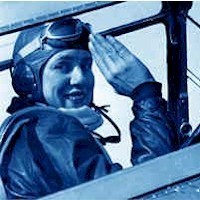
Ernest K Gann was an aviator, author, filmmaker, sailor, fisherman and conservationist.
After earning his pilot license, Gann spent his much of his free time aloft, flying for pleasure. The continuing Great Depression soon cost him his job and he was unable to find another position in the movie business. In search of work, he decided to move his family to California. Gann was able to find odd jobs at Burbank Airport, and also began to write short stories. A friend managed to get him a part-time job as a co-pilot with a local airline company and it was there that he flew his first trips as a professional aviator. In the late 1930s many airlines were hiring as many pilots as they could find; after hearing of these opportunities, Gann and his family returned to New York where he managed to get hired by American Airlines to fly the Douglas DC-2 and Douglas DC-3.
For several years Gann enjoyed flying routes in the northeast for American. In 1942, many U.S. airlines' pilots and aircraft were absorbed into the Air Transport Command of the U.S. Army Air Forces to assist in the War Effort. Gann and many of his co-workers at American volunteered to join the group. He flew DC-3s, Douglas DC-4s and Consolidated C-87 Liberator Express transports (the cargo version of the Consolidated B-24 Liberator bomber). His wartime trips took him across the North Atlantic to Europe, and then on to Africa, South America, India, and other exotic places. Some of his most harrowing experiences came while flying The Hump airlift across the Himalayas into China. In the years to come Gann's worldwide travels and various adventures would become the inspiration for many of his novels and screenplays.
At the end of World War II, the Air Transport Command released the civilian pilots and aircraft back to their airlines. Gann decided to leave American Airlines in search of new adventures. He was quickly hired as a pilot with a new company called Matson Airlines that was a venture of the Matson steamship line. He flew from the U.S. West Coast across the Pacific to Honolulu. This experience spawned ideas that were developed into one of his best-known works, 'The High and the Mighty.' Matson ultimately soon fell prey to the politically well-connected Pan American Airlines and failed. After a few more short-lived flying jobs, Gann became discouraged with aviation and he turned to writing as a full-time occupation.
Gann's major works include the novel The High and the Mighty and his aviation focused, near-autobiography Fate Is the Hunter. Notes and short stories scribbled down during long layovers on his pioneering trips across the North Atlantic became the source for his first serious fiction novel, Island in the Sky (1944), which was inspired by an actual Arctic rescue mission. It became an immediate best-seller as did Blaze of Noon (1946), a story about early air mail operations. In 1978, he published his comprehensive autobiography, entitled A Hostage to Fortune.
Although many of his 21 best-selling novels show Gann’s devotion to aviation, others, including Twilight for the Gods, and Fiddler's Green reflect his love of the sea. His experiences as a fisherman, skipper and sailor, all contributed storylines and depth to his nautical fiction. He later wrote an autobiography of his sailing life called Song of the Sirens.
Gann wrote, or adapted from his books, the stories and screenplays for several movies and television shows. For some of these productions he also served as a consultant and technical adviser during filming. Although it received positive reviews, Gann was displeased with the film version of Fate Is the Hunter, and removed his name from the credits. (He later lamented that this decision cost him a "fortune" in royalties, as the film played repeatedly on television for years afterward.) He wrote the story for the television miniseries Masada, based on 'The Antagonists.'
A forgotten paperback, 50+ years old, hardly an enticing find at some Little Free Library. But a dandy sea tale it is, taking us onboard an ancient tall ship that’s nearly the last working 3- mast vessel on the ocean. Named ‘Cannibal’, the boat is as much a character in the book as any human. But that’s not taking anything away from the people onboard, either passengers or crew. Working in impossibly rough conditions, the crewmen are tough and also tough to identify with. These are throwback sailors, experts in a ship’s rigging, reading the wind and the water, and existing on bad food and little sleep. The paid passengers are more familiar to us, crossing an ocean for their individual reasons and fitting stereotypes we’ve seen in movies and on the page: the reverend who can quote scripture and argue theology but struggles with human frailty; the older couple who are survivors by clinging to each other and their shared past; the rowdy atheist who argues with the pastor but comes through in a pinch. And don’t forget the femme fatale who is mysterious, beautiful, and not as good at hiding her past as she needs to be. But the best part of the book comes later on when the protagonist, our intrepid captain, finds ways to upend our expectations about himself, the boat, the people, and the boat’s fate. Good reading.
This could have been a five star book but it was about sailing which I know nothing about. Story was about a group of pasengers sailing from Papeete to Mexico with a load of cobal. The ship is a sailing ship with cheap passage fighting the new steam ships which are more expensive. Captain is a loser who allowed one ship to go down years ago and killed 17 passengers. The co-captain is a by the book Navel officer who resents not being the captain of this ship and yet wishing he were on a steamer.
The sailing ship develops a leak and the minimal crew are busting their butts to try and save the ship. Everyone wants to cut this cruise shot and make it to Honolulu but the captain is adamant they are going to Mexico.
The captain falls for a passenger who is leading him on. The co-captain recognizes her as a whore from Hawaii who had to flea from the island as one of her Johns was killed and she suspect. She definitely doesn't want to go to Hawaii where she will be detained and imprisoned with her expired password.
The sailing ship hits bad weather and the leak gets worse and worse until the passengers begin to help the crew to save their own lives
Excellent plot, characters and writing. If you are a sailor, you'd love this book. If you just want a quick and excellent read, I'd recommend it.
I bought this book at Salvation Army and it smells funny.
It is the story of a trade ship named the Cannibal and her crew/passengers, set in 1927. The author,Ernest Gann, uses some great descriptive passages and rugged dialogue like "What the hell of a voyage this is going to be! Spare me days if I haven't landed right in the lap of the Lord!" and "Before ye start hangin' diplomas in your cabin, there's one ye've got to hang in yer heart, Davey. No man can call himself a worth-a-damn sailor until he's worked a ship around the Horn."
I haven't read it all the way through- I'm mostly jumping from passage to the next- but it's great fun. My favorite part so far is when Captain Bell gets a haircut in his cabin from a beautiful lady. It's an awkward/intense moment for the Capt.
This is an older book, published in 1956, about a sailing ship and its possible demise. I was routing for Bell, and in the end, he did things his own way. Relatively short paperback and yellowed pages on my copy of it. I am not into sailing, but a good story, so I was mildly interested.
“Twilight For the Gods” (William Sloane, 1956) by Ernest Gann was my first venture into this prolific author’s work. Found a dented first edition at the Newberry Library Book Sale for $2 … bought it, read it, liked it. This story is about a seafaring captain on one of the last tall-masted sailing ships, right when the age of steam was taking over commercial shipping. You can see the contrast between the ages early on when the wood-hulled Cannibal offloads a new Ford truck at some port. And so it goes in the year 1927.
The master of the ship is somewhat of an anachronism himself…having never sailed a steam ship and having little chance of ever doing so because of past misdeeds. Overlooking the timing of the tale, Captain David Bell is a cross between Patrick O’Brian’s Captain Jack Aubrey from the Master and Commander series and Lieutenant William Bligh from the Mutiny of the Bounty. While the former was even handed with his men, the latter had a hard streak that did not sit well with his. We see Captain Bell display both traits.
The storyline follows the Cannibal quite possibly on its last voyage … with a cargo of copra and a handful of paying passengers. The captain needs this voyage to be profitable or he will lose his rapidly decaying ship. The paying passengers are fleeing their own demons and we get to peek inside their hearts along the passage. The same is true with the wary crew, all of whom would be on steam vessels if they could have earned a spot.
Gann’s writing is simple and effective. He paints his characters with a subtle touch, and lets you in on the story over time. You won’t start out with a ton of backstory, but you’ll get it all in the end. And the end is satisfying and evenhanded. I can’t wait to read more of Ernest Gann, including some of his more popular work such as The High and the Mighty. Recommended.
An amazing book indeed ! Ernest K. Gann proved that he's one heck of a writer. It symbolizes the society itself , everything happens in the Cannibal , the characters are magnificent , each of them attracts you in a specific way. Readers might say that some of the pages are somehow weak , but actually I found everything well written . Some paragraphs are beyond incredible , and others are just fine , but I believe it deserves 5 stars . Very Well Done.
Only 221 pages; the first 160 were hell, but the last 60 became interesting. Set in 1927, the Cannibal was one of the last commercial sailing ships in a world dominated by steamships.
The old bucket encountered a lot of problems during the voyage: bad winds, bad weather, angry crew, cranky passengers, a leak, a pump that broke, and sails that tore. Can the ship reach its destination? You'll have to read it to find out.
An interesting offering from Gann. There were a few stories going on at the same time, all intertwined. A light hearted book about an end of an era and kind of man. The "romance" thru it is original and kept relevant to the theme of the story. Great characters you love to love, love to hate, and love to wonder about.
This story was so beautiful! I never thought I would like it, I'm not one about sailing ships, let alone fiction book that aren't like Pirates of the Caribbean. By the end of the book I was rooting for Bell and I was desperately sad about the "Cannibal." I didn't think I would cry over the fact that the ship was sunk. Fantastic read, Gann, absolutely fantastic!
A great book for anyone who loves to read about the age of sail. This is written at the very end of the era, on a ship struggling to compete with steamships. A fascinating read, beautifully written.
This book was a good sea yarn. I enjoyed all the sailing ship terms and action. The characters were interesting and the story intriguing without being overly adventurous. A fine novel from the 1950s but perhaps timeless in its appeal if you are interested in sailing ships and the sea.