

What do you think?
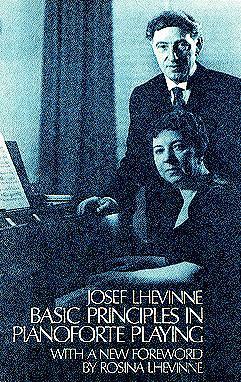
Basic Principles in Pianoforte Playing
This little book, written at the height of his career by Josef Lhevinne, the "inward poet of the piano," is a clear statement of principles based on his lifelong experience in performance and teaching. Lhevinne was, with Rachmaninoff, Schnabel, and Hoffman, one of the great modern masters, and was the first artist invited to teach at the newly formed Julliard Graduate School of Music.
Technique, through essential, must be subordinate to musical understanding. Complete knowledge of scales, apprehended not mechanically but musically; understanding of the uses of rests and silence, which Mozart considered the greatest effect in music; a feeling for rhythm and training of the ear; these are the basic elements of a thorough grounding in musicianship and are accordingly emphasized in the opening chapters.
The heart of the book is devoted to the attainment of a beautiful tone. Anyone who has heard Lhevinne play or has listened to one of his recordings will know how great were his achievements in that area. The secret lay, at least in part, in the technique he called "the arm floating in air," and in the use of the wrists as natural shock absorbers. The achievement of varieties of tone, of the singing, ringing tone, of brilliancy, of delicacy, and of power are all explained in terms of a careful analysis of the ways in which the fingers, hand, wrist, arm, and indeed the whole body function in striking the keys. There are further remarks about how to get a clear staccato and an unblurred legato, about the dangers of undue emphasis on memorization and the need for variety in practicing, and special comments on the use of the pedal, which should be employed with as much precision as the keys.
Throughout, specific musical examples are presented as illustrations. The author draws not only upon his own experiences and methods, but upon the examples of Anton Rubenstein and of his teacher, Safonoff, for this remarkably lucid and concise formulation of basic principles.
Reprint of the original 1924 edition.
Technique, through essential, must be subordinate to musical understanding. Complete knowledge of scales, apprehended not mechanically but musically; understanding of the uses of rests and silence, which Mozart considered the greatest effect in music; a feeling for rhythm and training of the ear; these are the basic elements of a thorough grounding in musicianship and are accordingly emphasized in the opening chapters.
The heart of the book is devoted to the attainment of a beautiful tone. Anyone who has heard Lhevinne play or has listened to one of his recordings will know how great were his achievements in that area. The secret lay, at least in part, in the technique he called "the arm floating in air," and in the use of the wrists as natural shock absorbers. The achievement of varieties of tone, of the singing, ringing tone, of brilliancy, of delicacy, and of power are all explained in terms of a careful analysis of the ways in which the fingers, hand, wrist, arm, and indeed the whole body function in striking the keys. There are further remarks about how to get a clear staccato and an unblurred legato, about the dangers of undue emphasis on memorization and the need for variety in practicing, and special comments on the use of the pedal, which should be employed with as much precision as the keys.
Throughout, specific musical examples are presented as illustrations. The author draws not only upon his own experiences and methods, but upon the examples of Anton Rubenstein and of his teacher, Safonoff, for this remarkably lucid and concise formulation of basic principles.
Reprint of the original 1924 edition.
64 pages, Paperback
First published June 1, 1972
Ratings & Reviews
Friends & Following
Create a free account to discover what your friends think of this book!
Community Reviews
Displaying 1 - 18 of 18 reviews

July 24, 2022
3.5 ⭐
I owe a debt of gratitude to Julie G for drawing my attention to the author, Josef Lhevinne, after kindly sharing a story with me involving her family’s connection, a few degrees separated, to the renowned pianist and piano teacher. I’m almost certain now that I had seen him mentioned in Schonberg’s ‘Lives of the Great Composers’ but likely wouldn’t have stumbled across this wonderful little book otherwise.
Lhevinne graduated at the top of a class that included the likes of Sergei Rachmaninoff and Alexander Scriabin and was the first artist to be invited to teach at the Juilliard Graduate School of Music.
He also wrote this wee little statement of principles in Pianoforte playing; weighing in at just 48 pages, it’s a collection of condensed thoughts on what Lhevinne believed to be the most important factors when studying the keyboard. Needless to say, with such a slim build, there’s very little fat to be shed; scarcely a superfluous word to be found.
In a nutshell, Musicianship trumps Technique trumps execution and interpretation.
A grounding in musicianship is a sound knowledge of fundamental music theory. Lhevinne stresses the value of ear training, a sense of rhythm and proper use of rests (the silence between the notes) and says the student ”must know all the scales in all keys, major and minor, and the must literally know them backwards. [They must also] know the chords and know the fingering of all the arpeggios.” This should all be attained at a primary level, well before one gives any consideration to technique or touch. At one point, in his occasionally snarky tone, Lhevinne laments the number of students that come to him without a solid grounding in music theory saying:
”Study of this kind is not only a great waste of the pupil’s time but also a disgusting waste of the time of the advanced teacher, who realizes that he is not training a real musician but a kind of musical parrot whose playing must always be meaningless”... Ouch!
The section regarding technique is largely concerned with attaining a delicate touch - a beautiful tone. Some specific points include ensuring that your arms are “floating in the air”, you are always striking “key bottom” and using the fleshier cushioned part of your finger (with some exceptions) and that your wrists are loose (again with exceptions) and utilised at all times as shock absorbers/suspension.
These points probably seem quite obvious to a pianist with a little bit of training behind them but, as a beginner, it can be very easy to stop really “thinking” about and “listening” to what you're doing when playing the instrument and waste a significant amount of time tapping keys without really making any progress. In performance, I guess this is the ultimate goal; for your motions to be activated subconsciously, without delay between thought and action. But in the earlier stages of development, it can be absolutely detrimental and a little book like this serves as a great reminder to maintain some of these facets of correct technique. Since finishing this, many of Lhevinne’s suggestions have been echoing in my mind as I practice and I hope they continue to do so.
It's more than a little evident that Lhevinne idolised the great pianist, Arthur Rubinstein, referring to him as the “lion of the keyboard”. Holding him up as the archetype keyboardist, essentially all examples of technique that Lhevinne cites are taken from his observations of Rubinstein and, furthermore, most of the musical examples given are works of Frédéric Chopin of whose works, Rubenstein was considered the greatest interpreter of his time. It’s endearing in a way; as good as Lhevinne was, he’s still just a regular-ish dude, fanboying over one of his heroes.
At 48 pages, totally worth it! You can read this in one or two sittings just to, as I said, refresh yourself on some of the fundamentals of technique. I did finish on a bit of a downer though. Lhevinne suggests that:
”Two hours a day for those who are not advanced in music… are not too much for technic. I do not see how one can climb over the great mountain of modern technic at a less speed than two hours a day”.
And then, immediately following that:
”Avoid worry and distractions of any kind when you are practicing. Your mind must be every minute on what you are doing, or the value of your practice is lessened enormously… Do not think you have been practicing, if you have played a single note with your mind on anything else.”
This was the point of confirmation; Lhevinne was most certainly addressing his words to the hopeful young piano student; not to the 34-year-old dad of a 10-month-old with a stressful full time job! In any case, there’s still much to learn here, regardless of your circumstances.
”There is no shortcut. One cannot go around or under the mountain. One must climb straight over it.”
I owe a debt of gratitude to Julie G for drawing my attention to the author, Josef Lhevinne, after kindly sharing a story with me involving her family’s connection, a few degrees separated, to the renowned pianist and piano teacher. I’m almost certain now that I had seen him mentioned in Schonberg’s ‘Lives of the Great Composers’ but likely wouldn’t have stumbled across this wonderful little book otherwise.
Lhevinne graduated at the top of a class that included the likes of Sergei Rachmaninoff and Alexander Scriabin and was the first artist to be invited to teach at the Juilliard Graduate School of Music.
He also wrote this wee little statement of principles in Pianoforte playing; weighing in at just 48 pages, it’s a collection of condensed thoughts on what Lhevinne believed to be the most important factors when studying the keyboard. Needless to say, with such a slim build, there’s very little fat to be shed; scarcely a superfluous word to be found.
In a nutshell, Musicianship trumps Technique trumps execution and interpretation.
A grounding in musicianship is a sound knowledge of fundamental music theory. Lhevinne stresses the value of ear training, a sense of rhythm and proper use of rests (the silence between the notes) and says the student ”must know all the scales in all keys, major and minor, and the must literally know them backwards. [They must also] know the chords and know the fingering of all the arpeggios.” This should all be attained at a primary level, well before one gives any consideration to technique or touch. At one point, in his occasionally snarky tone, Lhevinne laments the number of students that come to him without a solid grounding in music theory saying:
”Study of this kind is not only a great waste of the pupil’s time but also a disgusting waste of the time of the advanced teacher, who realizes that he is not training a real musician but a kind of musical parrot whose playing must always be meaningless”... Ouch!
The section regarding technique is largely concerned with attaining a delicate touch - a beautiful tone. Some specific points include ensuring that your arms are “floating in the air”, you are always striking “key bottom” and using the fleshier cushioned part of your finger (with some exceptions) and that your wrists are loose (again with exceptions) and utilised at all times as shock absorbers/suspension.
These points probably seem quite obvious to a pianist with a little bit of training behind them but, as a beginner, it can be very easy to stop really “thinking” about and “listening” to what you're doing when playing the instrument and waste a significant amount of time tapping keys without really making any progress. In performance, I guess this is the ultimate goal; for your motions to be activated subconsciously, without delay between thought and action. But in the earlier stages of development, it can be absolutely detrimental and a little book like this serves as a great reminder to maintain some of these facets of correct technique. Since finishing this, many of Lhevinne’s suggestions have been echoing in my mind as I practice and I hope they continue to do so.
It's more than a little evident that Lhevinne idolised the great pianist, Arthur Rubinstein, referring to him as the “lion of the keyboard”. Holding him up as the archetype keyboardist, essentially all examples of technique that Lhevinne cites are taken from his observations of Rubinstein and, furthermore, most of the musical examples given are works of Frédéric Chopin of whose works, Rubenstein was considered the greatest interpreter of his time. It’s endearing in a way; as good as Lhevinne was, he’s still just a regular-ish dude, fanboying over one of his heroes.
At 48 pages, totally worth it! You can read this in one or two sittings just to, as I said, refresh yourself on some of the fundamentals of technique. I did finish on a bit of a downer though. Lhevinne suggests that:
”Two hours a day for those who are not advanced in music… are not too much for technic. I do not see how one can climb over the great mountain of modern technic at a less speed than two hours a day”.
And then, immediately following that:
”Avoid worry and distractions of any kind when you are practicing. Your mind must be every minute on what you are doing, or the value of your practice is lessened enormously… Do not think you have been practicing, if you have played a single note with your mind on anything else.”
This was the point of confirmation; Lhevinne was most certainly addressing his words to the hopeful young piano student; not to the 34-year-old dad of a 10-month-old with a stressful full time job! In any case, there’s still much to learn here, regardless of your circumstances.
”There is no shortcut. One cannot go around or under the mountain. One must climb straight over it.”

November 6, 2025
اصول بنیادین در نواختن پیانو
نشر افکار جدید.
نشر افکار جدید.

August 2, 2021
Well, this was incredibly short, but the author certainly packed a lot into it and it was certainly interesting. I will just say that now that I've made my way through a couple of these books about piano technique is that whilst they are insightful, they largely cover the same stuff. See, I actually thought that the writing in this was quite nice and the metaphors and similes the author used to describe certain elements. That was great. It just doesn't provide anything that was necessarily new, but rather more stuff that I've read in other books that were rehashed.
Now, I'm not saying the author copied the other pianists, not at all, but I do think that once you reach their level of piano playing, you've seen a lot and that a load of their best advice would ultimately be somewhat similar, especially regarding things like tone and technique, also considering the experience they would have teaching students and leading masterclasses, for they were the forefront pianists of their era.
As a pianist, or piano student at least, books like this one are certainly helpful - they are also short and easy to read which makes studying a lot easier aha. On one hand, I wished that there was a greater variety of content that was explored, as while the stuff was good and very insightful I think for even the most advanced piano students, you can also get it from literally any other book on piano technique. It discusses the standard stuff with finger and wrist touch, articulation, producing a good tone that's not booming and Rubenstein, and I suppose for a book titles the Basic Principles, I shouldn't really be complaining.
Anyway, I thought that this was interesting enough of a read. 6/10
Now, I'm not saying the author copied the other pianists, not at all, but I do think that once you reach their level of piano playing, you've seen a lot and that a load of their best advice would ultimately be somewhat similar, especially regarding things like tone and technique, also considering the experience they would have teaching students and leading masterclasses, for they were the forefront pianists of their era.
As a pianist, or piano student at least, books like this one are certainly helpful - they are also short and easy to read which makes studying a lot easier aha. On one hand, I wished that there was a greater variety of content that was explored, as while the stuff was good and very insightful I think for even the most advanced piano students, you can also get it from literally any other book on piano technique. It discusses the standard stuff with finger and wrist touch, articulation, producing a good tone that's not booming and Rubenstein, and I suppose for a book titles the Basic Principles, I shouldn't really be complaining.
Anyway, I thought that this was interesting enough of a read. 6/10

June 12, 2020
The way Lhevinne worded how to play with a delicate touch is perfect.all my students understand it and thanks to his excellent choice of words, all can do it!

Read
June 8, 2010(Actually finished this a while ago, just never logged on to say so, which means I'm guessing on the date finished.)
As a person with exactly one year of piano teaching experience under my belt, this book blew me away. I can't say there was a lot in here I didn't already know in some sense, but it's put together quite well and is just full of the most beautiful nuggets of insight.
If you play the piano more than a little bit, this book is well worth the short time it will take you to read it.
As a person with exactly one year of piano teaching experience under my belt, this book blew me away. I can't say there was a lot in here I didn't already know in some sense, but it's put together quite well and is just full of the most beautiful nuggets of insight.
If you play the piano more than a little bit, this book is well worth the short time it will take you to read it.
April 25, 2025
This book is short and to-the-point, and one of the best books of its kind that I have read. Josef Lhévinne was a great pianist and teacher of the early twentieth century. He and his wife, Rosina, collaborated for many years, and she wrote a preface to this Dover reissue with fond reminiscences of her husband, who had died years before. Lhévinne's advice is both direct and practical, and gives much for the interested student to think about and work on. I highly recommend this book, especially to adults who might be getting started with the piano, or returning to it after many years.

May 25, 2009
Short, inexpensive volume full of good insights.

April 12, 2020
Very good tips for practicing and practical methods for teaching. I used this as a bit of inspiration before my own practicing and enjoyed doing that. A good source to have for teachers.

Read
June 25, 2022'There is hardly anything so hideous as bad piano playing, and scarcely anything more beautiful than the masterly interpretation of a great composition by a great artist. Surely, it is worth all the study and far more, to acquire an intimacy with this wonderful instrument which brings so many of the gorgeous treasures of the tone world so near to the individual.'
Josef Lhevinne was a Russian piano teacher in the 20th century. To give a sense of the man's ability, at the Imperial Conservatory in Moscow, he graduated top of a class which included Sergei Rachmaninoff and Alexander Scriabin. Fleeing Russia during the Russian Revolution, he landed in Berlin in 1907. Labelled along with his wife, Rosina, as enemy aliens during the Great War, he would emigrate to New York City in 1919 where he continued a concert career and taught at Juilliard.
In this short book, Lhevinne distils some of his piano knowledge. This book did not have as much import for me as Heinrich Neuhaus's or Karl Leimer's, but it still contained useful advice. It begins with an introduction by Rosina, who recounts a famous story that I had read elsewhere. Josef was away on tour, and Rosina had to fill in as teacher. After returning, a student played a phrase in the way she had taught him, only for Josef to demand 'What idiot taught you that?' Rosina would go on to teach in the same position as Josef at Juilliard following his death
I will list below some of the parts I found useful for my own piano practice:
In the Foreword, Rosina writes that as students in Russia, they were taught from the earliest age to develop a perfect technique. Not for the sake of having perfect technique, but instead to develop the skill to express the ideas of the composer. A pianist is a 'middleman', who must try their best to remain true to the composer's ideas.
Anton Rubinstein called the pedal 'the soul of the piano.'
To emphasise the importance of rests in music, he quotes Mozart as saying 'Silence is the greatest effect in music.'
Rhythm should remain even. To preserve that evenness, he asks his students to imagine a swinging pendulum.
Most students hear, but do not listen. One must train their ears.
Consider striking the key all the way down to develop good tone.
A good tone consists of three things: a mental conception of it, the amount of surface covered with the fingers, and a loose wrist.
Rubinstein and great pianists always played relaxed, like 'floating in the air'. This is gained more by mental attitude than by exercise.
When finished a piece, ask yourself two questions:
'Do you express the composer's thought and mood?
Do you express what you feel and wish?'
For memorisation, memorise phrase by phrase and not by measure.
This would not be my first recommendation for a book on piano technique, but it is a pleasant addition to a collection.
Josef Lhevinne was a Russian piano teacher in the 20th century. To give a sense of the man's ability, at the Imperial Conservatory in Moscow, he graduated top of a class which included Sergei Rachmaninoff and Alexander Scriabin. Fleeing Russia during the Russian Revolution, he landed in Berlin in 1907. Labelled along with his wife, Rosina, as enemy aliens during the Great War, he would emigrate to New York City in 1919 where he continued a concert career and taught at Juilliard.
In this short book, Lhevinne distils some of his piano knowledge. This book did not have as much import for me as Heinrich Neuhaus's or Karl Leimer's, but it still contained useful advice. It begins with an introduction by Rosina, who recounts a famous story that I had read elsewhere. Josef was away on tour, and Rosina had to fill in as teacher. After returning, a student played a phrase in the way she had taught him, only for Josef to demand 'What idiot taught you that?' Rosina would go on to teach in the same position as Josef at Juilliard following his death
I will list below some of the parts I found useful for my own piano practice:
In the Foreword, Rosina writes that as students in Russia, they were taught from the earliest age to develop a perfect technique. Not for the sake of having perfect technique, but instead to develop the skill to express the ideas of the composer. A pianist is a 'middleman', who must try their best to remain true to the composer's ideas.
Anton Rubinstein called the pedal 'the soul of the piano.'
To emphasise the importance of rests in music, he quotes Mozart as saying 'Silence is the greatest effect in music.'
Rhythm should remain even. To preserve that evenness, he asks his students to imagine a swinging pendulum.
Most students hear, but do not listen. One must train their ears.
Consider striking the key all the way down to develop good tone.
A good tone consists of three things: a mental conception of it, the amount of surface covered with the fingers, and a loose wrist.
Rubinstein and great pianists always played relaxed, like 'floating in the air'. This is gained more by mental attitude than by exercise.
When finished a piece, ask yourself two questions:
'Do you express the composer's thought and mood?
Do you express what you feel and wish?'
For memorisation, memorise phrase by phrase and not by measure.
This would not be my first recommendation for a book on piano technique, but it is a pleasant addition to a collection.

October 20, 2023
I am a piano teacher and this tiny book was recommended to me by my former piano teacher.
Some of my favorite ideas in here:
- "it takes courage...for the student to value a rest properly"
- moving primarily from the metacarpal joint
- the wrist is like a shock absorber in a car
- like how you can tell someone's emotions by their voice's tone/break, emotion should be obvious in piano playing
- it takes a lot of willpower to play slowly
- stop and listen: do you express the composer's thought/mood? do you express what you feel and wish? by all means, express something!
Some of my favorite ideas in here:
- "it takes courage...for the student to value a rest properly"
- moving primarily from the metacarpal joint
- the wrist is like a shock absorber in a car
- like how you can tell someone's emotions by their voice's tone/break, emotion should be obvious in piano playing
- it takes a lot of willpower to play slowly
- stop and listen: do you express the composer's thought/mood? do you express what you feel and wish? by all means, express something!

September 11, 2020
This is a slight but informative tract on the essence of expressing music through playing the piano. The author, a noted performer, shares his intimate experience from touch and accuracy to staccato and legato. With an emphasis on attaining a beautiful tone, the author speaks with clarity for all who love their engagement with the music of the piano.

February 26, 2019
Excelente libro para pianistas
Todo pianista que quiera llegar a producir belleza con el instrumento debería leer este libro. Se llega a comprender la necesidad de incorporar las recomendaciones en la técnica mientras se las lee.
Todo pianista que quiera llegar a producir belleza con el instrumento debería leer este libro. Se llega a comprender la necesidad de incorporar las recomendaciones en la técnica mientras se las lee.
March 20, 2023
A great but very short read it certainly puts myself in place with what sort of level I am at it makes you realise that it takes years to get to a good standard of being able to play well it as give me a good insight to see what I need to achieve
April 17, 2020
Short, with good advices. Lhevinne is one of the world's greatest pianist in his day, and one can tell from this book that he's more of a practitioner than a thinker/teacher.

May 16, 2020
Small, but mighty. I can't recommend this book highly enough for anyone involved in playing the piano. At the very least it should be handed to every intermediate piano student and beyond.
January 7, 2009
A concise summary of superb advice for improving piano playing.
Some gems:
"Rests are just as important as notes. Music is painted upon a canvas of silence."
"Do not think you have been practicing, if you have played a single note with your mind on anything else."
"I am confident that centuries of practice are wasted around the world because the element of beauty is cast aside."
"Why is much playing inaccurate? Largely because of mental uncertainty."
"It takes strength of will to play slowly."
"...practice very slowly, then just a little faster and finally never at a speed that would lead to mental and digital confusion."
Lines like these encapsulate the secrets to great piano playing. Lhevinne must have been an awesome teacher. I studied with a student of a student of his, who incorporated much of his philosophy and advice into the lessons; they were the most useful lessons I ever had.
Some gems:
"Rests are just as important as notes. Music is painted upon a canvas of silence."
"Do not think you have been practicing, if you have played a single note with your mind on anything else."
"I am confident that centuries of practice are wasted around the world because the element of beauty is cast aside."
"Why is much playing inaccurate? Largely because of mental uncertainty."
"It takes strength of will to play slowly."
"...practice very slowly, then just a little faster and finally never at a speed that would lead to mental and digital confusion."
Lines like these encapsulate the secrets to great piano playing. Lhevinne must have been an awesome teacher. I studied with a student of a student of his, who incorporated much of his philosophy and advice into the lessons; they were the most useful lessons I ever had.

April 16, 2015
The book discusses, generally, important aspects of professional piano playing, including some common mistakes of amateur players. A short, encouraging read. But not much depth into details. The author gives little instructions on how to achieve the skills he mentions, probably because they all depends on particular student under a particular mentor. The book is basically for serious piano players who aim at professional career or piano teachers. For recreational players, you're not going to spend your whole life just get the scales sound right, but one can find useful advices here.
March 30, 2016
If you have ever wanted to know anything about the proper technic and principles in piano playing, this is the book for you. It is in depth yet comprehensive, and quite enjoyable.
Displaying 1 - 18 of 18 reviews