Jump to ratings and reviews
Rate this book

StarCraft II: Wings of Liberty

Rate this book
Starcraft II is a unique, sci-fi universe, where players build armies for the Terran, exiles from Earth; the Protoss, a humanoid species with advanced technological and mental abilities; and the Zerg, an insectoid species that assimilates other species into their swarm. This guide features a walkthrough of the game.

432 pages, Paperback

First published July 27, 2010

Loading...
Loading...

About the author

Brady Games

614 books56 followers
BradyGames is a publishing company in the United States operating as a DK imprint, which specializes in video game strategy guides, covering multiple video game platforms. It published their first strategy guide in November 1993 as a division of MacMillan Computer Publishing. In 1998, Simon & Schuster (which acquired Macmillan in 1994) divested BradyGames as part of its educational division to Pearson PLC. BradyGames has grown to publish roughly 90-100 guides per year. On 1 June 2015, BradyGames merged with Prima Games, and future strategy guides made by the publishing company will be published under the Prima Games label.

Ratings & Reviews

What do you think?
Rate this book

Friends & Following

Create a free account to discover what your friends think of this book!

Community Reviews

5 stars
12 (30%)
4 stars
15 (37%)
3 stars
8 (20%)
2 stars
4 (10%)
1 star
1 (2%)
Displaying 1 of 1 review
Profile Image for Ted.
515 reviews736 followers
October 18, 2017
not monopoly ...

file under: awesome-young-women; books-you-never-knew-you-had-no-interest-in; chess?; culture-Korea; e-games; game-reviews-not-baseball; into-the-future; NYer; sports?


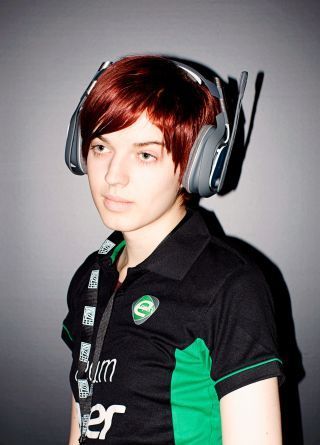
Scarlett. The best foreign player in the StarCraft II universe?
[from The New Yorker, photo by Jenny Hueston]

3 1/2 stars

An article in the Nov. 24 ’14 Tech issue of The New Yorker, by Ben McGrath, introduced this seven-decader to StarCraft II. I’ll use the article’s name, “Good Game” abbreviated to “*gg”, to reference it below. Anything quoted directly will be so indicated.

The article is subtitled “The rise of the professional cyber athlete”.

Wait. ”athlete?” Well, McGrath devotes an entire page (the second) in the article to mustering evidence that e-gaming is increasingly seen by various entities as deserving to be called a “sport” – and once that’s accomplished, the next step would be to confer the sobriquet “athlete” on the practitioners of this sport – would it not? Maybe. I won’t argue.

The article is eleven pages of text, a pretty significant exploration of the topics covered: from the above “sport/athlete” discussion, to electronic gaming (professionally), to the recent media enthusiasm for this (very thin) slice of 21st century life-of-the young, to the making and maintenance of the StarCraft II game, to the at times somewhat dark culture of the game’s players, to the topic which unifies McGrath’s take on all these things: Scarlett. For whom, see below.


The game.

The original StarCraft was produced by Blizzard Entertainment (also the maker of the immensely popular Warcraft series) in 1998. A huge success, it spawned an expansion, and then in 2010 the follow up StarCraft II game. (See here. The “real-time” refers to the fact that there are no player turns in the game – the action (and player activity) is continuous. “Strategy” is opposed to “tactical”, though in this game some say it is more tactical that strategic. In the StarCraft universe, the strategic part of the game is referred to as the “macro game”. StarCraft II
is often compared to chess: it is strategic and extremely difficult, requiring a mathematical cast of mind … but the analogy breaks down … The map changes from game to game … Instead of black and white, players choose from among three “races”, called Zerg, Terran, and Protoss, with different strengths and vulnerabilities. In the early stages, players cannot see each other’s armies, and must dispatch scouts to the darkened corners; they must also develop economies, with which to fund the inevitable battles. It’s as if Gary Kasparov had to plot a pawnless endgame while simultaneously harvesting minerals, building fuel extractors, and searching in vain for Spassky’s queen. Academic researchers now use StarCraft II – the “drosophila” of brain science, as one paper suggested – when studying people who expertly perform cognitively complex tasks. Chess may soon be eclipsed as the standard bearer of competitive I.Q.
Expert play of StarCraft requires as many as 300 actions per minute (APM): the left hand pounding “hot keys” on the keyboard, the right mouse hand moving the cursor and clicking. The left/right clicks are different game commands: usually left clicks select units or place abilities, right clicks issue context sensitive orders. (the book, p. 209)

When the game was released in 1998,South Korea was in the process of modernizing its broadband infrastructure. Gaming cafes, known as PC bangs, had become the default after-school hangout for teenagers in Seoul, and StarCraft was the new pickup hoops or sandlot ball.

In 2000 the Ministry of Culture, Sports and Tourism formed the Korea e-Sports Association, and soon after “two television channels were dedicated to broadcasting and analyzing the games.” Indeed, South Korea carries the mail for StarCraft, as evidenced by this photo of a Korean Air jet, the back half of its fuselage bearing the StarCraft story aloft and abroad..

see photo here

Sources: Wiki as mentioned, and *gg.


Scarlett.

Scarlett is the player name assumed by a young Canadian player of StarCraft II. Scarlett is not however a “typical” player, or an Everyman. First, Scarlett is a “she”, not a “he”, which places her in an extremely thin wedge of the e-game player pie. Scarlett is also a foreigner in the StarCraft II world – meaning quite explicitly that she is not Korean.

Huh? Well, virtually all the best players in the world (the world of StarCraft II and the world of planet Terra as well) come from Korea, due to its status in that country suggested above. Suffice it to say that Scarlett is known to many as the “best foreign player” anywhere, though she herself deflects this a bit by saying that she feels another foreign player is better than she.

“Scarlett” is actually a 21 year old Canadian woman named Sasha Hostyn.
Her father, Rob Harrap, is a geology professor at Queen’s University [Kingston Ontario]; her mother, Joyce Hostyn, a committed Xeriscapist, has worked in public radio, politics, and software design … (Sasha) and her older brother, Sean, who is twenty-two and studying math and computer science, refer to their parents as Rob and Joyce.
Sean goes by their dad’s last name, Sasha by their mom’s.

Sasha and her brother are products of what their parents call “unbundled parenting”. “The family played card games (Magic: the Gathering, not Go Fish) and board games (Carcassonne, not Monopoly) obsessively … Sasha was a predictable winner, and the three others competed for second place.”

A “progressive family” in many ways. As McGrath notes,
Sasha faced little of the usual parental skepticism as she began to contemplate postponing college in favor of a video game. “I don’t believe that kids have to do a traditional career,” Joyce said. Rob said, “I don’t see this as any different from somebody going backpacking for two years after high school.”


The term “transgender” (used in both neutral and semi-pejorative manners) seems to float about Sasha frequently, judging by McGrath’s use of it in the article. Frankly, as I found out here,the term is used with all sorts of different meanings by different people and communities. Thus Sasha is probably wise to refuse comment on it to journalists ”as she feels that it has no bearing on her role in gaming”.

(*gg for quotes; otherwise my summary from the same source)

Hint: Google “scarlett starcraft II” to find interesting links. Oh, and those earmuffs she’s wearing in the picture? A white noise generator, worn by players to help concentration and keep out crowd noise.

The Book.

Oh yes, this is a book review.

The book being reviewed is a manual of the StartCraft II game. It’s primary aim is to help a new player get into this very difficult e-game. The first part of the book helps that newbie through a number of solo campaigns that come with the game, designed to introduce aspects pf the game in an increasing order of complexity and difficulty.

The Wings of Liberty campaigns place the player in a Terran role. As the missions come and go, the book explains the background and gives tips on how to play. For example, the importance of assigning “hot keys” on your keyboard in the same manner game after game. The most important gameplay skill you can learn for StarCraft II is this: create your own hotkey system, and then master it. And by “mastering” a hotkey system we mean burn it into your unconscious mind so it haunts your dreams.

The book starts by outlining basic Terran strategy: Game Phases, Scouting, Base Building, Resource Gathering, and Combat. Following this seven missions are gone into in detail, with separate sections on each of the 3-5 scenarios in each mission. This “Single Player” section of the book occupies about the first 190 pages.

The remainder of the 425 pages are devoted to multi-player StarCraft II. This includes about 70 pages of basic information which brings the skills introduced in the single player section into the context of playing matches against another player. One feature of this part of the book is “Pro Tip”s, where professional StarCraft II players will write sections on particular aspects of playing the game.

Then there’s a hundred page section on the buildings and forces available to the game’s three races. This gets into a lot of details, which are mostly unintelligible unless you know a lot more about the game than I do.

There’s more stuff, but I’m worn out just looking at it.

All in all the book appears to be a must-have for anyone wanting to get into this game. It’s sort of fun to browse around in it. It’s easy to recognize the length of the journey that would be required to understand how to play the game. I’m pretty sure I’ll be sticking to chess.

The book isn’t capable of easy transport. Large format, (8 1/2 x 11, ~.75” thick, weighing about 40 oz.) very high quality paper, every page dense with color. How much does ink weigh?


YouTube.

This is a video of a match that is described on the opening page of McGrath’s article between Scarlett and one of the world’s best players, Bomber. It’s the rubber match of a three game set. Fall 2013, New York’s Hammerstein Ballroom. Scarlett is nineteen.

What you’re seeing is the view that the audience sees, which is an overhead view of a shifting portion of the map they’re playing on. The entire map is shown in the lower left corner. There’s a small outline of a mashed rectangle that indicates where the full screen view is coming from. This moves around under control of a video technician called the “observer”, who decides what part of the game action to show to the crowd.
There are all sorts of information and scoring data popping up on various edges. To you and me this means little or nothing. The video quality is very good, easily good enough for full screen viewing. You need to have your volume on so you can hear the commentators. Even if what they’re saying means little, the asides and the tone of their voices convey what’s going on.

This match lasted over 40 minutes, of which about the final 35 are on this video. If you want you can advance the thing by toying with the timeline on the bottom, as usual.

There’s a little interview at the end.

https://www.youtube.com/watch?v=Cwp1d...

Here’s a cute little interview of an eighteen year old Scarlett having played in an event in Las Vegas and apparently shocked the StarCraft gaming family. The interviewer appears to be little older than the interviewee.

https://www.youtube.com/watch?v=W_2n5...

Note: The following discussion may or may not be of interest. Somehow I think I became accused of holding some sort of opinion(s) which I don't, but I can't be sure ...
Displaying 1 of 1 review