Jump to ratings and reviews
Rate this book

For the Living & the Dead

Rate this book
The first volume by Tomas Transtromer in almost a decade, For the Living and the Dead includes an unusual a prose memoir about the poet's childhood, which goes some distance to explain why he became an adolescent psychologist. In other respects, however, the collection is of a piece with Transtromer's earlier work. Why, he seems to ask, are words so sadly inadequate to convey our meaning to others? His solution in the face of this inadequacy is to merge the intimate lyric--as familiar in its tone as a personal letter--with the most stringent economies of language. It has been said that Transtromer's work comes across well in translation because of its striking imagery. This is partly true, but he has no less firm a grasp on musical structure, cadence, and pacing. All these qualities are present in "Grief Gondola No. 2," translated by Robert Bly. An homage to Liszt, the poem resembles a musical composition, complete with theme, variations, and "The heavily loaded gondola carries their lives, two return tickets and a one-way.... The heavily loaded gondola carries life, it is simple and black." Transtromer is not a poet of the everyday, but one who needs a rupture of routine to steal his glimpse into another world. The poems are urgent encounters in which Transtromer seems to be in constant transit. Most often he depicts himself as a passenger, and an invisible "The carp in the pond are always moving, they swim while they sleep, / they are an example for the always in motion." But when the poet can enter into a communion with his subject--including, ultimately, the fellow-traveling carp in "Streets in Shanghai"--he persuades the reader that along with seeing, he has been seen as well. --Mark Rudman

32 pages, Paperback

First published January 1, 1989

Loading...
Loading...

About the author

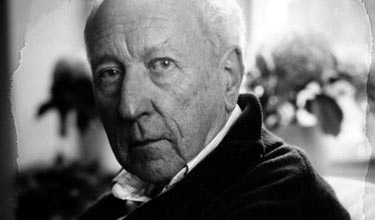
Tomas Tranströmer

157 books393 followers
His poetry, building on Modernism, Expressionism, and Surrealism, contains powerful imagery concerned with issues of fragmentation and isolation. “He has perfected a particular kind of epiphanic lyric, often in quatrains, in which nature is the active, energizing subject, and the self (if the self is present at all) is the object,” notes critic Katie Peterson in the Boston Review.

Critic and poet Tom Sleigh observed, in his Interview with a Ghost (2006), that “Tranströmer’s poems imagine the spaces that the deep then inhabits, like ground water gushing up into a newly dug well.”

His honors include the Lifetime Recognition Award from the Griffin Trust for Excellence in Poetry, the Aftonbladets Literary Prize, the Bonnier Award for Poetry, the Neustadt International Prize for Literature, the Oevralids Prize, the Petrarch Prize in Germany, the Swedish Award from International Poetry Forum,the Swedish Academy’s Nordic Prize, and especially the 2011 Nobel Prize in literature. His work has been translated into more than 50 languages.

Tranströmer suffered a stroke in 1990, and after a six-year silence published his collection Sorgegondolen (Grief Gondola) (1996). Prior to his stroke, he worked as a psychologist, focusing on the juvenile prison population as well as the disabled, convicts, and drug addicts. He lives in Sweden.

On Thursday, 6th of October 2011 he was awarded the Nobel prize in Literature "because, through his condensed, translucent images, he gives us fresh access to reality".

Ratings & Reviews

What do you think?
Rate this book

Friends & Following

Create a free account to discover what your friends think of this book!

Community Reviews

5 stars
64 (30%)
4 stars
73 (34%)
3 stars
60 (28%)
2 stars
10 (4%)
1 star
4 (1%)
Displaying 1 - 19 of 19 reviews
Profile Image for Gaurav Sagar.
215 reviews1,835 followers
July 18, 2026


source


Tomas Tranströmer has been holding my senses for the past few days, the unusual poetry of the Swedish poet comes as a pleasant surprise to me, as it can be said with authority that his poems act as some breach in the conventional thinking. We often see that with modernization and urbanization we lose upon cultural values and heritage and it is visible in the poetic diaspora too, however, it could be said with the stamp of authority that Tranströmer does something totally opposite to it. He acts as an active and dynamic bridge between contemporary life and history since he attempts to portray the shock of modern life through history, not merely as sequential but deep down at texture and feel too.


Death has one of the most sought-after enigmas by mankind, and the world of the Swedish poet is not untouched by it. However, death should be seen in relation to life as its mysteries, if at all, maybe revealed only then. Life and death are two aspects of the same reality, and we see that the poems of Tranströmer discuss this symbiotic relationship with panache, the poems hover around the close proximity of death and life. We see that death may act as a medium of walking into other dimensions wherein the unfulfilled existence of humanity tries to attain fulfillment as we see in The Forgotten Captain from the collection-For the Living and the Dead. So in a way death may act as an unsurmounted passage to achieve what could not be the mundane normalcy of humanity. The thread of imagination weaves beautiful reality which otherwise could not be possible but definitely probable. The boundary between life and death is fragile and thin; the poetry of Tranströmer makes death reassuring but still maintains its inevitability.


The poetry of Tranströmer has a deep connection to the natural world, nature’s epiphany of seasons and moods could be portrayed through great imagery which may sound very tangible to readers. The mystical poetry of the poet- which has mystic of the natural world and human psychology- progresses from a concrete reality to a heightened state of awareness. We see in six winters the changing seasons in terms of changing emotional states from a fresh perspective.


The imagery of poems leaps out of the page which presents a clear and vivid image to the reader but then the reader is taken aback by the sudden twist in the fate of the circumstances which may symbolize deep inner meanings. We see in Romanesque Arches that the narrative dwells upon unknown vaults or rooms inside us and our endeavor to continuously moving towards it, what lies there inside we may or may not know but we have to keep moving and that’s how human beings are. We may find vaults where we recognize ourselves or where we become completely unaware of ourselves, it may go on till infinity. Here, we encounter our familiar existential angst and anxiety but someone- perhaps an angel- gives assuring support to us that we should not be ashamed of being human since this is how we meant to be, though it could fill us anxiety but at the same time it opens the possibility of new opportunities lying hidden and unexplored there.

Inside the huge Romanesque church the tourists jostled in the half darkness.
Vault gaped behind vault, no complete view.
A few candle flames flickered.
An angel with no face embraced me
and whispered through my whole body:
"Don't be ashamed of being human, be proud!
Inside you vault opens behind vault endlessly.
You will never be complete, that's how it's meant to be."


source


Tomas Tranströmer strives to make poetry the very place wherein shocks of experience may occur, in the sense that readers might feel the trembles of visual imagery in the unique cross-over of modernity with history with them being its objects. The unearthly coolness and indifference mark his poetry. His imagination is poised on the brink of revelation but patient enough to let things take their own course, it’s just the glimpse of these shocking revelations which make his poetry unique in its sense.


The fact that Tranströmer was a renowned psychologist too might have helped him in such an accurate and deep portrayal of humanity, in relation to the natural world. The poet uses various contraries -such as all and nothing, dark and light, self and other, sleep and wakefulness- to arrange them in a certain way so as to open huge areas of possibilities within these short lyric poems. The imagination, rhythm, vividity, and the silences between words give these lyric poems a tinge of greatness which cut their thread off time and makes these immemorial. These poems built on Modernism, Expressionism, and Surrealism contain powerful imagination with issues of fragmentation and isolation. The quatrains provide a clear visual sense to the reader who can associate his/ her own self as being the object of the poems.


The problem of translation is often associated with authors of non-English languages, and it becomes all the more pronounced in the case of poets because of obvious difficulty in the translation of poetry but the translation of works of Tranströmer comes well because of its great imagery, the vivid visual experience it creates may be recreated in translated languages too. His poems are in a sense a sort of portal which may provide you the opportunity to peek into alternative possibilities and realities while being in this very reality you know as life. His poetry is a dynamic space that keeps on moving no matter what and may persuade the reader too to be on this eternal journey.


4.5/5
Profile Image for K.D. Absolutely.
1,820 reviews
February 7, 2012
Tomas Transtromer (born 1931), a Swedish writer, poet and translator, won the Nobel Prize for Literature last year, 2011. He is the 108th winner of the award and the first Swede to win since 1974. It was also revealed that he had been nominated every single year since 1993. We won the award for “his condensed, translucent images that give us fresh access to reality.” Half of his body is paralyzed due to stroke in 1990 that also affected his speech. However, at the age of 81, he can still write poems and play the piano. He finds both activities helpful in coping up with the condition of his body.

This book, For the Living and the Dead (Swedish: För levande och döda) is not his latest work but it came out a year prior to his stroke. First published in 1989, this is a collection of his poetry and it won Nordic Council Literature Prize for that year. It is divided into three parts: Poems-Memoir-Poems. The first set of poems was about things that probably people in Sweden or Scandinavian countries would observe in their everyday living. However, I could not relate to many of them since they are about snow, winters, the middle ages. My favorite however is the poem Silence translated by Robin Fulton. Short but touching as it creates simple images that anybody could relate to.

The second part is his boyhood memoir. Very interesting life he had. Like George Orwell (recent read), his parents got divorced and he felt that despite his mother being able to support him and his siblings, he missed having a father while growing up. Probably he turned his attention to insects and he began to be fascinated by them. He spent hours and hours in the Museum of Natural History where no one normally went to visit except him. So, the owner of the museum took fancy of him and taught him so many things. He began collecting insects that was a fad with young boys during his time. Even up to now, some of those collections are still with him. From insects, he studied psychology as a profession with writing poetry as his passion since he was a boy.

The third part is another set of poems that they are mostly about his childhood. It was a nice smooth shift from reading his poignant and interesting childhood memoir. It’s like listening to a song with a narration at the start and then followed by a heartfelt rendition of a sweet song. In fact the title of the first poem is As When You Were a Child translated by Joana Bankier and I copied the poem here just to give you a sample of the poetry of Transtromer:
AS WHEN YOU WERE A CHILD

As when you were a child and some tremendous hurt
Was pulled over your head like a sack –
Glints of sunshine through the mesh
And the hum of the cherry trees.

But it doesn’t help, the great hurt
Covers head and torso and knees
And though you are able to move sometimes
Spring brings no happiness.

Yes, shimmering wool cap, pull it down over your face
Stare through the mesh.
Out on the bay, the rings of water multiply soundlessly.
Green leaves darken the earth.

I don’t know about you but I liked it. I am not really into poetry reading but if you read it aloud and really let the words grow on you, you will feel nostalgic and miss your younger years.

For his sweet poetry and what he went through in life, I feel that Tomas Transtromer richfully deserved the 2011 Nobel Prize for Literature and all the awards he is getting for his beautiful works.

God bless you, sir.
Profile Image for paradispetrus .
120 reviews2 followers
Read
November 6, 2024
”Vi ser nästan lyckliga ut i solen, medan vi förblöder ur sår som vi inte vet om.”
Mitt poesi-år fortsätter tappert. Denna poesisamling gick mig tyvärr helt förbi. Jag hade fått för mig att Tranströmer skulle passa mig som hand i handske, men här lyckades jag nog inte alls möta Tomas i hans tankar. Ofta brukar i alla fall ett par dikter eller åtminstone några strofer öppna upp sig, men här var det nog stängt, förutom några meningar, varav en citeras ovan. Får lägga detta på att jag fortsättningsvis är en ovan poesiläsare.
Profile Image for Debra Lowman.
457 reviews20 followers
May 10, 2013
If you're reading this book of poetry, you most likely already know about the man Transtromer. This is not his first book of poetry, nor his most recent. This is a collection of translated poems selected specifically for their quality in translation.

The book is organized into three parts, poems, memoir, and poems. One of my favorites in the book were Romanesque Arches.."vaults open endlessly behind vaults." Epigram was another.

I took these in small chunks over a period of a month or so. Since I am not Scandinavian, I had to look up places and times in history and attempted to put Transtromer into the time frame. Don't be afraid to do this. Poetry is a mirror of the poet. It's okay to have to Google. Poetry is meant to be loved, pored over and caressed. It often suffers the pretentious.

A lovely collection. Not to be missed in the poetry genre.
Profile Image for Pelle "redacted" Parrafin.
71 reviews57 followers
Read
October 2, 2023
Jag är omgiven av skrivtecken som jag inte kan tyda, jag är alltigenom analfabet.
Men jag har betalat det jag skulle och har kvitto på allt.
Jag har samlat på mig så många oläsliga kvitton.
Jag är ett gammalt träd med vissna löv som hänger kvar och inte kan falla till marken.

Och en pust från havet får alla dessa kvitton att rassla.
Profile Image for Astrid Ottmann-Knoph.
61 reviews
October 8, 2025
Fantastisk! Og dette er favoritten:


MADIGRAL
Jag ärvde en mörk skog dit jag sällan går. Men det kommer en dag när de döda och levande byter plats. Då sätter sig skogen i rörelse. Vi är inte utan hopp. De svåraste brotten förblir ouppklarade trots insats av många poliser. På samma sätt finns någonstans i våra liv en stor ouppklarad kärlek. Jag ärvde en mörk skog men idag går jag i en annan skog, den ljusa. Allt levande som sjunger slingrar viftar och kryper! Det är vår och luften är mycket stark. Jag har examen från glömskans universitet och är lika tomhänt som skjortan på tvättstrecket.

Profile Image for Teemu Helle.
188 reviews1 follower
June 6, 2024
Hieno. Rikas, yksityiskohtainen. Lyhyempi muoto sopii Tranströmerille.

(Luettu teoksesta Kootut teokset, Tammi 2011.)
Profile Image for Blair.
Author 2 books49 followers
March 7, 2021
Although the memoir component was interesting in this collection, the prose doesn't quite live up to the poetry, which is outstanding.
Profile Image for Alina Saari.
83 reviews
April 14, 2025
Joskus harvoin sitä törmää teokseen, joka kutittelee sen pienen lapsen kainaloita, jota voi kutsua inspiraatioksi tai kauneudeksi. Semmoiseen teokseen, joka muistuttaa että olet myös sielullinen olento, et vain älyllinen tai ruumiillinen.

Tämä oli goottilaista kultaa, orgaaninen kuin holvikaari, leikkisän unelmoiva äänetön huuto, joka on muodoltaan kirkas pisara.

Seinien läpi kulkeminen sattuu, siitä sairastuu \ mutta se on välttämätöntä. \ Maailma on yhtä. Mutta seinät… \ Ja seinä on osa sinua - \ sen tietää tai ei tiedä mutta se koskee kaikkia \ paitsi pieniä lapsia. He eivät seiniä tunne.

Kirkas taivas alkaa nojata seinään. \ Se on kuin rukous tyhjyydelle. \ Ja tyhjyys kääntää kasvonsa meidän puoleemme \ ja kuiskaa \ ”Minä en ole tyhjä, minä olen avoin”.

(Mt. Vermeer, s.24-25)

Iloinen tunne, että tässä on seuraava suosikkirunoilijani <3
33 reviews
April 1, 2012
Something is always lost in translation, even more so with poetry I think. The images are often stunning, but the poems just didn't speak to me. In part I only Grief Gondola No.2 touched me. The childhood memoir that is part II was very moving. Part III contained a few more poems with which I connected--A Sketch From 1844, Vermeer, Within The Walls Is Endlessness.
Profile Image for Doug Cornelius.
Author 2 books31 followers
Read
December 21, 2017
Poetry is not really on the top of my reading list, but I needed to finish Book Riot's Read Harder Challenge. It required a collection of poetry in translation not about love. This was the easiest to get from my library.
Profile Image for Darío Carrillo.
250 reviews16 followers
July 15, 2014
«Despertar es un salto en paracaídas desde el sueño.
Libre del agobiante torbellino, se hunde
el viajero hacia la zona verde de la mañana.» Tomas Tranströmer
Profile Image for Stuart Hodge.
252 reviews8 followers
May 1, 2017
spare, and...quiet poetry, from cold winters and grey days. beautiful, too, like ice crystals.

only bit i really wasn't into was the memoir portion, which as a boyhood reminiscence was...fine, but hardly exceptional or visibly formative.
Displaying 1 - 19 of 19 reviews