This record of children's outdoor games played in the street, park, playground, or wasteland is drawn from the contributions of 10,000 children in England, Scotland and Wales. It reveals that the games children take pleasure in when out on their own are usually those learnt from each other - not from adults. They are games in which children may deliberately scare each other, ritually hurt each other, take foolish risks, play ten against one, and yet in which they consistenly observe their own sense of fair play. This volume explains in detail how a large number of street games are played, and gives the rhymes and sayings children repeat while playing them, together with their different regional names. It also contains notes on their individual histories, and compares apparently recently invented games with amusements in Elizabethan, medieval and even classical times, while numerous analogues from other countries indicate the extent of their distribution. Iona and Peter Opie have also written "The Oxford Dictionary of Nursery Rhymes", "The Oxford Nursery Rhyme Book", "The Oxford Book of Children's Verse", "The Lore and Language of Schoolchildren", "Classic Fairy Tales", "A Nursery Companion" and "The Oxford Book of Narrative Verse". Iona Opie is also the author of "The Singing Game" and "People in the Playground".
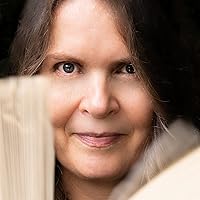
Iona Margaret Balfour Archibald was born in Colchester, Essex, England. She was a researcher and writer on folklore and children's street culture. She is considered an authority on children's rhymes, street and playground games and the Mother Goose tradition. She was elected a Fellow of the British Academy (FBA) in 1998 and was made a Commander of the Order of the British Empire (CBE) in 1999.
The couple met during World War II and married on 2 September 1943. The couple worked together closely, from their home near Farnham, Surrey, conducting primary fieldwork, library research, and interviews of thousands of children. In pursuing the folklore of contemporary childhood they directly recorded rhymes and games in real time as they were being sung, chanted, or played. Working from their home in Alton, Hampshire they collaborated on several celebrated books and produced over 30 works. The couple were jointly awarded the Coote Lake Medal in 1960. The medal is awarded by The Folklore Society "for outstanding research and scholarship".
Speaking in 2010, Iona speaks of working with her husband as being "like two of us in a very small boat and each had an oar and we were trying to row across the Atlantic." and that "[W]e would never discuss ideas verbally except very late at night."
Assuming this is a reprint of the original book (subsequently & inexplicably broken into 3 separate volumes) this book is the result of Iona and Peter Opie’s research into self-organized children’s games in Great Britain in the 1960’s. I got it from the library years ago & finally ordered my own copy from amazon. When I first read it, I wasn't sure why it fascinated me, but now I know. It's full of gorgeous examples of dynamic complexity, and describes how humans (albeit young ones) self-organize to create and sustain culture and language in a self-sufficient society that merrily thrives on the brink of chaos, while being astonishingly consistent across space and time. I love this book.
Only reason I don't give this the full five is the scholarly dryness is sometimes a bit thick, but I was still enthralled. Absolutely going to look for more of the Opies' work.
A very thorough study that informs parenting, teaching, and all therapies for kids (OT, PT, SLP, etc). Important for anyone who works with children or does research into the above fields.