The first casebook for use in courses in aesthetics, Puzzles about Art provides more than 180 real and hypothetical cases that illustrate important principles and theories in the philosophy of art. With 25 illustrations as well as concrete examples from legal cases, museum experiences, newspaper articles and various media, including painting, sculpture, photography, music, drama, and film, Puzzles about Art helps students understand specific problems in the visual arts.
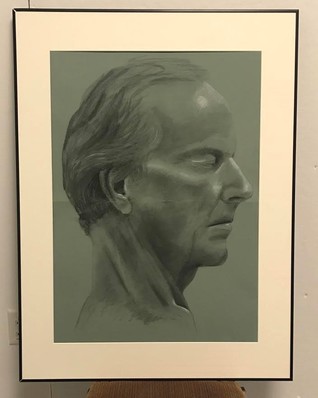
Portrait in Charcoal by Colin Russell (my artist son)
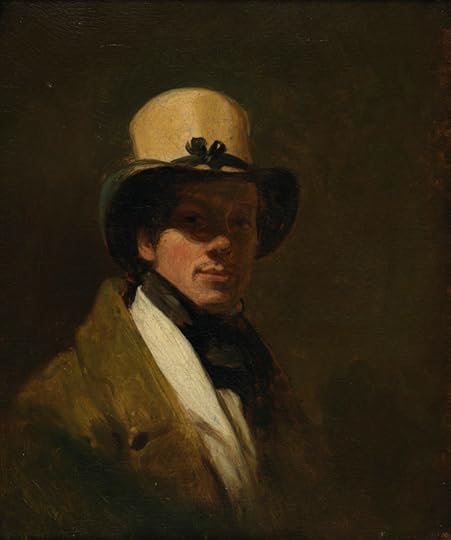
Self-portrait of Henry Inman
One important fact about this aesthetics casebook is that it is sheer fun for anybody interested in art. Rather than making general statements about the 6 chapters and their introductory essays (other reviewers have done this), I will note my favorite case study in each chapter.
Creativity and Fidelity: Performance, Replication, Reading ------ We have the case of the horrible junior high concert where one night the conductor/music teacher wants his 8th graders to hit all the correct notes when performing Bach's First Brandenburg Concerto. And the students do, in fact, hit all the correct notes, since the conductor slowed the temp to super-slow and it took the 8th graders three hours to play their Bach. So, the question is: Did the parents who attended the concert hear Bach's concerto? For me, this case is not only good for a lively discussion of music and the integrity of art but is also laugh out loud funny. I can imagine sitting through such a concert!
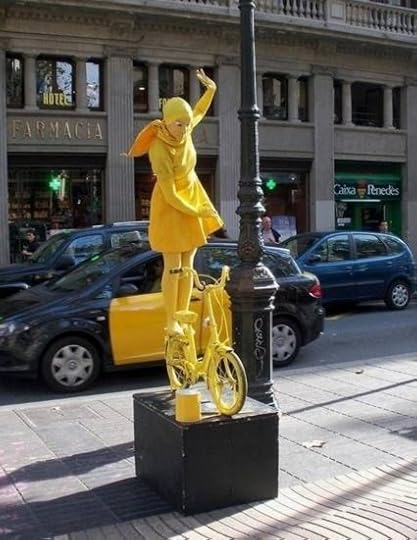
Art and Artworks ----- Ben Vautier, performance artist, sits on a chair out in a city street with a placard on his lap reading, "Look at me. That's all it takes; I'm art." The questions raised by this case are: Was Ben right? Can a person be an artwork? If so, when will Ben stop being an artwork (perhaps when he goes home to shower)? Can Ben be an artwork without the placard? I find this a great case study for a very personal reason: years ago I performed Living Sculpture after having extensive training in mime and physical theater. So, I have additional questions: Should my performance be considered art since I had the formal training in using my body as art and Ben did not? I did perform Living Sculpture in a museum during a gallery opening. How is my museum performance different from performing on a city street?
Beauty, Ugliness, and the Aesthetic Experience ----- According to Thomas Aquinas `beauty is that whose mere observation is pleasing'. Reading this statement made by Aquinas, Jim reflects on his enjoyment of pornography. The author raises the following questions for our consideration: Is all pornography ugly, simply by being pornography? Does pornography's ugliness disqualify it from being beautiful? Is Jim merely observing? Is Jim's experience sufficient in showing Aquinas wrong in defining beauty in this way?
Meaning and Interpretation ----- The authors pose the question: "Should we value art because we learn from it and use it to enhance our understanding of some aspects of the world in which we live?" With this in mind we have the case of director Michael Cimino filming a scene of American soldiers playing Russian roulette while fighting in Vietnam. Although such a game was never actually a documented fact, Cimino said the game functioned as a symbol of the soldier's wartime fate. We are asked to agree or disagree on such cinematic devices being called a symbol.
Art and Other Values ----- The authors ask the questions: "Does an artist have the right to offend the moral or religious sensitivities of a community? Should whatever aesthetic values we find in film, painting, literature, or any of the other arts yield to other societal values? With these questions in mind we consider the case study of Jean-Luc Godard's film Hail Mary. Many religious-minded people find this film offensive. Recognizing how censorship is a hot public issue, such a case study is fertile ground for reflection.
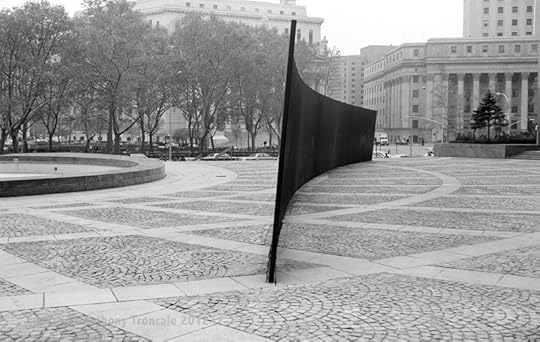
Critical Judgment ----- The authors present the case study of Richard Serra's Tilted Arc. This public work of art was praised by art critics and art experts, but business people who were forced to actually look at Serra’s art and live with it in their public plaza hated the thing. So the question becomes: Should the work be removed? Or, perhaps, should the business people be educated on the artistic and aesthetic value of Serra's work? Again, such case studies can provide a fantastic jumping off point for reflections or discussions on what it means to judge a work of art.
This was a fun time, if less illuminating than I was hoping for. I enjoyed the precedents / the references to historical controversies about art, and would have loved a couple more meaty deep-dives drawn from actual events (like the passage about Serra's Tilted Arc). But I really could have done without the contrived hypotheticals that kept hammering in the same point from a dozen angles. Every question was essentially a variant of "but is it art? what is art? what is good art?" (possibly also "but is it too morally fucked-up to be art?"), so it didn't feel like the questions had to be asked SO many times? Anyway, still a worthwhile read!
"Look at me. That's all it takes, I'm art." —Ben Vautier
"Many men, when left to themselves, have but a faint and dubious perception of beauty" —Hume (sick burn!!!)
This is an intriguing way to explore aesthetics -- rather than write abstractly about beauty, meaning, creativity and criticism, the authors have gathered more 180 puzzles related to the visual arts, some drawn from real life and some contributed by fellow philosophers. If a band of eighth graders takes three hours to perform the first Brandenburg Concerto, has the audience heard Bach's work? Can Harold Cohen's computer program AARON be said to make art? What distinguishes Andy Warhol's Brillo boxes from those of another artist ... or from ordinary Brillo boxes? By posing vivid, stimulating questions, the book makes the philosophy of art seem immediate, absorbing and worthy of deeper study.
Puzzles about Art: An Aesthetics Casebook" is just that, a selection of puzzling cases which raise interesting questions about art and art theory. The book is organized into 6 chapters: Art and Artworks; Beauty, Ugliness and Aesthetic Experience; Meaning and Interpretation; Creativity and Fidelity; Art and Other Values; and Critical Judgment. Each chapter begins with a 10-page introduction and then provides another 10-25 pages of questions, problems, and case studies.
The case studies, which are drawn from a wide variety of sources (some previously published and discussed, others not; some real, some fabricated) are the real contribution made by this collection. The questions and issues they raise are both timely and important to any study of aesthetics. An Amazon reviewer describes the book as a "welcome and refreshing departure from the standard approach," but while the book is certainly welcome and refreshing, it's less a departure from the usual literature than a helpful supplement to it (which is how I've used it in my college courses). It's certainly not a stand-alone text. If you don't know art theory, this collection of cases will not teach you much about it--and that's it's only real weakness, since it could have.
The introductory discussions to each set of cases are generally well-written and interesting, but without adding much if any length to the text they could have done a better job of introducing and explaining the primary thinkers on each subject, rather than just offering a mostly topical overview to contextualize what follows. In other words, the authors of this otherwise fine text missed a chance (or at least, they didn't take full advantage of the chance) to educate their readers rather than just stimulate their thinking. Hopefully a second edition will correct that missed opportunity, for it would make the book infinitely more helpful to readers unfamiliar with our rich but complicated philosophy of art.
This book was used as a text for my aesthetics class, but it is quite readable and enjoyable in its own right. There are some very thought-provoking cases that draw the reader to question the boundaries of things. What is or is not art? What is or is not beautiful? Is it purely subjective?