

What do you think?

A Woman's Worth
Cutting across class, race, religion, and gender, A Woman's Worth speaks powerfully and persuasively to a generation in need of healing, and in search of harmony.
With A Woman's Worth , Marianne Williamson turns her charismatic voice—and the same empowering, spiritually enlightening wisdom that energized her landmark work, A Return to Love — to exploring the crucial role of women in the world today. Drawing deeply and candidly on her own experiences, the author illuminates her thought-provoking positions on such issues as beauty and age, relationships and sex, children and careers, and the reassurance and reassertion of the feminine in a patriarchal society.
With A Woman's Worth , Marianne Williamson turns her charismatic voice—and the same empowering, spiritually enlightening wisdom that energized her landmark work, A Return to Love — to exploring the crucial role of women in the world today. Drawing deeply and candidly on her own experiences, the author illuminates her thought-provoking positions on such issues as beauty and age, relationships and sex, children and careers, and the reassurance and reassertion of the feminine in a patriarchal society.
160 pages, Paperback
Published March 8, 1994
About the author
Marianne Williamson
468 books2,368 followersMarianne Williamson is an internationally acclaimed lecturer, activist, and author with six New York Times bestsellers. Her books include Tears to Triumph, A Return to Love, A Year of Miracles, The Law of Divine Compensation, The Gift of Change, The Age of Miracles, Everyday Grace, A Woman's Worth, Illuminata, and A Course in Weight Loss. She has been a popular guest on television programs such as Oprah and Good Morning America.
Ratings & Reviews
Friends & Following
Create a free account to discover what your friends think of this book!
Community Reviews
Displaying 1 - 30 of 247 reviews

December 3, 2012
One of my favorite books!
Love Marianne Williamson!! Proverbs 31:10b PRICELESS:-)
Our deepest fear is not that we are inadequate. Our deepest fear is that we are powerful beyond measure. It is our light, not our darkness, that most frightens us. We ask ourselves, who am I to be brilliant, gorgeous, talented, fabulous? Actually, who are you not to be? You are a child of God. Your playing small doesn't serve the world. There's nothing enlightened about shrinking so that other people won't feel insecure around you. We are all meant to shine, as children do. We were born to make manifest the glory of God that is within us. It's not just in some of us; it's in everyone. And as we let our own light shine, we unconsciously give other people permission to do the same. As we're liberated from our own fear, our presence automatically liberates others.
Love Marianne Williamson!! Proverbs 31:10b PRICELESS:-)
Our deepest fear is not that we are inadequate. Our deepest fear is that we are powerful beyond measure. It is our light, not our darkness, that most frightens us. We ask ourselves, who am I to be brilliant, gorgeous, talented, fabulous? Actually, who are you not to be? You are a child of God. Your playing small doesn't serve the world. There's nothing enlightened about shrinking so that other people won't feel insecure around you. We are all meant to shine, as children do. We were born to make manifest the glory of God that is within us. It's not just in some of us; it's in everyone. And as we let our own light shine, we unconsciously give other people permission to do the same. As we're liberated from our own fear, our presence automatically liberates others.
August 2, 2013
I loved this book at first, the encouragement, the wisdom that women should under all circumstances support one another. Then I got to the page where she refers to certain women as sluts and whores (and then she does it again! in the next chapter). I picked up this book because of her other compassionate, wise, powerful writing, but this one doesn't quite fit. It's uplifting in places, yet preachy and judgmental in others. If we are going to uplift all women then we need to be compassionate towards ALL women with the understanding that some act like sluts and whores because they don't know better and because they need help. This book was written a long time ago (90s I think) so perhaps its time for a rewrite/revision?
April 6, 2012
When you've gone to hell and made it back - this book speaks to you because it's about the path back. It's more about breaking free, finding joy, finding yourself, and learning to love yourself. Being a woman in a patriarchal society ends up being an adventure that tests every strength a woman is born with and toys with every weakness that was created by the world. It's a great book to show you the most positive productive path to attaining your worth as a woman. Very empowering for a sensitive soul in today's society.

October 21, 2014
1/14/15 - I first picked this book up because I felt like I was at a place in my life where needed to read something affirming, and empowering, from a woman's perspective. I liked that this one is short, written relatively simply, and is spiritual without being overtly religious. I figured if it turned out to be a bit too "mushy" or "new agey" for my taste, it would at least be a quick read, a week or two max, and I would be able to cull a few chunks of positive, general wisdom. Well, it's been nearly three months, and I'm only about 2/3 through. Should I slog through to the end, in the hopes I'll be able to salvage something worthwhile, or just give up and move on?
So what caused me to loose enthusiasm for this read? At first I marked several meaningful passages, but haven't done so for at least the last couple chapters. I'm currently stuck in the chapter about sex, which is full of sweeping absolutistisms that border on troublesome sexist stereotypes. Actually, I have struggled with this issue since the beginning, but forgave the author because I figured writing about women as a whole population and their generalized spiritual life issues is difficult without using broad strokes. I figured I knew what she "meant". It's just so much more pronounced in this particular chapter though, it makes me physically cringe at times. I appreciate when she focuses on masculine and feminine traits, which exist within all men and women, and discussion of how damaging it is that the feminine is so often repressed in our culture. However I do not so much appreciate the frequent digressions into "men are like this, and women are like that", or "women SHOULD xyz..." as if we're all the same. Oh, and excessive slut shaming and body shaming too. How unenlightened of the author, to presume the quality of someone's life based solely on her appearance.
My struggles with this book also include the rambling paragraphs of meaningless mumbo jumbo. Nonsensical sentences stacked one after another with little discernible relation between them or the surrounding topical paragraphs. Almost nonsensical filler text, like loripsum, but with a new age flavor. I consider myself to have pretty good reading-comprehension, but I literally reread entire pages full of significant seeming statements and had no idea what I had just read or how it related to the supposed topic of the chapter. Scanning back through, now I can't find any specific examples though, and I'm actually rediscovering lots of seemingly good passages. Was I just in a bad headspace and didn't get it? Or is my issue a phenomenon of the writing style, that individual passages sound good in isolation, while scanning, but as a whole it doesn't make much sense? It's a toss up.
I loathe abandoning another book and I might still get something out of this one, so I suppose I will continue, if only to just check it off as complete.
2/26/15 - I eventually did trudge through and finish this one. Ugh. The chapter about motherhood was the worst. I know multiple worthwhile women who have no interest or desire in being mothers. But the author seems to think they are wrong, because apparently a woman's primary purpose (and worth!) is her physical AND spiritual capacity to nurture life/the world. According to the author, a woman is incapable of finding fulfillment while denying motherhood. Barf. I'm sure they, and the millions others who are childless and happy, would disagree.
The brief, emotional section on abortion made me want to hurl the book across the room. I'm sorry, but don't talk about the pain and suffering you ASSUME all women who have abortions feel, unless you're ALSO going to talk about the grief and struggles of women who give up their babies for adoption... And while we're at it, the struggles of actually becoming a mother too! Just to be fair and enlightened about such a complex topic, ya know. Ugh. And all of this rant is kind of ironic, because personally I do want to have a baby, and experience motherhood, and I feel unfulfilled because I'm still waiting... So this awful chapter also speaks to me somewhat in its intended context. I guess I can just understand the issue from other points of view while feeling my own feelings too. So did this supposed spiritual guru help me deal with said feelings? Nope. She just made me angry for being so judgmental of my awesome friends who own their own bodies and make their own choices for their lives and already know their worth. :P
That's hardly the end of the patriarchal nonsense. Nary a page after the abortion stuff is this:
“During the recent presidential election, Hillary Clinton was attacked for having the audacity to be a strong woman with a mind of her own [lol, she still is 25 years later!]. I understand her predicament very well. But there's another side to the Hillary question [What question was that?]. It's great that she takes an active role politically [indeed!], but [...wait, is that a hint of condescension?] one of her most important functions as First Lady is to help Bill Clinton emotionally, to provide him and their daughter with the feminine, intimate, personal support that every person needs in order to live most powerfully in the world [oooooooh, so THAT'S what a wife is supposed to do for her worldly working man husband, because this is really a marriage/family metaphor!]. Every prospective First Lady is now asked what she would do if she got the job. Jacqueline Kennedy had said [notice the use of passive voice] that her greatest service...would be [passive again] to take care of John Kennedy. There was a time when I would have found that an unliberated answer [because it IS]. Today I find it sublime, sane, and feminist. [Feminist?! WTF]
“It is feminist because it honors the role of the feminine—nurturing, care giving, compassionate, loving—whether it is performed by a man or a woman.” Yeeeeeah..... This word you keep using. I don't think it means what you think it means. And where in there discussed how men should nurture and support their women?! SMH. And so is Hillary, all the way to the 2016 election, if she CHOOSES to run, that is.
But seriously. All I got out of this passage was some contradictory weirdness about how women are supposed to take care of their husbands and families AND maybe also be independent and empowered too, but not really because then they're not nurturing heir families enough. Oh, and men too... somehow. I think???
The whole book was like this for me.
ANYHOOT in conclusion: I'm downgrading this from two to one stars. It is dated, baby-boomer, patriarchal, new age flavored tripe, masquerading as spiritual feminist empowerment.
Perhaps one might get something out of it if one's empowerment comes from fitting snuggly into the "traditional" womanly role assigned at birth according to one's visible genitalia. The world would be a better place if we all would just accept that role graciously and willingly, wouldn't it. Then, women (and feminine traits) wouldn't HAVE to be second class to men (and masculine traits), because we would all be settled comfortably in our assigned "equal" places!
So what caused me to loose enthusiasm for this read? At first I marked several meaningful passages, but haven't done so for at least the last couple chapters. I'm currently stuck in the chapter about sex, which is full of sweeping absolutistisms that border on troublesome sexist stereotypes. Actually, I have struggled with this issue since the beginning, but forgave the author because I figured writing about women as a whole population and their generalized spiritual life issues is difficult without using broad strokes. I figured I knew what she "meant". It's just so much more pronounced in this particular chapter though, it makes me physically cringe at times. I appreciate when she focuses on masculine and feminine traits, which exist within all men and women, and discussion of how damaging it is that the feminine is so often repressed in our culture. However I do not so much appreciate the frequent digressions into "men are like this, and women are like that", or "women SHOULD xyz..." as if we're all the same. Oh, and excessive slut shaming and body shaming too. How unenlightened of the author, to presume the quality of someone's life based solely on her appearance.
My struggles with this book also include the rambling paragraphs of meaningless mumbo jumbo. Nonsensical sentences stacked one after another with little discernible relation between them or the surrounding topical paragraphs. Almost nonsensical filler text, like loripsum, but with a new age flavor. I consider myself to have pretty good reading-comprehension, but I literally reread entire pages full of significant seeming statements and had no idea what I had just read or how it related to the supposed topic of the chapter. Scanning back through, now I can't find any specific examples though, and I'm actually rediscovering lots of seemingly good passages. Was I just in a bad headspace and didn't get it? Or is my issue a phenomenon of the writing style, that individual passages sound good in isolation, while scanning, but as a whole it doesn't make much sense? It's a toss up.
I loathe abandoning another book and I might still get something out of this one, so I suppose I will continue, if only to just check it off as complete.
2/26/15 - I eventually did trudge through and finish this one. Ugh. The chapter about motherhood was the worst. I know multiple worthwhile women who have no interest or desire in being mothers. But the author seems to think they are wrong, because apparently a woman's primary purpose (and worth!) is her physical AND spiritual capacity to nurture life/the world. According to the author, a woman is incapable of finding fulfillment while denying motherhood. Barf. I'm sure they, and the millions others who are childless and happy, would disagree.
The brief, emotional section on abortion made me want to hurl the book across the room. I'm sorry, but don't talk about the pain and suffering you ASSUME all women who have abortions feel, unless you're ALSO going to talk about the grief and struggles of women who give up their babies for adoption... And while we're at it, the struggles of actually becoming a mother too! Just to be fair and enlightened about such a complex topic, ya know. Ugh. And all of this rant is kind of ironic, because personally I do want to have a baby, and experience motherhood, and I feel unfulfilled because I'm still waiting... So this awful chapter also speaks to me somewhat in its intended context. I guess I can just understand the issue from other points of view while feeling my own feelings too. So did this supposed spiritual guru help me deal with said feelings? Nope. She just made me angry for being so judgmental of my awesome friends who own their own bodies and make their own choices for their lives and already know their worth. :P
That's hardly the end of the patriarchal nonsense. Nary a page after the abortion stuff is this:
“During the recent presidential election, Hillary Clinton was attacked for having the audacity to be a strong woman with a mind of her own [lol, she still is 25 years later!]. I understand her predicament very well. But there's another side to the Hillary question [What question was that?]. It's great that she takes an active role politically [indeed!], but [...wait, is that a hint of condescension?] one of her most important functions as First Lady is to help Bill Clinton emotionally, to provide him and their daughter with the feminine, intimate, personal support that every person needs in order to live most powerfully in the world [oooooooh, so THAT'S what a wife is supposed to do for her worldly working man husband, because this is really a marriage/family metaphor!]. Every prospective First Lady is now asked what she would do if she got the job. Jacqueline Kennedy had said [notice the use of passive voice] that her greatest service...would be [passive again] to take care of John Kennedy. There was a time when I would have found that an unliberated answer [because it IS]. Today I find it sublime, sane, and feminist. [Feminist?! WTF]
“It is feminist because it honors the role of the feminine—nurturing, care giving, compassionate, loving—whether it is performed by a man or a woman.” Yeeeeeah..... This word you keep using. I don't think it means what you think it means. And where in there discussed how men should nurture and support their women?! SMH. And so is Hillary, all the way to the 2016 election, if she CHOOSES to run, that is.
But seriously. All I got out of this passage was some contradictory weirdness about how women are supposed to take care of their husbands and families AND maybe also be independent and empowered too, but not really because then they're not nurturing heir families enough. Oh, and men too... somehow. I think???
The whole book was like this for me.
ANYHOOT in conclusion: I'm downgrading this from two to one stars. It is dated, baby-boomer, patriarchal, new age flavored tripe, masquerading as spiritual feminist empowerment.
Perhaps one might get something out of it if one's empowerment comes from fitting snuggly into the "traditional" womanly role assigned at birth according to one's visible genitalia. The world would be a better place if we all would just accept that role graciously and willingly, wouldn't it. Then, women (and feminine traits) wouldn't HAVE to be second class to men (and masculine traits), because we would all be settled comfortably in our assigned "equal" places!

May 9, 2016
Okay... there's good stuff in here about self-love and womanhood, but this felt very dated, occasionally in an offensive way. I see why it's a classic that therapists still recommend and libraries should keep buying, but... you really have to pick out the good and bad from it.
Good take-aways:
"Forget looking for earthly role models, because there aren't many; and even when we find them, they live their own lives and not ours." p. 18
"Perhaps joy can be practiced. Perhaps we can decide to be happy, to give joy before waiting to receive it. This is not denial, but affirmation of the power inside us." p. 47
Bad take-aways (i.e. you have got to be kidding me)
"One of her most important functions as First Lady is to help Bill Clinton emotionally, to provide him and their daughter with the feminine, intimate, personal support..." p. 108, about Hillary Clinton and what her "job" as First Lady entails :-0
There's also some stuff about abortion that surprised me, in that I feel like she really missed the mark; it's different for everyone, but she makes generalizations that felt rather conservative. She also talks ALOT about relationships between women and men- and while she gives a caveat at the beginning that she's not trying to offend queer women, I feel like that wouldn't stand nowadays. Now, you would write the book and attempt from the beginning to be inclusive- not tack on a disclaimer afterwards. I don't know- I think being a generation separate from the original audience probably affected my general response.
Good take-aways:
"Forget looking for earthly role models, because there aren't many; and even when we find them, they live their own lives and not ours." p. 18
"Perhaps joy can be practiced. Perhaps we can decide to be happy, to give joy before waiting to receive it. This is not denial, but affirmation of the power inside us." p. 47
Bad take-aways (i.e. you have got to be kidding me)
"One of her most important functions as First Lady is to help Bill Clinton emotionally, to provide him and their daughter with the feminine, intimate, personal support..." p. 108, about Hillary Clinton and what her "job" as First Lady entails :-0
There's also some stuff about abortion that surprised me, in that I feel like she really missed the mark; it's different for everyone, but she makes generalizations that felt rather conservative. She also talks ALOT about relationships between women and men- and while she gives a caveat at the beginning that she's not trying to offend queer women, I feel like that wouldn't stand nowadays. Now, you would write the book and attempt from the beginning to be inclusive- not tack on a disclaimer afterwards. I don't know- I think being a generation separate from the original audience probably affected my general response.

April 25, 2013
A Woman’s Worth by Marianne Williamson
I see how my experiences in life are true to this process of being the princess and ultimately entering into the Queen stage of life.
Example:
I experienced a lot of severe parental neglect, physical, emotional, sexual abuse: molestation and rape. I developed Post-Traumatic Stress Disorder, somatization and conversion disorders. For a long time, I was unhappy and felt like a victim. As I went through therapy and started to heal and understand Post Traumatic Stress Disorder, I made the transition from victim into a SURVIVOR (Queen).
I decided instead of letting my abusers win, by my silence, I would find my voice to help others learn how to cope with mental illness and their past traumas so they can live a happy life. Taking a negative and turning it into a positive by writing my memoir.
This book is a must read. This is only one part of the book it talks about relationships, spirituality and positive thinking.
I am very inspired by this author and this is the first book I have read by her. I look forward to reading her other books.

December 23, 2008
Some of her writing and ideas seem a little too much for me. Too needy or whiny or something like that. Still, there are some great moments in this book and my favorite quote of all time, which has been attributed to Nelson Mandela, but is actually hers:
"Our greatest fear is not that we are inadequate, but that we are powerful beyond measure. It is our light, not our darkness, that frightens us. We ask ourselves, "Who am I to be brilliant, gorgeous, handsome, talented and fabulous?" Actually, who are you not to be? You are a child of God, your playing small does not serve the world. There is nothing enlightened about shrinking so that other people won't feel insecure around you. We were born to make manifest the glory of God within us. It is not just in some; it is in everyone. And, as we let our light shine, we consciously give other people permission to do the same. As we are liberated from our fear, our presence automatically liberates others."
Marianne Williamson
Author of Return to Love, and A Woman's Worth
"Our greatest fear is not that we are inadequate, but that we are powerful beyond measure. It is our light, not our darkness, that frightens us. We ask ourselves, "Who am I to be brilliant, gorgeous, handsome, talented and fabulous?" Actually, who are you not to be? You are a child of God, your playing small does not serve the world. There is nothing enlightened about shrinking so that other people won't feel insecure around you. We were born to make manifest the glory of God within us. It is not just in some; it is in everyone. And, as we let our light shine, we consciously give other people permission to do the same. As we are liberated from our fear, our presence automatically liberates others."
Marianne Williamson
Author of Return to Love, and A Woman's Worth
March 7, 2012
No one woman can tell you your worth. She contradicts herself in the book about the only one point she really makes concerning what she THINKS women want and cannot handle relating to work and success. Her stories only disregard the entire population of women but her idealisitic veiw. It sounds like a bunch of complaining to me. The way the entire population of women express and orient themselves should be honored as their free will based upon their values, beliefs and worth not Williamson's.

June 22, 2014
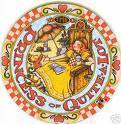
I’m not certain I could do this book justice trying to paraphrase its lessons. She speaks of why each woman must develop the aspects of the Queen or the Goddess within herself – cultivate the divine power that is her destiny. Coincidentally the bookmark I used is the Mary Englebreit’s rendering of the towhead blond girl on the throne that says ‘It’s good to be Queen’ – I have the same print as a puzzle glued in matted in my kitchen. I bought it partly for the legend of the band I loved (love) so well, but also because the title of Queen has long been mine, Queen of Hearts, Queen of Poland - a mildly haughty, regal way of being. That’s not the way Williamson is using the title to illustrate her lesson, but that we need to remember to elevate our thoughts and speech to reflect our position of grace and power that comes from within our hearts. There is much more to it. It must be read and pondered and meditated upon, not paraphrased or merely characterized.

January 5, 2019
This was given to read as homework by my career coach as I transition into a new career at the young-old age of forty-seven.
It was okay. There were a few ideas that really resonated. One is the idea that feminism isn't necessarily always about establishing equality, but instead about establishing different but not necessarily better. Acknowledging the power, beauty. and necessity of the feminine energy. Feminism is about embracing all that is feminine.
I also appreciated her thoughts on aging. I have never felt happier, sexier, more self-assured, more capable than I do now. If aging is bad, an aging female is often viewed as the worst of the bad. I don't believe that. The years have given me so much more than just wrinkles. I have wisdom, experience, depth, perspective. If wrinkles and a few aches and pains are the price for what I've gained as a person over the years, I think I've gotten a damn good bargain.
It was okay. There were a few ideas that really resonated. One is the idea that feminism isn't necessarily always about establishing equality, but instead about establishing different but not necessarily better. Acknowledging the power, beauty. and necessity of the feminine energy. Feminism is about embracing all that is feminine.
I also appreciated her thoughts on aging. I have never felt happier, sexier, more self-assured, more capable than I do now. If aging is bad, an aging female is often viewed as the worst of the bad. I don't believe that. The years have given me so much more than just wrinkles. I have wisdom, experience, depth, perspective. If wrinkles and a few aches and pains are the price for what I've gained as a person over the years, I think I've gotten a damn good bargain.

May 11, 2010
"When we love a man, we love from the bottom of all souls, from our source, from the center of things, from God. If men only knew what a blessing our love is. Ad if we only knew what a blessing it is to be loved by them. To say "I love you" and to mean it is the same thing as saying "God bless you."

November 1, 2016
Language is incredibly beautiful. Poetic even.
I for one love this book. And it is not about aggressive feminism. It is very much a book for learning about the soul underneath all exterior expectations, and internal personal expectations----that we put on ourselves, and then discover that who we really are all along is good. Beautiful. Right. There was nothing wrong with us to begin with. What the book offers the reader to consider is an awareness and an embracing of ourselves that had me realize that I am the queen I have been striving to be all along. And quietly celebrating that on multiple levels of our existences.
In a nutshell: Being OK with ourselves. Self-love. Self-respect. In a divine and emotional approach. It is not religious, it is not preachy. It is an offering to look at woman and at oneself in a new light in addition to what we already thought we knew.
Whatever you believe, the book is eloquently written and it is a pleasure in itself to read each sentence. Words flow off the pages like song.
I for one love this book. And it is not about aggressive feminism. It is very much a book for learning about the soul underneath all exterior expectations, and internal personal expectations----that we put on ourselves, and then discover that who we really are all along is good. Beautiful. Right. There was nothing wrong with us to begin with. What the book offers the reader to consider is an awareness and an embracing of ourselves that had me realize that I am the queen I have been striving to be all along. And quietly celebrating that on multiple levels of our existences.
In a nutshell: Being OK with ourselves. Self-love. Self-respect. In a divine and emotional approach. It is not religious, it is not preachy. It is an offering to look at woman and at oneself in a new light in addition to what we already thought we knew.
Whatever you believe, the book is eloquently written and it is a pleasure in itself to read each sentence. Words flow off the pages like song.
July 21, 2009
I read this book as a teenager, and I am glad I did so. It really made me take a second look at how I valued myself. At the time, and throughout the 13 years since then I have often given it as a gift to female friends. One of the things I liked most about it was that it was a spiritual book, and non denominational for the most part. When reading it I always felt like I was having a cup of tea with an old friend who has some really good advice on caring for ourselves.

June 30, 2011
I read this book while in London....I read it over and over and over and over. It has been years since I picked it up...but it feels like the right time. Anyhow....my dog keeps bringing it to me....she thinks I need to read it too. This book changed my life during a time when my life was changing. It was a beautiful, fortuitous combination. God bless Marianne Williamson!
September 1, 2013
I don't need to find my inner goddess and turn myself from a slavegirl into a queen. Annoying book. Didn't really finish it...skipped around and skimmed a lot. Aborting the mission.
May 7, 2020
Some outdated concepts and ideas but, good intention behind the book.
I really liked these quotes:
"Slowly but surely, generation after generation, over thousands of years, the feminine was made to seem ridiculous. She was debased in men as well as women, all of us risking shame when choosing to relate to her"
"We are now living at the beginning of resurrection of Goddess. This occurs not through the reemergence of anyone particular symbol, be it Mary, Quanyin, Gaea, or Isis. She is many names and faces but, her most important one is your own"
I really liked these quotes:
"Slowly but surely, generation after generation, over thousands of years, the feminine was made to seem ridiculous. She was debased in men as well as women, all of us risking shame when choosing to relate to her"
"We are now living at the beginning of resurrection of Goddess. This occurs not through the reemergence of anyone particular symbol, be it Mary, Quanyin, Gaea, or Isis. She is many names and faces but, her most important one is your own"

February 24, 2019
Though written in the 90's, I feel this book is still very relevant in today's society. Marianne not only speaks about the struggles, perils, and boundaries experienced by women but delves how those aspects affect family life, relationships, success in the workplace, etc., all while being the voice of hope that the global community will come around to kindness and acceptance of the fire that is female. Lovely style of writing, a necessary voice, and a breath of fresh air. I'm eager to read more of her books.
June 27, 2020
Great for women beginning to deconstruct their patriarchal religious conditioning.
March 4, 2020
Pieces of this feel incredibly uplifting and powerful

July 3, 2023
"Whatever it was, the alcohol helped her let it out, but then the alcohol enslaved her, and then it killed her. That's clear. But why do people who have the most ardor, the most enchantment, the most power so often feel the need for drugs and alcohol? They do not drink just to dull their pain; they drink to dull their ecstasy. Betty Lynn lived in a world that doesn't know from ecstatic women, or want to know, or even allow them to exist" (14).
"You bet we're in denial. We deny the power of weakness to hold us back, be it the weakness of the world or the weakness in our own past" (15).
"The woman who is truly self-aware knows that her self is a light from beyond this world, a spiritual essence that has nothing to do with the physical world. Those of us who strongly believe in the reality of spirit are quickly invalidated by a worldly power system that senses within spiritual truth the seeds of its own destruction. For if we truly believe in internal light, we would not believe in the power of external forces and we would not be so easy to dominate and control" (24).
"It is to realize that it is God's will that each of us, every woman, man, and child, be happy, whole, and successful. It is impossible to overestimate the psychic damage done by the delusions, pseudo-religious and other, that God is somehow happier or we are somehow purer if we are suffering just a bit. The truth is not that God is happier or that we are better, but that the institutions that told us so are happier because suffering keeps us in our place, where we are easier to control
But how can there be a joyful planet without its joy being inhabited by joyful people? Our embrace of joy doesn't rob others of the possibility. Quite the opposite is true--it liberates them, if they choose to be liberated" (28).
"I have never received the criticism for failure that I have for success, and it is clear to me that people in our society at least unconsciously hold the conviction that someone else's success limits their own, makes them lesser, and puts a permanent lid on their own chances. The world believes in finite resources and everybody's guilt. As long as we adhere to these pernicious beliefs, we will not only fail to let others shine, but we will never be able to allow ourselves to shine fully either" (29).
"Throughout our twenties and thirties, we care so much about what the Joneses think, even if we think we don't. These two decades are the time when we're most tempted to try to live for others. Around forty, it occurs to us that the Joneses are either going to like us or they're not, that the Joneses have holds in their socks too, thank you, and that we have less control over what other people think than we ever imagined" (49).
"Age appals us because maturity appals us, responsibility appals us" (50).
"Without a spiritual life, what are we left with? What is there to strive for? Where do we look for clues? In magazines?" (50).
"Someone once gave me a coffee mug on which is printed ENTERTAIN NO NEGATIVITY. If only I could be so strong. As 1992 was drawing to a close and I gathered with friends at the approach of midnight, I scribbled on a piece of paper, 'In 1993, I will repeat no negative stories.' We are not a little powerful; we are enormously powerful. Every time we say a negative word, we lay the mental plans for negative things. There is no escaping this law of the mind. As we think, so shall it be" (51).
"Many of have set up our lives so that we are constantly busy, living on a kind of adrenaline that poses as energy. This is an insidious trick of the negative mind: building a wall of frantic activity that mitigates the experience of a meaningful inner life" (53).
"Just as children grow by playing games in which they imagine themselves to be grown-ups, so are we meant to grow by imagining ourselves to be bigger than we are right now. You need not apologize for being brilliant, talented, gorgeous, rich or smart. Your success doesn't take away from anyone else's. It actually increases the possibility that others can have it too. Your money increases your capacity to give money to others, your joy increases your capacity to give joy to others, and your love increases your capacity to give love to others. Your playing small serves no one. It is a sick game. It is old thinking and it is dire for the planet. Stop it immediately. Come home to the castle" (54).
"There's a big difference between a weak man and a gentle man. Weak men make us nervous. Gentle men make us calm" (67).
"enchanted women can't make it without love and a sense of the miraculous. Period. We live in an environment hostile to sensitive souls" (86).
"We know so little in this society about the search for enlightenment, and what's worse is that in our pugnacious arrogance we often look down on those who do know something about it. We have squeezed the mystical experience out of our cultural data bank. And millions and millions of starved souls are reaching for it anyway, lining up in fervent pilgrimage" (86).
"What would the world be like if the guiding principle of our lives were this: We will do nothing, support nothing, conspire with nothing that could possibly hurt anyone? This cuts to essential knowledge, that we must stand up to protect the children no matter what, no matter where. And we are all children" (98).
"If harmlessness becomes the order of the day, problems will be replaced by the joy of creating joy. All we will do is pray, create, and make love--or some variations thereof, forever" (98).
"Children are not children. They are just younger people. We have the same soul at sixty that we had at forty, and the same soul at twenty-five that we had when we were five" (111).
"We live in a society where a small percentage of people call the shots: A vast majority serve a social or business structure centered outside themselves that cares not one bit for their hearts or their souls" (114-115).
"No one is stuck who chooses not to be. No one is without infinite potential for a radical turnaround--from all that is unconscious and fearful and weak to all that is conscious and loving and strong" (121).
"When I was in my early twenties, I went with a date to a nightclub in New York. Appearing there were two talented young musicians, Daryl Hall and John Oates. Although we would later know them as Hall and Oates, at the time they were known, but not that well known, and their music had the fabulous impact of fresh beginnings and new sounds.
Something happened to me that night. I had been to many concerts before , but I had never experienced as I did then the transcendent way a musician can bring an entire room into a single heartbeat. I remember thinking, 'They're priests; that's what they really are. They're priests. They weren't taking me on a magic-carpet ride to music. Music was the magic carpet on which they were taking me somewhere else, that somewhere else the land and sky inside ourselves. It's the purpose of our lives to find that place and stay in it" (126).
"I fell in love with the thought that a human life could be a priestly conduit, a connecting link between earth and sky. It didn't matter, then, whether we were artists, philosophers, teachers, or rabbis. What mattered was that we laid down our ego lives, that we might be used as some sort of highway to a life that lay beyond all this. And as I grew and as I stumbled and, most important, as I began to love and be loved, I realized that the ultimate priest is the lover inside us, and the ultimate priesthood is the role of friend and loved one" (130).
"We have great power to affect the attitudes and behavior of the people around us, at work and at home. We have the power to set a tone of honor, to create an energy around ourselves that says, 'I respect myself. I respect you. Let's respect each other'" (129).
"Through the power of all that is beautiful in human beings, let all that is ugly go back to where it came from" (132).
"You bet we're in denial. We deny the power of weakness to hold us back, be it the weakness of the world or the weakness in our own past" (15).
"The woman who is truly self-aware knows that her self is a light from beyond this world, a spiritual essence that has nothing to do with the physical world. Those of us who strongly believe in the reality of spirit are quickly invalidated by a worldly power system that senses within spiritual truth the seeds of its own destruction. For if we truly believe in internal light, we would not believe in the power of external forces and we would not be so easy to dominate and control" (24).
"It is to realize that it is God's will that each of us, every woman, man, and child, be happy, whole, and successful. It is impossible to overestimate the psychic damage done by the delusions, pseudo-religious and other, that God is somehow happier or we are somehow purer if we are suffering just a bit. The truth is not that God is happier or that we are better, but that the institutions that told us so are happier because suffering keeps us in our place, where we are easier to control
But how can there be a joyful planet without its joy being inhabited by joyful people? Our embrace of joy doesn't rob others of the possibility. Quite the opposite is true--it liberates them, if they choose to be liberated" (28).
"I have never received the criticism for failure that I have for success, and it is clear to me that people in our society at least unconsciously hold the conviction that someone else's success limits their own, makes them lesser, and puts a permanent lid on their own chances. The world believes in finite resources and everybody's guilt. As long as we adhere to these pernicious beliefs, we will not only fail to let others shine, but we will never be able to allow ourselves to shine fully either" (29).
"Throughout our twenties and thirties, we care so much about what the Joneses think, even if we think we don't. These two decades are the time when we're most tempted to try to live for others. Around forty, it occurs to us that the Joneses are either going to like us or they're not, that the Joneses have holds in their socks too, thank you, and that we have less control over what other people think than we ever imagined" (49).
"Age appals us because maturity appals us, responsibility appals us" (50).
"Without a spiritual life, what are we left with? What is there to strive for? Where do we look for clues? In magazines?" (50).
"Someone once gave me a coffee mug on which is printed ENTERTAIN NO NEGATIVITY. If only I could be so strong. As 1992 was drawing to a close and I gathered with friends at the approach of midnight, I scribbled on a piece of paper, 'In 1993, I will repeat no negative stories.' We are not a little powerful; we are enormously powerful. Every time we say a negative word, we lay the mental plans for negative things. There is no escaping this law of the mind. As we think, so shall it be" (51).
"Many of have set up our lives so that we are constantly busy, living on a kind of adrenaline that poses as energy. This is an insidious trick of the negative mind: building a wall of frantic activity that mitigates the experience of a meaningful inner life" (53).
"Just as children grow by playing games in which they imagine themselves to be grown-ups, so are we meant to grow by imagining ourselves to be bigger than we are right now. You need not apologize for being brilliant, talented, gorgeous, rich or smart. Your success doesn't take away from anyone else's. It actually increases the possibility that others can have it too. Your money increases your capacity to give money to others, your joy increases your capacity to give joy to others, and your love increases your capacity to give love to others. Your playing small serves no one. It is a sick game. It is old thinking and it is dire for the planet. Stop it immediately. Come home to the castle" (54).
"There's a big difference between a weak man and a gentle man. Weak men make us nervous. Gentle men make us calm" (67).
"enchanted women can't make it without love and a sense of the miraculous. Period. We live in an environment hostile to sensitive souls" (86).
"We know so little in this society about the search for enlightenment, and what's worse is that in our pugnacious arrogance we often look down on those who do know something about it. We have squeezed the mystical experience out of our cultural data bank. And millions and millions of starved souls are reaching for it anyway, lining up in fervent pilgrimage" (86).
"What would the world be like if the guiding principle of our lives were this: We will do nothing, support nothing, conspire with nothing that could possibly hurt anyone? This cuts to essential knowledge, that we must stand up to protect the children no matter what, no matter where. And we are all children" (98).
"If harmlessness becomes the order of the day, problems will be replaced by the joy of creating joy. All we will do is pray, create, and make love--or some variations thereof, forever" (98).
"Children are not children. They are just younger people. We have the same soul at sixty that we had at forty, and the same soul at twenty-five that we had when we were five" (111).
"We live in a society where a small percentage of people call the shots: A vast majority serve a social or business structure centered outside themselves that cares not one bit for their hearts or their souls" (114-115).
"No one is stuck who chooses not to be. No one is without infinite potential for a radical turnaround--from all that is unconscious and fearful and weak to all that is conscious and loving and strong" (121).
"When I was in my early twenties, I went with a date to a nightclub in New York. Appearing there were two talented young musicians, Daryl Hall and John Oates. Although we would later know them as Hall and Oates, at the time they were known, but not that well known, and their music had the fabulous impact of fresh beginnings and new sounds.
Something happened to me that night. I had been to many concerts before , but I had never experienced as I did then the transcendent way a musician can bring an entire room into a single heartbeat. I remember thinking, 'They're priests; that's what they really are. They're priests. They weren't taking me on a magic-carpet ride to music. Music was the magic carpet on which they were taking me somewhere else, that somewhere else the land and sky inside ourselves. It's the purpose of our lives to find that place and stay in it" (126).
"I fell in love with the thought that a human life could be a priestly conduit, a connecting link between earth and sky. It didn't matter, then, whether we were artists, philosophers, teachers, or rabbis. What mattered was that we laid down our ego lives, that we might be used as some sort of highway to a life that lay beyond all this. And as I grew and as I stumbled and, most important, as I began to love and be loved, I realized that the ultimate priest is the lover inside us, and the ultimate priesthood is the role of friend and loved one" (130).
"We have great power to affect the attitudes and behavior of the people around us, at work and at home. We have the power to set a tone of honor, to create an energy around ourselves that says, 'I respect myself. I respect you. Let's respect each other'" (129).
"Through the power of all that is beautiful in human beings, let all that is ugly go back to where it came from" (132).

January 18, 2014
As women we can sell ourselves short as mothers, wives, lovers, friends and employees. Marianne Williamson is our biggest advocate, reminding us that we are worth far more than we allow ourselves to acknowledge. It's easy for women to sacrifice, getting lost in a sea of needs, losing ourselves in others, forgetting our power as creative beings.
I think A Woman's Worth should be assigned reading for every woman.
This is the third book of Williamson's that I've read. I see this book as a 140-page essay rather than a self-help guide. Though the form is at times amorphous and meandering, delving sometimes into Woolfish stream of consciousness, she manages to pinpoint the essence of a woman's role, purpose and spiritual mission. This is quite a large feat for 140 pages! Ultimately, she writes that a woman can only find peace and security in herself. We as the "goddess" can only lead intact. And that peace can only come from a strong spiritual core cultivated through meditation, prayer, yoga, or some type of daily spiritual practice, even physical exercise helps. To love deeply, she argues, is a woman's greatest gift. She discusses children, sex, relationships, but ultimately her core messages comes down to the imperativeness of a whole woman only made whole by a strong connection to God. "The only beloved who can always be counted on is God," she writes.
The golden nugget here is her voice. It is highly engaging, almost enthralling and penetrating. Though her message can get convoluted in so many of her thoughts, to enjoy this book you just have marinate in her words, and stay in the moment of her raw prose.
I think A Woman's Worth should be assigned reading for every woman.
This is the third book of Williamson's that I've read. I see this book as a 140-page essay rather than a self-help guide. Though the form is at times amorphous and meandering, delving sometimes into Woolfish stream of consciousness, she manages to pinpoint the essence of a woman's role, purpose and spiritual mission. This is quite a large feat for 140 pages! Ultimately, she writes that a woman can only find peace and security in herself. We as the "goddess" can only lead intact. And that peace can only come from a strong spiritual core cultivated through meditation, prayer, yoga, or some type of daily spiritual practice, even physical exercise helps. To love deeply, she argues, is a woman's greatest gift. She discusses children, sex, relationships, but ultimately her core messages comes down to the imperativeness of a whole woman only made whole by a strong connection to God. "The only beloved who can always be counted on is God," she writes.
The golden nugget here is her voice. It is highly engaging, almost enthralling and penetrating. Though her message can get convoluted in so many of her thoughts, to enjoy this book you just have marinate in her words, and stay in the moment of her raw prose.

August 20, 2014
Marianne notes in her preface to "A Woman's Worth" that "In writing this book, I have no purpose other than a creative spill of my own guts." And that's a good way to characterize the book. It is written almost as notes to herself that are being shared with others. Unlike my favorite book by her, "Everyday Grace" which was about hope, forgiveness and miracles, there is no real overriding message to this book that I could see.
Marianne Williamson is a great writer, so the book is still an enjoyable read and she does make some good points, such as:
- We are responsible for how we see ourselves
- The truth is there when the mind is ready to receive it
- Children remind us of what's important
- The biggest limit to our having is our small reach
But by and large, the book seems to be mainly venting about the way she believes men treat women in our culture (i.e. as the weaker sex and as sexual objects.) She is particularly upset by the way older women are treated, noting, "Your youth is the measure of your worth, and your age is the measure of your worthlessness."
If you're interested in Marianne's work, I would recommend some of her other books, like "Everyday Grace," "A Return to Love" or "The Age of Miracles."
Marianne Williamson is a great writer, so the book is still an enjoyable read and she does make some good points, such as:
- We are responsible for how we see ourselves
- The truth is there when the mind is ready to receive it
- Children remind us of what's important
- The biggest limit to our having is our small reach
But by and large, the book seems to be mainly venting about the way she believes men treat women in our culture (i.e. as the weaker sex and as sexual objects.) She is particularly upset by the way older women are treated, noting, "Your youth is the measure of your worth, and your age is the measure of your worthlessness."
If you're interested in Marianne's work, I would recommend some of her other books, like "Everyday Grace," "A Return to Love" or "The Age of Miracles."
January 16, 2017
Here it is, Marianne is the true author of the famous self-worth quote attributed to Nelson Mandela. This is Marianne, "Our deepest fear is not that we are inadequate. Our deepest fear is that we are powerful beyond measure. It is our light, not our darkness, that most frightens us. We ask ourselves, who am I to be brilliant, gorgeous, talented, fabulous? Actually, who are you not to be? You are a child of God. Your playing small doesn't serve the world..."
This book is somewhat dated (1993) and could use a revision in expressing some ideas. It spoke to me of how we are ever so slowly coming together as a society with an arc drawing us forward and upward in total. Marianne writes beautifully. The birth metaphors and the ideas of genuine women being present as we actually are resonated with my nursing profession background.
What I take away is how society desperately needs to fully embrace masculine and feminine to heal. Men and women need feminism. Feminism is not a word to be afraid of. It's a word to learn about so each human being can balance. Leading with love and confidence permeates these chapters. I was reminded of Asian philosophies surrounding chi and yin/yang.
This book is somewhat dated (1993) and could use a revision in expressing some ideas. It spoke to me of how we are ever so slowly coming together as a society with an arc drawing us forward and upward in total. Marianne writes beautifully. The birth metaphors and the ideas of genuine women being present as we actually are resonated with my nursing profession background.
What I take away is how society desperately needs to fully embrace masculine and feminine to heal. Men and women need feminism. Feminism is not a word to be afraid of. It's a word to learn about so each human being can balance. Leading with love and confidence permeates these chapters. I was reminded of Asian philosophies surrounding chi and yin/yang.
October 6, 2015
Disappointing... I got this book as a gift from my dad and the name and table of content made me excited. At first, I did like a few quotes, but the author became more and more subjective and self-contradicting. The page 25 simply ended my relationship with the book after several moments of "Maybe she has a good reason for saying this". I cannot take a writer - let alone lecturer - seriously if they constantly believe that a woman can only realise her "worth" and better handle society if (and only if) she connects with a God. I can't also take this writer seriously if she constantly thinks that any woman with more-than-average drinking or eating habits has to be dealing with psychological issues (marriage, career, family, self-harm, etc) and wishes to forget about them through those habits. In page 25, she explicitly judges a woman whom she calls "fat" and feels "her misery" and decides to "pray for her". You cannot possibly acquire any useful information about women's worth if the female writer herself is bashing them... I do respect her spirituality, but that is a private affair and employing it in what should have been an intellectual text is unacceptable.

July 25, 2011
Marianna Williamson has captured in this deceptively small book a number of very powerful thoughts on the "coming of age of women." She is an amazing lecturer and an equally intriguing writer regarding all matters pertaining to human spiritual awakening. Her work echoes a growing number of spiritual leaders who see the signs of a strong woman archetype being birthed into humanity. Williamson points out that, although women are coming into their own, there is still much work and responsibility for women to act and to help other women in this process. She equates this spiritual growth to "giving childbirth," in that it is a painful process, but "the pain is bearable as we realize where it is leading." Williamson is encouraging to the women going through this growth, but never minimizes the work and the dedication required for this new woman to successfully emerge as an equal partner to man as co-creators of a kinder more balanced world for all people.

October 28, 2015
If I told you there's a Goddess hidden inside each woman, how would you react? If you're not retching in the corner, then you probably also call yourself a feminist and will enjoy this book. If that idea hastens a roll of the eyes, then maybe just tackle some Brene Brown instead. I love Marianne Williamson and tend to believe in all her ideas. She's outrageous and incredibly radical most of the time, but I enjoy that about her perspective. This book is not well-organized and is more just a mash-up of all her beliefs in different places. At some point in each chapter she does get to the title topic, but don't count on her for clarification beyond more study of her talks and other works. Marianne's panorama of a woman's silent, yet unflinching, power on the throne is breathtakingly beautiful. I felt validated from my reading of this book and would read it again in a few years to recount these priorities.

January 4, 2009
I am having a hard time with this book. It's what my "spiritual book club" chose for the month, and it's feeling a little self-righteous and maybe even whiny for me.
It's not totally without value however, here's one I liked:
It's as if God has said, "Here. Feel this," and we don't know whether he said that because he is angry at us or because he loves us.
But, truly, I feel like this book was written for the generations who were born before me, women for whom the idea of being glorious and true to yourself is a new idea.
And in the end, it got better - one person said, "less Pegan," but for me, that wasn't it. It got less self righteous and a little more equal with men instead of being goddess-centric.
It's not totally without value however, here's one I liked:
It's as if God has said, "Here. Feel this," and we don't know whether he said that because he is angry at us or because he loves us.
But, truly, I feel like this book was written for the generations who were born before me, women for whom the idea of being glorious and true to yourself is a new idea.
And in the end, it got better - one person said, "less Pegan," but for me, that wasn't it. It got less self righteous and a little more equal with men instead of being goddess-centric.

February 4, 2014
I read this book for the first time 20 years ago. It was interesting to read it again, during a different era in my life. I think it resonated with me even more the second time through. We do grow more spiritual and reflective as we grow older, it is true.
The author seeks to explore and redefine the value of women in the many roles that our society often over looks. She does it well. After all, our roles in the workplace are not the only ones that matter. It is the other hats that we all wear as wives, mothers, friends and the caretakers of our homes that often nourish us.
It is easy to overlook our true worth. Thank you Marian Williamson for an in depth probe into what really makes us tick. We are not alone.
The author seeks to explore and redefine the value of women in the many roles that our society often over looks. She does it well. After all, our roles in the workplace are not the only ones that matter. It is the other hats that we all wear as wives, mothers, friends and the caretakers of our homes that often nourish us.
It is easy to overlook our true worth. Thank you Marian Williamson for an in depth probe into what really makes us tick. We are not alone.

August 13, 2014
Exceptional. Poetic. Yes! This book gave me the chills and made me cry. It made me laugh and made my heart beat faster. It stirred something deep within, spoke to something very ancient and cosmic and eternal. I had heard so much about Marianne Williamson that I was nervous her writing would not live up to the hype. Quite the opposite. This book was everything and then some. It called: "Awake, awake! Beautiful and wise woman!" A spiritual battle cry for the glorious Light within. A poetic return to our Birthright and to our very selves. This book is not just for women, it is for all of humanity, whose time has come to return to that part of ourselves we have long ago abandoned but never, ever forgotten.

July 5, 2009
I first read this book in 2009. I've just read it again (2014) and it resonated much more. I am in a different place now than I was 5+years ago and so this book and it's lessons and messages mean more and make more sense. I loved it and found it extremely comforting and encouraging and motivating. If you've read this book and found it to be lukewarm, wait a while and read it again. It has staying power and as she says in the final pages of the book, "Allow them (older women) to pour out their gifts to you." This book is one of the author's many gifts but I wasn't ready to receive it in 2009. I am ready now.
Displaying 1 - 30 of 247 reviews