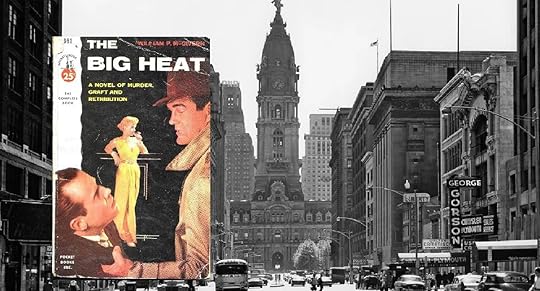
When Detective Dave Bannion discovers the involvement of city officials in two deaths, he soon finds his own life in danger, in the unforgettable tale of murder, corruption, greed, and vengeance. Reprint.
William P. McGivern was a novelist and screenwriter. In his early years he worked as a police reporter for the Philadelphia Bulletin and a reviewer and reporter for the Evening Bulletin in Philadelphia. Prior to his career in the newspaper business he served in the United States Army from 1943-1946.He moved to Los Angeles in 1960. His works include over twenty thrillers and mysteries as well as Soldiers of 44, a novel based on his experiences in World War II. His novels turned into movies include The Big Heat, Rouge Cop, Shield For Murder, Odds Against Tomorrow and the bestselling Night of the Juggler.In 1952 McGivern received an Edgar Award from the Mystery Writers of America and served as president of that organization in 1980. He was the master of the hard-boiled detective novel.
A fifties noir novel in which Dave Bannion, a honest cop, leaves the force to look into a murder case that his superiors don’t seem interested in investigating. It’s Bannion against world, or at least it starts out that way. A solid story well told, clearly and with no unnecessary trimmings. One of the best noirs I have read recently.
The excellent source material for a fine example of the classic film noir period.
Read whilst waiting to leave Copenhagen.
A classic piece of noir writing, Banion is an honest cop in a crooked town, forced off of the force in horrifying circumstances whilst investigating the suicide of a cop and the murder of a B-girl he relentlessly pursues the case as a private citizen.
McGivern was clearly a talented writer, bringing this dark and potentially schlocky material to a higher literary level than most others writing in the early 1950s, even his character names are great and memorable without resorting to silliness.
Having seen the 1953 Fritz Lang movie several times and always being shocked by some of the key scenes I expected this to be either darker in tone or dramatically different in terms of story, happily neither expectation was proven accurate. McGivern provided the brilliant film with a very strong and stable basis that Lang simply hung a nice decoration over. This book deserves much higher praise than it seems to have garnered, considering just how highly thought of the movie was. Unlike with other movie adaptations, the darkness and violence was found in the source material in this case.
As a simple police procedural it was interesting reading, I'd say much more enjoyable than the Ed McBain 87th Precinct series infact, as a social commentary it was explicit in its condemnation of weak men (including most of society) and its accusations towards corrupt politicians, as a novel of one man facing up to the darkness within themselves and those around him it was top class. The only aspect of the novel that realy let it down for me was the occasional change of perspective away from Banion which drag you out of the mood created by riding alongside the hero.
A highly recommended selection for anyone interested in the genre, especially as it has seemingly been forgotten by the reading public.
He had been nosing about a No Trespassing sign, so they decided to put him out of the way. It had started with Deery’s suicide.
Dave Bannion is a dodo bird dressed in blue: an honest cop. He’s about to become extinct because he refuses to listen to good advice from his boss and rule the suspicious death of a police clerk a suicide. Thomas Deery shoots himself without leaving a suicide note. His widow claims that he had health problems. Bannion is contacted by the man’s secret lover, a dance girl named Lucy Carroway, with a different story.
That’s what made him such a sweet guy. He felt responsible for everybody, for me, for his wife, for all the crookedness in the world. He couldn’t just enjoy himself and let the world go to hell.
Soon after, Lucy’s tortured body is thrown from a speeding car, a signature hit from the crime syndicate controlling the city. Bannion takes the evidence to his captain only to be ordered to drop it. Then he returns home to his wife and four year old daughter only to be threatened on the phone by the crime boss Mike Lagana. A furious Bannion confronts the mobster but very soon his car is rigged with a bomb that kills his wife instead of him. Instead of receiving help from the police, Bannion is asked to resign for not following orders and for leaking information to the press.
I read philosophy, he thought, because I’m too weak to stand up against the misery and meaningless heartbreak I run into every day on the job.
The time for philosophy and for following the rule of law is gone. For Dave Bannion the only thing left is payback. The big heat is on!
>>><<<>>><<<
“Damn them, they’re always at some keyhole,” Carmody said. “Why in hell do we let ‘em in here, anyway? What good do newspapers do? They just print stuff to cause trouble?” “They shouldn’t cover police at all, if you ask me,” Neely said.
William P. McGivern honed his literary skills as a police reporter in Philadelphia, the setting of this novel. The fruits of his labour are apparent not only in his direct, unflinching portrait of the criminal underworld, but also in his biting editorials against corruption and in his faith in the true power of the press. The demons and the system Bannion is fighting against are making a comeback in recent years, while the press has joined ranks with the servants of the all-mighty Profit – so this old novel becomes suddenly relevant to current urban developments
That was the way they preserved the status quo, kept their harmless, little city-wide bingo game operating. Kill, cheat, lie, destroy! While cops looked the other way and judges handed down suspended sentences. This was their city, their private, beautifully-rigged slot machine, and to hell with the few million slobs who just happened to live in the place.
Bannion follows the scant clues relentlessly: who killed his informer Lucy? Who planted the bomb? Who is calling the shots in the police department? Why is everybody scared of the reason Tom Deery killed himself? But what can one man do against an institutionalized criminal enterprise? In the world of 1953, apparently plenty! Step by careful step, Bannion tracks a loose thread and when he finds it, pulls on it to unravel the whole fabric. One of the weak links in the scheme is named Larry Smith, a young punk with an inflated sense of his own intelligence.
Larry went into the rackets by choice, as another young man might go in for the law, because he had learned that everything was rigged – the police, the courts, politics, elections, the whole damn city. It was rigged like a slot machine to clip the suckers and pay off the operator. So why be a sucker?
This wouldn’t be a film noir without a femme fatale. . Bannion confronts Max Stone, the second most powerful mobster in the city, in a bar and catches the eye of the gangster’s moll, Debby. Her entrance into the story is where I realized I have already seen the movie version of Fritz Lang. The arresting beauty of Gloria Grahame and an infamous hot coffee pot scene triggered my recall. Debby has some of the best lines in the whole script, and the most dramatic story arc. She’s a real scene stealer for me.
“So Max is a gambler. Is that a crime? I know people who do a lot worse and are in church every Sunday looking respectable as judges. And why should I care where he gets his money? The main thing is to have it. It isn’t easy to get hold of, believe me. Nobody ever gave me anything until I met Max.”
“I feel like something that’s been shut up because no one wants to look at it. I just lie here and think, that’s all.” She smiled, but it was a lop-sided effort. “For a gal who spent most of her life not thinking, it’s a pretty rough routine.”
The heat becomes almost unbearable as the action speeds up towards the final confrontation between Bannion and the syndicate. I know I should avoid spoilers, but damn! McGivern sure knows how to spin a powerful story here. He even feels confident enough to challenge the standard genre portrait of the lone justiciary by making Bannion work with the ‘good’ cops and get help from civil minded citizens:
‘Lonely figure against the mob. That wasn’t it, Inspector. I had help, all I could use.
One of the things I like from 1953 and I would like to see more in 2025 is the idea that crime doesn’t pay and that justice wins the day, no matter how stacked the playing deck is. Here’s what the new police commissioner has to say:
Corruption has a way of ruining everything it touches. The people of a city are corrupted, too. Instead of using their privilege as voters to fire the bastards who sell out their interests, they shrug and say, ‘Well, what can you do about it?’ or, ‘Well, that’s human nature, I guess.’ Human nature, my foot. That’s the voter’s apology for his own laziness.
My favorite gal Debbie / Gloria Grahame also has a good closing line about taking the law into your own hands:
“It’s not worth it. It’s all bad, this hating people.”
A friend of mine used Chat GPT to find out more about the author. Much as I dislike or trust these AI bots, it did provide a good line about McGivern:
He had a knack for turning real-world grit into morally complex, pulse-pounding stories that helped define the hardboiled tradition.
He is indeed one of the genre-defining writers for me and I hope I will add more of his books to my reading queue.
“That was the essence of police work, checking everything. A cop had to investigate all the obvious details, ask all the obvious questions, plod about doing things that frequently seemed pointless and stupid…He had to do all the tedious, useless work, because occasionally the impossible, unlikely or foolish areas of investigation turned out to be the most profitable ones.”
It all starts when officer Thomas Deery commits suicide. Detectives and called into the scene and so is Sergeant Dave Bannion, and they go through the usual paperwork and procedure and process. But something doesn’t add up when he gets a tip from a B-girl named Lucy Carroway. And when she soon after ends up dead, he knows something is up. When his wife dies when a bomb intended for him goes off, it becomes highly personal for Bannion. He takes matters into his own hands, resolved to unearth the murders and also dig up the dirtiness and corruption that exist within the city.
One of the areas that this novel explores is how much one person is willing to do or potentially sacrifice in order to clean up a city from a level of crime and fraud from various sources.
“There was always a loose end in even the neatest jobs.”
I like how McGivern delves into the character of Bannion and his mission to take down the big wigs that are running the game and also get a sense of resolve and justice for his own personal tragedy. While this is definitely a revenge tale, it goes a little deeper in examining the makeup of how deep corruption can run in a big city when unchecked and one police officer’s pursuit of justice. Here the corruption comes from all sides in the form of hoodlums, crime lords, compromised law enforcement, crooked judges, and a bunch of mugs.
And as Bannion continues to follow leads, trust his intuitions, it gets more and more complicated.
The Big Heat is a gritty, tension-filled, effective addition to the noir catalog. McGivern writes in such a manner to keep the action coming and the pace swift. It’s a shame that this book is not as well-known because it is a fine example of the hard-boiled genre and is equally impressive as the Fritz Lang’s classic 1953 film with Glenn Ford.
When the film version is better known than the source novel, there is a tendency for some to think they know the story. This is always a mistake. The Kim Darby film prevented me from reading TRUE GRIT for years; it is now one of my favorite novels. William McGivern's THE BIG HEAT is so much richer and complex than Fritz Lang's classic film version. McGivern is a hell of a writer, precise, taut, and with few words wasted. THE BIG HEAT was the first of his books to draw attention to the former Philadelphia crime journalist. This is a tale of corruption, corruption so deep seated that it has become habit. Dave Bannion goes from cop to avenging angel, and his story influenced crime writing and movies for years. Highly recommended.
McGivern delivers a tight, simple little hardboiled here that's easy, quick to digest and delivers on thrills. What I like most about this one is the straightforward plot and some of the quips in his prose that's not too thick with the "hardboiled-ese". It does lack some originality, but in '53, it should've passed easy. I really wanted more resolution out of what happened to Lagana, and Debby as a femme fatale, but overall, this fits as one of the most simple hardboiled, good novels out there.
The sign on the door said - CFNA under that was "Crime Film Noir Anonymous", I opened it and walked in. Behind the desk sat a peroxide blonde (I swear) 'bout mid 30's. Name tag on the desk said, Vicky. She looked up, and she had the most beautiful green eyes, with a cig between those red lips and said, "you need help"? I replied, "yeah, in a big way". "Tell me how it started" , Vicky asked in that husky, smoky sounding voice of hers. I sat in the lone visitors chair, elbows on my knees, hands over my face. ..."Well it started about a month ago. No where to go, places were shutting down, reruns on TV." There was nowhere to go on the weekends, business's were having to close their doors." Then I raised my head, looked into those emerald colored eyes, and said " Vicky, there was NO March Madness...NO Opening Day Baseball! So, one Saturday morning I did a search online for the top 100 noir movies....that's when it started. This book "The Big Heat" is my SECOND read in row, where I watched the movie after I finished the book."
"My new best friend is IMDB", I whispered. Vicky smiled and said, "yeah, you do have it bad".
Great book. Published in 1952, McGivern's The Big Heat is a classic noir novel. It's set in modern day Philadelphia. Police detective Dave Bannion is called in on a "routine suicide". Routine except that the dead man was a police clerk. Routine except that his wife is strangely composed. When Bannion questions an old acquaintance of the dead man, she saw him recently and found him to be in good spirits. The acquaintance then turns up brutally tortured and murdered.
Mobsters play a prominent role. McGivern wrote a wonderful scene in which Bannion confronts mobster Mike Lagana at the latter's house - their conversation which quickly escalates into a heated argument would make a great film scene. I saw the movie a year or two ago, but don't remember if it was included. The scene I do remember - unforgettable - is the one in which one of Lagana's underlings throws a pot of scalding hot coffee into Debbie's (Gloria Grahame's) face ! Until I read that scene, I wasn't positive that I had seen the movie.
The Big Heat refers to the heat that police and city higher-ups are putting on the force to toe the line and stay out of the backroom dealings the police have with organized crime. It also refers to the heat that the press is ramping up on dishonest cops, and which has the potential to explode into an all-out expose if certain facts and names are leaked.
McGivern has outstanding psychological insight into his characters and their motives. And excellent powers of description:
"Suddenly he remembered the way Lagana had looked at him, up and down with those funny, blank eyes. Well, what the hell was a look ? ... Probably the old man needed glasses. Nobody had eyes like that unless he was dead. That's what the old man's eyes were like, he thought. Like a stiff's. There was a funny winter light in the back of them, the same thing you saw in a stiff's eyes."
McGivern writes a really believable scene when Mrs. Deery is threatened at gunpoint. Too many writers allow characters to be brave in the face of death, which isn't realistic.
The Big Heat includes a classic line that could be written into just about any noir thriller:
"... everything was rigged - the police, the courts, politics, elections, the whole damn city. It was rigged like a slot machine to clip the suckers and pay off the operator. So why be a sucker ?"
William P. McGivern’s novel The Big Heat was the source for Fritz Lang’s classic 1953 film noir of the same title. McGivern enjoyed considerable success as a novelist and screenwriter in various genres.
The movie followed the plot of the novel fairly closely, even including the famous coffee pot scene (if you’ve see the movie you know which scene I’m talking about and if you haven’t seen it I won’t spoil the shock effect). The most significant change was to the character of Max Stone who becomes Vince Stone in the movie. The Max Stone of the book is equally vicious but he’s a man driven to viciousness by fear, while the Vince Stone of the movie is a more confident, and more overtly sadistic, character.
Dave Bannion is an honest cop in a city in which honesty is a rare commodity. Corrupt city officials and politicians are in the pockets of gangsters like Mike Lagana. Lagana lives a life of genteel elegance in a luxurious mansion surrounded by beautiful gardens, but he started life as a brutal gangster and a gangster he remains.
Bannion has always been aware of the underlying corruption of the city but up until now it hasn’t had any direct effect on his life or on his work as a Homicide cop.
All that will change. At first it seems like a routine case. A police clerk has committed suicide. There are no suspicious circumstances. The dead cop, Tom Deery, was the sort of guy who goes through life without attracting much attention. He had always been assumed to be honest, he had no obvious vices. His wife claims he was very concerned about health problems and that seems like a satisfactory explanation for his suicide. Then Bannion gets a telephone call from a woman. She tells him that she’s sure the dead man had no health problems and she doesn’t believe he would have taken his own life.
A bit of digging around reveals that this woman. Lucy Carroway, had been Deery’s mistress some years earlier. Deery’s widow assures Bannion that Lucy was still bitter that the affair with her husband ended and Bannion is satisfied that that explains her story. Even the fact that Tom Deery used to own a holiday house is not especially suspicious. A police clerk might have been able to afford a little luxury like that if he was very careful with his money, and besides maybe his wife or his family had some money. Bannion is happy enough to close the case. Until Lucy Carroway is murdered.
This seems like a boy of a coincidence, and Dave Bannion doesn’t like coincidences. And the murder was particularly brutal but it wasn’t a sex crime. Bannion is now convinced the Deery case is worth looking into more deeply. He still doesn’t think he’s run into a major criminal conspiracy but when he’s ordered peremptorily to drop the case the pieces start to fall into place. If the big boys who run the city want him to stop investigating then there must be something to investigate. Something big. Bannion is not just honest, he’s also stubborn. His refusal to drop the case will have catastrophic personal consequences for him, consequences that will see him handing in his badge and conducting his own private war against organised crime, a war of revenge.
He will find himself up against Mike Lagana, and against hoodlums like Max Stone.
It’s a pretty good story. The main weakness is the ending which is much too pat and too neat and doesn’t quite ring true. The story shows us a world of moral squalor but also a world of moral ambiguity. People aren’t always crooked because they’re bad. Some are just weak. Or frightened. Even the tough guys are sometimes prone to fear. And even gangster’s molls like Debby (Max Stone’s girlfriend) can turn out to be capable of extraordinary courage and decency. The ending undercuts this a little as the author tries to tie things up too comprehensively.
There’s plenty of hardboiled dialogue and plenty of atmosphere. This is pulp fiction but it’s not too pulpy (not that I have a problem with pulp fiction that’s very pulpy indeed). McGivern’s style is straightforward but effective.
Bannion is a hero but he’s a hero with some flaws and he’s generally believable. McGivern gives us some memorable villains and, in the person of Debby, a complex female character whose motivations are entirely believable.
A fine crime thriller. Not quite as good as the movie, but that’s nothing to be ashamed of since the movie is very very good indeed. Definitely worth a read.
As a former Pennsylvanian it’s a rare treat to read a noir set in Philadelphia, especially since hey, we can be corrupt too, and we’re within living memory (qv Frank effing Rizzo.) Philly isn’t all cheese witt and funnel cakes and wasn’t c. 1953 when this novel is set. Good cops take a backseat to the crooked ones and the hero decides to leave the force, if not his quest for justice, after it all becomes very very personal.
A former crime reporter, McGivern knows the city and doesn’t waste a word. A wonderful surprise.
What makes the movie "The Big Heat" so good is that it stuck very close to its source, even down to many lines of dialogue. The main difference is how the movie ended.
McGivern had an interesting career, starting out as a a crime reporter, then a career of dozens of novels, hundreds of sf stories, screenwriting and stories for television and movies.
The Big Heat belongs in the pantheon of crime fiction, and the movie is on most everybody's top ten film noir list.
The Big Heat is about a police investigator who looks into the suicide of a fellow officer and finds more than he is supposed to.
This book has a lot of criticisms about the way police forces are run, identifying problems that plague society today. He points out the tendency to protect one of their own, even if the officer is doing wrong. He questions the ethics behind militaristically doing what you're told.
The book was adapted to the silver screen starring Glenn Ford and Gloria Grahame.
The Big Heat, screenplay by Sydney Boehm, based on the serial by William McGivern, directed by Fritz Lang 10 out of 10
This is evidently one of the best options for the Armageddon that we may contemplate, seeing as it is one of the best motion pictures of all time, selected on The New York Times’ Best 1,000 Movies Ever Made list - http://realini.blogspot.com/2020/04/n... - and an inspirational film that could make us face the adversity of the pandemic with more courage, resilience, self-sacrifice, kindness, vitality, integrity, grit, hope, just like the hero of this impressive story, Sergeant Dave Bannion aka fantastic Glenn Ford, who takes on an all-powerful Evil, that we may see as the Virus or perhaps Trump in this age, the gangster- politician Mike Lagana.
We can easily assimilate, see the resemblance, if not the perfect replica with the Crook in charge of the free world represents for the Quintessential Vileness presented in this formidable movie, the corrupt individual that has climbed at the top – in the film it is just a town, but the real estate owner that has been through a series of bankruptcies and yet his idiotic fans see him as a ‘successful businessman has risen on top of the world, ‘stable genius’ as he is, pathological liar, spectacularly stupid and representative though for the depth and magnitude of the bright thinking of tens of millions of Americans and citizens of other nations, for there is no border for cave men and women and the likes of BolsoNero, Duterte, Putin and Xi are almost copies of the Orangutan… The Big Heat starts with the suicide of a policemen and the call his widow, Bertha Duncan, makes to the…underworld, controlled by Mike Lagana and his cronies and hatchet men, the most prominent being, Vince Stone aka young and remarkable Lee Marvin, people that have the city under their control, because they have corrupt politicians, police commissioners on their payroll…which also strikes one as so similar with the present, in our land we have had until just a while ago such vicious and disgusting leaders, that their ‘party’ – in fact a Mafia organization meant to assure power and money – was known as the Red Plague – fortunately, Alhamdulillah, the disgusting thief that made laws for his own good is now in jail, though this is no reason for exaggerated exuberance, given that the other comrades share the same avarice, selfishness, stupidity and desire to steal and get rich at all costs.
Then we have the Lagana and Trump, representing the flaws of America, past and present respectively – a model to which I keep coming back, because it affects almost all of us and it is overwhelming and it seems to show the Decline, the Decadence, the Failure for us all, since that democracy used to be hailed – as the system in general – as the epitome of the successful running and development of a country as in The American Dream, all of which appears to have collapsed, in spite of the impeachment – voted down in terms of punishment in the Senate controlled by sycophants and smaller replicas of the Big Scoundrel - - and it pains so many, given that this used to be The Model to follow, the Shining City on the Hill, the Goal that we must look towards and hope that we will arrive there in the future…and now we look and see a post-apocalyptic society, where the Ultimate Pithecanthropus is in charge and not only that, but as he makes thousands of mistakes and tells tens of thousands of proven lies, 30 or 40% still love him and they are ready to use their guns – and they have a huge arsenal, bigger than most armies in the world – to keep him there…
To lighten the tone a little, we used to have jokes here and in the rest of Eastern Europe about America, such as ‘we offer 4 bedrooms penthouse, center of this or that capital, with all the amenities and exclusive facilities for a tent in Central Park…or another has the End of the World – just like now, with the Apocalyptic Virus – arrive and the American president says ‘do not worry, we have the space ships, we can leave the doomed planet’, while ours says ‘do not panic, we are anyway 50 years behind’ – that last figure varied, it was 100 at one time and now, in political terms we are ahead some decades, in the sense that our illuminated president is one million times better – with his inevitable flaws – than the monkey that they have placed in the White House…this trend could be reversed, but we surely hope not…Insha’Allah! Dave Bannion is investigating the suicide, when he has a talk with Lucy Chapman, a woman that had had an affair with the late Duncan and who knows that there is something seriously wrong with the lies told by the widow, who has tried to justify a desperate act, claiming her late spouse had been very sick, when he was not and this makes the honest sergeant suspect there is more to find, especially when he would find that the poor ‘barfly’ – the demeaning term used then for those who had no possessions, flirted and had intimate affairs with various men, around bars – would be killed and worse, tortured, displaying cigarette burns on the dead body…
The hero knows, just like everybody else, that the gangster Mike Lagana is in charge and anything that happens in the streets has to have his marks, the approval and therefore he tries to push the bar tender, after he stays close to hear him connect the ‘higher echelons’, to tell him about the killer that ended the life of the poor woman who has tried to be a whistleblower – another connection with the present, when some patriot has tried to sound the alarm over the treasonous behavior of the president, Trump has pushed his monstrous behavior as far as to put the life of that noble man or woman in danger and in the days of the crisis, he has just sacked the Inspector General that had warned congress over the now infamous Ukraine scandal… Dave Bannion walks up to the resident of the Godfather and confronts him, but the initial result is to have him scolded and warned by the lieutenant, who had had Big Heat coming from upstairs, where Commissioner Higgins and others are on the payroll of the gangster – indeed, in one scene of despicable violence, Vince Stone attacks his mistress, Debby Marsh aka Gloria Grahame, and pours hot coffee over her face, torturing and mutilating her for life and it is the commissioner who has to take her to the hospital, servant of the killers as he is, to prevent the otherwise inevitable report that would be made in such a case…
Tragedy strikes at the home of the Untouchable Sargent, when a bomb destined to silence him forever, blows someone else instead, but this will only serve to strengthen his anyway marvelous resolve to stand alone in front of the Evil Empire and fight to find the truth, revenge and make the loathsome creatures pay for their rottenness and abjection…
I enjoyed this book and intend to read more McGivern. The book moved fast and had interesting and well written supporting characters, especially Debbie. Debbie was a party girl and the main gangster's girlfriend. Bad things happen to Debbie and after being treated in a more human way by Bannion, the protagonist, she begins to grow into a better person.
An excellent movie was made from the book. I don't quite agree with this being called noir fiction unless you are using a very broad definition of the term. It's a case of a good guy going on a vengeance kick after his wife was killed by gangsters (it was suppose to be him that was killed). But he is a moral guy at heart and although he has a very bad temper he can't quite get completely down in the mud with the men he is after. I felt it was more of an action thriller than being the dark and moody style I associate with noir although there was a still an appropriate, and interesting, amount of introspection by the characters about what was happening to them and how it was affecting their actions.
McGiverns style is straight forward but there was a good balance between the action and learning how the characters were affected by events and were even changed by the events. Bannion was continually walking a fine line between his strong moral upbringing and his lust for revenge on those wwho killed his wife. We can read his thoughts when he is torn between what he thinks is right and what he anger and rage is pushing him to do.
Eddie Murphy laughed all the way to the bank on the success of his hit action comedy BEVERLY HILLS COP, which was rumored to have been turned down by the likes of Harrison Ford, Mickey Rourke, Richard Pryor, James Caan, and Sylvester Stallone, and eventually grossed more than $230 million domestically on a $13 million budget. One of the major contributors to the film's success is its engaging score and soundtrack, which features among others, the former Eagles man, Glenn Frey. Recorded over two days and compensated with fifteen thousand dollars, the Number 2 on the US Billboard Hot 100 loudly proclaimed that BEVERLY HILLS COP is a happening movie and that THE HEAT IS ON. Missing the fanfare of a synthesizer soundtrack, William P. McGivern's 1952 hardboiled crime noir showcases murder, graft and retribution in the 'City of Brotherly Love', mainly via a tough cop who's short on sympathy and long on vengeance. The rumble in the department and in the city is growing louder, the fix is in, and the heat is on. THE BIG HEAT.
Between the Schuykill and Delaware river, Philadelphia. A noir world where the dames were a tough and practical lot, appealing in an attractive blend of boredom and weariness, and with the capacity for surprise. A time when newspapers still had a strong voice and an uncompromising cop could still help the city. A pure cop, a little too honest and inquisitive, investigating a grave occurrence--a cop's suicide with the potential to tear a department to pieces--and echo into big city politics. Sergeant Bannion of the Philly Homicide Bureau has gone through 24 hrs of refined hell and he wants help with the case, but the cop shop stymies him at every turn and the cover-up runs all the way to the top, literally, of City Hall who wants the investigation quashed. Bannion, you see, is destined for more important work, like supervising other detectives, and is yanked off the case after ignoring the not so subtle 'No Trespassing' signs and the investigation is quashed. But you can't keep a good cop down. Despite the misery and the meaningless heartbreak he runs into every day on the job, Dave Bannion is still that, ONE GOOD COP. Influenced by philosophy that stipulates it's natural for man to be good and evil is the aberrant course, he simply follows his usual methodical work habits to keep the eternal anger and sadness at bay. That was the essence of police work, checking everything, and the Korean War veteran with a hair-trigger temper and a wild-streak inside him knows that there was always a loose end in even the neatest jobs. With a smile, cause Dave Bannion doesn't like to play it tough, he vows that those responsible have it coming, and they needed more of it.
In this town, where everything was founded on the fix, the police, courts, politics, elections, and the whole city were rigged like a slot machine. The few million people who happen to live there, they see things and still don't see; they know about the politician-hoodlum tie-up. It was their city and they did what they liked with it and the people in it, their private, beautifully controlled paradise. There shan't be anything to worry about, after all, this isn't Russia, it's Philadelphia. When the usual way to preserve the status quo, keep their little city-wide bingo game operating, results in kill, cheat, lie, and destroy, Bannion is no longer interested in the sociological angles of corruption. Just justice and vengeance. And the job is all his, his alone with no help from anyone, relying on muscle and his head. The secret lies with the automatic cog of paper work and a soft, perfumed, sadistic dame, in cahoots with the mob and the machine running Philly and holding it in its big bitter grip. The Big Blast, the big heat was coming, and in its sights was the decades of corruption hurting public interest for years. Sure, it can't be cleaned up in a day, but today Bannion is starting. At its heart, THE BIG HEAT is a grim pulp noir novel that turns from a mission of justice to one of retribution. Escape into a retro world of arm-chair adventuring with clip joints, paper work, pull-toys, telephone books, B-girls, burlesque houses and terms like kosher, rammy, the right dope and on the level. Affecting a deceptive general-store manner about it, THE BIG HEAT is overtly about a cop doing his job solving a suicide and a dirty murder among a police force where everyone does what they're told, embraces sunshine details and rides herd. Bannion stands alone with a gun in his fist and vengeance in his heart. That's the big heat, gentle reader, and you'll have to get down and dirty with crooked cops, corrupt officials, ruthless gangsters, and fast dames to cruise along with the awesome 50s and experience what THE BIG HEAT is.
This is the second McGivern book I've read and for the same reason (I had watched the movie first; this one is more faithfully adapted than Odds Against Tomorrow). Judging just by these, the author, unlike many in this genre, writes a variety of plots and viewpoints ("Odds" is mostly about criminals; this one depicts the investigative figure). Here, Dave Bannion is an honest cop in a corrupt town (Philadelphia, which McGivern depicts with all the rainy sordidness of David Goodis). While investigating the questionable suicide of a fellow cop, he inadvertently comes up against the local mob; to stop him, they exact a terrible price. At that point, the book changes from a police procedural to a revenge tragedy.
I liked a lot about this book: the author's evocative descriptions of place; the narrative (many hard-boiled characters don't have such strong personal stakes); and the depiction of local political corruption and the mob (the book was published in 1953, less than two years after the Senate formed a committee to investigate organized crime). On that last, McGivern's attitude is interesting: he lambastes the crooked cops and the close-ranks attitude towards protecting them, but he also acknowledges that many are good, honorable men just doing their best. Finally, all the noir elements are apparent: the author's intervention critiques the concept of the "lone wolf" main male character as Bannion discovers that he cannot, in fact, do everything alone.
Characterization, though, is the biggest draw here. Dave Bannion goes through a tremendous character arc as circumstances force him into actions he never thought he was capable of. The author foreshadows this by presenting Bannion's "dark side" early on (an anger he struggles to control). Later, the book turns into an ancient Medieval Morality play (it's no accident that a priest pops up every now and then) as Bannion struggles between good and evil. For me, the tension surrounding Bannion's will-he-or-won't-he-lose-his soul descent into darkness was more interesting -- and poignant -- than the investigation, which, I think, was the author's intent.
As usual with these books, racism and sexism are apparent. I will say that they are less so here than in other books of this era. Debby is a fantastic and atypical femme fatale with a strength and unique moral code all her own (she is played by the great Gloria Grahame in the film). It's too bad that McGivern believed so strongly in fatalism and . Note: The ending of this book left room for a sequel; I wonder if the author ever intended to revisit this world?
I really like this book! It is not as cliche or outdated as I feared. In fact the few people of colour (this is a book from the 1950s America!) in the story are as detailed and varied as the "white fokes". Some are gangsters, but others are just normal likeable people trying to get by in the hard town, that is 1953 mafia ruled Philadelphia. Even the women are characters of action (although they all look like Marilyn Monroe, of course).
The theme of the book is basically a debate on what is best to be driven by revenge or by sorrow and I like how it compares that with selfishness vs compassion, I don't think I have ever read a book to that deep into philosophy, while still keeping ud the action (apart from Arne Dahl, who always spends half the book brooding over something).
And in the end, who is the craziest; a police officer, who looks to the great philophers for the meaning of the word, or the police accountant, who travels the world in his imagination, while ignoring the world..?
It turns out that William P. McGivern’s 1953 novel “The Big Heat,” the source of Fritz Lang’s justly celebrated film, is excellent in its own right – thoughtful, intelligent, well structured, harrowing in its treatment of misogyny and revenge, and still all too timely in its dead-on dissection of civic corruption at high and low levels of politics and law enforcement. Highly recommended.
"Reformers come and go and are seldom noticed or missed." McGivern was not on my radar and I was unprepared for how much I enjoyed this, maybe because he puts together a police procedural in a way that makes it seem like the first cousin to a good western. Or maybe because the evening news makes its subtext (about the importance of personal integrity in a corrupt world) seem especially poignant.