

What do you think?

Trotsky
Non fiction historical
Paperback
First published January 1, 1978
About the author
Irving Howe
207 books50 followersIrving Howe was an American literary and social critic and a prominent figure of the Democratic Socialists of America.
Ratings & Reviews
Friends & Following
Create a free account to discover what your friends think of this book!
Community Reviews
Displaying 1 - 6 of 6 reviews

February 26, 2011
A Small Book on a Large Subject
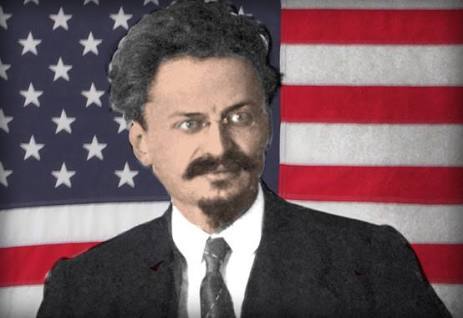
At 1,648 pages, Isaac Deutscher’s “The Prophet” is likely to remain the definitive biography of Leon Trotsky for some time yet.
This work doesn’t purport to supplant “The Prophet”, though it does quibble with a few issues of interpretation.
At barely 200 pages, it can’t possibly match the level of detail (“This is a small book on a large subject”), but it is a good summary of the biographical facts as well as a critical analysis of the most important issues in Trotsky’s political life and writing.
Isaac Deutscher was a Trotskyist at the time he wrote his biography, whereas the most that can be said of Irving Howe is that he was an ex-Trotskyist. He understood the issues as a sympathetic insider, but his political views had moved away from Marxist revolution to democratic socialism and support of non-violent multi-party elections. Much of the criticism of Trotsky’s views derives from Howe’s own political perspective, which seems to be dictated by the fact that he lived and worked all of his life in the United States. A revolution such as what occurred in Russia in 1917 was not viable in the United States in the twentieth century (let alone now in the twenty-first century).
More Admiration Than Adherence
Despite these differences, Howe clearly admired Trotsky. Not only was Trotsky a Marxist revolutionary, but he was a talented and insightful literary and social critic, much, in this last respect, like Howe himself. As occurred after Lenin’s death, Trotsky won “more admiration than adherence”. There is something of the respect for the polymath in Howe's admiration of Trotsky:
“Unburdened by office he is again the independent political analyst, historian, and literary man.
“He writes now with an authority of statement, an incisiveness of structure, a cutting sharpness of phrase, a flowing range of metaphor that demand that he be regarded as among the great writers of his time. And his productivity is amazing.”
The reader doesn't have to wonder too long how Trotsky would have felt about this admiration of his critical abilities. Howe himself acknowledges:
“To Trotsky this could have brought little gratification; a man intent upon transforming history is not to be consoled by praise for his style.”
Howe’s criticism effectively derives from his own democratic tendencies. It applies to both the acquisition of power, and the government of society. Howe clearly believes that power should only be achieved by electoral means, and that democracy is vital in both the political party and the government.
A Rigid Bolshevik Loyalist
On the other hand, Trotsky always defined himself as a “Marxist revolutionary” (actually, in English translation, a “Marxist revolutionist”): he advocated the use of revolutionary means to acquire political power, and his reasons for doing so were grounded in strict adherence to and belief in Marxist theory. Moreover, despite support of a multi-factional party in the early months after the revolution, Howe believes that Trotsky didn’t do enough to advocate and maintain democracy in the Party or in the Soviet Parliament:
"[Trotsky] remained too rigid in his loyalty to the Bolshevik tradition."
As late as three years before his assassination, "Trotsky counted too heavily on revolutionary will, revolutionary clarity, revolutionary elan; he could not allow himself to see the extent to which 1937 was sharply different from 1917 and western Europe sharply different from Russia."
A Universality of Mind
Ironically, Trotsky found himself in exile, partly because he wasn’t just a revolutionist. He had other interests and preoccupations, most of them creative:
"One might suppose that the struggle in the Communist leadership would have occupied Trotsky's entire energies, but it did not. To write on topics not directly related to the party struggle seemed refreshing, cleansing. And the idea of a many-sided intellectual life, a universality of mind, obviously delighted him."
Stalin objected to any rival, let alone one who possessed attributes he lacked. He sought to marginalise Trotsky in order to win the leadership of the Party:
"The most brilliant figure of the Russian Revolution was cast by the usurping dictatorship as a heretic, then a 'traitor', and finally, in the macabre frame-ups of the Moscow Trials, an 'accomplice of fascism'.”
“A harassed and powerless exile, Trotsky continued to speak and write defiantly."
A Towering Example of a Man
Clearly, Howe continued to admire Trotsky’s literary and creative temperament:
"Even those rejecting his every word must recognise that in the last ten or twelve years of his life Trotsky offered a towering example of what a man can be."
In his writings -
"Trotsky's tone is supremely self-confident, sometimes openly arrogant: it registers the voice of an assured victor. His strategy as narrator is to aim not for suspense but for an expected fulfillment. Trenchant observations and wicked thrusts: these are now at the bidding of ideology, or, more accurately, of an epic narrative being shaped in accord with that ideology."
"Trotsky's thought could have gone in either of two basic directions, toward a stubborn reassertion of a fundamentalist Bolshevism or some problematic version of the socialist idea. His mind was a mixture of the rigid and the flexible: he held unquestioningly to the basic tenets of Marxism, but within their boundaries he was capable of innovation and risk."
However, in Howe’s view, Trotsky lacked the foresight to imagine the welfare state:
"Trotsky's apocalyptic vision simply could not encompass the whole ambiguous, unstable, but by no means unhopeful development that we call the welfare state; still capitalist in its socio-economic relations but significantly modified toward greater humaneness, partly as a result of the unbroken power of the working class."
Having won the Revolution, the Bolshevik Trotsky didn't want to take a backward step and lose the gains that had been made.
The Failure of a Comprehensive Approach
Trotsky shared Lenin’s unwillingness to compromise the Bolshevik agenda with the Social Democrats. However, when it came to a strategy to oppose Hitler and Fascism, he believed that the Bolsheviks had to recruit the support of the Social Democrats, at least in Germany.
While this illustrates some ability to respond flexibly to circumstances, Howe criticises Trotsky’s Marxist rigidity:
"The point [of the criticisms suggested here] is to call into question the rightness of a comprehensive historical and political approach. And the evidence seems strongly to indicate that the whole outlook of revolutionary Marxism-Leninism as Trotsky understood it broke down before the realities of mid-twentieth-century political life."
Thus, it seems that Howe’s primary reservation is about the political strategy of revolutionary violence. He doesn't indicate whether a revolution is justifiable in any circumstances, no matter how oppressive the regime.
Howe doesn’t necessarily agree with other anti-Stalinists that totalitarianism grows inevitably out of either revolution or the socialist/communist ideology. Though he does imply that more democratic structures might have avoided the risk of totalitarianism in Russia:
“In retrospect, it seems clear that the significance of all the opposition groups within the Bolshevik party, both Trotskyist and non-Trotskyist, was primarily as a series of ill-related efforts to stop or slow the trend toward totalitarianism.”
Later, Howe adds:
"To say this is not to excuse the principled failure of Trotsky to raise the issue of multi-party socialist democracy; it is, at best, to explain it."
Equal to His Time
For all of his political reservations, Howe is still quite generous in his assessment of Trotsky the man:
"Nevertheless, I believe that a good portion of the writings of this extraordinary man is likely to survive and the example of his energy and heroism likely to grip the imaginations of generations to come...For Trotsky embodied the modern historical crisis with an intensity of consciousness and a gift for heroic response which few of his contemporaries could match: he tried, on his own terms, to be equal to his time."
SOUNDTRACK:
At 1,648 pages, Isaac Deutscher’s “The Prophet” is likely to remain the definitive biography of Leon Trotsky for some time yet.
This work doesn’t purport to supplant “The Prophet”, though it does quibble with a few issues of interpretation.
At barely 200 pages, it can’t possibly match the level of detail (“This is a small book on a large subject”), but it is a good summary of the biographical facts as well as a critical analysis of the most important issues in Trotsky’s political life and writing.
Isaac Deutscher was a Trotskyist at the time he wrote his biography, whereas the most that can be said of Irving Howe is that he was an ex-Trotskyist. He understood the issues as a sympathetic insider, but his political views had moved away from Marxist revolution to democratic socialism and support of non-violent multi-party elections. Much of the criticism of Trotsky’s views derives from Howe’s own political perspective, which seems to be dictated by the fact that he lived and worked all of his life in the United States. A revolution such as what occurred in Russia in 1917 was not viable in the United States in the twentieth century (let alone now in the twenty-first century).
More Admiration Than Adherence
Despite these differences, Howe clearly admired Trotsky. Not only was Trotsky a Marxist revolutionary, but he was a talented and insightful literary and social critic, much, in this last respect, like Howe himself. As occurred after Lenin’s death, Trotsky won “more admiration than adherence”. There is something of the respect for the polymath in Howe's admiration of Trotsky:
“Unburdened by office he is again the independent political analyst, historian, and literary man.
“He writes now with an authority of statement, an incisiveness of structure, a cutting sharpness of phrase, a flowing range of metaphor that demand that he be regarded as among the great writers of his time. And his productivity is amazing.”
The reader doesn't have to wonder too long how Trotsky would have felt about this admiration of his critical abilities. Howe himself acknowledges:
“To Trotsky this could have brought little gratification; a man intent upon transforming history is not to be consoled by praise for his style.”
Howe’s criticism effectively derives from his own democratic tendencies. It applies to both the acquisition of power, and the government of society. Howe clearly believes that power should only be achieved by electoral means, and that democracy is vital in both the political party and the government.
A Rigid Bolshevik Loyalist
On the other hand, Trotsky always defined himself as a “Marxist revolutionary” (actually, in English translation, a “Marxist revolutionist”): he advocated the use of revolutionary means to acquire political power, and his reasons for doing so were grounded in strict adherence to and belief in Marxist theory. Moreover, despite support of a multi-factional party in the early months after the revolution, Howe believes that Trotsky didn’t do enough to advocate and maintain democracy in the Party or in the Soviet Parliament:
"[Trotsky] remained too rigid in his loyalty to the Bolshevik tradition."
As late as three years before his assassination, "Trotsky counted too heavily on revolutionary will, revolutionary clarity, revolutionary elan; he could not allow himself to see the extent to which 1937 was sharply different from 1917 and western Europe sharply different from Russia."
A Universality of Mind
Ironically, Trotsky found himself in exile, partly because he wasn’t just a revolutionist. He had other interests and preoccupations, most of them creative:
"One might suppose that the struggle in the Communist leadership would have occupied Trotsky's entire energies, but it did not. To write on topics not directly related to the party struggle seemed refreshing, cleansing. And the idea of a many-sided intellectual life, a universality of mind, obviously delighted him."
Stalin objected to any rival, let alone one who possessed attributes he lacked. He sought to marginalise Trotsky in order to win the leadership of the Party:
"The most brilliant figure of the Russian Revolution was cast by the usurping dictatorship as a heretic, then a 'traitor', and finally, in the macabre frame-ups of the Moscow Trials, an 'accomplice of fascism'.”
“A harassed and powerless exile, Trotsky continued to speak and write defiantly."
A Towering Example of a Man
Clearly, Howe continued to admire Trotsky’s literary and creative temperament:
"Even those rejecting his every word must recognise that in the last ten or twelve years of his life Trotsky offered a towering example of what a man can be."
In his writings -
"Trotsky's tone is supremely self-confident, sometimes openly arrogant: it registers the voice of an assured victor. His strategy as narrator is to aim not for suspense but for an expected fulfillment. Trenchant observations and wicked thrusts: these are now at the bidding of ideology, or, more accurately, of an epic narrative being shaped in accord with that ideology."
"Trotsky's thought could have gone in either of two basic directions, toward a stubborn reassertion of a fundamentalist Bolshevism or some problematic version of the socialist idea. His mind was a mixture of the rigid and the flexible: he held unquestioningly to the basic tenets of Marxism, but within their boundaries he was capable of innovation and risk."
However, in Howe’s view, Trotsky lacked the foresight to imagine the welfare state:
"Trotsky's apocalyptic vision simply could not encompass the whole ambiguous, unstable, but by no means unhopeful development that we call the welfare state; still capitalist in its socio-economic relations but significantly modified toward greater humaneness, partly as a result of the unbroken power of the working class."
Having won the Revolution, the Bolshevik Trotsky didn't want to take a backward step and lose the gains that had been made.
The Failure of a Comprehensive Approach
Trotsky shared Lenin’s unwillingness to compromise the Bolshevik agenda with the Social Democrats. However, when it came to a strategy to oppose Hitler and Fascism, he believed that the Bolsheviks had to recruit the support of the Social Democrats, at least in Germany.
While this illustrates some ability to respond flexibly to circumstances, Howe criticises Trotsky’s Marxist rigidity:
"The point [of the criticisms suggested here] is to call into question the rightness of a comprehensive historical and political approach. And the evidence seems strongly to indicate that the whole outlook of revolutionary Marxism-Leninism as Trotsky understood it broke down before the realities of mid-twentieth-century political life."
Thus, it seems that Howe’s primary reservation is about the political strategy of revolutionary violence. He doesn't indicate whether a revolution is justifiable in any circumstances, no matter how oppressive the regime.
Howe doesn’t necessarily agree with other anti-Stalinists that totalitarianism grows inevitably out of either revolution or the socialist/communist ideology. Though he does imply that more democratic structures might have avoided the risk of totalitarianism in Russia:
“In retrospect, it seems clear that the significance of all the opposition groups within the Bolshevik party, both Trotskyist and non-Trotskyist, was primarily as a series of ill-related efforts to stop or slow the trend toward totalitarianism.”
Later, Howe adds:
"To say this is not to excuse the principled failure of Trotsky to raise the issue of multi-party socialist democracy; it is, at best, to explain it."
Equal to His Time
For all of his political reservations, Howe is still quite generous in his assessment of Trotsky the man:
"Nevertheless, I believe that a good portion of the writings of this extraordinary man is likely to survive and the example of his energy and heroism likely to grip the imaginations of generations to come...For Trotsky embodied the modern historical crisis with an intensity of consciousness and a gift for heroic response which few of his contemporaries could match: he tried, on his own terms, to be equal to his time."
SOUNDTRACK:
August 28, 2012
What an unusual little book. It is a brave man who would attempt to sum up the life of one of the begetters of the Russian Revolution of 1917 in less than 200 pages, especially so when the massive biography written by Isaac Deutscher (at over 1500 pages), would seem to have cornered the market (if that's an appropriate phrase to use given this subject!).
But, as Howe writes in his preface "...this is not a biography; it is a political essay with a narrative foundation." We do get a bare-bones narrative of Leon Trotsky's life, interwoven with a critique of his writings. In fact, quite a lot of this work falls somewhere between political and literary criticism of Trotsky's writings. This might seem unusual, but is less so when it is realised that Irving Howe, as well as being heavily involved in U.S. socialist circles, was a Professor of Literature.
What also becomes clear is that Howe has an ambivalent relationship with his subject - he expends much more ink on Trotsky's work when he was on the outer with very little influence, than on his time in power during the Revolution itself, and the Civil War which followed, in which it could be argued that Trotsky was the saviour of the Bolsheviks.
There is of course a reason for this. Howe was one of those socialists who was acutely aware of Stalin's despotism and tyranny, and as such focuses much of this work on Trotsky's response to and rebuttal of Stalin and his methods. Of course he here faces a problem - if Trotsky's work was so brilliant during this time, why was he so absolutely ineffective at engineering any change? Howe does tackle this issue, pointing out that Trotsky's grasp of the political process was poor (although he did triumph in the Revolution and the Civil War), and his responses to Stalin were fettered by his continuing belief that the Bolshevik party should be the only party to be allowed to carry the Revolution forward.
This became an insuperable problem for Trotsky, as Stalin had bureaucratized the party to such an extent that the socialist ideal had become lost in a sea of careerism and rent-seeking. Trotsky, for all his verbal brilliance, failed to take any concrete action against this tendency, and all too soon it was far too late, and he was sent into exile.
Whilst being quite forthcoming about the brutality of Stalin and his cronies, Howe is more reticent about Trotsky's actions during the Civil War, where he authorised many actions that today would be considered war crimes. Howe does point out later on in the book, when he describes Trotsky denouncing Stalin for resorting to any means to get his way, that Trotsky did exactly the same thing during the Civil War. Howe fails to make the link that occurred to me on reading this passage that Stalin could use Trotsky's earlier actions as justification for his terror in the thirties - that perhaps it was Trotsky after all, with his hostage taking and political commissars, that sowed the seed that grew into the early morning knock on the door and the show trial.
Howe does try to make the best of a written oeuvre that, especially in the "wandering years", was a result partly of writing to keep himself in the spotlight, and partly of writing merely to pay the bills. So, while we get Howe trying manfully to create over-arching theories in Trotsky's attitude to Fascism or the Jewish Question, what we see is something slightly less coherent. Trotsky was, however, quite clear-eyed about the dangers of Fascism, and from where it gained it's power - if socialism was the movement of the proletariat, fascism was the movement of the class immediately above them, and gained power in those countries where that class was predominant (Germany and Italy having lost a lot of their 'natural' upper classes in their unification struggles).
Howe spends as many pages describing Trotsky's literary style as he does discussing his political theories, and while this is mildly interesting, I'm sure not many people would come to Trotsky for reading pleasure. As such, I'd find it hard to recommend this book to anyone who wanted to find out more about the man and his ideals - the only thing going for it for a dilettante is it's length.
Check out my other reviews at http://aviewoverthebell.blogspot.com.au/
But, as Howe writes in his preface "...this is not a biography; it is a political essay with a narrative foundation." We do get a bare-bones narrative of Leon Trotsky's life, interwoven with a critique of his writings. In fact, quite a lot of this work falls somewhere between political and literary criticism of Trotsky's writings. This might seem unusual, but is less so when it is realised that Irving Howe, as well as being heavily involved in U.S. socialist circles, was a Professor of Literature.
What also becomes clear is that Howe has an ambivalent relationship with his subject - he expends much more ink on Trotsky's work when he was on the outer with very little influence, than on his time in power during the Revolution itself, and the Civil War which followed, in which it could be argued that Trotsky was the saviour of the Bolsheviks.
There is of course a reason for this. Howe was one of those socialists who was acutely aware of Stalin's despotism and tyranny, and as such focuses much of this work on Trotsky's response to and rebuttal of Stalin and his methods. Of course he here faces a problem - if Trotsky's work was so brilliant during this time, why was he so absolutely ineffective at engineering any change? Howe does tackle this issue, pointing out that Trotsky's grasp of the political process was poor (although he did triumph in the Revolution and the Civil War), and his responses to Stalin were fettered by his continuing belief that the Bolshevik party should be the only party to be allowed to carry the Revolution forward.
This became an insuperable problem for Trotsky, as Stalin had bureaucratized the party to such an extent that the socialist ideal had become lost in a sea of careerism and rent-seeking. Trotsky, for all his verbal brilliance, failed to take any concrete action against this tendency, and all too soon it was far too late, and he was sent into exile.
Whilst being quite forthcoming about the brutality of Stalin and his cronies, Howe is more reticent about Trotsky's actions during the Civil War, where he authorised many actions that today would be considered war crimes. Howe does point out later on in the book, when he describes Trotsky denouncing Stalin for resorting to any means to get his way, that Trotsky did exactly the same thing during the Civil War. Howe fails to make the link that occurred to me on reading this passage that Stalin could use Trotsky's earlier actions as justification for his terror in the thirties - that perhaps it was Trotsky after all, with his hostage taking and political commissars, that sowed the seed that grew into the early morning knock on the door and the show trial.
Howe does try to make the best of a written oeuvre that, especially in the "wandering years", was a result partly of writing to keep himself in the spotlight, and partly of writing merely to pay the bills. So, while we get Howe trying manfully to create over-arching theories in Trotsky's attitude to Fascism or the Jewish Question, what we see is something slightly less coherent. Trotsky was, however, quite clear-eyed about the dangers of Fascism, and from where it gained it's power - if socialism was the movement of the proletariat, fascism was the movement of the class immediately above them, and gained power in those countries where that class was predominant (Germany and Italy having lost a lot of their 'natural' upper classes in their unification struggles).
Howe spends as many pages describing Trotsky's literary style as he does discussing his political theories, and while this is mildly interesting, I'm sure not many people would come to Trotsky for reading pleasure. As such, I'd find it hard to recommend this book to anyone who wanted to find out more about the man and his ideals - the only thing going for it for a dilettante is it's length.
Check out my other reviews at http://aviewoverthebell.blogspot.com.au/

September 14, 2020
I never met a Trotsky biography I didn’t like but this one was exceptional. Lots of interesting insights on most pages. Of course, it’s also nice to get a flavor of the writing of the once dominant American socialist intellectual.

March 16, 2023
An exciting and concise summary of Trotsky's life and work. It came out eleven years before the Berlin Wall came down so Howe won't have had access to all the material western historians got to look at in the 90s. Trotsky comes across as a nicer bloke than Lenin as portrayed in Robert Conquest's book in the same series. Many of the questons that this volume grapples with seemed more current at the time it was written but perhaps that makes it more exciting than a similar volume written today could be.

January 12, 2020
Another dishonest biography: keeping the nice and the not so nice, but erasing the bad and the ugly.

June 16, 2007
very short biography from a social-democratic perspective. right on the shortcomings of bolshevism, but silly otherwise.
Displaying 1 - 6 of 6 reviews