new in paperback Silence on the Mountain is a virtuoso work of reporting and a masterfully plotted narrative tracing the history of Guatemala’s thirty-six-year internal war, a conflict that claimed the lives of some 200,000 people, the vast majority of whom died (or were “disappeared”) at the hands of the U.S.-backed military government. Written by Daniel Wilkinson, a young human rights worker, the story begins in 1993, when the author decides to investigate the arson of a coffee plantation’s manor house by a band of guerrillas. The questions surrounding this incident soon broaden into a complex mystery whose solution requires Wilkinson to dig up the largely unwritten history of the country’s recent civil war, following its roots back to a land reform movement that was derailed by a U.S.-sponsored military coup in 1954 and to the origins of a plantation system that put Guatemala’s Mayan Indians to work picking coffee beans for the American and European markets. Decades of terror-inspired fear have led the Guatemalans to adopt a survival strategy of silence so complete that it verges on collective amnesia. The author’s great triumph is that he finds a way for people to tell their stories, and it is through these stories—dramatic, intimate, heartbreaking—that we are shown the anatomy of a thwarted revolution that has relevance not only to Guatemala but also to countless places around the world where terror has been used as a political tool.
The book is interesting. It speaks to the mindset of the poor people of Guatemala caught between the terrorists and the military. The book begins with a discussion between the author and a plantation owner whose childhood home had been burnt to the ground by guerillas/terrorists and a search for those responsible. The odyssey begins in 1993 and culminates in with the completion of the book in 2002.
Like most books about the region and the hot spots during the Cold War, this book establishes a firm stand on the side of the guerilla/terrorists and against the military government. This is to be expected. The government was run by a series of dictators from the Arbenz years through most of the time period discussed in the book. This book discusses the human psychological trauma that the people went through and their willful forgetting of the events until reawakened with the UN human rights investigations.
The major drawback of the book was the theme that the US backed regimes were bad and by the extension so was the US. While this cannot be disagreed with, the author mentions several times that guerrilla/terrorists were trained by Cubans. Some of them took part in other rebellions in Central America. Despite this nothing is said about the Cuban backing and by extension, the backing of the Soviet Union during the period of 1954-1989. No questions were posed. This stands out by its omission.
The book is not bad for its genre but is not one that I would highly recommend.
I read this book while working in a rural mountain clinic in Guatemala. Passing through some of the peaceful villages Wilkinson discusses I found it difficult to believe these were the same villages and native people that within the last twenty years had experienced such terror and war and genocide. Yet the silence and the forgetting Wilkinson discusses is present. Prompted by his elegant stories and research, I found some footprints of Guatemala's bloody past.
Wilkinson has crafted an excellent memoir/expose'. Although by the end of the book his viewpoint is clear, the reader rarely feels "preached to" or made to feel the object of guilt. (Although as a US citizen during Guatemala's civil war years--1970-1996 --my level of ignorance concerning my countries involvement is scandalous) Rather, I felt as if I were, like the author, trying to understand a very difficult problem, coming to provisional conclusions after many false steps and unreliable data.
Well worth the effort--a well researched and passionately written manuscript.
One of the best, most engaging pieces of non-fiction writing I have read in a long time. This book was recommended as a must-read before my trip to Guatemala. Though I knew a fair amount about the horrific civil war, this book succeeded in revealing a much more personal, complex and tragic view of the war. Wilkinson is well-aware of his position as a white American trying to do research in a place that has, for so long, adopted silence as a mechanism of coping with injustice, tragedy and terror - especially among indigenous people. I felt his frustration at not being able to solve the many mysteries that he encountered, but when he would get a piece of information or even a half-answer, I celebrated his small victories. I was so thoroughly engaged in this journey. Call it the historian in me. The end of the (rather long) book was really the beginning of truthful revelations about the atrocities committed. There were so many places that Wilkinson could have gone wrong, but the book was meticulously organized, beautifully woven together, reflective, informative and heart-wrenching.
A powerful, haunting account of Guatemala’s failed agrarian reform, bitter civil war, and ongoing inequality and strife. Wilkinson captures so well the contradictions that define so much of this country’s history and culture, and also sheds a light onto the role of the US in Guatemala and other countries like it. A compelling read, and a must for those who will spend time in the region.
although sometimes overzealous in its insertion of metaphor and imagery on Wilkinson's part, this was one of the best investigative non-fiction works i've read to date. with so many people to give voice to, another writer might have failed to satisfactorily develop so many characters but fortunately for Wilkinson that wasn't the case. I only wish perhaps that the book focused a bit less on Wilkinson's experience & more on either what he learned or supplemental info that could help us better appreciate the findings he was after. Even so, this was overall a really interesting history of Guatemala's struggle for true democracy and how that struggle has been consistently thwarted in the name of fighting communism, terrorism, or whatever word those with the socio-political talking stick prefer to use to prevent the working class (&/or the ones with the most legitimate claim to the land, i.e., the Indigenous population) from rising up and seeking just and fair treatment, and equitable working and living conditions.
(p. 142) "Well, Mario, you showed me what it means to be poor all right. Poverty is when your kid's hair falls out because you can't give him enough food--because your husband can't work, because he has a problem in his head which he can't treat, because he can't afford the medicine the doctor prescribed, and even if he could afford it, maybe that's not what he needs, but he doesn't know for sure.
"Poverty is when your family has to survive for who knows how long on your wife's wages--which in almost every plantation in the region is half what a man receives--and what a man receives is already below the legal minimum wage--and the legal minimum wage isn't anywhere near what it would take to give your kid a truly healthy diet and a decent education.
"Poverty is the first child dead, the second one ailing, and perhaps no chance of having a third. Poverty is no medical attention--or on rare occasions too much, but never fully understanding what's happening and rarely having much control.
"That's the crux: poverty is not having control. Not controlling your diet, your work, your health, not even who enters your home. That's right, Mario, poverty is when your kid’s hair comes loose--but more than that, it's when strangers can walk into your home and pull it out."
(p. 144) "Criticize them, and they would call you a hypocrite. They were no different from people in Europe and the United States, who preferred to buy coffee from the countries that provided the cheapest labor. And they were no different from employers in those affluent countries who also minimized their labor costs in order to maximize their profits. But there was a difference. Here in Guatemala's coffee fields, employers met practically no resistance, no organized labor, few legal restraints. They had complete control of life in the plantation; their workers had almost none.
"There had been one brief period of time when the coffee workers of La Igualdad had gained some share of control over plantation life. That had been forty years ago. Now they had so little they didn't dare recall what it had been like."
(p. 166) "Had the agrarian reform done only this [land redistribution], it would have alienated the plantation elite. But it went further. In order to obtain land, workers had to take the initiative. They had to submit a petition to the government. And to submit a petition, they had to form an agrarian committee and elect their peers to lead it. In this way the reform would not only make it possible for workers to act independently of the plantation, it would engage them right away as independent actors. It would mobilize them as a political force that would be capable of dominating elections for years to come.
"And that is precisely what worried the U.S. government--not the reform's impact on the economy, but its impact on national politics. American aid officials considered it 'constructive and democratic in its aims.' And in fact, the CIA was actually encouraging other countries to implement similar reforms at the time. But in Guatemala, U.S. officials feared that the reform's success would benefit the communists who had designed it."
(p. 323) "Then I told him that the rest of the country, with the exception of people on the left, did not seem to be very interested in any of the candidates, not even in Gramajo. I had found a considerable amount of apathy regarding the elections.
"'This apathy is provoked, It's deliberate,' Gramajo responded, now looking a bit piqued. He told me that it resulted from a conspiracy of the 'oligarchy' to delegitimize politicians so that few people would vote and their own candidate could carry the election."
(p. 327-8) "Consider also what Ronald Reagan had to say about Rios Montt after the two presidents met in Honduras on December 5, 1982...
"'Well, I learned a lot,' the ever-affable Reagan told reporters on Air Force One as they left Central America that day. 'You'd be surprised. They're all individual countries.' As for Rios Montt, Reagan praised the general as 'a man of great personal integrity' who was 'totally dedicated to democracy,' but unfortunately was 'faced with a challenge from guerrillas armed and supported from those outside Guatemala.' And he dismissed the charges of widespread human rights abuses as simply 'a bum rap.'
"The next day, as Rios Montt's troops raped and killed the residents of Las Dos Erres, the U.S. news cycle was devoted largely to the question of whether or not the president had known before his trip that Central America consisted of 'individual countries.' It would seem that Ronald Reagan, while at the pinnacle of the world political order, may have had one thing in common with the Guatemalan peasants at the bottom: a mastery of the strategic use of professed ignorance."
(p. 344) "Another way to tell the history of Guatemala's war is this: it took four decades of violence to stamp out what the Agrarian Reform had created--the commitment to the future that those men had shared, the belief that they could transform their nation."
(p. 351) "The Guatemalan army made the guerrillas turn to acts of terror by making it impossible for them to do politics.
"How did the army do this? They did it through the sort of killing that took place in La Igualdad, which is to say, not by killing guerrillas, but by killing their supporters and potential supporters within the civilian population, and by doing so in such an arbitrary and vicious fashion that people in the region came to feel an intense and overwhelming fear, not merely of supporting the guerrillas, but of doing anything that might suggest they sympathized with the guerrillas' cause--such as denouncing the army's methods or giving voice to their own fear. The army did it, in other words, through an extremely effective campaign of terror."
This entire review has been hidden because of spoilers.
I confess that I barely skimmed the last third of the book. It's a skillful account of a researcher's efforts to discover what really happened during the Arbenz administration, when efforts were being made to redistribute some of the European land-owners' coffee plantation land to the workers. The terror used to stifle the president and the unions and revolutionaries in their efforts, including CIA tactics, were enough to discourage the survivors not to even talk about it. Frightening! I gave up on the close reading because it had become difficult to track all of the "players."
While researching for a documentary on the immigration crisis in Guatemala, I came across the reference of this book being one of the best books on the Guatemalan civil war, which lasted thirty-six-years and claimed some 200,000 people, the vast majority of whom died (or “disappeared”) at the hands of a U.S.-backed military government. The title sounded familiar, so I checked out my bookshelves and, low-and-behold, it surfaced and I’m so glad it did.
The author was a young human rights worker, and the story begins in 1993, when the author decides to investigate the arson of a coffee plantation’s manor house by a band of guerrillas. This scene was familiar, as my wife’s family also had a coffee plantation in the piedmont region of Guatemala. We stayed at the “big house” many times during our initial courting period in the 1970’s. I wrote an article, “My Life in the Land of the Eternal Spring,” in which I reflect on the gap of expectations between what our four-year-old daughter could expect in life in contrast to that of the more than a dozen worker children peering in a screen door of the big house. They were looking at the new puppy my daughter received for Christmas and the many colorful packages under the Christmas tree. The tranquility and beauty of the lush gardens surrounding the big house were counterbalanced by the dismal conditions of the plantation workers, who were part of a feudal labor structure that offered opportunities for advancement where, to a degree, Mayan workers were picking coffee beans for European markets.
When the author begins investigating the arson of the coffee plantation’s manor house, the questions surrounding the incident blossom into a complex mystery with little information from those who lived there during this period. After digging into the unwritten history of the country’s civil war, following its roots led back to a land reform movement largely curtailed by a U.S. sponsored military coup in 1954.
Finding anything about this period of time was complicated by decades of terror-inspired fear, causing Guatemalans to adopt a survival strategy of silence bordering on collective amnesia. Amazingly, the author manages to tell an extraordinary tale in a most disarmingly funny, perceptive and deeply human way. You feel that you’re riding with him on his beat-up motorcycle up slippery, dangerous jungle trails into the heart of the rural areas where some seem to be just awakening from a long nightmare.
The author’s story crosses all of the rigid social and ethnic nuances that make up Guatemala. His entrée to “La Patria” plantation was a planter of German descent who married an American college professor, making the planter, for all intents and purposes, an American. The author sees through the family stories of overcoming adversity through virtue to the racial favoritism that gave handsome opportunities to the lighter-skinned immigrants, while retaining the local Indians and mestizos in low-wage jobs. Once the wife inherited the plantation, she vowed to treat the workers fairly, which turned out to be much more complicated than meets the eye.
Wilkinson also interviews members of the guerrilla groups, specifically the Revolutionary Organization of the People in Arms (ORPA), who were hiding in the forests above the plantations. While at the coffee plantation of my wife’ family, I heard stories of how the army would descend on the plantations during the day looking for subversives, only to be followed by the guerillas. Later that day, the guerillas would return and carry off those it deemed were collaborating with the landowners—life was very complex, to say the least.
He does a masterful job in convincing members of the community of Igualdad to share the story about the massacre of a community known as “Sacuchum.” There had been a battle in the woods below, and all day long they had listened to the army bombing the mountainside. Then on Saturday the soldiers came up the mountain from all sides and surrounded the valley. The people had no idea what the army intended to do. So they waited. And on Sunday morning the soldiers came down into the town…
After hundreds of troops and three helicopters controlled the area, the soldiers pulled villagers out of their homes and put them in a circle and began taking them away. About twenty women were raped. The next morning, villagers followed the path into the woods where they had seen the soldiers lead villagers away and found the first bodies half-buried, in ditches, five or six people in each ditch. There were my brothers. They had their throats slit. Many of them had their throats cut like animals. Some had been strangled. They put a cord around their neck, tied it to a stick and turned the stick until they were choked. Forty—four people had been killed. And no bullets had been fired.
The author’s real gift is his ability to find ways for people to tell their stories—and through them—dramatic, intimate, heartbreaking—that anatomy of a thwarted revolution is revealed, which is relevant not only to Guatemala, but also to the countless places around the world where terror is used as a political tool.
Product details • Paperback • Publisher: Duke University Press (August 31, 2004) • ASIN: B00QOR7VF0 • Pages: 359
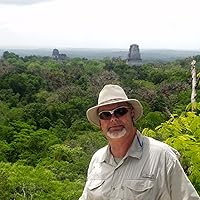
Walker was a Peace Corps Volunteer in Guatemala and spent over forty years helping disadvantaged people in the developing world. He came to Phoenix as a Senior Director for Food for the Hungry, worked with other groups like Make-A-Wish International and was the CEO of Hagar USA, a Christian-based organization that supports survivors of human trafficking.
His book, Different Latitudes: My Life in the Peace Corps and Beyond, was recognized by the Arizona Literary Association for Non-Fiction and, according to the Midwest Review, “…is more than just another travel memoir. It is an engaged and engaging story of one man’s physical and spiritual journey of self-discovery…”
Several of his articles have been published in Ragazine and WorldView Magazines, Literary Yard, Literary Travelers and Quail BELL, while another appeared in "Crossing Class: The Invisible Wall" anthology published by Wising Up Press. His reviews have been published by Revue Magazine, as well as Peace Corps Worldwide, and he has his own column in the Arizona Authors Association newsletter, “The Million Mile Walker Review: What We’re Reading and Why.”
His honors include the "Service Above Self" award from Rotary International. He’s the membership chair for “Partnering for Peace.” His wife and three children were born in Guatemala. You can learn more at www.MillionMileWalker.com and follow him on Facebook at https://www.facebook.com/millionmilew...
Exceptional journalistic account of a society ravaged by civil war. Daniel Wilkinson lived in Guatemala and interviewed countless people on either side of the conflict. What emerges is a portrait of a people so racked by decades of paranoia and butchery that they turn within themselves and deny the violence around them. Much like the citizens of the former Soviet Union, who for decades lived in constant fear and paranoia. It's a gripping account told by a fearless citizen journalist with the writing chops to match.
Tough at times, but a great peek of what Guatemala has been through through the examination of one community. Reads like a mystery but also enough political and background information to make you learn about what happened in Guatemala, the US role in it, and the silence that has gripped the country to a certain extent even up to today.
Great case study on the impacts of the Guatemalan civil war and the army committed genocide on a plantation district. Really provides solid context to the race relations (role of germans, the ladino vs indigenous divide, and the divide amongst plantation indigenous and the ones still connected to their communities), class structure of the plantation economy, guerrilla warfare and the tools of counter insurgency and repression (aka just kill the villages so theres no direct support to be had).
Its also a good case study in how the development of capitalism in any country requires a captive labour force, whether through plantation bondage when labour supply is low or through market relations when labour relations are high. A tragedy that a bourgeois land reform which was the land reform of 52, as stated by the head of the pgt, ended up being implemented without the former plantation workers receiving any security through the increase in population and thus an increase in labour supply and the coming of the neoliberal era.
Also an interesting case study in how capitalism is able to subsume and reproduce for profit identities which were collectivist and previously diametrically opposed to it, once those identities become dislodged from the material basis in which they were produced previously.
This book is a magnificent work of journalism. Wilkinson brings stories out of the shadows by making the victims of these horrific crimes know that it is a safe place to tell their stories. The atrocities committed by the Guatemalan government with the full backing of the US are heartbreaking to read about and that is exactly why every American ought to know about them.
200,000 people were murdered essentially out of a fear of communism. This all started because a law about making things more fair to Finca workers was passed. A law that an actual communist would probably call capitalist all things considered. However, this made the US government scared so they launched a coup which triggered the bloody civil war/genocide.
200,000 people were casualties of American fear. Imagine if another country was scared of the US so they annihilated Salt Lake City. Everyone in the world would know about the annihilation of Salt Lake City and it would rightfully be talked about non stop. However, our own government led to the deaths of the same number of people and yet the majority of Americans could not find Guatemala on a map.
This book humanizes these stories and makes sure that the reader will never forget what happened in Guatemala.
"If [the U.S., post 9-11] could stop to imagine how it actually would have been- recall those moments of raw fear when our buildings or subway stops were evacuated, recall dreading what we might hear on the evening news, recall what it was like to be staring out an office window or riding an elevator or reading a newspaper and feel a sudden urge to cry, and then imagine the danger being so immediate that we couldn't even talk about it, and imagine that the people doing this to us were proclaiming their own righteousness to the world, and imagine living like this day after day, year after year, until the most we could hope for was to be left alone. If we do this, we may begin to grasp what hundreds of thousands of Guatemalans experienced during their war. For Guatemala was a place where terrorism did, in fact, win."
Good overview of what happened during the 1954 Agrarian Reform and the aftermath of war between the army and guerillas. The author interviewed hundreds who were reluctant to speak, paralyzed with fear. I'm glad I was able to learn more about their history.
I first went into this book just wanting to understand more about the history of the Guatemalan civil war. But as I continued reading, I realized that secondly, this book also offers a great perspective on the nature of building connections, relationships, as an 'outsider' with the people inside a community. At first, I was worried about having 'too much' of the narrator injected into the story, but then I realized that his presence, his experience, were a significant aspect of understanding the entire case as a whole.
This is really the second book I read that actually delved into history, the first being "The Last Great Frenchman" about Charles de Gaulle. But in this book, the passions, pain, and vigor really shine through much more intensely. Although all history must be binded to human experience, this book really does a great job of connecting to the personal aspects of the Guatemalan Civil War.
I'm happy to have read this book because it has helped me connect with my dad.
While this book was dense at times (lots of names and dates), overall it was an educational read that didn’t feel like reading a history textbook.
Wilkinson travels and interviews small villages and coffee plantations to better understand the decades-long, hidden civil war. This book covers over 100 years of history, so it is dense; however, he illuminates the stories so you can identify people to the timeline. I learned a lot and Wilkinson is helpful with weaving in international politics and how that impacted and influenced Guatemala. Specifically highlighting how the US backed the military dictatorship government to overthrow and stamp out the “communist” guerrillas
This book provided me with immense insight into the 1960-1996 Guatemalan Civil War before I visit the region next year, and I highly recommend it for anyone interested in learning about the war. It follows a narrative format and provides enough relevant historical context for a history student like myself. The author had the opportunity to interview members of the Guatemalan army, ex-guerrilla fighters, and victims of the violence. Many of the interviews are shocking. I was very pleased to have found this book.
This book was an incredibly valuable read for me during my trip to Guatemala. It is a testament to the importance of oral history and how stories are shared and passed down in the agricultural communities of Guatemala. Though this book was packed full of information, it reads like a fiction book filled with action. It’s heartbreaking and gut wrenching. My only critique is that by interjecting with his own narrative, Daniel Wilkinson takes away from the Guatemalan story he is recording. Great book and would recommend to anyone visiting Guatemala or for anyone with an interest in history.
I saw this book on a bookshelf my first night in Guatemala, while I had researched the country before I visited, 2018, I really didn't understand the civil war. The writing got better as the book went on. Threat, violence, terror can create silence and forgetting. Silence can also be used as a defense, act of courage or a way to maintain dignity. The U.S. feared communism so much we supported repressive, violent regimes and lied. We continue to reap what was sown.
I've read 15 books on Guatemala so far and this one is THE BEST one I've read. So good. It really helps me understand the civil war and why it not only started but especially why it was lost. I love how you get to here from not the people in power but the ordinary people--the poor farm laborers, the landowners, the soldiers, the guerrillas, the mayor, teachers, local politicians, and so on.
I was amazed by this book and it taught me to not trust everything you hear in the news. Well written, and SO historically important. I love that the author went there and lived there. When I have been in Guatemala, I have seen firsthand how Guatemalans still fear talking about the genocide. There are still forces around that continue to threaten them.
presented a lot of good information about workers' unions, the revolution, and CIA involvement that i was curious about after leaving guatemala, and captured the spirit of that time in history - however, sequencing was disjointed, leaving me confused about timelines and the cause and effect of each major event
Compelling first-person account of journalizing the horrors of Guatemala’s dark past, the United States of America’s influence of that darkness, and the prevalent cultural and economical chaos that resulted from those early events.
Particularly relevant for today, our demand for coffee and our fear of communism left a neighbor nearly destroyed and impoverished with the added label of criminal if they try to seek asylum from the mess we instigated.
If uncovering truth matters to you - read this book. Every now and again a writer and a story will come along, driven with facts and purpose, and bring light, clarity and understanding to those who will listen. Silence on the Mountain is such a book.
One of the best books ever written. Read if you're interested in: -research process (ethnography...investigative journalism...human rights reporting) -Guatemalan landscapes and evocative writing about it -reviving Reagans corpse so you can bludgeon him to death -what politics really means
Excelente libro para entender el origen del conflicto armado interno en Guatemala y el temor de la gente a hablar de lo sucedido. Además, súper sencillo de leer.
Again, another required reading for my history class. Interesting topics and anecdotes from people, but it was dense and I felt like I never made any progress through the book.