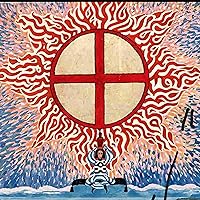
This essential guide to the art and architecture of ancient Mesoamerica succinctly and evocatively summarizes the artistic achievements of the high pre-Columbian civilizations—Olmec, Maya, Teotihuacan, Tolec, Aztec—as well as those of their less well-known contemporaries. The pyramids and palaces, jades and brightly colored paintings emerge from these pages as vividly as when they first astonished Cortés's men in 1519. There was a surprising unity in Mesoamerican culture from Mexico to Honduras and from 1500 BC to the Spanish Conquest. Among many features shared were a 260-day ritual calendar and a preoccupation with gods representing natural forces. Current research also emphasizes the great importance of rites of kingship, including warfare and blood sacrifice. In this third edition, Mary Miller opens up new windows on the ancient past with fresh readings of works of art, all the while offering careful archaeological interpretations. Recent hieroglyphic decipherments provide insights into ancient art, spelling out long-distance connections between the Maya and their neighbors. Updated throughout, with special attention to evidence for dating, the new Art of Mesoamerica is the ideal companion for students and travelers. 193 illustrations, 44 in color.
Ah, difficult. I don't know if you know the the World of Art series, they are all lavishly illustrated, this one has 250 illustrations (185 in colour) 250 illustrations over 277 pages of text, now I'm not very good at maths but even so I could tell that was a lot of illustrations. Not something that is unusual for this series, but for the first time I felt I would have preferred fewer pictures and more words, even bearing in mind the saying that an illustration is worth a thousand words.
I felt that there could have been a 277 page book on the art of the Aztecs (they get one chapter) and another on the art of the Maya (they get two chapters), ok that would admittedly leave the Olmecs & co. high and dry. Then I thought of Art of the Andes, which I read not long before this one, and that seemed to me to deal far more effectively with its topic, working up chronologically and geographically but also pointing out the common themes and special features of each of the peoples that Rebecca Stone considered. Miller's book did not feel as successful to me, despite cover a much shorter time period and a smaller area - essential greater Mexico minus western Mexico which apparently did not have that much contact with the central highlands or the eastern coast. Perhaps the problem was the Aztecs and the Maya, because they have left a literary legacy maybe they overshadow the quieter societies. Or was it that Miller was less successful in stressing common themes than Stone?
There seemed to be a lot of Architecture and town planning, while the amount that is known about the history of the peoples of Mesoamerica meant there was a lot of telling the reader whose heart was hacked out by whom and offered up as a sacrifice to hungry gods, and there was a good deal of cities sacked men killed, women eaten, and chihuahuas carried off into slavery (or possibly some other combination of such activities).
Overall there was not a great deal about art, it was more a potted history of pre-colonial Mesoamerica with a lot of gorgeous pictures (particularly of temples). My final complaint is that I found some of the illustrations of carved stones too small considering the dense decorative style that the Mesoamericans preferred - perhaps future editions need to come with a hand lens to allow the reader to best appreciate the book.
As a thorough and bloody introduction to the history of pre-colonial Mesoamerica with an interest in the Art, it is pretty fantastic and as good an update starting point to exploring those arid highlands and deep jungles, catching glimpses of sophisticated urban centres and a world in which wheels were only used on children's toys.
There seemed to be an iterative quality about these societies, consciously or not they were building on each other, the barbarians who brought down one great city would often enough in a couple of generation's time be replicating its forms and features, sometimes physically incorporating its art works into their own cities (p.252). The Aztecs in particular were fond of burying hordes of objects excavated from previously abandoned metropoli, the cities of mesoamerica were presided over by great pyramids, these pyramids it is slowly being revealed were built up on top of tombs, sometimes successive layers were built over further burials. At the centre of these societies were giant funeral monuments on which sacrifice was performed, as it happened some of these societies had a mythology of catastrophe that periodically all life in existence was destroyed and the Earth swept clear for a new iteration of existence, this seems to be reflected in what can be seen of the history of the region an iterative process of the collapse and rebirth of city states some with imperial ambitions. Repeated societies honoured their gods and ancestors through human sacrifice - cutting open the chest of the victim and removing their heart - an act sometimes graphically depicted on art works - the sacrificial victim though had to be of a certain quality, his skin ideally would be smooth like a tomato and he would not have flabby buttocks or thighs (p.258).
That detail demonstrates my problem with the book, Miller suggests in it that we can see something of the aesthetic of the Aztecs, but in the pictures that she chooses to show us of an eagle knight or of a ruler covered in regalia any flabbiness of the buttocks or thighs is very well hidden from view by their costume. This is a book full of fascinating things, but not strictly an account of the Art of Mesoamerica
If the arrival of Cortes and his followers was another long feared catastrophe event in a way the mesoamericans cut out and consumed the heart of the incoming culture and made it part of their own and the last pages of the book illustrate examples of the curious survival of pre-Columbian elements within even formal Christian culture which was ostensibly dedicated to the creation of a new world - crucifixes would be made with an obsidian blade at their heart, while scribes wrote down some of the poetry of the Aztecs and their rivals and the Maya epic Popol Vuh (pp 272-7).
I noticed that while in Art of the Andes anything might be associated to shamanism - from the colours used to paint pottery to an unusual design, Miller mentions shaman I believe twice only in this book about Mesoamerica, possibly this too is related to the source material available the myth of the Hero twins who must play (and win against) the cigar smoking lords of the nine underworlds in the ball court before they can bring their father the Maize god back to life, related in the Popol Vuh may have been shared by many of the peoples of Mesoamerica (many of the cities at least have a ball court), aspects of this culture are still alive as discussed in Time among the Maya something which is also suggested by the ongoing habits of pilgrimage to some of the abandoned cities of Mesoamerica.
I first started reading this in 2001 and then again in 2007. Last spring, I restarted it an plodded through it until I finally knocked it off this morning.
In truth, it is a historical/archeological book about the various Mesoamerican cultures and its various art forms. The writer does know art but approach it from a cultural-archeological rather than a basic decorative spin. The author brings in a lot of facts and places the various art pieces, architecture in the context of its forma and function. I enjoyed it because I am a huge Mesoamerican cultures student and I appreciate art for its practical use and value. This is a solid and enjoyable book for art and culture fans. But, it is not for everyone.
Finished for a class in Mesoamerican art history and archaeology. This book was helpful and informative however I did find the use of the term Jade misleading. Green stone or Jadeite isn't Jade as most think it.
I always thought I would have to travel half away around the world to see and appreciate an ancient culture but after reading this book I feel like I accomplished this! I will definitely put some of these sites on my bucket list to visit. Overall, this work is a great introduction to Mexican civilization for any person or student interested in early Mexican history and art. The book contains many colorful (250) pictures of sites, and artifacts which were invaluable. This was an update from her 2001 edition.
Compelling enough to keep me interested, but given my existing interest in the subject I am super biased. Still, I would recommend it to anyone looking to get a broad overview of the grand scope of Mesoamerica through the lens of art and architecture.
This volume is part of a series of art from around the world and through history. This one focuses particularly on the Mayan period with some Aztec art thrown in at the end.
They are a few things that attract me right now to this style of art and its foundations. First is the style which is angular, intricate and expressionistic. Next is the focus on animals and nature and how interconnected it all is.
It is amazing to think about how important the spiritual element was in this culture. There is so much emphasis placed on appeasing the greater spirits and honoring dead rulers. How much these served as the focus of this society. The element of human sacrifice seems horrific but this society is so different from ours that we might not have the perspective to understand the role it played.
There were a few things that frustrated me. First is simply that the focus on the art which is clearly so interweaved into the entire civilization feels incomplete. Also given the range of vocabulary which is unique to this civilization a glossary of terminology would have been helpful.
This is a college level Art History textbook. It covers the Art and History of the Olmecs, Maya, Teotihuacan, Toltec and Aztecs, all middle America civilizations prior to European colonization. The 6th edition includes information on some of the more recent archaeological finds, which is interesting. Palace and temple architecture, pyramids, sculpture, painting and pottery of each culture is examined. Along the way you will get a solid perspective of this time period in history. Studying the art history of a civilization is one of my favorite ways to learn its overall history.
In some of the pictures it is hard to see the details but that is a minor complaint. The text is replete with color illustrations that provide a great foundation and visuals.
I never really intended to read this book. I got it because of the stunning artwork that it contained (and I mean tons of it). Once I started to thumb through and read excerpts, I decided I had to read it. The exhaustive research and detail, both regarding the art and pleasantly the history, is apparent from the first page. Consider adding this to your research if you’re seriously interested in Mesoamérican culture.
An excellent primer to a vast, complex, and diverse grouping of civilizations spanning over 1500 years of time -- and there's constantly new civilizations, new cities, new sculptures, etc., being excavated! So while this book felt dense and exhaustive in its range of topics, it only covers a fractile of the history of Mesoamerican Art.
I read the 6th edition, which was published in 2019. This updated version has stunning, fully colored, high quality images. It makes a difference and helps you not just understand how beautiful so much of this art is, but the detail shots illustrate how complex these "primitive" art forms are. The textual content is also well written, Mary Ellen Miller never disappoints.
Buen compendio introductorio al arte mesoamericano. Ya tiene sus años y algunas cosas están desactualizadas (por ejemplo dice que aún no se leen los glifos mayas), pero aún así es un buen panorama general de lo que era el arte prehispánico.
The author was on a panel in conjunction with the Splendors of Mexico exhibit in San Antonio. Her book indicated that there has been increasing evidence that the Mesoamerican cultures had interaction, or trade, or at least knowledge of each other.
3.5 stars. Not bad for a school textbook. I just wish the pictures of the items were next to the text instead of a different page; sucks to flip back and forth.
While it provides a succinct overview of Precolumbian sites and cultural artifacts in the region, the text is curt and not always as clear as it could be. A fine introduction, but lacking depth and context in favor of brevity.