
What do you think?

History of English Literature from Beowulf to Swinburne
Andrew Lang's survey of English literature is a remarkably thorough look at the history of English writing, covering authors from Abbot Adamnan to Edward Young, and everyone of note in between.
- GenresNonfictionHistory
708 pages, Paperback
First published September 1, 2003
About the author
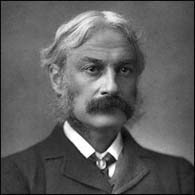
Andrew Lang
3,016 books585 followersTales of the Scottish writer and anthropologist Andrew Lang include
The Blue Fairy Book
(1889).
Andrew Gabriel Lang, a prolific Scotsman of letters, contributed poetry, novels, literary criticism, and collected now best folklore.
The Young Scholar and Journalist
Andrew Gabriel Lang, the son of the town clerk and the eldest of eight children, lived in Selkirk in the Scottish borderlands. The wild and beautiful landscape of childhood greatly affected the youth and inspired a lifelong love of the outdoors and a fascination with local folklore and history. Charles Edward Stuart and Robert I the Bruce surrounded him in the borders, a rich area in history. He later achieved his literary Short History of Scotland .
A gifted student and avid reader, Lang went to the prestigious Saint Andrews University, which now holds a lecture series in his honor every few years, and then to Balliol College, Oxford. He later published Oxford: Brief Historical and Descriptive Notes about the city in 1880.
Moving to London at the age of 31 years in 1875 as an already published poet, he started working as a journalist. His dry sense of humor, style, and huge array of interests made him a popular editor and columnist quickly for The Daily Post, Time magazine and Fortnightly Review. Whilst working in London, he met and married Leonora Blanche Alleyne Lang, his wife.
Interest in myths and folklore continued as he and Leonora traveled through France and Italy to hear local legends, from which came the most famous The Rainbow Fairy Books . In the late 19th century, interest in the native stories declined and very few persons recounting them for young readers. In fact, some educationalists attacked harmful magical stories in general to children. To challenge this notion, Lang first began collecting stories for the first of his colored volumes.
Lang gathered already recorded stories, while other folklorists collected stories directly from source. He used his time to collect a much greater breadth over the world from Jacob Grimm, his brother, Madame d'Aulnoy, and other less well sources.
Lang also worked as the editor, often credited as its sole creator for his work despite the essential support of his wife, who transcribed and organised the translation of the text, to the success.
He published to wide acclaim. The beautiful illustrations and magic captivated the minds of children and adults alike. The success first allowed Lang and Leonora to carry on their research and in 1890 to publish a much larger print run of The Red Fairy Book , which drew on even more sources. Between 1889 and 1910, they published twelve collections, which, each with a different colored binding, collected, edited and translated a total of 437 stories. Lang, credited with reviving interest in folklore, more importantly revolutionized the Victorian view and inspired generations of parents to begin reading them to children once more.
Last Works
Lang produced and at the same time continued a wide assortment of novels, literary criticism, articles, and poetry. As Anita Silvey, literary critic, however, noted, "The irony of Lang's life and work is that although he wrote for a profession... he is best recognized for the works he did not write," the folk stories that he collected.
He finished not the last Highways and Byways of the Border but died.
Andrew Gabriel Lang, a prolific Scotsman of letters, contributed poetry, novels, literary criticism, and collected now best folklore.
The Young Scholar and Journalist
Andrew Gabriel Lang, the son of the town clerk and the eldest of eight children, lived in Selkirk in the Scottish borderlands. The wild and beautiful landscape of childhood greatly affected the youth and inspired a lifelong love of the outdoors and a fascination with local folklore and history. Charles Edward Stuart and Robert I the Bruce surrounded him in the borders, a rich area in history. He later achieved his literary Short History of Scotland .
A gifted student and avid reader, Lang went to the prestigious Saint Andrews University, which now holds a lecture series in his honor every few years, and then to Balliol College, Oxford. He later published Oxford: Brief Historical and Descriptive Notes about the city in 1880.
Moving to London at the age of 31 years in 1875 as an already published poet, he started working as a journalist. His dry sense of humor, style, and huge array of interests made him a popular editor and columnist quickly for The Daily Post, Time magazine and Fortnightly Review. Whilst working in London, he met and married Leonora Blanche Alleyne Lang, his wife.
Interest in myths and folklore continued as he and Leonora traveled through France and Italy to hear local legends, from which came the most famous The Rainbow Fairy Books . In the late 19th century, interest in the native stories declined and very few persons recounting them for young readers. In fact, some educationalists attacked harmful magical stories in general to children. To challenge this notion, Lang first began collecting stories for the first of his colored volumes.
Lang gathered already recorded stories, while other folklorists collected stories directly from source. He used his time to collect a much greater breadth over the world from Jacob Grimm, his brother, Madame d'Aulnoy, and other less well sources.
Lang also worked as the editor, often credited as its sole creator for his work despite the essential support of his wife, who transcribed and organised the translation of the text, to the success.
He published to wide acclaim. The beautiful illustrations and magic captivated the minds of children and adults alike. The success first allowed Lang and Leonora to carry on their research and in 1890 to publish a much larger print run of The Red Fairy Book , which drew on even more sources. Between 1889 and 1910, they published twelve collections, which, each with a different colored binding, collected, edited and translated a total of 437 stories. Lang, credited with reviving interest in folklore, more importantly revolutionized the Victorian view and inspired generations of parents to begin reading them to children once more.
Last Works
Lang produced and at the same time continued a wide assortment of novels, literary criticism, articles, and poetry. As Anita Silvey, literary critic, however, noted, "The irony of Lang's life and work is that although he wrote for a profession... he is best recognized for the works he did not write," the folk stories that he collected.
He finished not the last Highways and Byways of the Border but died.
Ratings & Reviews
Friends & Following
Create a free account to discover what your friends think of this book!
Community Reviews
Displaying 1 - 2 of 2 reviews

October 25, 2017
Title: History of English Literature
From 'Beowulf' to Swinburne
Author: Andrew Lang
Release Date: February 21, 2018 [EBook #56613]
Language: English
Produced by Laura N.R. and Marc D'Hooghe at Free Literature (Images generously made available by the Internet Archive)
Free download available at Project Gutenberg.
I made the proofing this book for Free Literature and it is published by Project Gutenberg.
Images available at Internet Archive
CONTENTS.
Preface v
List of Authors xi
CHAPTER
I. Anglo-Saxon Literature: The Anglo-Saxon Way of Living--Minstrels,
Story-Tellers, and Stories--Beowulf--The
Wanderer--The Plaint of Deor--The Seafarer--Waldhere--The
Fight at Finnsburg 1
II. Anglo-Saxon Christian Poetry: Caedmon--Cynewulf--Andreas--Dream
of the Rood--Elene--Riddles--Phoenix 16
III. Anglo-Saxon Learning and Prose: Latin among the
Anglo-Saxons--Bede--Alcuin--Alfred--The Anglo-Saxon
Chronicle--The Monks and Learning--Aelfric 23
IV. After the Norman Conquest: Latin Literature--Walter
Map--Changes Since the Conquest 35
V. Geoffrey of Monmouth: The Stories of Arthur 42
VI. Layamon's "Brut": Ormulum--Ancren Riwle--The Owl
and the Nightingale--Lyrics--Political Songs--Robert of
Gloucester--Cursor Mundi--Devotional Books--Minot 48
VII. The Romances in Rhyme: Tristram--Havelok--King Horn--Beues
of Hamtoun--Guy of Warwick--Arthur and Merlin--The
Tale of Troy--The Story of Troy from Homer to
Shakespeare--King Alisaundre 60
VIII. Alliterative Romances and Poems: Gawain and the Green
Knight--Pearl--Huchowne 72
IX. Chaucer: Early Poems--The Dethe of the Duchesse--Other
-Early Poems--Troilus and Criseyde--The Canterbury
Tales 78
X. "Piers Plowman," Gower
XI. The Successors of Chaucer: Lydgate--Occleve--Hawes 110
XII. Late Mediaeval Prose: Wyclif--Chaucer's Prose Style
--Trevisa--Mandeville--Pecock: "The Repressor"--Capgrave
--Lord Berners 115
XIII. Malory 124
XIV. Early Scottish Literature: Barbour--Wyntoun--The Kingis
Quhair--Henryson--Dunbar--Blind Harry--The Buke of
the Howlat--Gawain Douglas--Sir David Lyndsay 129
XV. Popular Poetry. Ballads
Professional Poetry: Skelton--Barclay 147
XVI. Rise of the Drama: Heywood--Ralph Roister Doister--
Gammer Gurton's Needle--"Gorboduc" 153
XVII. Wyatt and Surrey. Gascoigne. Sackville: The Earl of
Surrey--Tottel's Miscellany--Gascoigne--Sackville 163
XVIII. Prose of the Renaissance: Elyot--Ascham--Lyly's
Euphues--Sidney--Sidney's "Defence of Poesie"
Spenser 172
XIX. The Elizabethan Stage and Playwrights: John Lyly--Peele
--Greene--Lodge--Nash--Marlowe--Kyd--Shakespeare--The Sonnets
--Later Plays--Jonson--Jonson's Prose 193
XX. Other Dramatists: Beaumont and Fletcher--Chapman--John
Marston--Dekker--Middleton--Heywood--Webster
--Massinger--Ford--Shirley 242
XXI. Elizabethan and Jacobean Prose Writers: Hooker--
"Martin Marprelate"--Bacon--Raleigh--Overbury--Translators--Pulpit
Eloquence 265
XXII. Late Elizabethan and Jacobean Poets: Minor Lyrists--
Drayton--Daniel--Davies--Giles and Phineas Fletcher
-Corbet--Sir John Beaumont 283
XXIII. Late Jacobean and Caroline Prose: Burton--Herbert of
Cherbury--Browne.
Caroline Prose: Milton--Jeremy Taylor--Thomas Fuller--Hobbes--Izaak
Walton--John Bunyan--Clarendon 303
XXIV. Caroline Poets: Crashaw--Herbert--Vaughan--Herrick--Carew
--Lovelace--Suckling--Habington--Cartwright--Davenant
--Cowley--Denham--Sherburne--Stanley--Browne--Cotton
--Waller--Marvell--Milton--Samuel Butler 328
XXV. Restoration Theatre: Congreve--Vanbrugh--George Farquhar
--Otway--Nat Lee--Dryden 358
XXVI. Augustan Poetry: Alexander Pope--Prior--Gay--Ambrose
Philips--Tickell 382
XXVII. Augustan Prose: Steele--Addison--Swift--De Foe 394
XXVIII. Georgian Poetry I.: Edward Young--James Thomson--William
Collins--Thomas Gray--The Wartons--John Dyer--William Shenstone 422
XXIX. Georgian Poetry II.: Thomas Chatterton--William Cowper
--Literature in Scotland (1550-1790)--Robert Burns--Charles
Churchill--George Crabbe 434
XXX. Georgian Prose I.: The Great Novelists--Richardson--Henry
Fielding--Tobias Smollet 458
XXXI. Georgian Prose II.: Samuel Johnson--Oliver Goldsmith--Edmund
Burke--Horace Walpole--Laurence Sterne—-David Hume--Robertson
--Edward Gibbon--Richard Brinsley Sheridan--Lady Mary
Wortley Montagu--Junius 471
XXXII. The Romantic Movement: Coleridge--Walter Scott
--William Wordsworth--Robert Southey--Shelley--Byron
--Keats--Walter Savage Landor 497
XXXIII. Later Georgian Novelists: Frances Burney--
Mrs. Radcliffe--Maria Edgeworth--Charles Brockden Brown
--Jane Austen--Walter Scott, the Novelist--James Fenimore
Cooper--Washington Irving.
Magazines and Essayists: Charles Lamb--Leigh Hunt--William
Hazlitt--Thomas de Quincey 530
XXXIV. Poets after Wordsworth: Philip Freneau--William Cullen.
Bryant--John Greenleaf Whittier--Henry Wadsworth
Longfellow--Alfred Tennyson--Robert Browning--Edgar
Allan Poe--Ralph Waldo Emerson--James Russell Lowell
--Matthew Arnold.
General Writers: John Ruskin 560
XXXV. Late Victorian Poets: Edward FitzGerald--George Meredith
--Elizabeth Barrett Browning--Christina Rossetti--Dante
Gabriel Rossetti--William Morris--Swinburne.
Poetic Underwoods 594
XXXVI. Latest Georgian and Victorian Novelists: Dickens--
Thackeray--The Brontë Sisters--Nathaniel Hawthorne--Oliver
Wendell Holmes--Charles Kingsley--George
Meredith--Anthony Trollope--George Eliot--Robert Louis
Stevenson--Minor Novelists 609
XXXVII. Historians: Thomas Babington Macaulay--Thomas Carlyle
--James Anthony Froude--Edward Augustus Freeman--William
Hickling Prescott--John Lothrop Motley--J. S.
Mill--Cardinal Newman--W. E. H. Lecky 643
Index 665
From 'Beowulf' to Swinburne
Author: Andrew Lang
Release Date: February 21, 2018 [EBook #56613]
Language: English
Produced by Laura N.R. and Marc D'Hooghe at Free Literature (Images generously made available by the Internet Archive)
Free download available at Project Gutenberg.
I made the proofing this book for Free Literature and it is published by Project Gutenberg.
Images available at Internet Archive
CONTENTS.
Preface v
List of Authors xi
CHAPTER
I. Anglo-Saxon Literature: The Anglo-Saxon Way of Living--Minstrels,
Story-Tellers, and Stories--Beowulf--The
Wanderer--The Plaint of Deor--The Seafarer--Waldhere--The
Fight at Finnsburg 1
II. Anglo-Saxon Christian Poetry: Caedmon--Cynewulf--Andreas--Dream
of the Rood--Elene--Riddles--Phoenix 16
III. Anglo-Saxon Learning and Prose: Latin among the
Anglo-Saxons--Bede--Alcuin--Alfred--The Anglo-Saxon
Chronicle--The Monks and Learning--Aelfric 23
IV. After the Norman Conquest: Latin Literature--Walter
Map--Changes Since the Conquest 35
V. Geoffrey of Monmouth: The Stories of Arthur 42
VI. Layamon's "Brut": Ormulum--Ancren Riwle--The Owl
and the Nightingale--Lyrics--Political Songs--Robert of
Gloucester--Cursor Mundi--Devotional Books--Minot 48
VII. The Romances in Rhyme: Tristram--Havelok--King Horn--Beues
of Hamtoun--Guy of Warwick--Arthur and Merlin--The
Tale of Troy--The Story of Troy from Homer to
Shakespeare--King Alisaundre 60
VIII. Alliterative Romances and Poems: Gawain and the Green
Knight--Pearl--Huchowne 72
IX. Chaucer: Early Poems--The Dethe of the Duchesse--Other
-Early Poems--Troilus and Criseyde--The Canterbury
Tales 78
X. "Piers Plowman," Gower
XI. The Successors of Chaucer: Lydgate--Occleve--Hawes 110
XII. Late Mediaeval Prose: Wyclif--Chaucer's Prose Style
--Trevisa--Mandeville--Pecock: "The Repressor"--Capgrave
--Lord Berners 115
XIII. Malory 124
XIV. Early Scottish Literature: Barbour--Wyntoun--The Kingis
Quhair--Henryson--Dunbar--Blind Harry--The Buke of
the Howlat--Gawain Douglas--Sir David Lyndsay 129
XV. Popular Poetry. Ballads
Professional Poetry: Skelton--Barclay 147
XVI. Rise of the Drama: Heywood--Ralph Roister Doister--
Gammer Gurton's Needle--"Gorboduc" 153
XVII. Wyatt and Surrey. Gascoigne. Sackville: The Earl of
Surrey--Tottel's Miscellany--Gascoigne--Sackville 163
XVIII. Prose of the Renaissance: Elyot--Ascham--Lyly's
Euphues--Sidney--Sidney's "Defence of Poesie"
Spenser 172
XIX. The Elizabethan Stage and Playwrights: John Lyly--Peele
--Greene--Lodge--Nash--Marlowe--Kyd--Shakespeare--The Sonnets
--Later Plays--Jonson--Jonson's Prose 193
XX. Other Dramatists: Beaumont and Fletcher--Chapman--John
Marston--Dekker--Middleton--Heywood--Webster
--Massinger--Ford--Shirley 242
XXI. Elizabethan and Jacobean Prose Writers: Hooker--
"Martin Marprelate"--Bacon--Raleigh--Overbury--Translators--Pulpit
Eloquence 265
XXII. Late Elizabethan and Jacobean Poets: Minor Lyrists--
Drayton--Daniel--Davies--Giles and Phineas Fletcher
-Corbet--Sir John Beaumont 283
XXIII. Late Jacobean and Caroline Prose: Burton--Herbert of
Cherbury--Browne.
Caroline Prose: Milton--Jeremy Taylor--Thomas Fuller--Hobbes--Izaak
Walton--John Bunyan--Clarendon 303
XXIV. Caroline Poets: Crashaw--Herbert--Vaughan--Herrick--Carew
--Lovelace--Suckling--Habington--Cartwright--Davenant
--Cowley--Denham--Sherburne--Stanley--Browne--Cotton
--Waller--Marvell--Milton--Samuel Butler 328
XXV. Restoration Theatre: Congreve--Vanbrugh--George Farquhar
--Otway--Nat Lee--Dryden 358
XXVI. Augustan Poetry: Alexander Pope--Prior--Gay--Ambrose
Philips--Tickell 382
XXVII. Augustan Prose: Steele--Addison--Swift--De Foe 394
XXVIII. Georgian Poetry I.: Edward Young--James Thomson--William
Collins--Thomas Gray--The Wartons--John Dyer--William Shenstone 422
XXIX. Georgian Poetry II.: Thomas Chatterton--William Cowper
--Literature in Scotland (1550-1790)--Robert Burns--Charles
Churchill--George Crabbe 434
XXX. Georgian Prose I.: The Great Novelists--Richardson--Henry
Fielding--Tobias Smollet 458
XXXI. Georgian Prose II.: Samuel Johnson--Oliver Goldsmith--Edmund
Burke--Horace Walpole--Laurence Sterne—-David Hume--Robertson
--Edward Gibbon--Richard Brinsley Sheridan--Lady Mary
Wortley Montagu--Junius 471
XXXII. The Romantic Movement: Coleridge--Walter Scott
--William Wordsworth--Robert Southey--Shelley--Byron
--Keats--Walter Savage Landor 497
XXXIII. Later Georgian Novelists: Frances Burney--
Mrs. Radcliffe--Maria Edgeworth--Charles Brockden Brown
--Jane Austen--Walter Scott, the Novelist--James Fenimore
Cooper--Washington Irving.
Magazines and Essayists: Charles Lamb--Leigh Hunt--William
Hazlitt--Thomas de Quincey 530
XXXIV. Poets after Wordsworth: Philip Freneau--William Cullen.
Bryant--John Greenleaf Whittier--Henry Wadsworth
Longfellow--Alfred Tennyson--Robert Browning--Edgar
Allan Poe--Ralph Waldo Emerson--James Russell Lowell
--Matthew Arnold.
General Writers: John Ruskin 560
XXXV. Late Victorian Poets: Edward FitzGerald--George Meredith
--Elizabeth Barrett Browning--Christina Rossetti--Dante
Gabriel Rossetti--William Morris--Swinburne.
Poetic Underwoods 594
XXXVI. Latest Georgian and Victorian Novelists: Dickens--
Thackeray--The Brontë Sisters--Nathaniel Hawthorne--Oliver
Wendell Holmes--Charles Kingsley--George
Meredith--Anthony Trollope--George Eliot--Robert Louis
Stevenson--Minor Novelists 609
XXXVII. Historians: Thomas Babington Macaulay--Thomas Carlyle
--James Anthony Froude--Edward Augustus Freeman--William
Hickling Prescott--John Lothrop Motley--J. S.
Mill--Cardinal Newman--W. E. H. Lecky 643
Index 665
September 1, 2020
Have a drink every time he mentions Jeanne d'Arc.
Displaying 1 - 2 of 2 reviews