The Australian Light Horse was a unique force, first raised during the Boer War, and then reformed for World War I. Most of the men were from the outback, had a special bond with their horses (which were all brought from Australia) - and they knew how to survive and fight in the desert. The greatest part of the Allied victory over the Turks was theirs. Colonel Lawrence had a strategy for actually defeating the Turks - as opposed to the British High Command's acceptance of the status quo. What Lawrence needed was a mobile, elite force to join his own troops - and in the Light Horse he had them. Battle-hardened by Gallipoli and the repulse of the Turkish invasion of Egypt, the Australians were ready. Under their brilliant commander, Sir Harry Chauvel they won great victories in the Sinai, Palestine and Syria - culminating in the last great cavalry charge in our military history, and the taking of Beersheba in 1917. Every Australian has heard of the Light Horse - but practically none have read their story. Roland Perry brings their story to life, and tells it with colour, emotion - and authority.
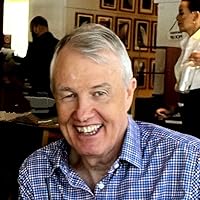
Professor Roland Perry (born 11 October 1946) is a Melbourne-based author best known for his books on history, especially Australia in the two world wars. His Monash: The Outsider Who Won The War, won the Fellowship of Australian Writers' 'Melbourne University Publishing Award' in 2004. The judges described it as 'a model of the biographer's art. In the Queen's Birthday Honours of June 2011, Perry was awarded the Medal of the Order of Australia 'for services to literature as an author.In October 2011, Monash University awarded Perry a Fellowship for 'high achievement as a writer, author, film producer and journalist.His sports books include biographies of Sir Donald Bradman, Steve Waugh, Keith Miller and Shane Warne. Perry has written on espionage, specialising in the British Cambridge Ring of Russian agents. He has also published three works of fiction and produced more than 20 documentary films. Perry has been a member of the National Archives of Australia Advisory Council since 2006.
In late 2012 Perry accepted an adjunct appointment at Monash University as a Professor, with the title ‘Writer-in-Residence’ in the University’s Arts Faculty.
A bit disappointed with this one. What promised to be a good concept for a book was let down by Roland Perry's clear biased against Britain. Whilst each to their own it should not interfere with the facts, for example Roland states categorically that it was impossible for a British soldier to rise through the ranks to become an officer, defiantly not the case! He seems to hold onto many of the myths and clichés surround WW1 and in my opinion has clouded his research in some respects.
I read this war history for a number of reasons. Firstly, I inherited it from my late Dad (I bought it for him) - it was the last book he was reading when he passed, and he never quite finished it.
Secondly, my maternal grandfather, who died well before I was born, served in the Australian Light Horse at Gallipoli and the Middle East. According to my mother, it was something he would never discuss, although he did leave an interesting diary of his WWI experiences.
Thirdly, although I have read quite a bit of war history, this Middle East campaign is one I knew less about than, say, Gallipoli or the trench warfare of the Somme, which was raging concurrently.
Roland Perry has done a marvellous job in bringing to life the arduous battles of 1915 - 1918 between the Allied forces (British, Australian, New Zealand and Indian) against the combined Turkish and German armies.
The title is a little misleading for, although the exploits of the Australian Light Horse feature prominently, it is not exclusively a history of this renowned fighting force.
This is more of a history of the Middle East campaign, with a whole cast of characters, but particularly featuring the excellent leadership of Sir Harry Chauvel and the mythical enigma that was Thomas Edward (T E) Lawrence, often referred to as Lawrence of Arabia.
Most people have heard of the infamous Charge of the Light Brigade at Beersheba in 1917, when a line of fiercely determined Australian troops on their sturdy Waler horses charged the Turkish lines and overwhelmed them to take the town and the essential water supplies that had been under Turkish/German control.
But this is but one of many important and tough battles fought over a period of three years around the southern coast of the Mediterranean Sea in lands that are now identified as Egypt, Israel, Syria and Lebanon, culminating in the taking of Damascus and the eventual rout of the Ottoman Empire.
Chauvel, the Australian commander of the Light Horse is portrayed as an astute, careful and tactically brilliant man, who ultimately gained the respect and admiration of his British superiors, especially General Edmund Allenby.
Remember that Australian troops fought in WWI as part of the British Imperial Army, and it was rare for Australian officers to be given control in preference to their British counterparts. Leaders like Chauvel and Monash were exceptions, and their careful planning and respect for their men won battles and saved many lives.
In parallel with the official military campaign against the Turks is the fascinating story of T E Lawrence. I really knew very little about him.
He acted as a British Intelligence Officer, often working alone outside of the official structures, to bring the local Arab population on side the assist the Allies. The Arabs wanted to be rid of the Turks, but demanded appropriate incentives to get involved in the fight. They were ruthless looters.
Lawrence was a smooth and shifty operator, relying on his wits and negotiating skills, using bribes and promises of future powers to enlist the aid of Arab tribes to undertake guerrilla activities, particularly the blowing up of railway lines and bridges. He convinced Arab troops to fight alongside Allied forces in battles where the enemy was attacked on several fronts at once.
Lawrence was genuinely fond of the Bedouins, living among them and adopting their dress and customs, and he made promises that they could control conquered territory once they were freed from Turkish control. And yet he knew that this was something of a ruse, as the British and French governments already had secret agreements in place to divvy up the spoils of war.
Perry has presented a thoroughly well researched war history about battles that are generally less well known than the stories of Gallipoli and the Somme, but which are no less important in the overall context of WWI.
One minor complaint - the book could have benefited from more maps interspersed within the text. There was just one small map at the beginning of the book that I kept referring back to, to understand the relative geographical locations of the many towns and localities that were referred to.
The title of the book is somewhat misleading, the Light Horse are simply the vehicle through which the author details the parallel and often intersecting military careers of Chauvel and Lawrence in WW1. With that in mind it is a useful book to assist in understanding the interplay of conventional (Chauvel’s cavalry) and unconventional (Lawrence’s Arabian raiders) operations across a campaign and the tensions that clearly arise when they work at divergent purposes. Author makes a great deal of the special touch needed to command ANZAC soldiers effectively continuing the narrative that none of the issues of Australia’s experience in WW1 were of our own doing. Learnt some things in here I wasn’t aware of (GEN Allenby getting abused off a parade ground by the ANZAC contingent) and gained some different insight into others (this is a good read if you have only read 7 Pillars for example to understand elements from the non-Lawrence POV).
I thought this book would have more about the overall history of the Australian Light Horse, but it only really covers the battles against the Turks, particularly in what is now Israel and Syria in World Aar 1. There is also quite a lot on Lawrence of Arabia and his exploits. The other main content of the book is on the Australian General Sir Harry Chauvel. The book also highlights the incompetence of some of the British Generals who tried to run the war from the front bar of the Savoy Hotel in Cairo. Overall it moves at a fast pace and is gripping but I have some reservations.
The title of the book should have included "and the Arab Revolt". A good third of the book was devoted to T.E Lawrence's exploits which were interesting and fitted nicely alongside of the various battles of the Light Horse in the Middle East. The book covers Gallipoli, why the Light Horse stayed in the Middle East and the leadership of Harry Chauvel. Sometimes the writing was repetitious and the adoration of the Anzac spirit a bit over the top. The battles in the Middle East WWI were interesting and the men were to be admired. I think that they deserved a book just focused on them.
Again a successful attack and charge from the Aussie mounted soldiers. Well led and managed, The Australian Light Horse was pivotal in the Beersheba campaign. Yes, we've all seen the Hollywood movies of cavalry charges but this is the real thing. Extraordinary.
While the story of the Australian forces and their battle with the Ottomans in the Arabian desert is an interesting one, the sloppy presentation is a definite negative.
This is an exhaustively researched book which shines a light on a little understood aspect of WW1, but one which had very far reaching consequences after war, in terms of the ultimate demise of the Ottoman empire, the creation of an Israeli state and in general terms the standing of the westamongst Arab nations.
The book covers a lot of ground and includes plenty of details on the campaigns of Lawrence of Arabia, which crossed paths with those of the Light Horse on many occasions.
However, the lack of maps in this book is a major failing - detailed operational descriptions of key actions are very hard to follow without them, but Perry asks us to do that many times over.
I agree with previous reviews which stated more maps are required. but I was able to get beyond that. I thoroughly enjoyed this book, the achievements of the Light Horse making me very proud to be Australian. my only criticism, although he was a major part of the Allied campaign in the Middle East, was a little too much focus on Lawrence of Arabia, with quite large chunks dedicated to his campaigns and attempts to involve the Arabs in the ruling of Syria post war. Other than that, a highly recommended read.
Most australian WWI history is written either on Gallipoli or The Western Front, however Australia had a large mounted infantry force in the Middle East in the war with Turkey. This book is a good introduction to this important but less known aspect of Australian involvement in the First World War.
For me readings this book was similar to reading a novel - because I found it to be a pager turner. It is an easy read, clear and concise and exciting.