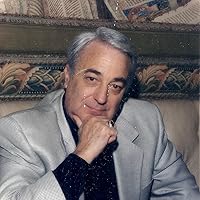
This book of stories celebrates people who have a magnetism, a tenacity, a personal vision, an independence, and a self-sufficiency that elude most of us today.
Caudill served in World War II as a private in the U.S. Army and was elected three times as to the Kentucky State House of Representatives. He taught in the History Department at the University of Kentucky from 1976 to 1984.
A common theme explored in many of Caudill's writings is the historic underdevelopment of the Appalachian region (particularly his own home area of southeastern Kentucky). In several of his books (most prominently Night Comes to the Cumberlands, 1962) and many of his published articles, he probes the historical poverty of the region, which he attributes in large part to the rapacious policies of the coal mining industries active in the region, as well as their backers: bankers of the northeastern United States. He notes that such interests most often had their headquarters not in Appalachia but in the Northeast or Midwest, and thus failed to properly reinvest their sizable profits in the Appalachian region. Following publication of Night Comes to the Cumberlands, President John F. Kennedy appointed a commission to investigate conditions in the region and subsequently more than $15 billion in aid was invested in the region over twenty-five years.
In his later years he became an active opponent of the rapidly growing practice of strip mining as practiced by companies working in Appalachia, which he believed was causing irreparable harm to the land and its people. He published articles in many magazines in addition to speaking out about the subject. Caudill pointed out that strip mining could be done responsibly as in England, Germany, and Czechoslovakia where topsoil, subsoil, and rocks are removed separately and placed back in layers in their original order.
Caudill became interested in the work of William Shockley, a scientist with controversial eugenicist stances at Stanford University in California. Caudill came to believe in Shockley's theory of "dysgenics," the argument that unintelligent people weaken the genes of a "race" over time. He felt that "genetic decline" in Eastern Kentucky contributed to issues of poverty. "The slobs continue to multiply," Caudill wrote in a 1975 letter to Time magazine. The editors of Time rejected Caudill's letter.
He also produced several volumes of folklore and oral history, which he collected himself from residents of the area centering on Letcher County and Harlan County, Kentucky. One of those oral history interviews in 1941 of a man who would have been about 90 years old, was the basis for the 1995 movie, Pharaoh's Army, starring Chris Cooper, Patricia Clarkson, and Kris Kristofferson.
Caudill killed himself with a gunshot to the head in 1990, faced with an advancing case of Parkinson's disease.[1] He is buried in Battle Grove Cemetery, Cynthiana, Kentucky.
Well-observed anecdotes from the Appalachian region, which have the feel of tall tales passed along each generation--regardless of how "true" the original events were, they become larger than life in the telling. It's a good window into the culture of the region, especially in the early 20th century. I'm grateful that Caudill was able to record them. But they're harder to enjoy knowing Caudill's attraction to eugenics; while he was carefully crafting warm tales about interesting Appalachian characters, he was also championing their eradication through literal interbreeding with "smart" Northerners. Gag. Wish I had another author to recommend for clear-eyed Appalachian accounts, but I'll keep looking.
Second book in my deep dive into KY history and culture. Each chapter is a stand-alone recount of t he life and times of an Appalachian Kentuckian. It has the feeling of sitting on your granddaddy's porch listening to the "old folks" tell stories. Lots of crazy ones in here including murders, adultery, the KKK, Jesse James, a skull sent from overseas, Civil Wa era ghosts, and the one that had me giggling was about a ventriloquist. I was considering reading a chapter aloud to my kids but I'm not sure that they would find the more appropriate chapters interesting.
“This is a powerful and deeply moving book. Having been raised in Letcher County, Kentucky, I found it especially meaningful—it took me back many years and stirred vivid memories of both place and people. The story is compelling, authentic, and written with a depth that truly resonates. A remarkable read.” Jim Kincer
Great observations of a people and a place. I always love how, in these stories and his other writing, Caudill draws the people and the land so close. The notion that destroying the people is destroying the land and destroying the land is destroying the people is very compelling. Some of these are really wonderful short stories, surprisingly sensitively written, at times funny, sometimes very sad - a fable-like exaggerated realism. Very good.